
Armenia Ratifies the Trump Route and Tells Moscow It Is Not Coming Back
Armenia's parliament ratified the US-backed Trump Route framework agreement by 63 votes to 32 on 28 October 2026, the same day its foreign minister said Yerevan does not see itself returning to the Russian-led CSTO.

Armenia's parliament ratified the Framework Agreement with the United States on the Trump Route for International Peace and Prosperity on 28 October 2026, and on the same afternoon the country's foreign minister told a news conference in Yerevan that Armenia does not see itself returning to the Collective Security Treaty Organization.
Armenia Ratifies the Trump Route and Tells Moscow It Is Not Coming Back
Yerevan, Armenia — The National Assembly approved the agreement and rejected the opposition's argument that Yerevan is giving up its leverage before it has a peace treaty with Azerbaijan.
A Vote of 63 to 32, and the Route Becomes Law
The National Assembly of Armenia ratified the Framework Agreement between the Republic of Armenia and the United States of America on Strategic Cooperation Concerning the Trump Route for International Peace and Prosperity on Wednesday 28 October 2026. The tally was 63 in favour and 32 against, with no abstentions. The ruling Civil Contract faction supplied the votes in favour. The two opposition factions, Strong Armenia and Armenia (Hayastan), voted against.
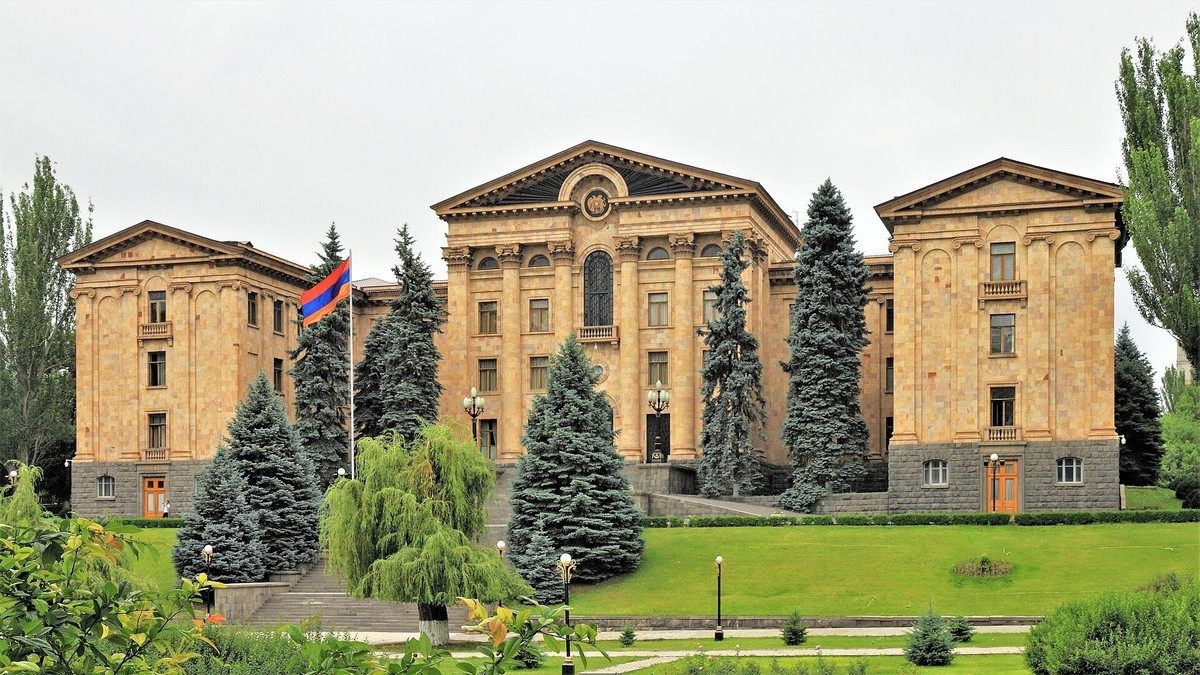
The bill was presented to parliament by Foreign Minister Ararat Mirzoyan, whose full title is Minister of Foreign Affairs and International Trade. Parliament debated ratification on 27 October; the Standing Committee on Foreign Relations had approved the bill by four votes to one on 21 October.
In the same session, the parliament approved a separate government proposal to ratify the charter of the Board of Peace by 92 votes in favour, none against and 8 abstentions.
What Armenia Actually Signed
The agreement provides for a TRIPP Development Company, founded by the Armenian government and TRIPP Development Company USA. Armenia holds 26 per cent and the US side 74 per cent, for an initial term of 49 years, the period for which construction and operating rights are granted.
The parties may extend cooperation for another 50 years. If they do, Armenia's stake rises automatically to 49 per cent with no additional investment, and the US company's share falls to 51 per cent, according to Mirzoyan's account in parliament. Mirzoyan said the US co-founder company will remain exclusively owned and controlled by the US government at all times.
The agreement grants the TRIPP Development Company "exclusive land use rights, development rights, related permissions, and all other rights", as Azatutyun reported. The company's charter and shareholders' agreement still had to be negotiated and adopted as of the 27 October debate.
The Forty-Two Kilometres Through Syunik
The infrastructure covered by the agreement includes a railway, highways, power transmission lines, fibre-optic cables and possible oil and gas pipelines, Mirzoyan told parliament on 27 October. The route connects Azerbaijan to its Nakhichevan exclave through Armenian territory, and gives Armenia a connection to third countries through Azerbaijan plus domestic railway connectivity.
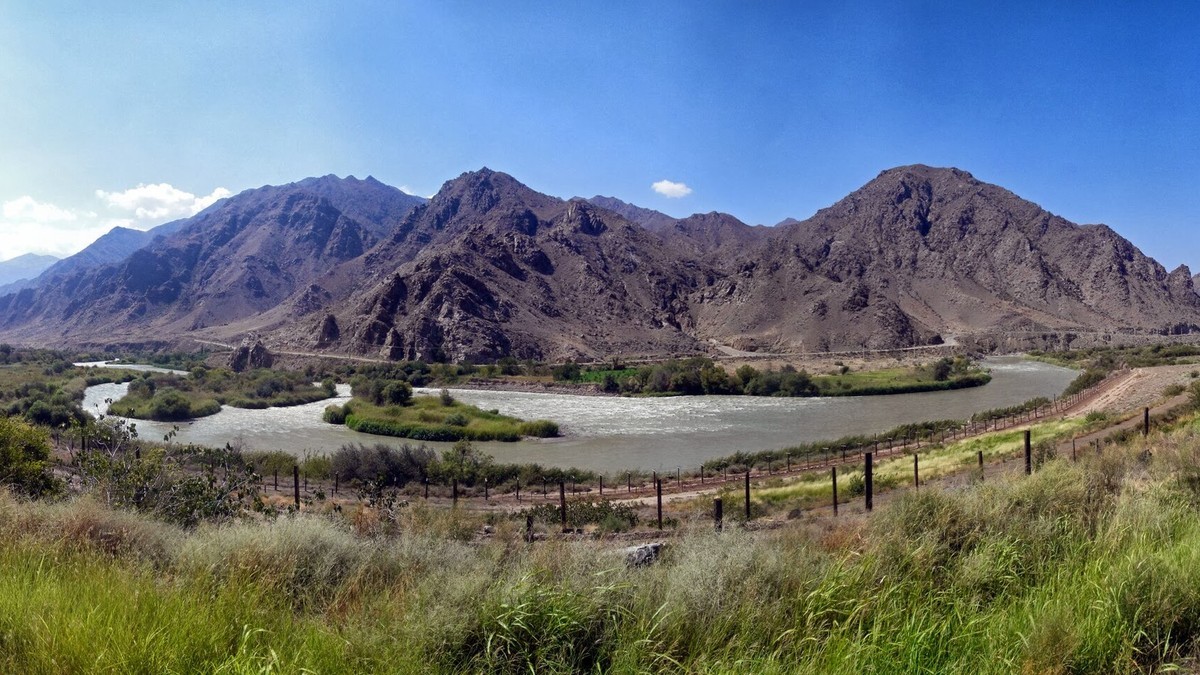
It runs along Armenia's border with Iran, through the southern Armenian province of Syunik. The Syunik section is approximately 42 kilometres.
Mirzoyan said the project is not necessarily one continuous strip: a gas pipeline could pass through the Ghazakh-Ijevan route while the railway would run through Meghri. He said he could not give a single width. He said trains will be able to make stops on the Syunik section and rejected suggestions that the agreement creates a special regime. Armenia retains sovereignty, jurisdiction, border security, customs and law enforcement, he said.
The Same Afternoon, a Door Closed in Moscow
At a joint news conference in Yerevan with Slovenian Foreign Minister Tone Kajzer on 28 October, Mirzoyan said Armenia does not envisage returning to the Collective Security Treaty Organization. "We stopped participating in the CSTO's activities a long time ago and froze our membership," he said.
"Comments by other member states or the organization's secretariat will not change our stance. We do not see ourselves returning to the CSTO."
He was responding to former CSTO Secretary General Nikolai Bordyuzha, who said in an interview with RIA Novosti that Armenia should be expelled. Armenia announced it was "freezing" its membership in February 2024, a status not provided for in the organisation's charter, and has stopped paying membership fees. CSTO Secretary General Taalatbek Masadykov told TASS that Armenia has de facto withdrawn.
A Former Secretary-General Says Expel Them
Bordyuzha's argument, as given to RIA Novosti, rests on the consensus rule. "If they suspend their participation but do not withdraw, they remain full members of the CSTO," he said. "As long as they remain full members, all decisions — which are made by consensus — must take their position into account."
He said it would be a decent step for Yerevan to withdraw permanently, and that if it did not, Armenia should simply be excluded.
Masadykov, speaking to TASS, described the arrangement as it currently operates. "They listen to the weekly reports, but they don't participate in our main events, exercises and the like," he said. He said Armenia receives documents, responds that it does not take part in discussion or decision-making but does not object to decisions taken by a limited group of member states, and that this "fully complies with Article 25 of the CSTO Charter". Masadykov said that if the issue is put on the agenda of the Collective Security Council, a decision could be adopted. Current members are Russia, Belarus, Kazakhstan, Kyrgyzstan and Tajikistan.
Moscow's Objection Was Already on the Record
Russian Foreign Ministry spokeswoman Maria Zakharova set out Moscow's reading of the project on 9 August 2025. "We will carefully assess Washington's statements regarding the restoration of regional communications," she said. "The trilateral agreements with Russia remain valid, as neither party has formally withdrawn from them."
Zakharova noted Armenia's EAEU commitments on the single customs space including transit regulation, and that Armenia's border with Iran remains under the protection of Russian border troops under a 1992 interstate treaty. She said the most suitable option for the South Caucasus was to search for and implement solutions developed by the region's countries themselves, with support from their direct neighbors — Russia, Iran and Türkiye.
On 1 October 2026, Alexey Shevtsov, a member of Russia's Security Council, called TRIPP an initiative designed to establish an American military presence in Armenia. "In Armenia, in full accordance with classical post-colonial models, yet another 'state within a state' is being established," he said. On 22 October 2026, Deputy Foreign Minister Alexander Grushko told the Eurasian Economic Forum in Verona that Moscow hopes Armenia's leadership is aware of all the risks of rapprochement with the EU.
Tehran's Careful Welcome
Iran's Foreign Ministry welcomed the finalisation of the Armenia-Azerbaijan peace agreement as "an important step toward achieving lasting peace in the region" but expressed "concern over the negative consequences of any form of foreign intervention, especially near its shared borders, that could undermine the security and lasting stability of the region".
President Masoud Pezeshkian said Tehran's demands on the corridor have been met. "Of course, this corridor is not what has been exaggerated about in the news," he said, according to Mehr. He said the framework of preserving territorial integrity, establishing a connection with Europe and not cutting it off with the north had been witnessed. "The only matter of concern is that an Armenian company and an American company want to build this road."
Pashinyan said TRIPP has no military component and poses no threat to Iran, and that it could become an opportunity for economic cooperation between Iran and the US and between Russia and the US.
The Opposition's Question: Where Is Armenia's Document?
Narek Karapetyan of Strong Armenia said the risk is what comes after the route opens. "Our main concern is that when the TRIPP is launched, Azerbaijan will come up with new demands … which are difficult to fulfill," he said. "Its main goal is to get its coveted road but not lift its blockade of Armenia in return." He said Yerevan should link implementation to the signing of an Armenian-Azerbaijani peace treaty, which Baku makes conditional on a change to Armenia's constitution.
Anna Grigoryan, parliamentary leader of Hayastan, said "Azerbaijan's interests are reflected more directly in this document than Armenia's interests could possibly be." Artur Khachatryan of the ARF asked whether Armenia has an equivalent binding document guaranteeing its own transport connectivity through Azerbaijani-controlled territory, particularly a route connecting Meghri with the Ararat region through Nakhichevan. "Is there a document that would be as binding for Azerbaijan as TRIPP is for Armenia?" he asked. His final question was: "Is there a written agreement or not?" Mirzoyan did not identify a specific equivalent binding document in the publicly reported exchange.
Samvel Karapetyan, leader of the Strong Armenia bloc, said ratifying TRIPP without a peace agreement carries "very significant risks". "For example, they could open TRIPP as a corridor and then say goodbye to us."
What Mirzoyan Says Armenia Gets
Mirzoyan told parliament the project would unblock regional communications, let Armenia connect to third countries through Azerbaijan, and ensure domestic railway connectivity. He said TRIPP is an opportunity to overcome decades of regional isolation and that its benefits should not be understood as unilateral concessions.
Armenia has begun importing wheat and fuel via Azerbaijan, he said. "It's just not possible that Azerbaijan will transport cargo to Nakhichevan without making it possible for Armenia to ship cargo through Azerbaijani territory."
He said the railway network would serve Armenian transport needs, questioning whether it was realistic to imagine trains using the route for Azerbaijan while Armenia could not establish a corresponding connection through Yeraskh. He acknowledged that lengthy procedures were among his principal concerns.
What Happens Next, and What the Border Says
With the vote, Armenia has completed its side of the process; the United States completed its own procedures earlier, clearing the way for the agreement to enter into force. Deputy Prime Minister Mher Grigoryan has already led a working group to Syunik to organise the start of design work, Pashinyan told his cabinet on 22 October.
The question of Armenia's CSTO membership goes before the Collective Security Council in Moscow on 11 November 2026. Armenia has not formally withdrawn, and Masadykov describes the result as a de facto withdrawal.
The peace agreement initialled in Washington on 8 August 2025 has not been signed, and Baku conditions it on a change to Armenia's constitution. Aliyev has openly warned the corridor would be established "whether Armenia wants it or not".
Azerbaijan's defence ministry said Armenian forces fired on Azerbaijani positions in Tovuz, Gadabay, Dashkesan and Gubadli overnight and into the morning of 28 October, and that the Aghjabedi region came under fire between 07:35 and 09:00. No Armenian response has been published.
By Jessica Ali, Staff Writer
This article was produced with AI-assisted research and editorial support. Sources: Armenpress, Panorama.am, News.am, News.az, Azatutyun, Armenian Weekly, Izvestia, RIA Novosti, Aurora News and the Ministry of Defence of Azerbaijan. Photographs: APA via News.az (cover); Marcin Konsek / Wikimedia Commons, CC BY-SA 4.0 (National Assembly building); Vahe Martirosyan / Wikimedia Commons, CC BY 2.0 (Araks river at Meghri).
What's Your Reaction?
 Like
0
 Dislike
0
 Love
0
 Funny
0
 Wow
0
 Sad
0
 Angry
0

Editor-in-Chief at Global1.News. Atlanta-based journalist who cuts through the BS and tells it like it is. Lead anchor, host, and the voice you hear when the spin stops and the truth starts.












Comments (0)