
Bowen: Myanmar genocide verdict is historic and could have far-reaching implications
The International Court of Justice’s (ICJ) historic ruling that Myanmar committed genocide against the Rohingya marks the first time a state has been found to have breached the 1948 Genocide Convention.

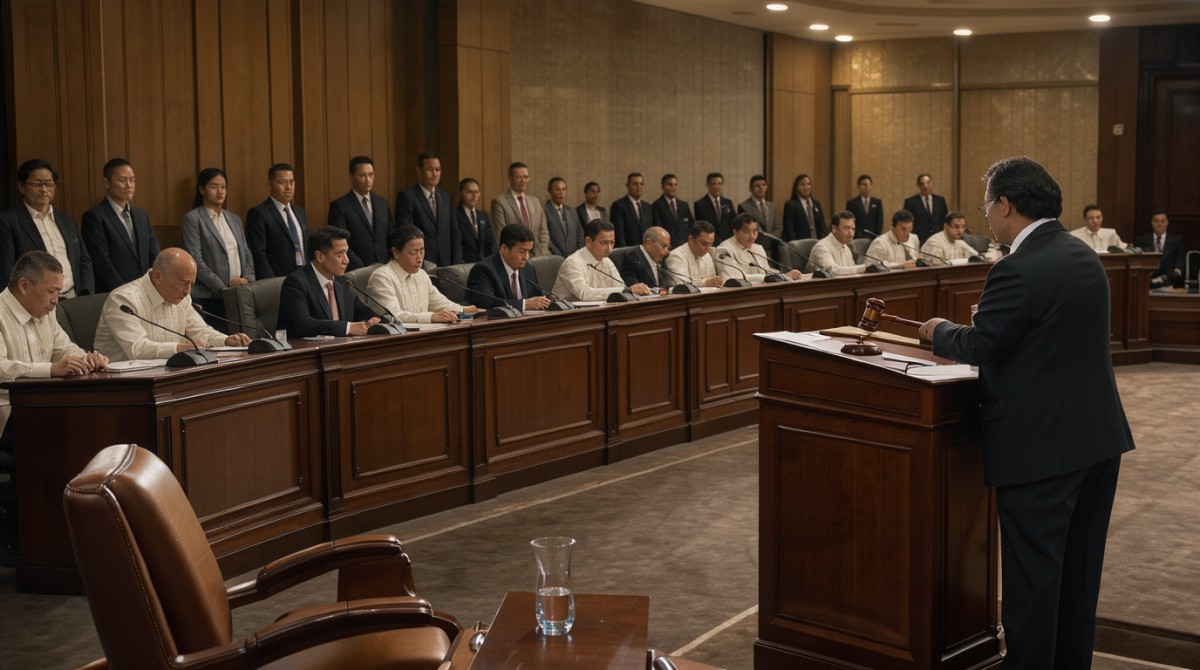
The International Court of Justice’s (ICJ) historic ruling that Myanmar committed genocide against the Rohingya marks the first time a state has been found to have breached the 1948 Genocide Convention. The decision, delivered by President Judge Yuji Iwasawa, carries weight far beyond the borders of Southeast Asia, as it clarifies the evidentiary threshold for proving genocidal intent and will shape pending cases before the world’s highest judicial body.
Background to the Myanmar verdict
The case was brought by The Gambia in 2019, backed by the Organisation of Islamic Cooperation, alleging that Myanmar’s security forces and allied militias carried out systematic acts of mass murder, rape, torture and village destruction against the Rohingya. The court recalled that at least 10,000 Rohingya were killed during the 2017 attacks, and that entire villages were burned with residents trapped inside.
In the sprawling refugee camps of Bangladesh, where more than one million Rohingya have lived since fleeing the 2017 atrocities, crowds gathered around screens to hear Judge Iwasawa read the verdict. The judgment, passed by a majority of nine votes to six, formally declared that Myanmar had committed genocide, imposing a legal stain that will linger in diplomatic and trade circles for years to come.
Legal significance of the ruling
The ruling is notable not only for its substantive finding but also for the way the court articulated the standard of proof required to establish genocidal intent. The judges emphasized that intent must be inferred from a “totality of the evidence,” not merely from isolated acts. As Janina Dill, Chair in Global Security at Oxford’s Blavatnik School of Government, explained, “Genocidal intent can be inferred from a pattern of conduct… the totality of the evidence cannot be explained without genocide being one objective.”
This clarification matters because proving intent has long been the most challenging element in genocide cases. The court noted that governments rarely publicise genocidal objectives, forcing tribunals to read between the lines of military orders, operational patterns and the scale of atrocities. The Myanmar judgment thus sets a precedent for how future cases will be evaluated, including the high‑profile suit brought by South Africa against Israel over alleged genocide in Gaza.
Implications for the Gaza case
South Africa’s filing, which alleges that Israel committed genocide against Palestinians in Gaza following the Hamas attacks of 7 October 2023, hinges on the same evidentiary bar clarified in the Myanmar decision. British barrister Philippe Sands, a member of The Gambia’s legal team, told the BBC that the “door remains open” for South Africa now that the standard has been defined, but he cautioned that success is not guaranteed. The court’s approach will require South Africa to demonstrate that the pattern of killings, destruction and displacement cannot be explained solely by military objectives.
Should South Africa meet the clarified standard, the Myanmar ruling could serve as a persuasive authority, reinforcing the argument that the scale and systematic nature of the Gaza attacks point to an intent to destroy, in whole or in part, a protected group. Conversely, a failure to meet the threshold would underscore the difficulty of translating massive civilian harm into a legal finding of genocide.
International reaction and diplomatic stakes
The verdict arrived at a time when the post‑World War II international legal order faces pressure from major powers. The article notes that the rules established after 1945 have been tested by leaders such as former US President Donald Trump, Russian President Vladimir Putin and Chinese President Xi Jinping. On the day of a summit in China, the ICJ issued a reminder that “international law still exists,” underscoring the political resonance of the ruling.
The United Kingdom, acting as the “pen holder” on the UN Security Council for Myanmar‑related diplomacy, pledged to “ensure accountability for these appalling crimes” and to send a clear message that such crimes cannot be committed with impunity. While the court has no enforcement mechanism, the UK’s statement signals that diplomatic pressure may intensify, potentially affecting Myanmar’s access to international aid and trade.
Reparations and the reality on the ground
Although the court ordered Myanmar to make reparations to the Rohingya, the practicalities of delivering assistance remain daunting. Hundreds of villages have been razed, and the Myanmar government is unlikely to accept the verdict quietly. The article stresses that the joy felt by Rohingyas in the camps will not translate into immediate improvements in their living conditions, which have been described as miserable and dangerous for almost a decade.
The lack of a direct enforcement mechanism means that reparations will depend on sustained international pressure, targeted sanctions and perhaps the use of UN mechanisms to monitor compliance. The precedent set by this ruling could, however, empower other victim groups to seek similar orders, knowing that the ICJ is willing to articulate a clear legal standard.
Broader impact on genocide jurisprudence
Beyond the immediate cases, the Myanmar decision reinforces the post‑Holocaust legal architecture crafted by Raphael Lemkin and his contemporaries. By reaffirming the high bar for intent, the court preserves the integrity of the Genocide Convention while providing a roadmap for future litigants. The judgment demonstrates that the ICJ is prepared to interpret the convention dynamically, adapting its application to contemporary conflicts without diluting its core principles.
Legal scholars will likely study The Gambia’s strategy—how it built a narrative that linked disparate atrocities into a coherent pattern of intent. The article notes that lawyers will examine this approach closely, as it may become a template for other states seeking justice for mass atrocities that fall short of conventional war crimes but rise to the level of genocide.
Looking ahead: enforcement, accountability and the role of civil society
The verdict’s immediate effect is symbolic, but its long‑term influence will depend on how the international community translates legal findings into concrete action. Civil society groups, especially those representing displaced Rohingya, will likely intensify advocacy for humanitarian aid, safe repatriation and accountability mechanisms such as targeted sanctions against senior Myanmar officials.
In the absence of a direct enforcement arm, the court’s moral authority becomes the primary lever. As the article highlights, the UK’s commitment to act and the broader diplomatic discourse surrounding the ruling suggest that states may be more willing to align their foreign policies with the court’s findings. Whether this translates into measurable improvements for the Rohingya or influences the outcome of the Gaza case will be a test of the international legal order’s resilience in the face of geopolitical pressures.
This article was produced with AI-assisted research and editorial support. Reporting is based on the source material cited below. Sources: BBC News Asia; bbc.co.uk; Global1.News (20 November 2026).
By Kenji Tanaka, Staff Writer
What's Your Reaction?
 Like
0
 Dislike
0
 Love
0
 Funny
0
 Wow
0
 Sad
0
 Angry
0

Japan Correspondent at Global1.News. Tokyo-based voice covering Japanese politics, technology, economy, and culture. Tracks the intersection of tradition and innovation in one of the world's most dynamic societies.













Comments (0)