
Sam Altman says his life is so weird that he’s unfazed by Andrew Garfield portraying him in upcoming movie
When Sam Altman steps onto the stage at the New York Times DealBook Summit and says a Hollywood biopic about himself isn’t even in his top‑ten weird moments, you know the tech‑founder circus is getting out of hand.
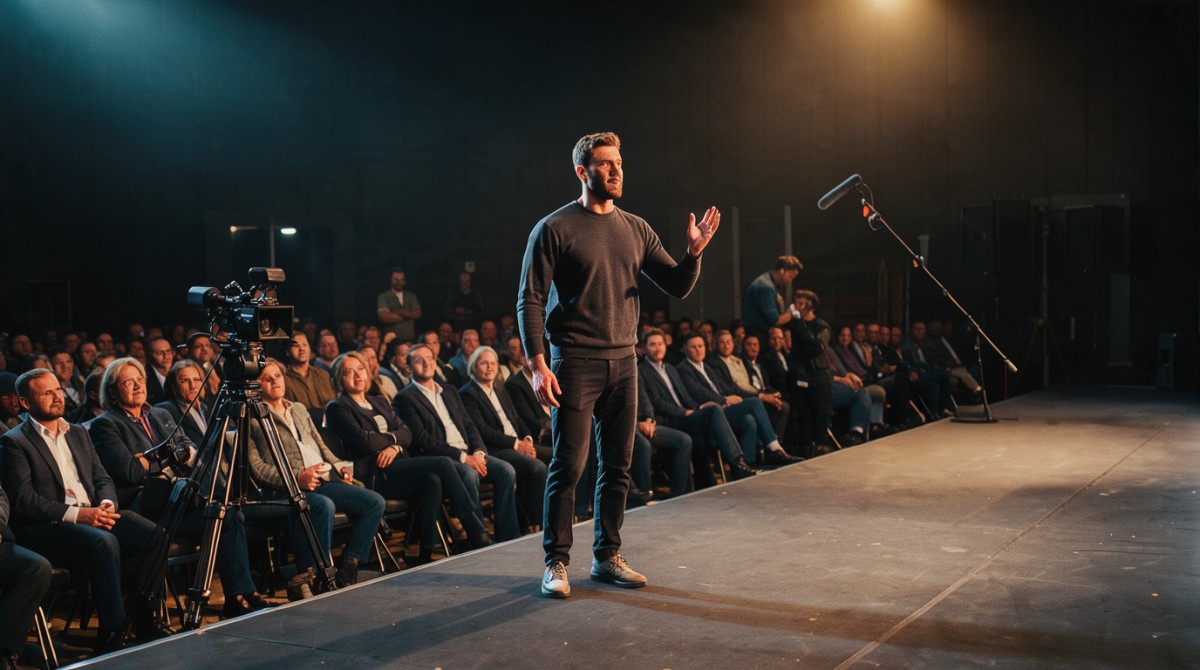
When Sam Altman steps onto the stage at the New York Times DealBook Summit and says a Hollywood biopic about himself isn’t even in his top‑ten weird moments, you know the tech‑founder circus is getting out of hand. The upcoming film “Artificial,” starring Andrew Garfield as the OpenAI chief, is the latest chapter in a saga where Silicon Valley’s biggest names become fodder for Hollywood scripts, Netflix docudramas and Netflix‑style hype cycles. For anyone running a real hosting operation, the lesson is simple: the louder the media circus, the heavier the risk of price‑pressures, talent poaching and a wave of “best‑practice” recommendations that crumble under production load.
Hollywood’s love‑hate relationship with AI founders
The TechCrunch piece notes that “Artificial” will hit theaters on Christmas, casting Garfield—best known for swinging webs as Spider‑Man—in a biographical comedy‑drama that chronicles OpenAI’s meteoric rise and the internal coup that briefly ousted Altman in 2023. Altman’s own reaction was a classic founder’s shrug: “If you had told me 20 years ago that someone was going to make a movie about me, that would have been weird. Now it’s not even in my top ten weird things.” That non‑reaction is itself a signal. He’s accustomed to being the center of a narrative that includes everything from boardroom drama to existential AI risk debates.
Garfield, who has never met Altman, told Esquire that anyone who shoulders “a level of responsibility for a company or technology that you know is going to do a hell of a lot of damage to the soul of humanity” must be able to dissociate. It’s a line that reads like a press‑release talking point, but it also hints at the growing perception that AI leaders are custodians of a technology that could upend entire industries—including the very hosting business we run.
From “The Social Network” to “Artificial”: a pattern of myth‑making
Garfield’s résumé includes a turn as Facebook co‑founder Eduardo Saverin in “The Social Network,” a film that turned a startup story into a cultural myth. The article points out that a sequel‑style follow‑up this year, “The Social Reckoning,” bombed at the box office, underscoring that not every tech‑centric flick lands. Still, the pattern is clear: Hollywood latches onto the drama of fast‑growing, VC‑fueled companies, then recycles those narratives for the next big name—this time, OpenAI.
For independent hosting providers, the myth‑making cycle matters because it fuels a hype loop that drives hyperscaler pricing wars. When a company like OpenAI becomes a household name, hyperscalers rush to claim they’re “AI‑ready,” slashing prices to lure the same customers that once might have turned to boutique hosts for specialized workloads. The result? A race to the bottom that squeezes margins for anyone not backed by deep pockets.
Altman’s “weird” reality: responsibility and risk
Altman’s own words—“we are ushering in this technology that we have all of these very real concerns about… we find ourselves in a role of such significance and such responsibility to make that go well”—are a reminder that AI isn’t just a buzzword. It’s a technology that will stress compute, storage and networking infrastructures in ways we’ve only seen in test labs. The “Artificial” narrative will likely dramatize boardroom fights, but the underlying truth is that the AI boom will drive exponential demand for GPU‑heavy workloads.
From a hosting perspective, that demand translates into two immediate risks: capacity strain and security exposure. The source material mentions an FBI‑linked “Artex AI open source hacking tool” that can breach networks in “under three hours.” While the article doesn’t detail the tool, the implication is clear—AI‑focused attackers are sharpening their knives, and any provider that can’t lock down its infrastructure will be a prime target.
The hyperscaler price‑war trap
When a Hollywood film puts a name like Altman on the marquee, it amplifies the brand’s cachet. Hyperscalers—AWS, Azure, GCP—leverage that cachet to push “AI‑optimized” instances at aggressively low introductory rates, hoping to lock in long‑term contracts. For a small‑to‑mid‑size host, the temptation to chase those discounts is strong, but the reality is that the fine‑print often includes hidden egress fees, mandatory support tiers and lock‑in clauses that erode profitability.
Our own experience over the past decade shows that when a client’s workload spikes because they’re training a new model, the hyperscaler’s “pay‑as‑you‑go” pricing can double or triple overnight. That volatility is a nightmare for cash‑flow management. The lesson from Altman’s non‑reaction to his own biopic is that you can’t let the hype dictate your pricing strategy. Keep your rates transparent, your contracts flexible, and your SLAs realistic.
Talent poaching and cultural spillover
The article notes that Mark Zuckerberg, despite his own grievances about “The Social Network,” organized a company outing for his staff when the film premiered and even bought a prop T‑shirt from the movie. That anecdote illustrates how tech CEOs use pop‑culture moments to rally teams and reinforce brand loyalty. For hosting firms, the same tactic can backfire if you’re not careful.
When a high‑profile film like “Artificial” hits the screens, expect a surge of interest from engineers who want to work on “the next big thing.” They’ll be drawn to the glamour of AI labs, leaving boutique providers scrambling to retain talent. The practical response is to double down on culture: give engineers ownership of real production problems, not just sandbox experiments. Show them the value of running a live, revenue‑generating service rather than a research sandbox that disappears when the hype cycle wanes.
Security concerns amplified by media attention
Garfield’s comment about the “damage to the soul of humanity” may sound philosophical, but it underscores a concrete security reality: the more public attention a technology gets, the bigger the attack surface. The source material’s brief mention of the FBI‑linked “Artex AI” tool is a red flag. While the article doesn’t provide technical details, the fact that a federal agency is tracking an open‑source AI hacking tool signals a maturing threat landscape.
For hosting operators, the actionable step is to treat AI workloads as high‑risk assets. Implement network segmentation, enforce strict API throttling, and adopt zero‑trust principles. Regularly audit third‑party libraries—AI frameworks are notorious for pulling in outdated dependencies that become vectors for supply‑chain attacks.
Actionable takeaways for independent hosts
First, **don’t chase the hype**. The buzz around “Artificial” will drive short‑term traffic spikes, but your business model should be built on steady, contract‑based revenue. Second, **price strategically**. Use transparent, usage‑based pricing that protects you from sudden GPU cost spikes, and consider offering fixed‑price bundles for predictable AI workloads.
Third, **invest in talent retention**. Give engineers real‑world production challenges that matter to your customers—high‑availability AI inference, low‑latency data pipelines, secure model serving. Fourth, **harden your security posture**. Treat any AI‑related service as a potential attack vector and apply layered defenses, from network segmentation to regular pen‑testing.
Finally, **watch the cultural narrative**. When Hollywood turns a tech founder into a movie star, it’s a signal that the market is entering a new phase of public scrutiny and regulatory interest. Stay ahead of the curve by engaging with policymakers, contributing to open‑source security tools, and positioning your brand as a responsible steward of AI infrastructure.
In short, Sam Altman may be unfazed by a Christmas‑day biopic, but the ripple effects of that film will be felt across the entire tech ecosystem. As a founder running real hosting infrastructure, you can either ride the wave of hype and risk being washed out, or you can anchor your business in solid engineering, transparent pricing and rigorous security. The choice is yours.
— Allan Ali, Founder
This article was produced with AI-assisted research and editorial support. Reporting is based on the source material cited below. Sources: TechCrunch; techcrunch.com; Global1.News (19 November 2026).
By Allan Ali, Global1.News
What's Your Reaction?
 Like
0
 Dislike
0
 Love
0
 Funny
0
 Wow
0
 Sad
0
 Angry
0

Publisher of Global1.News. Automation architect, systems builder, and the guy making sure the truth gets published.












Comments (0)