
Deepfake Carney Videos Fuel Investment Scams Targeting Canadians
In a recent CBC News report, the Fact Check team detailed how dozens of Facebook ads link directly to deepfakes of Prime Minister Mark Carney that promote fraudulent cryptocurrency schemes. The fake videos are designed to scam viewers into sending money to unregistered platforms.
In a recent CBC News report, the Fact Check team detailed how dozens of Facebook ads link directly to deepfakes of Prime Minister Mark Carney that promote fraudulent cryptocurrency schemes. The fake videos are designed to scam viewers into sending money to unregistered platforms.
Deepfake Carney Videos Fuel Investment Scams Targeting Canadians
Ottawa — Canadian authorities continue to confront a coordinated network of artificial intelligence-generated videos that impersonate Prime Minister Mark Carney to lure investors into unregistered trading platforms.
How the Scam Operates
CBC's visual investigations unit has tracked this scam network since at least January 2025. Fake CBC News articles that link to sketchy investment schemes flood social media with sensational headlines about the Canadian election and other political developments.
In March 2025, CBC News and Radio-Canada reported on the fake ads: clicking on a Facebook ad takes the user to a realistic-looking fake CBC News article; read on and the articles tout a zero risk cryptocurrency investment scheme. The trail leads to a sketchy investment trading platform.
One fake video used a deepfake of CBC journalist Rosemary Barton, as well as Elon Musk and Carney. In the fake video, a deepfaked Carney says the government has certified the safety of the alleged investment product and that none of the investors will lose their money. "All you need is to invest $350 and start making profit from the first month," the deepfaked prime minister said.
The deepfake was created using manipulated video originally taken from Carney's Liberal leadership launch speech in January 2025 on January 16. Fake articles were hosted under strange URLs such as marslandingjournal.com, gossipgiraffes.com, and more convincing ones such as cbc-politics.com.

Each fake article directs readers to a realistic-looking trading platform, such as Canada Crypto Fund, TrueNorth, or Token Tact. The New Brunswick Financial and Consumer Services Commission issued warnings about all three entities in March 2025, noting they are not registered to deal or advise in securities in New Brunswick.
The Platforms Targeted by Regulators
Canada Crypto Fund, TrueNorth and Token Tact each appeared in the fake articles as the destination for potential investors. All three received formal warnings from the New Brunswick Financial and Consumer Services Commission in March 2025 because none held registration to deal or advise in securities. The commission's alerts made clear that these platforms operated outside the regulatory framework that protects Canadian investors from unregistered activity.
Similar platforms have surfaced repeatedly in the scam network. The pattern shows operators shifting between names while reusing the same deepfake videos and article templates. Regulators noted that once one platform draws complaints, the network quickly promotes another, maintaining pressure on users to act before the opportunity disappears.
Canadian Political Context
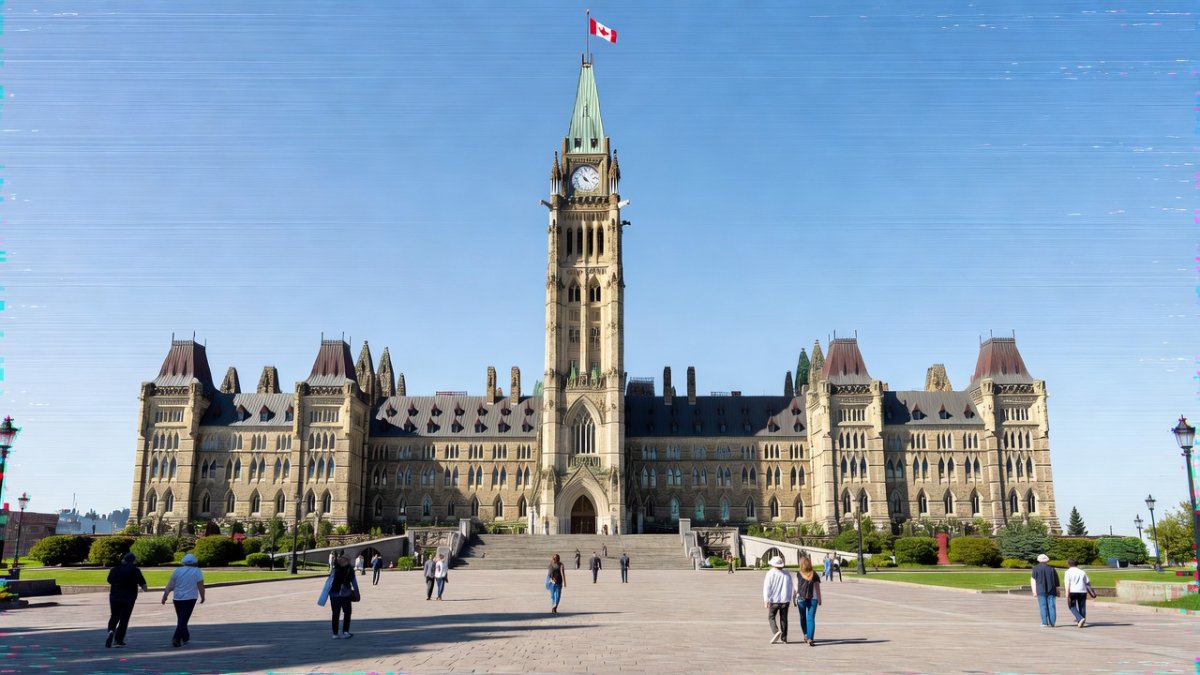
The scam network exploits the federal election cycle that centres on Parliament Hill and the House of Commons. Prime Minister Mark Carney's January 2025 leadership launch provided the original footage later altered for the deepfakes, tying the fraud directly to Liberal Party activities in Ottawa.
Similar deepfakes of Carney have appeared in ads on Facebook, Instagram, X (formerly Twitter), and YouTube, as well as Truth Social. The Logic reported that Facebook is being flooded with deepfake news reports about Mark Carney, with a network of Facebook scam accounts using increasingly political messaging to push a series of deepfake videos featuring Mark Carney, Elon Musk and Canadian network news anchors.
Provincial regulators in June 2025 issued alerts after discovering ads featuring AI-generated images of Mark Carney driving readers to bogus investment platforms dressed up to mimic legitimate Canadian news outlets, promising outsized returns if users invest quickly. The combination of political imagery and financial fraud is designed to exploit public trust in official sources, and the alerts warned that the tactics would intensify as campaign activity picks up.
Impact on Canadians
CTV News in September 2025 followed one of the links advertised in a deepfake Carney advertisement and it brought them to what appeared to be a CBC News article about an investment platform guaranteeing high returns. CTV described the situation as "we truly are stepping into the unknown," sparking AI concern and action.
Canadians face direct financial risks when they transfer funds to platforms such as Canada Crypto Fund. The deepfakes falsely claim government certification of the investment products — a claim no federal institution has made — and the urgency built into the ads is designed to push viewers to act before they can verify the offer.
The fraud also erodes public trust in official sources during a period when federal-provincial relations already strain over pharmacare expansion and housing affordability measures. Victims who lose savings may delay retirement or increase reliance on provincial social assistance programs.
The emotional manipulation is deliberate. By pairing a familiar political figure with sensational headlines and a sense of urgency, the ads are engineered to bypass the caution Canadians would normally apply to an unsolicited investment offer. Regulators have noted that the fake articles are written to look professional, complete with bylines, logos and news-style layouts, which makes them difficult to distinguish from legitimate coverage at a glance.
Regulatory Responses Across Provinces
Marissa Sollows, director of communications for the Financial and Consumer Services Commission of New Brunswick, stated "there is not going to be a decline in the number of these soon, particularly with the election. We are working certainly with our national and international counterparts, regulatory counterparts and enforcement staff at examining all kinds of different ways that we can look at disrupting and raising awareness of this, recognising that it is such a Whac-A-Mole game. When you take one down, 10 more pop up."
After CBC News reached out to Facebook parent company Meta and the Toronto-based company hosting one of the website domains, several of the Facebook accounts behind the ads were disabled and one website domain was suspended in March 2025. The RCMP-operated Canadian Anti-Fraud Centre continues to receive reports from across the country.
Provincial securities regulators have highlighted the jurisdictional challenge these networks create: platforms that are not registered in one province can still reach Canadians in every region through social media advertising, while the servers and domains behind the schemes are often hosted outside Canada. That gap is why Sollows said the commission is working with national and international counterparts and enforcement staff to disrupt the operations.
Evolution of the Scam Tactics
The network has shifted from simple text ads to full deepfake videos that combine footage of Prime Minister Mark Carney with statements from other public figures. Early versions appeared on Facebook and Instagram, but later iterations spread to X, YouTube and Truth Social. Each new platform required regulators to coordinate fresh takedown requests while the underlying video templates remained largely unchanged.
Operators also refined the hosting domains. Initial sites used obviously fabricated names, yet later examples adopted addresses that closely resembled legitimate news outlets. This progression forced both technology companies and securities regulators to update detection methods on an ongoing basis.
Protecting Yourself from AI-Driven Frauds
Canadians who spot such ads can report them to the Canadian Anti-Fraud Centre. The RCMP operates the CAFC. Canadians are advised not to send money, not to share personal information, and to verify investment platforms with provincial securities regulators.
CBC's Fact Check team specifically asks Canadians to send suspicious links and ads to them for verification. Individuals should cross-check any claim that Prime Minister Mark Carney has endorsed a specific trading platform against official statements issued from the Prime Minister's Office.
Users must also examine URL addresses carefully, because domains such as cbc-politics.com differ from the legitimate cbc.ca site. Enabling two-factor authentication on social media accounts reduces the chance that personal data will be harvested for further targeted scams.
Reporting Mechanisms and Public Response
The Canadian Anti-Fraud Centre accepts reports of suspected deepfake investment ads from any province or territory. Staff forward verified cases to the appropriate securities regulator and, where possible, to the social media platform hosting the advertisement. This central intake point allows patterns to be identified across jurisdictions even when individual victims report only once.
CBC Fact Check continues to solicit examples directly from the public. Each submission helps the team map new domains and video variants before they reach wider audiences. The process relies on timely public participation to keep pace with the rapid replacement of removed content.
What Lies Ahead for Election Integrity
The continued spread of these deepfakes threatens the integrity of public information by mixing legitimate political messaging with fraudulent investment pitches. As artificial intelligence tools become cheaper and more convincing, the challenge for regulators is expected to grow, and social media platforms and securities regulators will need to keep updating detection methods as the network shifts platforms and domain names.
Sollows said the commission is working with national and international regulatory counterparts and enforcement staff to examine ways to disrupt the schemes and raise public awareness. Because much of the infrastructure sits outside Canada, international coordination and faster takedown cooperation from social media companies will be essential to slowing the pace of replacement.
Until detection tools and platform enforcement keep pace with rapidly evolving deepfake technology, Canadians will remain vulnerable to operations that blend political figures with financial fraud. The current pattern demonstrates that regulatory action must keep pace with the technology it is meant to police.
By Alex Thompson, Staff Writer
This article was produced with AI-assisted research and editorial support. Reporting is based on sources cited in the article.
What's Your Reaction?
 Like
0
Like
0
 Dislike
0
Dislike
0
 Love
0
Love
0
 Funny
0
Funny
0
 Wow
0
Wow
0
 Sad
0
Sad
0
 Angry
0
Angry
0

Canada Correspondent at Global1.News. Based in Toronto, covering Canadian politics, energy, trade, and US-Canada relations. Provides the Canadian perspective on North American and global affairs.













Comments (0)