
Trump Goes to the Supreme Court a Third Time on Venezuelan TPS, and the Ninth Circuit Moves the Clock
The Justice Department asked the Supreme Court for a third time to keep a September 2025 order from reviving Temporary Protected Status for Venezuelans. Hours later the Ninth Circuit extended its own freeze, replacing Friday's deadline with a merits ruling nobody has scheduled.
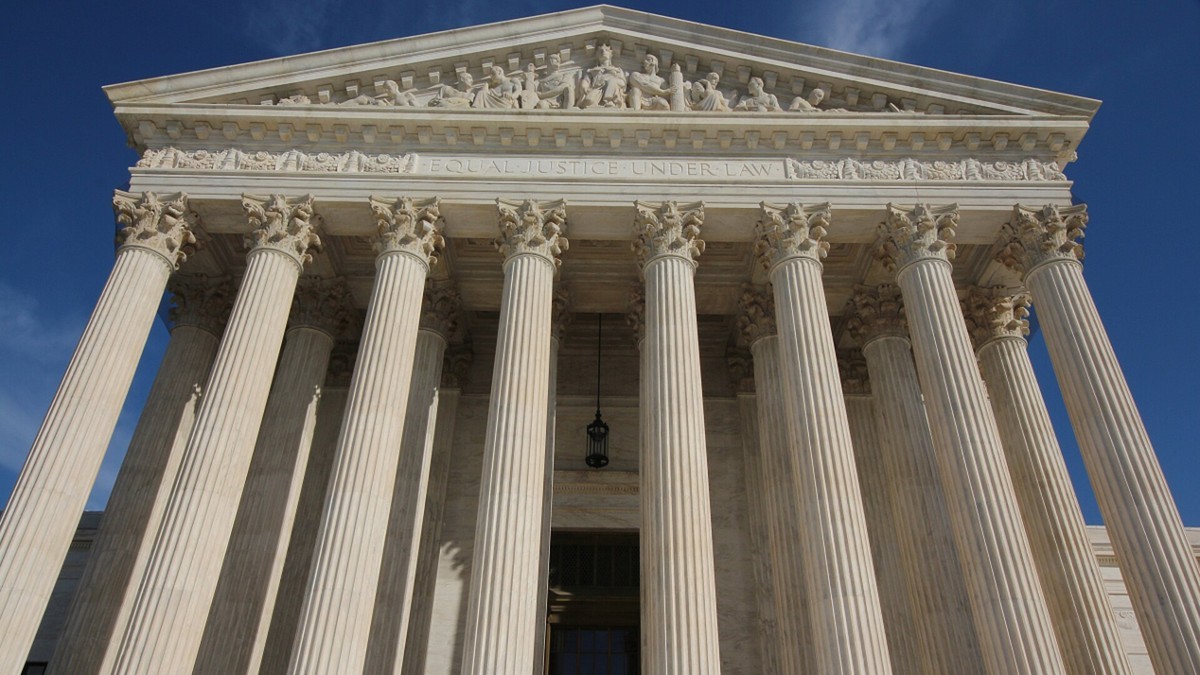
Folks, the federal government went back to the Supreme Court on Wednesday for the third time in a single immigration case, and for a few hours it looked like Friday would be the day hundreds of thousands of Venezuelans got their protection back. Then the Ninth Circuit moved the clock. Here is what the filings actually say, who signed them, and what it means for the people sitting in detention tonight.
Trump Goes to the Supreme Court a Third Time on Venezuelan TPS, and the Ninth Circuit Moves the Clock
WASHINGTON — The Justice Department asked the Supreme Court late Wednesday to keep a district court order from September 2025 from taking effect on Friday, 20 November, arguing that reviving Temporary Protected Status for Venezuelan nationals would force the release of roughly 1,800 people from immigration detention and block up to 332 final orders of removal.
The Filing: A Third Trip, Addressed to Kagan
Solicitor General D. John Sauer signed the emergency application in Mullin v. National TPS Alliance, docketed as No. 26A714, and addressed it to Justice Elena Kagan, who handles emergency requests arising from the Ninth Circuit. The department did not disguise its irritation. "This application marks a remarkable third trip to this Court in the same case," the filing states, adding that "the grounds for a stay are overwhelming." The justices have twice granted the administration temporary relief in this litigation, first at an earlier stage of the case and again in October 2025. This time the government is not asking the Court to decide anything on the merits. It is asking for a hold, so that a September 2025 judgment stays asleep while the appeal is heard.
The Order That Was Due to Wake Up on Friday
The order at the center of the fight was issued by US District Judge Edward M. Chen of the Northern District of California more than a year ago, and it has never been in force. Chen held that the Homeland Security secretary exceeded her statutory authority when she rescinded the Biden administration's extension of Venezuela's designation and moved to terminate it outright. The Ninth Circuit's own summary of the case records that he also found the secretary had acted in an arbitrary and capricious manner. The Justice Department calls the ruling "long-dormant" and says that as of Friday it "will spring into effect, inflicting severe and immediate harm." That single sentence is the whole case in miniature: one side sees a lawful judgment finally arriving, the other sees a dormant order detonating on a Friday.
Hours Later, the Ninth Circuit Moved the Clock
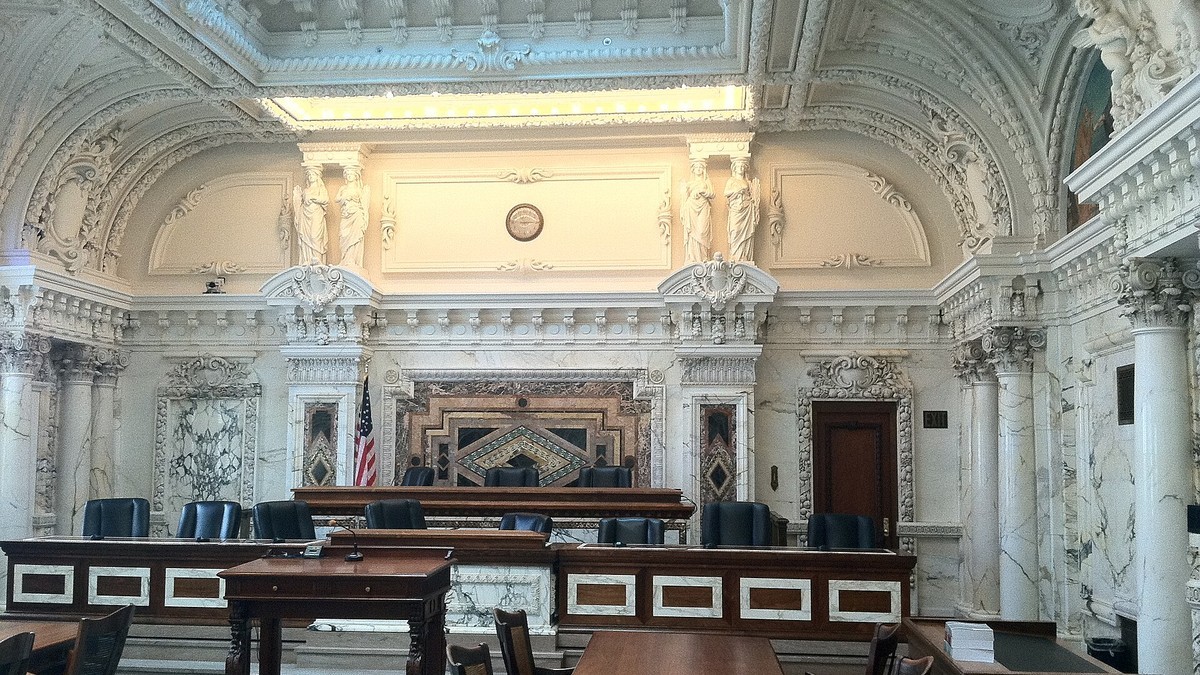
The three-judge panel of Kim McLane Wardlaw, Salvador Mendoza Jr and Anthony D. Johnstone has been the government's obstacle for three weeks. On 30 October it denied the government's motion to stay Chen's injunction and separately refused its request for a 21-day administrative stay. On 3 November it granted an administrative stay in part, withdrew the earlier order and ordered both sides to file supplemental briefs on the effect of Mullin v. Doe, due on 10 November. Then, hours after Wednesday's Supreme Court filing, the appeals court extended its temporary freeze until seven days after it issues a full ruling. The 20 November deadline is gone. What replaces it is a merits decision nobody has scheduled. The department had called the panel's refusal to stay "inexplicable" even though that panel had already granted a partial administrative stay in the same case. Its complaint is that the stay did not go far enough.
What the Government Says Would Happen on Day One
The numbers in the application are the government's own. Solicitor General D. John Sauer wrote that "the government could be forced to immediately release into the country some 1800 or so Venezuelan aliens from detention." Because ankle monitoring could not be relied on, he added, those released "would have an overwhelming incentive to flee" before the Court resolves the stay. Reviving the designation, the filing continues, "would also prevent the government from executing up to 332 final orders of removal and would obligate the government to provide untold aliens with work authorization." The department calls the consequences "enormously disruptive" and asks for an immediate administrative stay on those harms alone. The Associated Press, reporting the same filing, puts the detained population at about 1,800 and the number subject to deportation proceedings at about 330, a rounding that tracks the government's 332.
What the Plaintiffs Say Has Already Happened
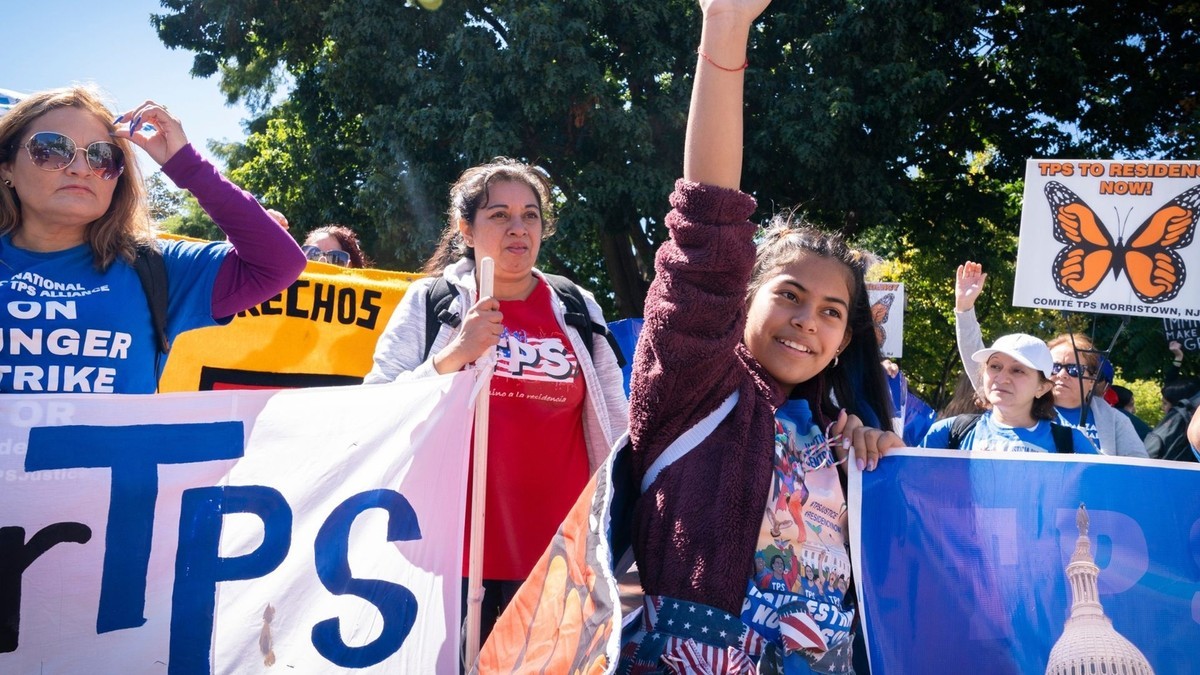
The plaintiffs — Venezuelan TPS holders and the National TPS Alliance — answered the harm argument by describing a harm that has already landed. Since the justices last intervened, they say, Venezuelan TPS holders have been detained, separated from children who are American citizens, deported to Venezuela, and in some cases sent to so-called third countries where they have no ties at all. That is the disagreement the Court is being asked to referee on an emergency clock: whether restoring a protection is the injury, or whether losing it was. The AP notes that when the designation was terminated last year the work authorizations went with it, and that thousands faced deportation proceedings, detention and removal. Nothing in either filing puts a figure on how many families have been split since the earlier stay, and no court has made a finding on that claim.
How Mullin v. Doe Changed the Ground
Everything in this round is downstream of a different decision. On 25 June 2026 the Supreme Court ruled in Mullin v. Doe, 609 U.S. 324, that federal courts generally lack jurisdiction over Administrative Procedure Act and other non-constitutional challenges to TPS terminations, because Section 1254a(b)(5)(A) bars review of "all non-constitutional claims." The justices had heard arguments in the Haitian and Syrian cases on 29 April. On 5 October they granted certiorari in the Venezuelan case, vacated the Ninth Circuit's judgment in National TPS Alliance v. Noem, 166 F.4th 739, and remanded for reconsideration in light of Doe. The mandate issued on 6 November. The government's position now is that Doe "unambiguously forecloses" Chen's order, and that the Ninth Circuit should have said so by stay rather than by briefing schedule.
Nineteen Months, and Two Designations
Venezuela was designated for TPS in March 2021 under President Joe Biden, and the designation was expanded in September 2023 to cover additional beneficiaries. Days before the second Trump inauguration, the outgoing administration extended the 2023 designation through October 2026, citing political repression, economic collapse and health crises. Former Homeland Security Secretary Kristi Noem rescinded that extension and moved to terminate the 2021 designation, effective 7 November 2025, a termination published at 90 Fed. Reg. 43225. On 3 October 2025 the Supreme Court stayed Chen's order and let the termination take immediate effect. The Justice Department now describes what followed as a "19-month hiatus," counting from the point protections stopped operating rather than from the day the designation was first granted.
Where This Case Sits in the Wider TPS Record
Congress created Temporary Protected Status in 1990 for nationals of countries hit by armed conflict, natural disaster or other extraordinary conditions, granted in periods of up to 18 months. The Associated Press reports that during Trump's second term the Department of Homeland Security has terminated TPS for more than 1 million people from 13 countries, including Venezuela, Haiti, Honduras, Nicaragua, Afghanistan and Syria, while in a shift in recent months maintaining protections for nearly 200,000 Salvadorans and more than 100,000 people from Ukraine and Sudan. The AP puts the number of Venezuelans who have received TPS at about 600,000. A Congressional Research Service fact sheet, drawing on Homeland Security data as of 25 June 2026, gives 627,750 across the two Venezuelan designations. The ACLU of Northern California has estimated that about 1.3 million people rely on TPS or closely related protections. Florida is home to more TPS holders than any other state, and Venezuelans are the largest group of beneficiaries nationally, followed by Haitians and Salvadorans.
What Venezuelans Should Not Assume
Nothing in Wednesday's filings revives anything. The terminations of both Venezuelan designations remain the operative rule, and the Ninth Circuit's order keeps them in place past Friday. Immigration attorney Vasanth Vaidyanathan, writing for Immigration Analytics, put the practical consequence bluntly: there is no restored status, no revived work permit and no new protection from detention until a court says otherwise. Cards that had been kept valid under earlier court orders have lapsed, he notes, and US Citizenship and Immigration Services has announced no new automatic extension. Employers, he writes, "should not treat any Venezuelan TPS document as revived." Form I-9 decisions should follow published USCIS guidance rather than litigation headlines. The State Department separately warns travelers to reconsider any trip to Venezuela, citing crime, kidnapping and poor health infrastructure.
What Happens Next
The immediate question is whether the justices grant the administrative stay the department asked for. Because the Ninth Circuit has already extended its freeze, there is no longer a Friday cliff to beat, which removes some of the urgency the government built its filing around. What remains is a merits ruling from a panel that has already refused twice to give the government everything it wanted, followed almost certainly by another trip to the Supreme Court whichever way that ruling goes. For the roughly 1,800 people in detention, the practical answer is unchanged tonight: the protection is still gone, the clock is still running, and the only thing that moved on Wednesday was the date.
This article was produced with AI-assisted research and editorial support. Sources: Reuters, the Associated Press, Al Jazeera, Law&Crime, Immigration Analytics, the Supreme Court stay application in Mullin v. National TPS Alliance (No. 26A714), the Ninth Circuit docket and opinion in No. 25-5724, the Congressional Research Service, US Citizenship and Immigration Services, WLRN, and the ACLU of Northern California. Photographs: US Supreme Court (Architect of the Capitol, public domain); Ninth Circuit courtroom (Sam Wheeler, CC BY-SA 3.0); TPS demonstration, September 2022 file photograph (Jacquelyn Martin/AP, File).
By Jessica Ali, Staff Writer
What's Your Reaction?
 Like
0
 Dislike
0
 Love
0
 Funny
0
 Wow
0
 Sad
0
 Angry
0

Editor-in-Chief at Global1.News. Atlanta-based journalist who cuts through the BS and tells it like it is. Lead anchor, host, and the voice you hear when the spin stops and the truth starts.












Comments (0)