
Non-profit claims 60% of Anthropic’s mapped US data center power demand is tied to natural gas
Anthropic’s latest data‑center power play is a wake‑up call for anyone running a rack‑and‑stack shop in the Caribbean or elsewhere. By that math, the project says 60 percent of the power demand at those sites is linked to natural gas.
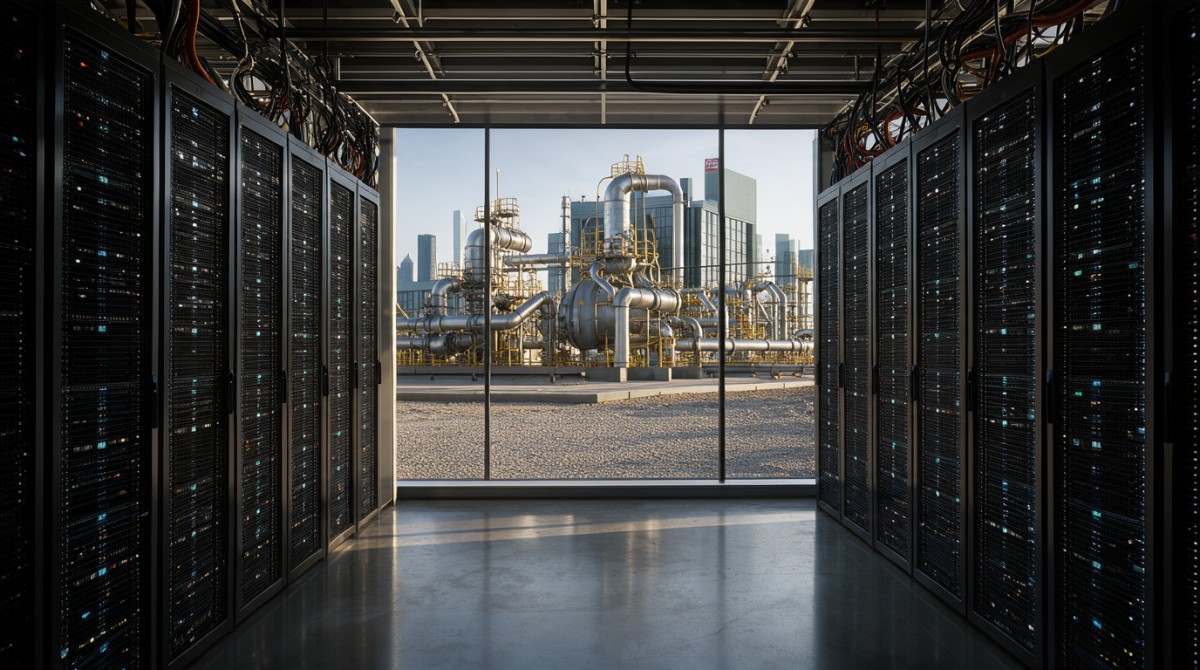
Anthropic’s latest data‑center power play is a wake‑up call for anyone running a rack‑and‑stack shop in the Caribbean or elsewhere. The non‑profit Better Data Center Project has mapped 19 US sites where Anthropic has leased between 5.9 and 9.6 GW of capacity, out of roughly 15 GW it has contracted. Their analysis shows that about 2.5 GW – roughly a quarter of the mapped load – is fed by on‑site natural‑gas generators, while the rest is tied to the grid, which itself draws about 47 percent of its electricity from natural gas. By that math, the project says 60 percent of the power demand at those sites is linked to natural gas.
Why the gas numbers matter to us
From a founder’s seat, the headline‑grabbing “60 percent” figure is less about climate optics and more about risk exposure. Natural gas is cheap and fast‑to‑deploy, but it also ties you to a volatile commodity market and to a fuel source that can be throttled by policy or supply shocks. Anthropic’s own $3.4 billion deal for 1.7 GW of Caterpillar generators – a partnership with OnePWR – underscores how seriously AI players are betting on gas to keep the lights on while they wait for renewable capacity to catch up.
For independent hosting providers, the lesson is clear: if you’re not already hedging against fuel‑price swings, you’re walking a tightrope. The US giants – Microsoft, Meta, Amazon, Google – have all signed similar on‑site gas deals to dodge the multi‑year interconnection queues that plague the grid. That move makes sense for them, but it also signals a broader industry shift toward “quick‑and‑dirty” power solutions that can backfire when the market turns sour.
The “quick‑and‑dirty” appeal of gas
Anthropic’s spokesperson made it plain: natural gas can be brought online quickly, ramps up and down as demand changes, and is abundant in the regions they’re eyeing for data centres. In practice, that means you can spin up a 100‑MW gas plant in months rather than waiting years for a grid connection permit. For a fast‑growing AI model like Claude, that speed is seductive.
But speed comes at a price. The Better Data Center Project notes that Anthropic’s on‑site gas capacity is only a slice of the total – 2.5 GW out of the 5.9‑9.6 GW mapped at each site. The bulk still leans on the grid, which itself is 47 percent gas‑heavy. So even if you build your own generators, you’re still riding the same gas‑laden grid for the majority of your power. That double‑dip amplifies exposure and makes the “renewable mix” promise feel more like a PR add‑on than a hard‑wired strategy.
Renewables on the horizon – or a mirage?
Anthropic says it’s working to broaden its mix with geothermal, wind, solar and emerging tech, and that in regions with strong renewable resources they’re designing projects to rely on clean power. The company also points to its membership in the Frontier carbon‑emission buying consortium and its partnership with Watershed for carbon accounting.
Those are respectable steps, but they sit alongside a massive $3.4 billion gas generator contract that won’t be operational for two years. In the meantime, the bulk of the load stays tied to fossil fuel. For a company that just completed an IPO valued at roughly $1.5 trillion, the optics of “working on renewables” can be a convenient narrative while the balance sheet still leans heavily on gas.
What the numbers really say about risk
Let’s break it down without pulling any new figures. Anthropic has contracted about 15 GW overall, with 5.9‑9.6 GW mapped in the Better Data Center Project’s sample. Of that sample, 26 percent is on‑site gas, and the rest is grid‑fed. Since the grid is 47 percent gas, the combined effect pushes the natural‑gas share to 60 percent across the mapped sites. That means more than half of Anthropic’s power bill – and its carbon footprint – is tied to a fuel that can be subject to price spikes, supply bottlenecks, and regulatory headwinds.
From a founder’s perspective, that translates into three concrete risk vectors: cost volatility, regulatory risk, and reputational risk. Cost volatility hits your bottom line directly; regulatory risk can force you to retrofit or retire gas assets; reputational risk can scare off environmentally‑conscious customers and investors who are increasingly demanding clean‑energy commitments.
How the hyperscaler playbook hurts smaller players
The big hyperscalers have the capital to lock in multi‑year gas contracts and to absorb the carbon cost of on‑site generators. Smaller hosting firms simply can’t match that firepower. When the market shifts – say, a carbon tax is introduced or natural‑gas supply tightens – the cost differential widens dramatically, squeezing margins for anyone still dependent on gas.
Moreover, the “grid‑bypass” strategy that works for a company with hundreds of megawatts of load can backfire for a boutique provider with a few megawatts. The permitting process for on‑site generators is not trivial, and the operational expertise required to run a fleet of gas turbines is a whole other ball‑game. Most independent data‑center operators would be better off focusing on power‑purchase agreements (PPAs) with renewable generators, or on locating in jurisdictions with strong grid renewables, rather than chasing the quick‑fix gas play.
Actionable steps for independent providers
First, audit your power mix. If you haven’t already, map out the proportion of your load that comes from the grid and the grid’s fuel composition. The Better Data Center Project’s methodology – looking at on‑site generation versus grid dependence – is a useful template.
Second, lock in renewable PPAs where possible. Even a modest 10‑20 MW renewable contract can shave a significant chunk off your carbon intensity and protect you from gas price spikes. Pair that with demand‑side management – load‑shifting, efficient cooling, and server‑utilisation optimisation – to reduce overall consumption.
Third, treat on‑site gas generators as a short‑term bridge, not a long‑term foundation. If you must deploy them to meet a capacity crunch, negotiate contracts that include clear exit clauses, fuel‑price caps, and conversion pathways to cleaner fuels like hydrogen or biogas.
Finally, be transparent with customers and investors. Anthropic’s spokesperson highlighted its carbon‑offset purchases and carbon‑accounting partnership; those moves are good for optics but don’t replace real emissions reductions. Publish a clear roadmap that shows when and how you’ll retire gas assets and transition to renewables. Transparency builds trust and can differentiate you from the hyperscalers who hide their fuel mix behind vague sustainability statements.
In short, Anthropic’s heavy reliance on natural gas is a cautionary tale. The allure of quick power is real, but the hidden costs – financial, regulatory, reputational – are even more real. Independent hosting firms that double‑down on clean‑energy strategies, lock in renewable supply, and keep gas as a true bridge will be the ones that survive the AI‑driven energy surge without getting burned.
— Allan Ali, Founder
This article was produced with AI-assisted research and editorial support. Reporting is based on the source material cited below. Sources: Data Center Dynamics; datacenterdynamics.com; Global1.News (20 November 2026).
By Allan Ali, Global1.News
What's Your Reaction?
 Like
0
 Dislike
0
 Love
0
 Funny
0
 Wow
0
 Sad
0
 Angry
0

Publisher of Global1.News. Automation architect, systems builder, and the guy making sure the truth gets published.














Comments (0)