
Around 10.3 Million Filipino Families Consider Themselves Poor in July 2026 — OCTA
OCTA Research finds 10.3 million Filipino families considered themselves poor in July 2026, up from 9.2 million in March. Involuntary hunger rose to 5.6 million families, hitting Balance Luzon and low-income households hardest, underscoring the need for stronger support.
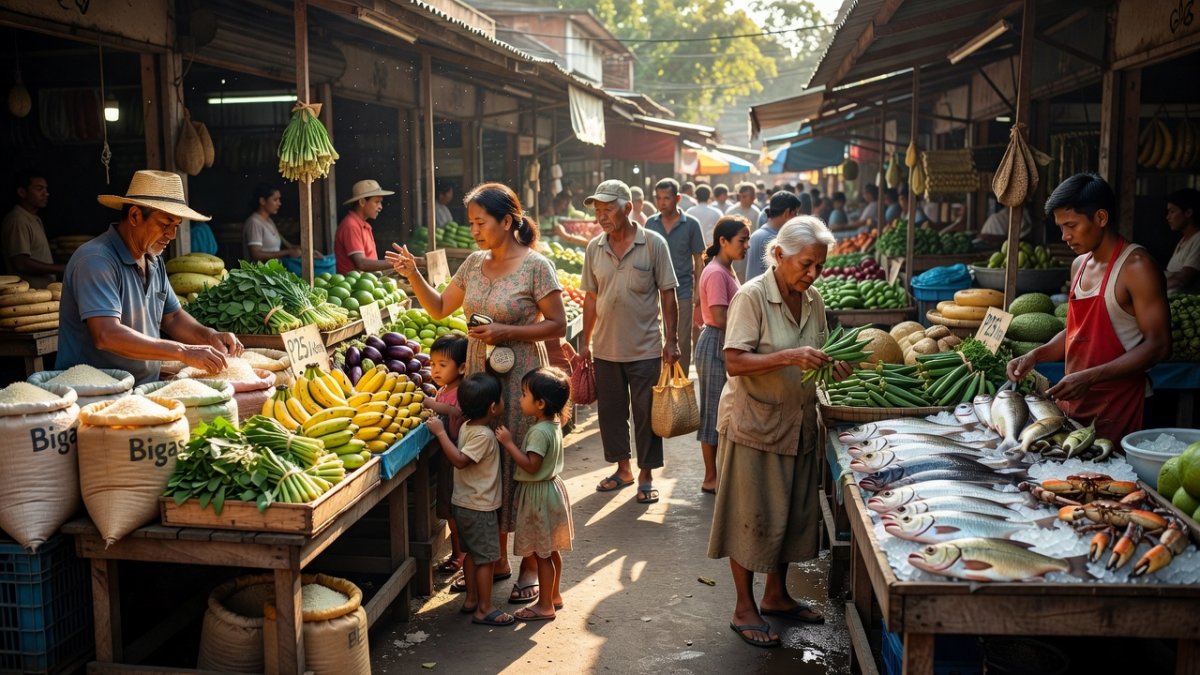
Self-Rated Poverty Rises by 4% in Second Quarter
The number of Filipino families who consider themselves poor has climbed to 10.3 million in July 2026, according to a recent report by private polling firm OCTA Research. The survey, conducted from July 4 to 11 through face-to-face interviews with 1,200 adult Filipinos nationwide, found that approximately 39% of respondents classified their families as poor. This marks a 4% increase from the 35%—or roughly 9.2 million families—recorded in March 2026.
The increase translates to about 1.1 million additional families who felt poor in the second quarter of the year. This shift is significant for a nation where the concept of "hirap" (hardship) is often measured not just by income, but by the daily experience of making ends meet. For many households, this self-assessment reflects the reality of budgeting for rice, transportation, and school supplies in an economy where prices at the palengke (market) remain a constant concern. The survey has a margin of error of ±3% at a 95% confidence level, meaning the true figure could range from 36% to 42%, but even the most conservative estimate represents a substantial portion of the population living in perceived deprivation.
OCTA's data also reveals that only 18% of Filipino families categorized themselves as "not poor," while the majority—42%—could not say whether they were poor or not. This "borderline" sentiment suggests a large segment of the population is living in a precarious state, where a single emergency—a medical bill, a typhoon, or a breakdown of a jeepney—could push them into self-rated poverty. The 42% who are uncertain represent a silent plurality, families who may have enough for today but live in constant anxiety about tomorrow. This ambivalence is a psychological burden that is rarely captured in traditional economic indicators like GDP growth or inflation rates, yet it shapes how millions of Filipinos make daily decisions about spending, saving, and investing in their futures.
Involuntary Hunger Affects Nearly 5.6 Million Families
The same survey found that more Filipino families experienced involuntary hunger during the same period. About 21%, or nearly 5.6 million families, told OCTA that they had experienced hunger in the past three months without having anything to eat. This figure is higher than the 17%, or 4.5 million families, recorded in March 2026, indicating a worsening food security situation for many. The jump of 4 percentage points in just four months is a rapid deterioration that should alarm policymakers at both the national and local levels.
The report noted that 87% of those who rated themselves as hungry said they experienced it only once or a few times, suggesting that while severe, prolonged hunger is not universal, the experience of going without food is becoming more common. This is particularly concerning for parents who may skip meals to ensure their children have something to eat before going to school, a practice that is all too familiar in many Filipino households. The distinction between occasional and frequent hunger matters for policy design: the 13% who experience hunger frequently—roughly 728,000 families—require urgent, sustained intervention, while the larger group of occasional hunger sufferers may benefit from more robust safety nets that prevent them from sliding into chronic deprivation.
The rise in involuntary hunger is a stark indicator of economic strain. It reflects the challenges faced by families who rely on daily wages—construction workers, market vendors, and tricycle drivers—whose income is often inconsistent and vulnerable to sudden changes in fuel prices or demand. The data underscores the fragility of the informal economy, which employs a significant portion of the workforce. When a construction project ends or a typhoon disrupts market days, these workers lose income immediately, and without savings or credit access, food is often the first casualty in the family budget.
Regional and Socioeconomic Disparities in Hunger
OCTA's report highlights significant disparities in the experience of hunger across regions and income classes. Hunger was most prevalent in Balance Luzon, at 27%, a region that includes many provinces outside Metro Manila. This suggests that the challenges are not confined to urban centers but are also deeply felt in rural and semi-urban areas where agricultural employment is common. The higher rate in Balance Luzon compared to the national average of 21% may reflect the particular vulnerabilities of provinces that are neither fully urbanized nor fully agricultural, where employment opportunities are limited and supply chains for affordable food are less developed than in the capital region.
The socioeconomic breakdown is equally telling. Most of those affected by hunger, or 35%, belonged to Class E, which represents households with extremely low incomes. This is followed by 20% who were in Class D, the lower-middle- or working-class segments. These figures illustrate that hunger is disproportionately affecting the most vulnerable members of society, those who have the least buffer against economic shocks. The concentration of hunger among Class E households is particularly troubling because it suggests that the poorest Filipinos are being left behind even as the broader economy may show signs of growth. For Class D households, the 20% figure indicates that even those with regular employment are struggling to put food on the table, a sign that wages are not keeping pace with the cost of living.
For local government units (LGUs) and barangay captains, these numbers serve as a call to action. The data suggests that existing feeding programs and social safety nets may not be reaching all those in need, or that the assistance provided is insufficient to cover the gap created by rising costs. The "bayanihan" spirit remains strong, but community efforts alone cannot substitute for systemic support. LGUs with limited budgets face difficult choices about how to allocate resources, and the OCTA data provides evidence that hunger should be a top priority. Barangay-level data, where available, can help target interventions to the specific communities most affected.
Economic Pressures and the Filipino Household Budget
The increase in self-rated poverty and hunger comes amid ongoing economic pressures that affect the daily lives of ordinary Filipinos. While the survey does not specify the causes, the trend aligns with concerns about the cost of basic goods and services. For Overseas Filipino Workers (OFWs) sending remittances home, the value of their earnings is impacted by exchange rates and inflation, affecting how much their families can purchase. A weakening peso means that every dollar sent home buys less rice, less cooking oil, and less medicine, effectively reducing the real income of recipient households even if the nominal amount of remittances remains stable.
The data also has implications for the Department of Budget and Management (DBM) and Congress as they deliberate on the national budget. The findings suggest that targeted subsidies and social protection programs need to be prioritized to address the immediate needs of families who are struggling. The question of how to fund these programs while maintaining fiscal discipline is a central challenge for policymakers. The increase in self-rated poverty by 1.1 million families in a single quarter suggests that existing programs are not adequately responsive to rapid changes in economic conditions, and that budget mechanisms need to be more flexible to allow for mid-year adjustments when indicators like these deteriorate.
For the Department of Social Welfare and Development (DSWD), the survey provides a baseline for evaluating the effectiveness of programs like the Pantawid Pamilyang Pilipino Program (4Ps). The increase in self-rated poverty suggests that while cash transfers provide crucial support, they may not be sufficient to lift families out of a feeling of economic insecurity, especially when faced with unexpected expenses. The 4Ps program, which provides conditional cash transfers to poor households, has been credited with reducing poverty in many areas, but the OCTA data suggests that the scale of need may be outpacing the program's coverage. DSWD may need to consider expanding the number of beneficiaries or increasing the amount of transfers to keep pace with rising costs.
The Human Face of the Numbers: Stories from the Ground
Behind the statistics are real families making impossible choices. A mother in Bulacan, part of Balance Luzon where hunger is most prevalent, may skip breakfast so her three children can have rice with dried fish before school. A construction worker in Cavite might work a double shift, hoping to earn enough to cover both rent and groceries, only to find that a sudden rainstorm cancels work for the day. A sari-sari store owner in Quezon Province watches her inventory dwindle as customers buy smaller quantities, stretching their pesos further but leaving her with less profit to restock.
The psychological toll of this economic precarity is significant. Parents who cannot provide enough food for their children often experience shame and guilt, which can strain family relationships and mental health. Children who go to school hungry have difficulty concentrating, which affects their academic performance and long-term prospects. The cycle of poverty and hunger is not just economic but intergenerational, as malnourished children are more likely to have health problems and lower educational attainment, perpetuating the conditions that keep families in poverty.
Community responses have been creative but insufficient. Some barangays have organized community gardens, planting vegetables in vacant lots to supplement family diets. Others have established "community pantries" where families can take what they need and give what they can. These grassroots efforts demonstrate the resilience and solidarity of Filipino communities, but they cannot replace systematic government intervention. The OCTA data provides a clear picture of the scale of need, and it is a picture that demands a comprehensive response.
Looking Ahead: The Need for Sustainable Solutions
As the nation processes these figures, the focus must shift toward sustainable solutions that address the root causes of poverty and hunger. This involves not only immediate relief but also long-term investments in education, healthcare, and job creation. The Department of Education (DepEd) plays a role here, as ensuring that children are well-nourished is essential for their ability to learn and eventually break the cycle of poverty. School-based feeding programs, which provide nutritious meals to undernourished students, are a proven intervention that should be expanded and adequately funded.
The survey's findings also resonate with the experiences of workers in the informal sector, such as jeepney drivers and sari-sari store owners, who are often the first to feel the impact of economic downturns. Their resilience is commendable, but it should not be taken for granted. Policies that support small businesses and improve access to affordable credit could help stabilize their incomes. Microfinance programs, cooperatives, and digital payment systems that reduce transaction costs could all contribute to greater economic security for informal workers. The government's efforts to formalize the informal sector should be accompanied by tangible benefits that make formalization attractive, such as access to health insurance and retirement savings.
The Commission on Elections (COMELEC) and the broader political landscape will also be influenced by these numbers. As the next electoral cycle approaches, the state of the economy and food security will undoubtedly be central issues for candidates at all levels, from barangay captains to senators. The voices of the 10.3 million families who feel poor must be heard in the halls of power. Voters who are struggling to feed their families are likely to reward candidates who offer credible plans for economic relief and punish those who appear out of touch with their daily struggles. The OCTA data should serve as a reminder to all candidates that economic issues are not abstract policy debates but matters of survival for millions of Filipinos.
In the meantime, the data from OCTA Research serves as a vital tool for understanding the nation's pulse. It is a reminder that behind every statistic is a family making difficult choices—whether to buy medicine or food, to pay for transportation or save for the future. The path forward requires a collective effort from the government, the private sector, and civil society to ensure that no Filipino family is left behind. The increase in self-rated poverty and hunger is not inevitable; it is the result of policy choices and economic conditions that can be changed. With the right investments in social protection, job creation, and food security, the next OCTA survey could tell a different story—one of progress rather than decline.
This article was produced with AI-assisted research and editorial support. Sources: OCTA Research, Philstar.com.
By Bella Reyes, Staff Writer
What's Your Reaction?
 Like
0
Like
0
 Dislike
0
Dislike
0
 Love
0
Love
0
 Funny
0
Funny
0
 Wow
0
Wow
0
 Sad
0
Sad
0
 Angry
0
Angry
0

Philippines/Southeast Asia Correspondent at Global1.News. Manila-based journalist covering Philippine politics, environment, maritime security, and social issues. Passionate about marine conservation and the communities protecting the Philippines' natural heritage.












Comments (0)