
With reconstruction stalled, Gazans shelter in buildings at risk of collapse
In the cramped corridors of Gaza City’s Al‑Shati refugee camp, Heba Arafat steadies herself on a slanted floor, the water bottle she set down rolling away as the room tilts.
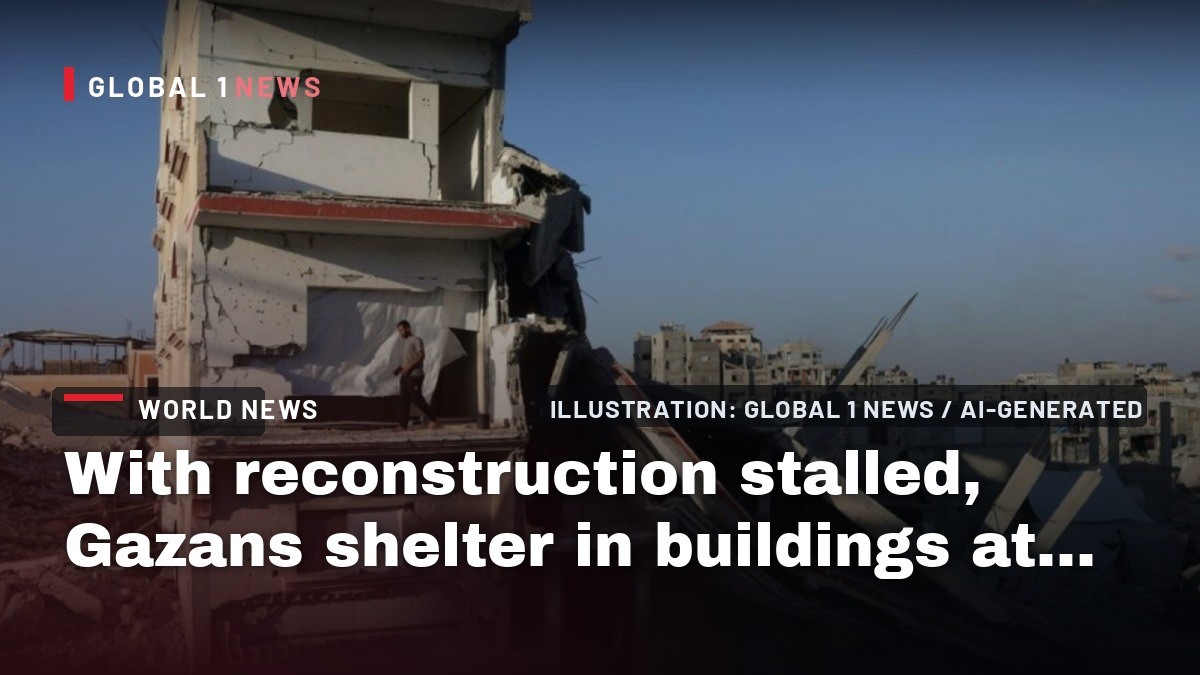
In the cramped corridors of Gaza City’s Al‑Shati refugee camp, Heba Arafat steadies herself on a slanted floor, the water bottle she set down rolling away as the room tilts. The tilt is the visible symptom of a deeper crisis: a housing stock devastated by three years of conflict, a civilian population forced to choose between unsafe shelters and open‑air displacement camps, and a reconstruction effort that remains stalled despite a ceasefire that began in October 2025.
The human cost of a tilted skyline
For Arafat, a 47‑year‑old mother of six daughters, the decision to return to a four‑storey building that “collapsed inward at the ground floor” was not a choice but a necessity. “We were forced to live here because we had nowhere else to go,” she told reporters, echoing the sentiment of thousands who have been displaced repeatedly since the war erupted in October 2023. The building, now home to about 30 residents, bears the scars of an Israeli ground operation that, according to local authorities, caused the structural failure.
Even as the building leans, daily life continues. Windows are missing, replaced by makeshift curtains of bedsheets that offer little privacy. Yet the alternative—crowded tents in humanitarian camps—poses its own dangers. Overcrowding and inadequate waste disposal have fueled outbreaks of skin infections such as impetigo, making the dilapidated apartments seem a comparatively safer haven despite the ever‑present risk of collapse.
Scale of damage across Gaza
The United Nations estimates that 84 percent of all structures in Gaza had been damaged or destroyed by October 2025. Gaza’s civil defence adds that roughly 2,000 buildings are currently at risk of collapse. These figures translate into a landscape where “hundreds of damaged and unsafe shelters” house displaced families, according to UN humanitarian coordinator Ramiz Alakbarov. The sheer volume of unsafe dwellings underscores why many residents, like Arafat, accept the gamble of staying in compromised buildings.
Recent tragedies illustrate the immediacy of the threat. Last week, a six‑storey building in Gaza City collapsed, killing 21 people, including 12 children. Israeli officials denied striking the building, but local authorities confirmed it had been hit repeatedly by airstrikes. Such incidents fuel a climate of fear, with residents fearing that “a wall or the roof might fall on us,” as Arafat expressed.
Municipal attempts to flag danger
Gaza City municipal staff now patrol streets, marking structures deemed unsafe with stencils. Spokesman Hosni Muhanna warned that these homes “pose a genuine threat to the lives of the displaced persons sheltering inside them, as well as to residents in the vicinity and those in nearby displacement camps.” Yet Muhanna acknowledges the limited options: “Thousands of displaced people are forced to seek shelter in these dilapidated buildings… to escape the hardships of displacement camps that offer no protection against the summer heat or winter cold.”
The municipal effort reflects a broader reality: without a viable alternative, residents are compelled to remain in structures that could collapse at any moment. The markings serve as a grim reminder of the precariousness of daily life, yet they do little to alleviate the underlying shortage of safe housing.
Humanitarian aid under restriction
Since the US‑brokered ceasefire in October 2025, Israel has allowed limited humanitarian aid into Gaza, but it continues to restrict the entry of equipment that could have “military use.” UN spokesman Stephane Dujarric noted in August that this includes large machinery needed to clear rubble and spare parts essential for operating construction tools. The restriction hampers the ability to clear debris and rebuild, leaving residents trapped in a landscape of ruin.
For families like the Arafats, the aid that does arrive often consists of basic necessities, while the tools needed to rebuild homes remain out of reach. The resulting dependency on aid compounds the psychological strain of living under constant threat, as families balance gratitude for food and medicine against the frustration of an unending reconstruction deadlock.
Economic paralysis and the reconstruction impasse
Gaza’s economy lies in tatters. With most commercial activity halted and infrastructure crippled, many residents rely entirely on humanitarian assistance. The lack of heavy equipment and building materials, coupled with ongoing airstrikes, has stalled the reconstruction plans outlined in the ceasefire agreement. The joint assessment by the United Nations, World Bank, and European Union in April projected a need for $71.4 billion in recovery and reconstruction spending over the next decade.
Despite the massive financial requirement, the flow of funds and materials remains choked by security concerns and political stalemate. The “ceasefire process stalled for months,” leaving the reconstruction timeline in limbo. Without a clear pathway to rebuild, the economic stagnation continues to push residents into unsafe shelters, perpetuating the cycle of vulnerability.
Health risks in makeshift shelters
Overcrowded camps, where many displaced families reside, face severe public health challenges. The lack of proper waste disposal has led to outbreaks of skin infections such as impetigo, particularly in camps where sanitation is inadequate. These health threats add another layer of risk for residents, making the decision to stay in a structurally compromised building a calculated trade‑off between immediate physical danger and longer‑term health hazards.
Humanitarian organizations report that the combination of inadequate shelter, limited medical supplies, and ongoing conflict has strained Gaza’s already fragile health system. The risk of disease spread in densely populated camps underscores why families like Arafat’s may prefer the relative privacy of a damaged apartment, despite the looming threat of collapse.
Looking ahead: the need for a pragmatic solution
The situation in Gaza remains a stark illustration of how protracted conflict translates into everyday insecurity for civilians. While the UN’s 84 percent damage statistic and the 2,000 at‑risk buildings paint a picture of widespread devastation, the lived experience of families like the Arafats reveals the human dimension behind the numbers.
For any meaningful improvement, a pragmatic approach is required: easing restrictions on construction equipment, accelerating the flow of reconstruction funds, and establishing clear, enforceable safety standards for shelters. Until such measures are taken, Gaza’s residents will continue to navigate a landscape where every step may be taken on a slanted floor, and every night may be spent under the shadow of a building that could collapse at any moment.
This article was produced with AI-assisted research and editorial support. Reporting is based on the source material cited below. Sources: Al-Monitor; al-monitor.com; Global1.News (23 September 2026).
By Hannah Berg, Staff Writer
What's Your Reaction?
 Like
0
Like
0
 Dislike
0
Dislike
0
 Love
0
Love
0
 Funny
0
Funny
0
 Wow
0
Wow
0
 Sad
0
Sad
0
 Angry
0
Angry
0

Israel Correspondent at Global1.News. Based in Tel Aviv, covering Israeli politics, security, technology, and society. Provides balanced, deeply-sourced reporting on one of the most closely-watched regions in the world.











Comments (0)