
West Bank 'Brink of Collapse' as Settler Violence Surges
The world's gaze is fixed on Gaza, where ceasefire talks shuffle between capitals and envoys. But 60 miles to the east, a quieter, more insidious crisis is unfolding — one that the United Nations now describes as a "breaking point." The occupied West Bank is being strangled by a surge in settler violence that has trapped families in their homes, displaced thousands, and driven the Palestinian Authority to the edge of financial and political oblivion.
The world's gaze is fixed on Gaza, where ceasefire talks shuffle between capitals and envoys. But 60 miles to the east, a quieter, more insidious crisis is unfolding — one that the United Nations now describes as a "breaking point." The occupied West Bank is being strangled by a surge in settler violence that has trapped families in their homes, displaced thousands, and driven the Palestinian Authority to the edge of financial and political oblivion. While Washington's Middle East envoy Jared Kushner jets back to the region to restart Gaza negotiations, the West Bank burns with barely a mention.
Besieged in Qusra: The West Bank's Silent Emergency as Settler Violence Hits Unprecedented Levels
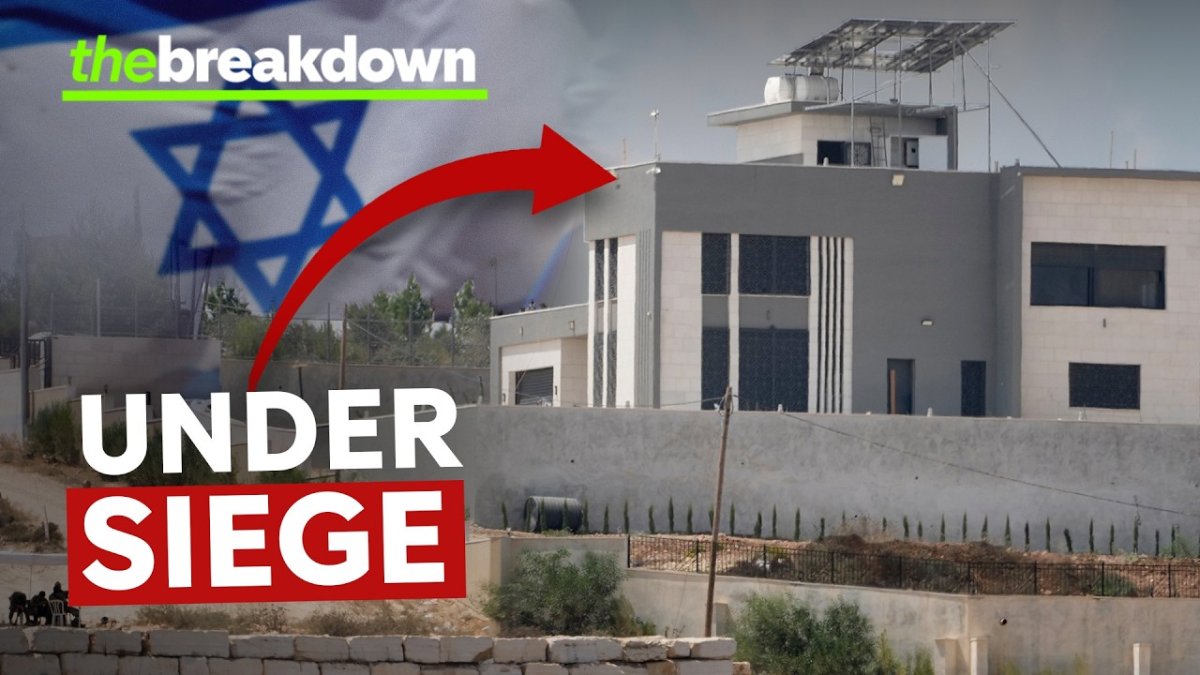
Qusra, Occupied West Bank – 20 August 2026 — For the past week, dozens of Israeli settlers have laid siege to three Palestinian homes on the edge of Qusra village, south of Nablus. Approximately 15 Palestinians, including young children, remain trapped inside without power or running water. The siege is not an anomaly; it is the new normal in a territory the UN warns is on "the brink of collapse."
A Village Under Occupation, Twice Over
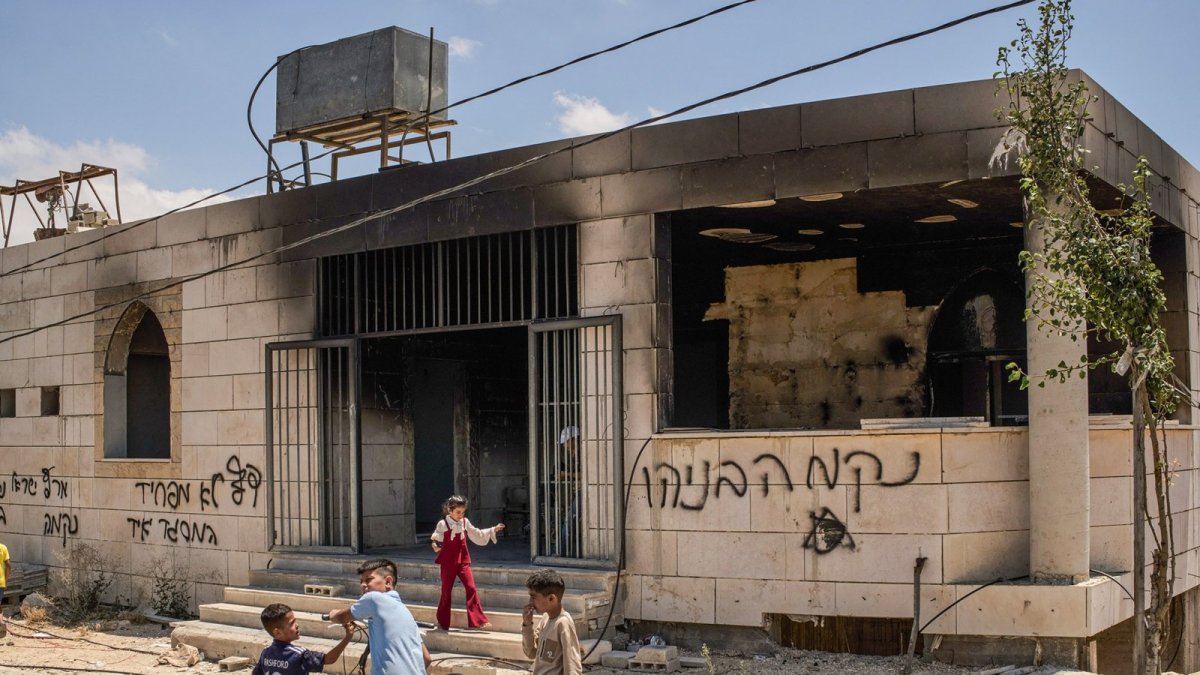
Qusra sits in Area B of the West Bank — territory nominally under Palestinian civil administration but effectively controlled by the Israeli military. The village has become a flashpoint. Last month, its mosque was torched. In March, 28-year-old Amir Moatasem Odeh was shot dead by a settler; no one has been arrested. Now, the Hassan family finds itself at the centre of a stand-off that has drawn international condemnation.
Yousef Hassan, his wife and two young daughters have been trapped since Sunday, when a group of settlers erected a tent outside their home, cutting off access. When his two-year-old daughter fell ill with vomiting and a high fever, an ambulance was blocked from reaching her. The area commander, Gen Avi Bluth, visited on Wednesday and promised to lift the siege, but the tent remained. Israeli forces eventually dismantled the structure and clashed with 50–60 settlers before withdrawing — but not before declaring the entire Qusra area a closed military zone, barring journalists from approaching the Palestinian homes.
Resident Aisha Abu Rida, also under siege, told Al Jazeera: "We are surrounded by settlers, but we are steadfast... we will not leave our home, no matter what happens." Her relative, American-Palestinian Loai Ridi, said his brother Qusai and 18-year-old nephew Ahmed were trapped with only "two to three days" of supplies left. In the neighbouring village of Jalud, a two-week siege in July had already forced two Palestinian families off their land entirely.
The Numbers Behind the Crisis
The siege of Qusra is a microcosm of a territory-wide pattern. According to the UN Office for the Coordination of Humanitarian Affairs (OCHA), more Palestinians were forcibly displaced in the first four months of 2026 than in all of 2025. Settler attacks now average 6.6 per day. At least 15 Palestinians have been killed by settlers as of 24 July 2026 — putting this year on track to surpass the previous record of 16 killings in 2023.
The broader toll is staggering. Since the start of 2026, Israeli authorities have approved or advanced approximately 12,360 housing units in the occupied West Bank, with $431 million allocated to support 34 new settlements. Some 76 Palestinians have been killed by Israeli forces or settlers this year, including 18 children. About 3,800 Palestinians have been displaced — nearly half of them children — with many incidents occurring in the presence of Israeli forces.
B'Tselem, the Israeli human rights organisation, reports that Israel has forcibly displaced 64 Palestinian communities over the past three years, with 15 more losing residents. More than 4,800 people have been driven from their homes. Executive director Yuli Novak is blunt: "Settler militias, backed by the Israeli military, are expanding their attacks into Palestinian villages and towns — seizing land, attacking homes and forcing families out. Israel's ethnic cleansing of the West Bank is accelerating and expanding in plain sight."
Washington's Blind Spot
The silence from Washington is deafening. Last week, US Middle East Envoy Jared Kushner — Donald Trump's son-in-law — returned to the region to restart Gaza peace talks. Yet no one in his delegation is discussing the West Bank. The message is unmistakable: Gaza is a humanitarian priority; the West Bank is an inconvenience.
Even the US ambassador to Israel, Mike Huckabee, has offered only a paradoxical response. He called the group surrounding the Qusra homes "Israeli terrorists" — while simultaneously voicing support for the wider settler movement that enables them. It is a contradiction that encapsulates the broader American approach: condemn the symptom, embrace the cause.
The results speak for themselves. Since 2020, Israeli civilians and soldiers have killed more than 1,100 Palestinians in the West Bank, with only one indictment secured over those deaths. Yesh Din, an Israeli NGO, documents that of hundreds of settler-violence cases since 2005, just 3 per cent resulted in convictions. The impunity is institutionalised.
The Palestinian Authority's Death Spiral
The violence is only half the story. The Palestinian Authority (PA), already weakened by decades of occupation, is being financially asphyxiated. Israel is withholding $6 billion in clearance revenues — taxes collected on the PA's behalf — preventing salary payments to civil servants and crippling basic services. The UN's Deputy Special Coordinator for the Middle East Peace Process, Ramiz Alakbarov, told the Security Council on 11 August that the PA has been driven "to the brink of collapse."
This is not accidental. The combination of settlement expansion, land seizures and financial strangulation creates a self-fulfilling prophecy: the PA becomes unable to govern, which is then cited as justification for further Israeli security control. Human Rights Watch's acting Israel and Palestine researcher, Sarah Sanbar, articulates the dynamic with chilling clarity: "The Israeli government and the settlers share the same goal of maximum land and minimum Palestinians... Settlers shoot, attack, and expel Palestinians from their land, and the state provides the weapons, the legal cover, and the budget to do it."
The human cost is borne disproportionately by children. UNICEF reports that 174 Palestinian children were killed in the West Bank between January 2024 and July 2026. At least 355 Palestinian children are currently held in Israeli detention. With 800,000 children living in the West Bank, an entire generation is growing up under siege, displacement and arrest — a fact with profound implications for any future peace.
Britain's Hollow Condemnations
Britain has not been silent — but its words have yet to translate into action. The UK's representative at the UN Security Council expressed alarm that Israel had approved 104 settlements in four years, an increase of 80 per cent. The Foreign, Commonwealth and Development Office (FCDO) has repeatedly condemned settlement expansion and settler violence, and continues to press for accountability and a two-state solution.
But the gap between rhetoric and reality is widening. France has enacted sanctions against entities and individuals responsible for settler violence and has threatened additional trade measures. Britain, by contrast, has yet to follow suit. The question in Westminster is no longer whether the UK should act, but whether it can afford not to. With Israel-Palestine remaining a live issue in British politics — from student unions to parliamentary select committees — the pressure for concrete measures is mounting.
The Israeli military's response to the Qusra siege has been telling. Chief of General Staff Eyal Zamir ordered an infantry battalion of reservists back from leave to reinforce troops in the West Bank — not to protect Palestinian families, but to manage the fallout of settler violence. The army's declaration of Qusra as a closed military zone effectively shields the settlers from scrutiny while punishing the besieged.
The Bottom Line — What Comes Next
The trajectory is clear, and it is catastrophic. OCHA reports that settler violence has completely or partially displaced 107 communities comprising 5,900 Palestinians since January 2023. Dozens more communities are at risk of erasure, according to Human Rights Watch. If the current pace continues, the West Bank will not merely be on the brink of collapse — it will have collapsed, with the Palestinian Authority reduced to a shell and the two-state solution rendered a historical footnote.
There is still a window for intervention. The UK could join France in imposing targeted sanctions on settler leaders and the organisations that fund them. The FCDO could press for an independent international investigation into the killing of Amir Moatasem Odeh and the hundreds of other unresolved cases. And Washington could — if it chose — condition its support for Israel on an end to settlement expansion. None of this is impossible. All of it requires political will.
For now, the Hassan family remains trapped in Qusra, their daughter recovering from fever, their water cut off, their future uncertain. The world's attention is on Gaza, where peace is being negotiated. But in the West Bank, there is no negotiation — only siege, displacement and erasure. The question is whether anyone will notice before it is too late.
By Erica Thornton, Staff Writer
This article was produced with AI-assisted research and editorial support. Reporting is based on sources cited in the article.
What's Your Reaction?
 Like
0
Like
0
 Dislike
0
Dislike
0
 Love
0
Love
0
 Funny
0
Funny
0
 Wow
0
Wow
0
 Sad
0
Sad
0
 Angry
0
Angry
0

US Politics and Policy Correspondent at Global1.News. Based in Washington DC, covering American politics, policy, elections, and the courts. Knows how the system works and tells you what it actually means.









Comments (0)