
Cape Town water outages: Full list of affected suburbs THIS WEEK
As the City of Cape Town rolls out a week‑long series of water maintenance works, residents across a swathe of suburbs are being urged to brace for disruptions that could range from brief pressure drops to full‑scale shut‑offs.
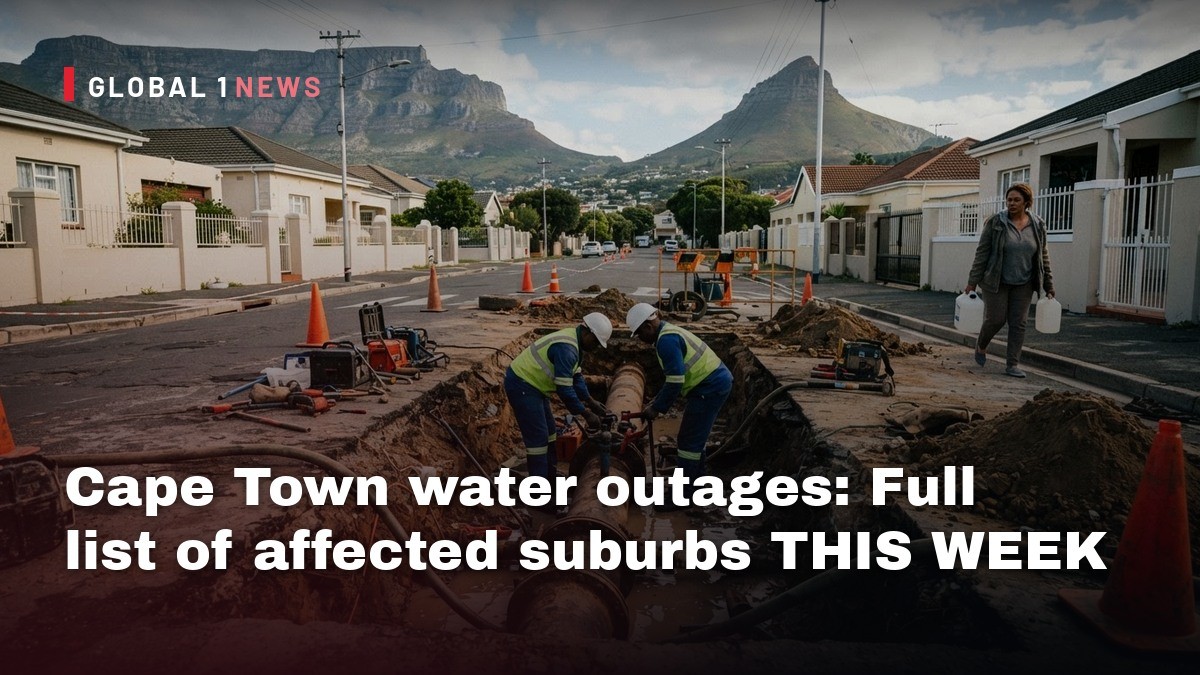
As the City of Cape Town rolls out a week‑long series of water maintenance works, residents across a swathe of suburbs are being urged to brace for disruptions that could range from brief pressure drops to full‑scale shut‑offs. The schedule, which runs from Monday 9 November to Saturday 14 November, is part of a broader push to upgrade pipelines, install new valves, replace meters and test the water network – a push the municipality says will ultimately tighten pressure control and curb losses from leaks and burst pipes. For many Capetonians, the timing feels like a double‑edged sword: the city’s infrastructure needs the overhaul, but the disruptions arrive just as households are still feeling the pinch of recent drought restrictions and rising water bills.
What’s on the timetable: a day‑by‑day breakdown
The maintenance programme kicks off on Monday with a complete water shut‑off in Plumstead from 09:00 to 19:30. Key streets such as Woodgate Road, Southfield Road, Severn Road, Basil Road and Medway Road will see the newly installed pipeline linked to the existing network, and surrounding streets could also feel the impact. While the city conducts leak detection inspections in Welgelegen, Table View, Tokai and Zevenwacht between 09:30 and 15:00, those checks will not interrupt supply.
Tuesday sees a flurry of activity across several suburbs. Plumstead faces another full shut‑off from 09:00 to 19:30, with new connections at Kudu Road and two intersections on Lincoln Road. In the same window, Loevenstein and Hoheizen will experience a complete cut from 09:00 to 19:00 as fresh pipeline links go live. Lotus River, Bantry Bay and Steenberg also sit on the schedule, with shut‑offs ranging from 08:00 to 20:00. In the western suburbs, Hanover Park, Newfields, Athlone Industria, Sand Industria, Pinati Estate, and the stretch of Govan Mbeki Road between Hanover Park Avenue and Becker Street will see either low pressure or total interruptions, with water tankers promised where needed.
Wednesday’s focus shifts to the Cape Town CBD, where Buitengracht Street and possibly surrounding streets will be shut off from 09:00 to 18:30 for a new meter installation between Military Road and Leeuwen Street. Meanwhile, water network testing from 09:00 to 16:00 could cause low pressure in areas such as Fairways, Parkwood, Olive Grove, Bizweni, Diep River, Wynberg, Helderzicht, Lourensia Park, Paardevlei, Garden Village, Victoria Park, Silvertas, Carey Park and Tamboerskloof.
Thursday repeats the Plumstead shut‑off from 09:00 to 19:30, this time covering the block bounded by Morton, Tiverton, Exeter, Thornbury and Hemyock Roads. Steenberg will again see work from 08:00 to 20:00 on Lake Road, Regis Road, Easson Road, Bergen Road, Steenberg Road and Vrede Road. Additional low‑pressure zones include Capricorn, Saxenberg Park, Tamboerskloof and Gardens, while Rondebosch East, Kenwyn, parts of Lansdowne, Penlyn Estate, Pinati Estate, Belthorn and Rylands will feel reduced pressure from 09:00 to 17:00.
The final day, Saturday, is slated for completion of the new 535mm water main connections, with the city aiming to have the rerouted alternative supply fully operational by the end of the week.
How the outages will hit everyday life
For households, a full shut‑off means no water for cooking, washing or sanitation during the allotted window. The city’s advice is clear: store enough clean, sealed water for drinking, cooking, washing and personal hygiene before the work begins. In areas where only pressure drops are expected, residents may notice weaker flows from taps, longer fill times for bathtubs and potential sputtering from showerheads. The municipality also warns that water may appear milky or discoloured after supply is restored – a temporary effect of trapped air in the pipes that should clear if the water is left to stand.
Businesses, especially those in the hospitality and retail sectors, will need to adjust opening hours or rely on water tankers to keep kitchens and restrooms functional. The city has pledged tankers where required, but the logistics of delivering water to densely populated suburbs like Plumstead, Steenberg and the CBD could stretch resources thin. Small enterprises that rely on a steady water flow – from laundromats to car washes – will have to plan around the shut‑off windows or risk lost revenue.
Why the upgrades matter for Cape Town’s water future
The maintenance programme is part of a longer‑term strategy to modernise Cape Town’s aging water infrastructure. By installing larger‑diameter mains, such as the new 535mm pipe, the city aims to improve pressure management across the network, reducing the frequency of low‑pressure incidents that have become commonplace in older suburbs. Upgraded valves and meters will also help detect leaks earlier, a crucial step in a city that still grapples with water loss from burst pipes and illegal connections.
Improved infrastructure is also tied to the city’s broader climate resilience agenda. With water scarcity still a pressing concern, especially after the severe droughts of the early 2020s, ensuring a reliable supply network is essential for both domestic use and the city’s economic engines – from tourism to the burgeoning tech hub in the Cape Town International Convention Centre precinct.
Community response and the politics of water
Residents have taken to social media platforms, including the city’s official X handle @CityofCTAlerts, to voice concerns about the timing and extent of the shut‑offs. In neighborhoods like Hanover Park and Pinati Estate, community leaders have organised neighbourhood watches to monitor water tanker arrivals and ensure equitable distribution. The call for transparency echoes broader debates in South Africa about water governance, where municipal water boards have faced criticism over service delivery and alleged mismanagement.
Local politicians have also weighed in, urging the city to accelerate infrastructure upgrades while minimizing disruption to vulnerable households. The tension between urgent upgrades and the immediate inconvenience to residents reflects a familiar South African narrative: the need to balance long‑term development with short‑term hardship, especially in historically underserved areas.
Practical tips for residents
Beyond storing water, the city recommends keeping taps closed during scheduled interruptions to prevent air ingress that could exacerbate the milky water effect once supply resumes. Residents should also label stored water containers with dates to rotate supplies and avoid stagnation. For those in areas with only reduced pressure, installing a water storage tank or a simple gravity‑fed system can provide a buffer during peak usage times.
Staying informed is crucial. The City of Cape Town will continue to post updates on @CityofCTAlerts, and residents are encouraged to monitor local radio stations and community WhatsApp groups for real‑time tanker locations. In the event of an extended outage, the municipality’s customer service centre remains the point of contact for reporting issues or requesting additional support.
Looking ahead: what the week tells us about Cape Town’s water trajectory
The week’s extensive maintenance schedule underscores how much work lies ahead to future‑proof the city’s water supply. While the immediate inconvenience is palpable, the upgrades promise a more resilient network capable of handling growth and climate pressures. If the city can keep the disruptions to a minimum and ensure water tankers reach the most affected suburbs promptly, the public’s patience may be rewarded with fewer low‑pressure incidents and a slower rate of water loss in the months to come.
For South Africans watching from other provinces, Cape Town’s approach offers a case study in balancing large‑scale infrastructure works with community engagement. As the nation grapples with water security across the board, the lessons learned here – from clear communication to rapid response logistics – could inform similar projects in Johannesburg, Durban and the Eastern Cape. In the meantime, Capetonians will need to roll up their sleeves, fill their jerrycans and ride out the week’s disruptions, keeping an eye on the broader goal of a more reliable water future for all.
This article was produced with AI-assisted research and editorial support. Reporting is based on the source material cited below. Sources: The South African; thesouthafrican.com; Global1.News (09 November 2026).
By Dante Williams, Staff Writer
What's Your Reaction?
 Like
0
 Dislike
0
 Love
0
 Funny
0
 Wow
0
 Sad
0
 Angry
0

Breaking News and Investigations Correspondent at Global1.News. Based in London, covering global breaking news, security, and investigative stories. Known for digging deeper and connecting the dots across continents.













Comments (0)