
Trump’s Drill Cut Reignites South Korea’s Nuclear Debate
The abrupt decision by US President Donald Trump on August 16, 2026, to order a substantial reduction in joint military exercises with South Korea has plunged the alliance into its most severe crisis of confidence in decades.
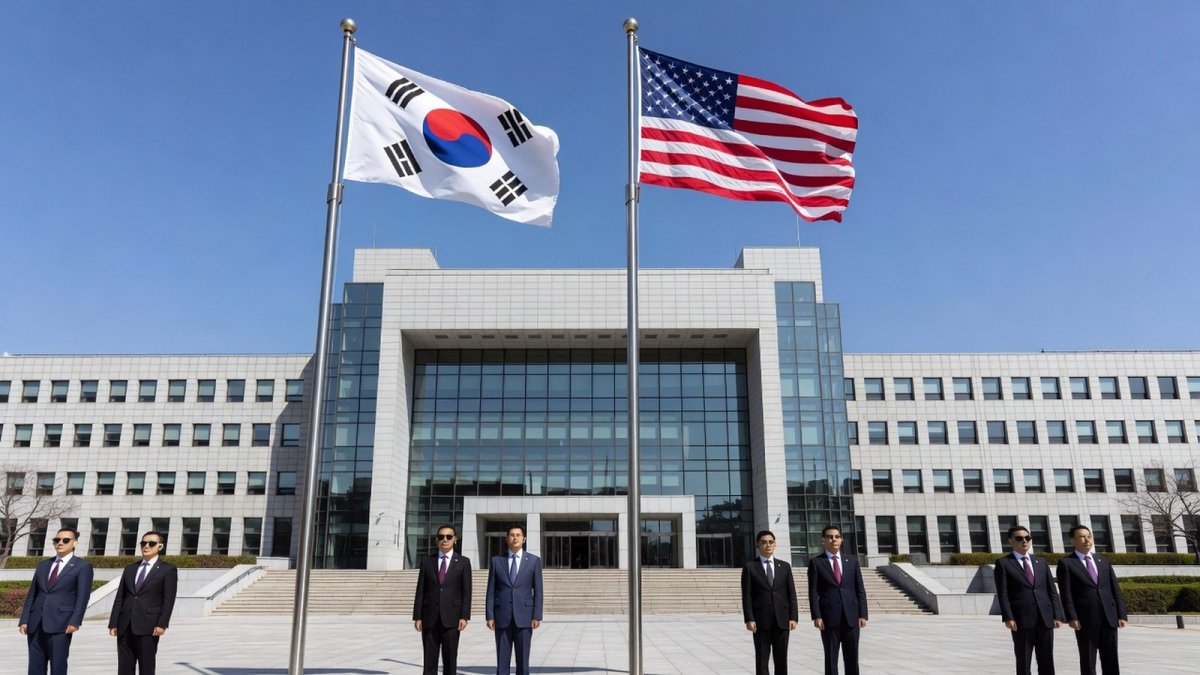
The abrupt decision by US President Donald Trump on August 16, 2026, to order a substantial reduction in joint military exercises with South Korea has plunged the alliance into its most severe crisis of confidence in decades. Coming without prior consultation with Seoul, the move has not only disrupted the scheduled Ulchi Freedom Shield (UFS) exercise but has also dramatically intensified the long-simmering debate over whether South Korea should pursue its own nuclear deterrent. As President Lee Jae Myung navigates this volatile landscape, the foundational assumptions of the US-South Korea alliance—extended deterrence, shared sacrifice, and mutual trust—are being called into question with an urgency not seen since the Cold War.
The Trigger: A Unilateral Decision and Its Immediate Fallout
The catalyst for the current turmoil was President Trump’s directive to the Pentagon to "substantially reduce" the scale of combined military training. In his public statement, Trump characterized the nuclear-armed North as "unthreatening and respectful," citing his "very good relationship with Kim Jong-un." The decision, which also referenced South Korea's refusal to join the US war against Iran, was made without consulting the administration of President Lee Jae Myung. The immediate consequence was the truncation of the Ulchi Freedom Shield exercise, which had been scheduled to run from August 17 to 27. On August 19, the South Korean Joint Chiefs of Staff announced that the second half of UFS would be cancelled at the US request, with the exercise concluding on August 21. While South Korean Defense Minister Ahn Gyu-baek has insisted that exercises will continue throughout the year, the symbolic and operational damage is done. This is not the first time Washington has scaled back military cooperation. In 2018, following the first US-North Korea summit in Singapore, combined exercises were similarly reduced. However, the current context is markedly different. North Korea has since expanded its arsenal, forged a significant military alliance with Russia, and formally designated South Korea as its primary enemy, renouncing any pursuit of unification. The unilateral nature of Trump’s decision, coupled with his rationale, has led South Korean lawmakers to describe the move as an "inane, haphazard decision" that guts the very foundation of the alliance. The Hankook Ilbo editorial on August 18 captured the national mood, stating that Trump’s announcement "reveals the stark reality of a faltering Korea-U.S. alliance, fueling public anxiety... It's absurd that the U.S. appears to treat North Korea more respectfully than its ally South Korea."Lee Jae Myung’s Response: Alliance and Self-Reliance
President Lee Jae Myung’s response has been a delicate balancing act between reaffirming the alliance and accelerating South Korea’s self-reliant defense capabilities. At a regular Cabinet meeting on Tuesday, August 18, Lee stressed the importance of a firm military alliance, stating, "National security will be further strengthened when the alliance is solid." He added, "When we build up our strengths, our value and importance as an ally will further grow." This rhetoric seeks to frame the crisis not as a rupture but as an opportunity to recalibrate the relationship on more equitable terms. Crucially, Lee, a liberal who has long advocated for a stronger indigenous defense posture, has called for proceeding without disruption with the planned transfer of wartime operational control (OPCON) of South Korean forces from the US. This transfer, a goal for over two decades, would place the South Korean military under its own command during wartime, with the US playing a supporting role. Lee also urged faster progress on South Korea’s nuclear-powered submarine program and the development of officers capable of integrated operations. This dual-track approach—clinging to the alliance while building independent capabilities—reflects a pragmatic recognition that Seoul cannot simply wish away its security dilemma, but it also cannot rely solely on a partner whose reliability is now demonstrably conditional.The Nuclear Question: Public Opinion and Strategic Reality
The immediate trigger for the nuclear debate is the erosion of trust in the US "nuclear umbrella," or extended deterrence. The Washington Declaration of April 2023, signed by then-President Yoon Suk Yeol and President Joe Biden, established the Nuclear Consultative Group (NCG) to strengthen this deterrence. However, the current administration’s actions have severely undermined the credibility of that commitment. Confidence had already been eroded by Trump’s tariff war and a 2025 immigration raid in Georgia that led to the detention of hundreds of South Korean workers. The drill cut is seen by many as the final proof that the US commitment is not absolute. Public opinion has shifted dramatically. According to the Asan Institute for Policy Studies’ "South Koreans and Their Neighbors 2025" poll (March 2025, n=1,000), a record 76.2% of South Koreans support acquiring an indigenous nuclear weapons capability, while 66.3% support the redeployment of US tactical nuclear weapons to the Korean Peninsula. This is a significant increase from a 2023 Asan poll, which found 64.3% support for Seoul independently building its own weapons. These numbers reflect a profound psychological shift in a society that has long relied on the US security guarantee. The debate is no longer confined to fringe nationalists; it is a mainstream political and strategic question.Historical Precedents: The Park Chung-hee Program
The current debate is not without historical precedent. In the late 1970s, under President Park Chung-hee, South Korea pursued a clandestine nuclear weapons program, according to declassified US documents. That program was ultimately abandoned under intense US pressure. The memory of that episode serves as a cautionary tale. It demonstrates both Seoul’s capacity and willingness to pursue a nuclear path when it feels abandoned, and the immense leverage Washington can exert to stop it. Today, the geopolitical landscape is different—South Korea is a global economic powerhouse with advanced technological capabilities—but the fundamental dynamic remains. The question is whether the US still has the leverage, or the will, to dissuade its ally from crossing the nuclear threshold.The Jangbogo-N Submarine Program: A Latent Capability
A more immediate and tangible manifestation of Seoul’s drive for strategic autonomy is the nuclear-powered submarine program. In May 2026, the Ministry of National Defense formally unveiled its "Basic Plan for the Development of the Republic of Korea Nuclear-Powered Submarine," initiating the Jangbogo-N Project. The roadmap projects the launch of the first nuclear-powered attack submarine (SSN) in the mid-2030s, using low-enriched uranium reactors. This program is a direct response to North Korea’s own submarine ambitions, which were revealed in December 2025 with the unveiling of an 8,700-ton nuclear submarine. The Jangbogo-N project is a strategic stepping stone. While it does not give Seoul a nuclear weapon, it provides a potent, survivable second-strike capability and, more importantly, develops the technological and industrial infrastructure for a potential nuclear program. The Institute for the Study of War (ISW) noted on August 4, 2026, that South Korea will legislate its nuclear nonproliferation commitment regarding SSN development into law, a move likely intended to quell concerns about nuclear latency and accelerate acquisition. However, the project depends on securing a nuclear fuel supply, which could require US congressional review, creating a potential point of friction. North Korea, acutely aware of this, is seeking to hinder the program by accusing South Korea of seeking to acquire nuclear weapons, as noted by ISW on August 19.North Korea’s Calculus and the Russia Factor
North Korea’s response to the crisis has been characteristically defiant. Kim Yo Jong, sister of Kim Jong Un and Director of General Affairs of the WPK, stated on August 19 that the reduction of UFS is meaningless, as it does not change the exercise’s "provocative and aggressive" nature. She rejected Trump’s claim of direct communication with her brother, while reiterating that Kim has positive personal feelings toward Trump. This nuanced message underscores that North Korea’s security policies and nuclear posture will continue regardless of personal relationships between leaders. Trump, for his part, has confirmed plans to meet Kim Jong Un during his upcoming visit to Asia, claiming that Kim responded positively to his August 16 message. However, analysts cited by AP suggest that Kim is unlikely to embrace Trump’s overture and return to talks unless he is promised significantly larger concessions. Kim has shunned talks with the US and South Korea since his high-profile diplomacy with Trump collapsed in 2019. At the WPK’s Ninth Party Congress in February 2026, Kim expressed conditional openness to dialogue, but only if the US accepts the regime’s nuclear status. The recent missile launch from Wonsan on August 12, 2026, which was not publicly reported—a rare departure—signals that North Korea continues to advance its capabilities. Furthermore, the alliance with Russia, forged over the war in Ukraine, has provided Pyongyang with advanced military technology and battlefield experience, which has been incorporated into its drill lessons. This makes the North a more formidable and unpredictable adversary.Strategic Implications and the Path Forward
The current crisis represents a fundamental inflection point for the US-South Korea alliance. The Lee administration has stated it hopes the Trump-Kim relationship will lead to dialogue, with South Korea contributing as a "pacemaker." Its "peaceful coexistence" policy toward the North has centered on goodwill gestures. However, this approach is now under severe strain. The unilateral US decision has empowered those in Seoul who argue that the alliance is a liability, not an asset. The path forward is fraught with complexity. For Seoul, the immediate priority is to manage the alliance crisis while accelerating its own defense programs. The push for OPCON transfer and the Jangbogo-N submarine are concrete steps toward a more self-reliant posture. However, a full nuclear weapons program remains a red line that would have catastrophic consequences for the nonproliferation regime and would likely trigger severe international sanctions. The challenge for President Lee is to channel public anger into a constructive, long-term strategy that strengthens South Korea’s position without triggering a regional arms race or a rupture with Washington. The US, for its part, must recognize that its actions have consequences. Treating a treaty ally with less respect than an adversary is a strategic error of immense proportions. The credibility of the US security commitment in the Indo-Pacific is now on the line, and the world is watching to see if the alliance can survive this self-inflicted wound.This article was produced with AI-assisted research and editorial support. Sources: The Diplomat, Yonhap, AP News, NPR, The Guardian, ISW Korean Peninsula Update, Asan Institute for Policy Studies.
By Prof. David Park, Staff Writer
What's Your Reaction?
 Like
0
Like
0
 Dislike
0
Dislike
0
 Love
0
Love
0
 Funny
0
Funny
0
 Wow
0
Wow
0
 Sad
0
Sad
0
 Angry
0
Angry
0

Prof. David Park
East Asia/Technology Correspondent at Global1.News. Seoul-based voice covering Korean politics, technology, business, and culture. Analyzes how technology and geopolitics intersect across East Asia.













Comments (0)