
Water Companies Face Record Pollution Year as Ofwat Approves £3.4bn Bill Rise
England’s water monopolies are on course for their worst year of pollution on record, new data obtained by Channel 4 News reveals, even as regulators hand the industry permission to extract another £3.4 billion from household bills. The twin revelations, published on the same day the country sweltered through its hottest day of the year, lay bare the scale of the crisis gripping the sector.
England’s water monopolies are on course for their worst year of pollution on record, new data obtained by Channel 4 News reveals, even as regulators hand the industry permission to extract another £3.4 billion from household bills. The twin revelations, published on the same day the country sweltered through its hottest day of the year, lay bare the scale of the crisis gripping the sector.
Water Companies Face Record Pollution Year as Ofwat Approves £3.4bn Bill Rise
London, UK – 14 August 2026 — Britain’s water companies are responsible for 59 serious pollution incidents in the first six months of 2026 alone, according to data released under Freedom of Information rules and shared with Channel 4 News. The figures, reported by Clare Fallon, North of England Correspondent, suggest the industry is on track to record its worst ever year for toxic sewage and chemical spills, despite a summer drought that should have reduced pressure on the network.
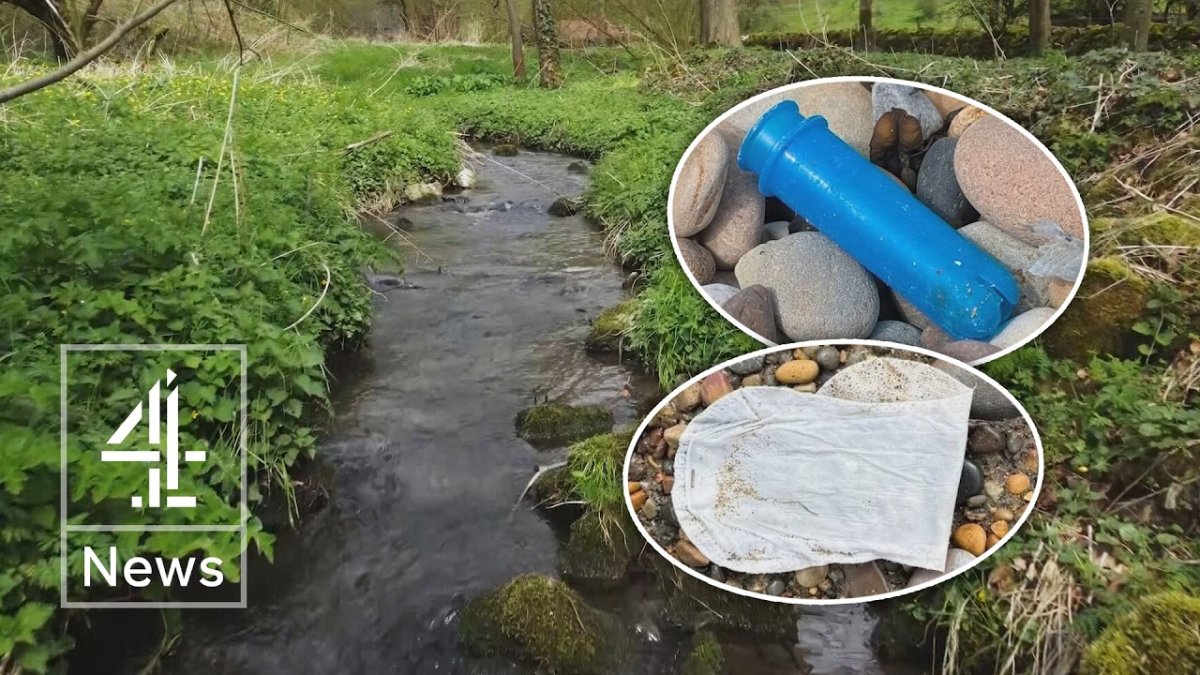
Record-Breaking Pollution: The Worst Year in a Decade
The FOI data, also reported by The i Paper’s Environment Correspondent Lucie Heath, shows the highest number of serious pollution incidents in at least a decade. If the current rate continues through the second half of 2026, serious incidents would be more than 50 per cent higher than last year and more than double the amount recorded in 2023. The data is preliminary and subject to change following Environment Agency (EA) investigations, but the trajectory is unambiguous.
These are not minor breaches. The 59 incidents include toxic sewage discharges and chemical spills that can kill fish, destroy river ecosystems, and force beach closures at popular bathing spots. The fact that this is happening during a heatwave — with record temperatures of 38.1°C recorded at Kew Gardens on 13 August — makes the damage worse. In drought conditions, river flows are low, meaning sewage and chemical pollution is less diluted and far more destructive to aquatic life.
Ofwat’s £3.4bn Gift: Five Firms Cleared to Raise Bills
Just one day before the pollution data emerged, Ofwat — the water regulator for England and Wales — provisionally approved up to £3.4 billion of additional spending across 13 water companies. Crucially, five suppliers have been given permission to pass those costs directly onto customers: Thames Water, Severn Trent Water, Southern Water, Wessex Water and South East Water.
This comes on top of the 36 per cent increase in bills Ofwat already allowed between 2025 and 2030, with an average rise of 5.4 per cent from April 2026. For households in the South West, where Wessex Water operates, the cumulative impact is severe. A typical family in Devon or Cornwall is now paying hundreds of pounds more per year than they were in 2024 — and they are being asked to absorb yet more.
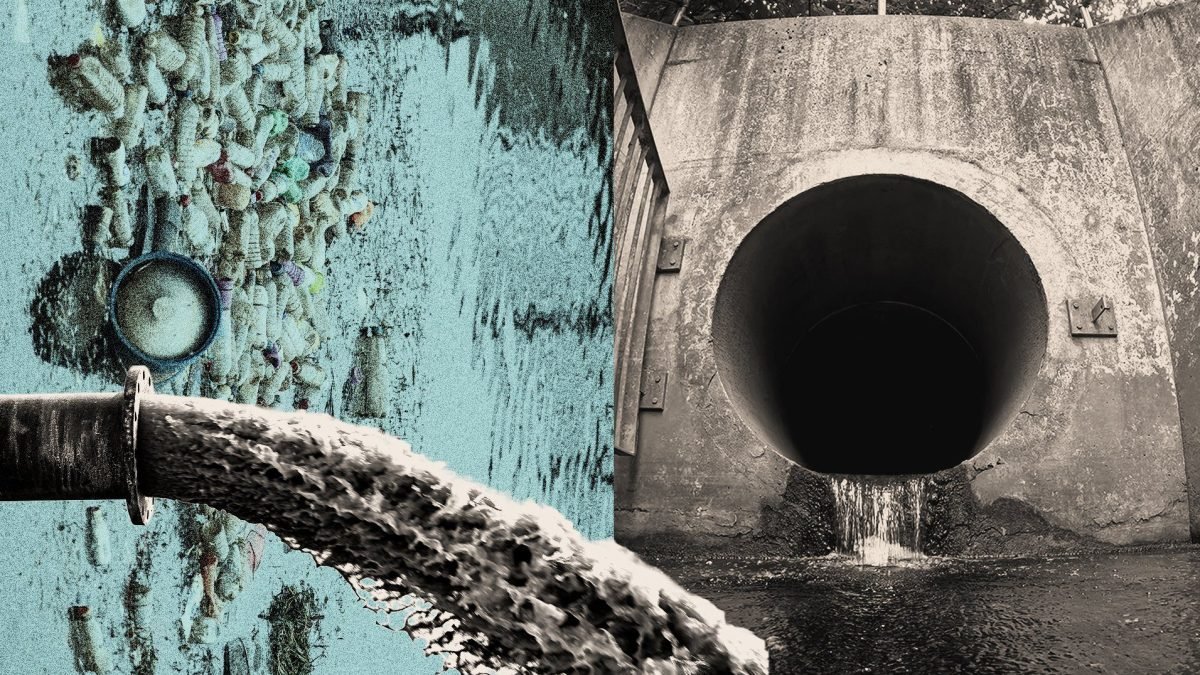
Downing Street’s Anger: Burnham Says Customers Are Not a ‘Blank Cheque’
Prime Minister Andy Burnham did not mince words in response to the dual announcements. “I understand why people are angry – I am too. The truth is customers have been asked to pay more for years, yet serious pollution incidents are at record levels and the pipes are still leaking. None of which is the billpayer’s fault, who should not be treated as a bottomless source of funding for other people’s failures,” he said.
Burnham went further, issuing a direct warning to the industry: “Customers cannot be treated as a blank cheque. Where water companies seek to pass unnecessary costs on to households, they will be challenged.” The Prime Minister’s language signals a potential shift in Government policy, though no formal intervention has yet been announced. The question is whether this is rhetoric or the precursor to real regulatory teeth.
The Regional Toll: From the Thames Valley to the North West
The impact of these 59 incidents is not abstract — it is felt in specific rivers, beaches, and communities across England. In the Thames Valley, Thames Water’s ageing infrastructure has been implicated in repeated sewage discharges into the River Thames and its tributaries, affecting rowers, anglers, and families who use the river for recreation. In the North West, United Utilities has faced scrutiny over spills into the River Irwell and Lake Windermere, a jewel of the Lake District that has suffered algal blooms linked to sewage nutrients.
In the South West, the region’s famous bathing waters — from St Ives to Bournemouth — are under threat. Surfers Against Sewage, the campaign group, has repeatedly flagged pollution alerts at popular beaches, and the summer heatwave has only intensified public anger. With hosepipe bans in place across much of southern England and wildfires burning in the West Midlands, the contrast between the industry’s financial health and its environmental record could not be starker.
The regional picture is uneven, and the crisis is not confined to one corner of England. In the South West, bathing waters at popular beaches have repeatedly failed water quality standards, with storm overflows discharging raw sewage into the sea after heavy rain. In the North West, rivers such as the Ribble and the Mersey have seen algal blooms and fish kills, while the Thames Valley — despite its affluent reputation — has some of the highest rates of sewage spills in the country. The irony is that these problems occur against a backdrop of drought conditions in parts of the south-east, where reservoirs are running low. The same infrastructure that fails to contain sewage in wet weather is also failing to retain water in dry spells, exposing the fragility of a system designed for a different climate and a different era.
For campaign groups such as Surfers Against Sewage and River Action, the 59-incident figure is the latest proof of what they have argued for years: that sewage discharges are not an occasional accident but a systemic failure, and that bill rises are being used to fund shareholder returns rather than infrastructure repair. The Freedom of Information request that exposed the scale of the problem has stoked public anger precisely because it contradicts the industry’s own narrative of improvement. When families are told to avoid their local beach or river, and then learn that bills are rising again, the sense of betrayal is acute — and it is amplified by the knowledge that the companies themselves have chosen to prioritise dividends over environmental compliance.
The Financial Picture: Profits, Debt, and Dividends
The water industry’s financial position is central to this story. Water companies collectively made billions of pounds in profits last year, while customer bills increased. Yet much of that profit is not being reinvested in infrastructure — it is going to debt interest payments and shareholder dividends. Thames Water, Britain’s biggest supplier with around 16 million customers, is on the brink of collapse under a debt mountain of more than £20 billion. Creditors are currently seeking a rescue deal to stave off temporary nationalisation.
The Consumer Council for Water (CCW), which represents customers, has demanded Ofwat show “every pound of this additional £3.4 billion is necessary.” The watchdog’s intervention reflects growing public scepticism about whether bill increases are funding genuine improvements or merely servicing the industry’s financial engineering. With bills rising faster than inflation and pollution at record levels, the burden of proof is firmly on the companies.
The roots of today’s crisis lie in the 1989 privatisation of the water industry, when Margaret Thatcher’s government sold off the regional water authorities to private investors, promising efficiency and investment. Three decades on, the sector has become a byword for financial engineering: companies have loaded up on debt to fund dividends and shareholder payouts, while the physical infrastructure — pipes, sewers and treatment works — has been allowed to decay. The contrast with the publicly owned model is stark: in 1989, the industry carried virtually no debt; today, the sector’s combined borrowings run to tens of billions of pounds, and critics argue that the public has effectively paid twice — once through bills, and again through the environmental and health costs of neglect.
Ofwat’s “provisional” approval of the £3.4 billion package is not a final green light. The regulator will now run a consultation period, likely to last several months, before making a final determination. The rationale cited by Ofwat is pragmatic: new housing developments, the energy demands of data centres, and the need to remove “forever chemicals” such as PFAS from drinking water all require capital investment. But the process is opaque to the public, and the consultation is largely a technical exercise between the regulator, the companies and industry consultants. There is no mechanism for customers to vote on the trade-off between higher bills and cleaner rivers — a democratic deficit that is becoming harder to ignore.
Enforcement: New Powers, Old Questions
Enforcement has long been the weak link in the regulatory chain. Until this summer, the Environment Agency needed to prove offences to the criminal standard of proof, making penalties too expensive and time-consuming to pursue. That changed on 7 July 2026, when new powers under the Water (Special Measures) Act came into force: the regulator can now impose civil penalties of up to £500,000 using the lower civil standard of proof, and automatic £10,000 “speeding ticket” fines for clearly defined breaches — doubling if unpaid within 28 days. Penalties are scaled to the size of the company, meaning they cannot simply be factored into the cost of doing business, and Environment Secretary Emma Reynolds has promised the regulator “the teeth it needs to deliver cleaner rivers, lakes and seas.” The question is whether these powers, applied to the 59 incidents under investigation, will finally change behaviour where years of voluntary promises have not.
The Bottom Line — What Comes Next
The convergence of these two stories — record pollution and record bill increases — creates a political and regulatory flashpoint. The Environment Agency’s investigations into the 59 incidents will determine whether any companies face enforcement action, but past experience suggests fines are often a fraction of the profits at stake. Ofwat’s provisional approval of the £3.4 billion package is subject to consultation, and the regulator could still face legal challenges from consumer groups.
For the Government, the pressure is mounting. Andy Burnham’s tough words will need to be backed by action, whether that means blocking bill increases, imposing binding pollution reduction targets, or finally taking Thames Water into public ownership. For households across England, the immediate reality is stark: they are paying more, getting less, and watching their rivers and beaches suffer the consequences. The question now is whether this is the moment the political establishment finally acts — or whether the water companies, as they have done for decades, simply weather the storm.
For readers who want to take action, the first step is simple: check the bathing water quality at your local beach or river via the Environment Agency’s online map, which is updated weekly during the season. If you spot pollution — whether it is sewage, foam, or dead fish — report it to the Environment Agency’s 24-hour hotline, and keep a record of the reference number. Then, write to your MP and ask three specific questions: what is being done to strengthen the fines regime, why are bill increases being approved without a public vote, and what steps are being taken to ensure that dividends are suspended until infrastructure is brought up to standard. The answers may be evasive, but the questions themselves are now part of the national conversation — and that is a start.
By Erica Thornton, Staff Writer
This article was produced with AI-assisted research and editorial support. Reporting is based on sources cited in the article.
What's Your Reaction?
 Like
0
Like
0
 Dislike
0
Dislike
0
 Love
0
Love
0
 Funny
0
Funny
0
 Wow
0
Wow
0
 Sad
0
Sad
0
 Angry
0
Angry
0

US Politics and Policy Correspondent at Global1.News. Based in Washington DC, covering American politics, policy, elections, and the courts. Knows how the system works and tells you what it actually means.













Comments (0)