
US detains man accused in multi-billion Venezuelan money laundering scheme
The arrest of Álvaro Pulido, a 62‑year‑old Colombian businessman, marks a new chapter in the United States’ relentless pursuit of the massive money‑laundering networks that have been siphoning resources from Venezuela’s most vulnerable citizens.
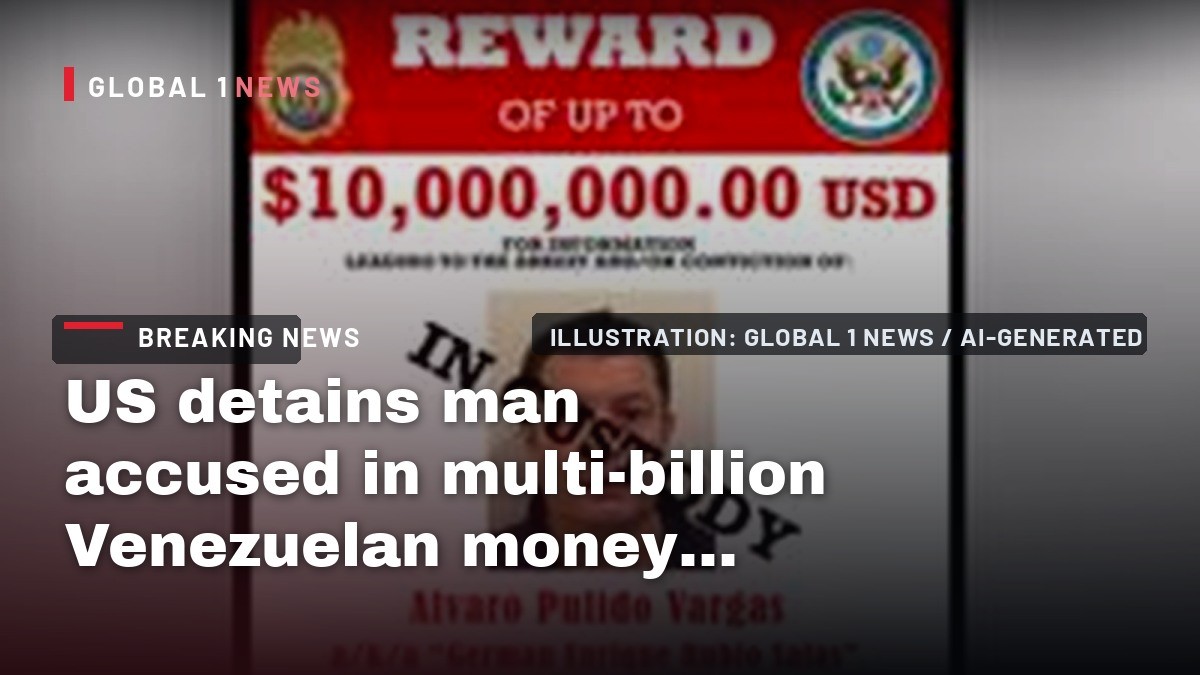
The arrest of Álvaro Pulido, a 62‑year‑old Colombian businessman, marks a new chapter in the United States’ relentless pursuit of the massive money‑laundering networks that have been siphoning resources from Venezuela’s most vulnerable citizens. Pulido, who had been held in a Venezuelan prison since early 2023 on accusations of diverting profits from the state oil giant PDVSA, was taken into U.S. custody during a Homeland Security Task Force operation on Sunday. While officials have not disclosed how he was transferred to the United States, the case underscores a broader strategy: to dismantle the financial arteries that sustain corruption and humanitarian crises across the region.
From Venezuelan Prison to U.S. Federal Court
The Department of Justice confirmed Pulido’s arrest but offered few operational details, noting only that he will appear before a federal court on Tuesday. The arrest follows a pattern of high‑profile detentions that began with the U.S. Drug Enforcement Administration and the State Department’s public offer of a $10 million reward for information leading to Pulido’s capture. This bounty, announced alongside a broader crackdown on illicit financial flows, signals the depth of U.S. commitment to tracking down those who profit from Venezuela’s misery.
Pulido’s legal troubles began in March 2023, when Venezuelan authorities jailed him on charges of diverting oil revenues from PDVSA. The allegations claim he overcharged the state for contracts meant to deliver food and medicine to impoverished communities, then funneled the excess profit through overseas accounts, including those in the United States. The U.S. indictment expands on these claims, charging Pulido in two separate federal cases with laundering more than $2 billion tied to Venezuelan government bribery schemes.
The Scope of the Alleged Scheme
According to prosecutors, Pulido and four co‑defendants bribed Venezuelan officials to secure contracts for essential supplies. The indictment alleges that the contracts were deliberately inflated, allowing the conspirators to pocket massive sums. Those profits, the Justice Department says, were laundered through a network of bank accounts abroad, masking the illicit origin of the funds and enabling the conspirators to enjoy the proceeds in foreign jurisdictions.
In addition to the broader $2 billion laundering operation, the indictment links Pulido to a separate $350 million scheme involving the Venezuelan currency exchange system. That operation, prosecutors say, was conducted in partnership with Alex Saab, another Colombian businessman who has long been a close associate of the Maduro regime. The two allegedly used bank accounts in Florida to move the money, exploiting the United States’ financial infrastructure to conceal the source of the funds.
Alex Saab: A Parallel Case
Saab’s own legal saga provides context for Pulido’s arrest. In the months preceding Pulido’s capture, Saab—once named minister of industry by President Nicolás Maduro in 2024—pleaded guilty to money‑laundering charges in a U.S. court. His downfall accelerated after a dramatic turn of events in January, when U.S. forces seized Maduro in a raid on Caracas and transported the former president to New York to face drug‑trafficking allegations.
Following Maduro’s removal, the U.S.–backed interim government in Venezuela quickly dismissed Saab from his ministerial post and, in May, extradited him to the United States. Saab’s guilty plea, which involved a $195 million money‑laundering case, underscores a pattern: high‑level officials and their business allies are being systematically targeted for exploiting state resources meant for the poor.
The Human Cost Behind the Numbers
While the financial figures dominate headlines, the human impact of these schemes is stark. The contracts at the heart of the indictment were supposed to deliver food and medicine to Venezuela’s poorest neighborhoods, where shortages have become a daily reality. By inflating prices and diverting funds, Pulido and his associates deepened the crisis, leaving families to scramble for basic necessities.
For Venezuelans, the corruption is not an abstract crime; it translates into empty shelves, long lines for medicine, and a growing sense of abandonment. The alleged overcharging of the government not only enriched a handful of businessmen but also prolonged the suffering of millions who depend on state‑run assistance programs.
Regional Implications of the U.S. Strategy
The United States’ focus on money‑laundering networks signals a broader shift in its Latin American policy. Rather than relying solely on diplomatic pressure, Washington is leveraging its law‑enforcement capabilities to target the financial lifelines of corrupt regimes. By offering substantial rewards and pursuing high‑profile indictments, the U.S. aims to deter future illicit schemes and signal to regional actors that corruption will have tangible consequences.
However, this approach also raises questions about sovereignty and the role of foreign intervention in domestic affairs. While many in the region welcome accountability for those who have enriched themselves at the expense of the poor, there is lingering skepticism about external powers dictating the terms of justice. The delicate balance between supporting anti‑corruption efforts and respecting national autonomy will shape future cooperation between the United States and Latin American governments.
Legal Outlook and Potential Outcomes
Pulido’s upcoming court appearance will set the tone for how the U.S. proceeds with the $2 billion money‑laundering case. If convicted, he could face a lengthy prison term and substantial forfeiture of assets, reinforcing the message that large‑scale financial crimes will be met with severe penalties. The indictment also names four co‑defendants, whose fates will likely hinge on plea negotiations or further investigations.
The case may also prompt additional cooperation from Venezuelan authorities, who have already handed over high‑profile figures like Saab. As the interim government seeks legitimacy, collaborating with U.S. prosecutors could be a way to demonstrate a break from the corrupt practices of the previous regime.
What This Means for the Venezuelan People
For ordinary Venezuelans, the arrest of Pulido offers a glimmer of hope that the mechanisms draining public resources are being exposed. Yet, the path from courtroom verdicts to tangible improvements in daily life is long and uncertain. The dismantling of laundering networks must be accompanied by genuine reforms that restore transparent procurement processes and ensure that aid reaches those who need it most.
In the meantime, the story of Álvaro Pulido serves as a reminder that the fight against corruption is as much about recovering stolen assets as it is about confronting the human toll of those crimes. As the region watches the proceedings unfold, the hope is that justice will not remain confined to courtrooms but will translate into real, measurable relief for the families who have endured years of scarcity and hardship.
This article was produced with AI-assisted research and editorial support. Reporting is based on the source material cited below. Sources: BBC News Latin America; bbc.co.uk; Global1.News (12 October 2026).
By Elena Vasquez, Staff Writer
What's Your Reaction?
 Like
0
Like
0
 Dislike
0
Dislike
0
 Love
0
Love
0
 Funny
0
Funny
0
 Wow
0
Wow
0
 Sad
0
Sad
0
 Angry
0
Angry
0

Latin America Correspondent at Global1.News. Based in Mexico City, covering politics, economics, energy, and culture across the region. Brings an on-the-ground perspective to stories spanning from the Rio Grande to Patagonia.















Comments (0)