
Peso Breaks the 17 Floor: A Milestone for Mexico's Currency
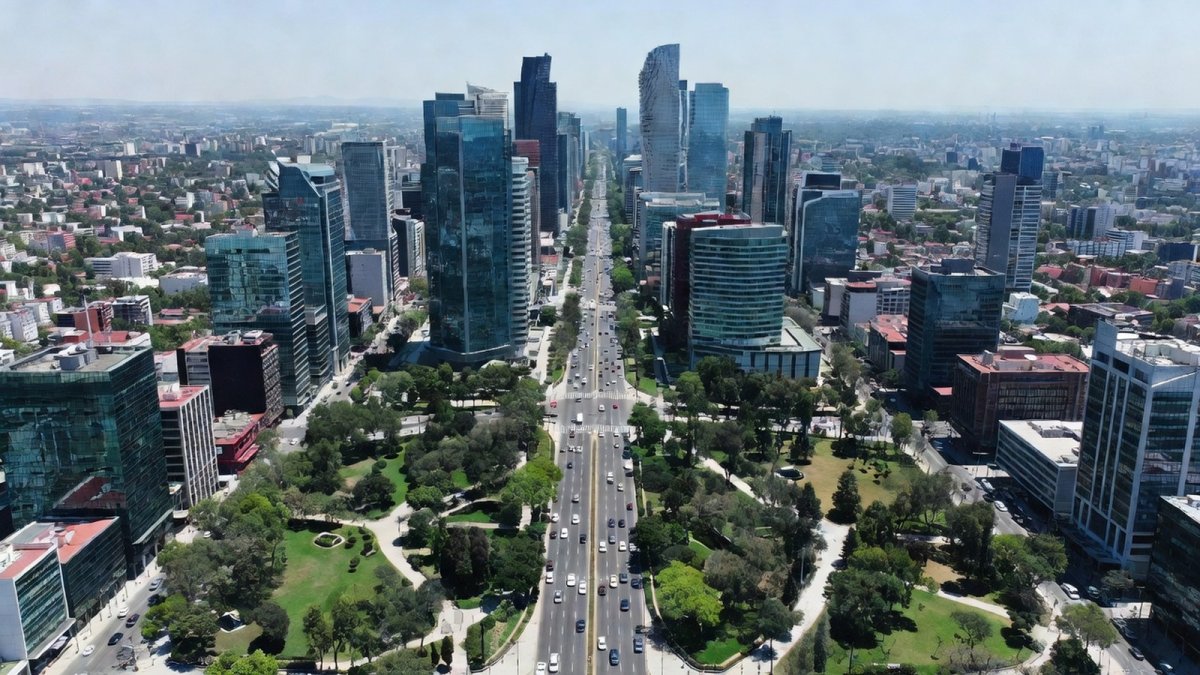
Peso Breaks the 17 Floor: A Milestone for Mexico's Currency Early Friday morning, before the sun had fully risen over Mexico City, the peso did something it had not done in over two years. At 16.9965 pesos per dollar, the Mexican currency pierced the psychological barrier of 17, a level that has come to symbolize both national pride and economic resilience.
Peso Breaks the 17 Floor: A Milestone for Mexico's Currency
Early Friday morning, before the sun had fully risen over Mexico City, the peso did something it had not done in over two years. At 16.9965 pesos per dollar, the Mexican currency pierced the psychological barrier of 17, a level that has come to symbolize both national pride and economic resilience. The last time the intraday exchange rate fell below this mark was on June 3, 2024 — the day after President Claudia Sheinbaum and the Morena party won their landslide electoral victory.
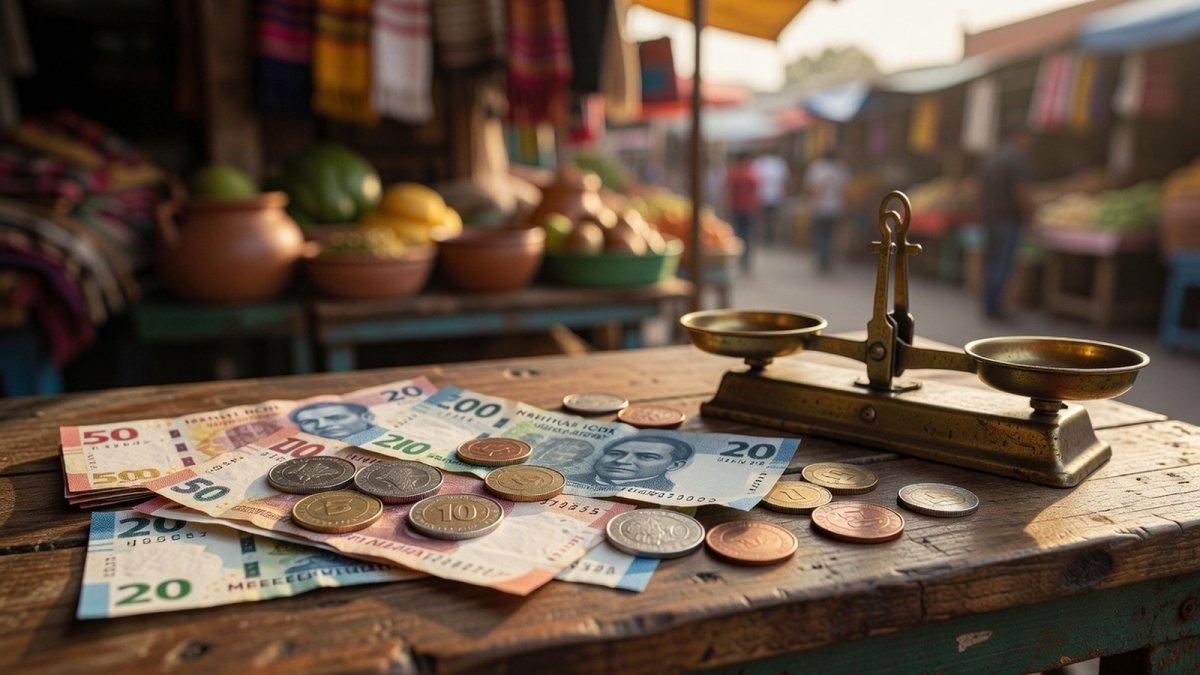
The movement represents an appreciation of 0.20% for the peso, equivalent to a drop of 3.39 cents for the U.S. dollar, according to financial portal Bloomberg. This follows four consecutive days of gains, during which the peso strengthened by 0.9% against the greenback. On the year, the Mexican currency has now appreciated by 5.2%, a remarkable turnaround for a nation that has weathered trade tensions, sovereign rating adjustments, and the constant shadow of USMCA renegotiations.
For families across Mexico, from the colonias of Ciudad Juárez to the ejidos of Yucatán, this is more than a number on a screen. A stronger peso means cheaper imports, more stable prices at the tianguis, and a sense that Mexico is holding its own in a turbulent global economy. But as with any currency movement, there are winners and losers — and the story is far more complex than a single exchange rate.
Tags: super peso, Mexican peso, exchange rate, Banxico, Claudia Sheinbaum, remittances, USMCA, dollar, Mexico economy, carry trade, interest rates, Banco de México
Why the Peso Is Surging: Global Winds and Local Strength
The return of the "super peso" is not an accident of the market. According to Paulina Anciola, an analyst at Banamex who spoke with El Universal, the currency's strength stems primarily from "the global weakness of the dollar amid increased uncertainty in the U.S. economy." The latest U.S. consumer inflation report indicated that price pressures had been momentarily contained, reducing the urgency for aggressive Federal Reserve action and softening demand for the dollar.
Anciola also pointed to a broader global appetite for emerging market assets. Investors, searching for yields in a world of low volatility, have found Mexico attractive. The interest rate differential between Mexico and the United States stands at roughly 450 basis points in Mexico's favor — Banxico's reference rate of 6.50% compared to the Fed's target range. This creates a powerful carry-trade incentive: borrow in dollars, invest in pesos, and pocket the difference.
"It would seem that the foreign exchange market has already internalized a significant part of the domestic uncertainty, both related to adjustments to the sovereign rating outlook, as well as in the trade arena in the face of the scenario of annual reviews of the USMCA," Anciola told El Universal. "So far there have been no episodes of high volatility." This internalization is crucial — it means investors have priced in the risks and still find Mexico worth their money.
The peso's journey to this point has not been linear. In late July, the currency had weakened to a near four-month low of 17.60 on July 24, before Banxico kept its benchmark interest rate unchanged at 6.50% and signaled it expects to maintain the current policy stance. The peso then firmed, trading near 17.22-17.26 in early August before this week's decisive push below 17.
What the Super Peso Means for Mexican Families and Remittances
In the quiet streets of Michoacán, Guerrero, Oaxaca, Zacatecas, and Guanajuato, millions of households begin each month with a familiar ritual: the arrival of remittances from family members working in the United States. These transfers — tens of billions of dollars a year — are one of Mexico's largest sources of foreign income, flowing to families in every state. A stronger peso, however, means each dollar sent home buys fewer pesos.
This is the double-edged sword of the super peso. While it signals international confidence in Mexico's economy, it also reduces the purchasing power of remittance dollars. A family that received 10,000 pesos for their monthly expenses when the exchange rate was 18 now receives roughly 9,440 pesos at Friday's rate of 16.99. For households in rural communities where remittances can represent 80% or more of total income, this difference is not abstract — it is the gap between buying school supplies and going without.
President Sheinbaum has been attentive to these concerns. When proposals emerged in the U.S. Congress to impose a 5% tax on remittances, she publicly opposed the idea. The U.S. House Budget Committee ultimately rejected the proposal 21-16, a defeat Sheinbaum acknowledged while urging Mexican communities to stay alert. The super peso, in this context, is a reminder that Mexico's economic fate is deeply intertwined with the millions of Mexicans who labor abroad.
At the same time, a stronger peso benefits Mexican consumers in tangible ways. Imported goods — from electronics to medicines to corn — become cheaper. Inflation, which has been a persistent concern for Mexican households, is more easily contained when the currency appreciates. For families shopping at their local tianguis or planning a trip to a pueblo mágico, the super peso can mean more purchasing power at home.
Banxico, Interest Rates, and the Carry Trade: The Mechanics Behind the Numbers
At the heart of the peso's strength lies a simple but powerful mechanism: the interest rate differential. Banxico's reference rate of 6.50% stands in stark contrast to the Federal Reserve's target range, creating a 450-basis-point gap that makes peso-denominated assets irresistible to global investors seeking yield. This carry trade — borrowing in low-yield currencies and investing in high-yield ones — has been a consistent driver of capital flows into Mexico.
Banxico's decision to hold rates steady at 6.50% in late July, despite global uncertainty, sent a clear signal of stability. The central bank indicated it expects to maintain the current policy stance, reinforcing investor confidence in the peso. According to data from Banco de México, the exchange rate fluctuated between a maximum of 17.07 and a minimum of 17.03 in Thursday's interbank market, before Friday's decisive break below 17.
The peso closed Thursday at 17.0431 pesos per "spot dollar," appreciating by 0.13% compared to Wednesday's close. This steady, incremental strengthening — rather than a sudden spike — suggests a market that is confident in Mexico's fundamentals rather than reacting to a single event. The private sector consensus forecasts a wholesale exchange rate of 17.90 pesos to the dollar by the end of this year, according to the latest Citigroup survey of 35 banks, brokerage firms, and analysis groups.
Yet there are warning signs beneath the surface. The most recent MND Peso Index, which compares prices of a basket of goods and services in Mexico and Dallas, Texas, found the peso overvalued against the dollar by 2.4% in early August. This suggests the currency may have moved ahead of economic fundamentals, and a correction could be on the horizon. Analysts expect some pullback, which is why the year-end consensus remains above 17.
USMCA, Trade Reviews, and the Road Ahead for Mexico's Economy
As the peso celebrates its strength, Mexico's trade relationship with its northern neighbors remains a source of both opportunity and anxiety. The USMCA annual reviews are a watch item for 2026, and the foreign exchange market has already internalized much of this uncertainty. So far, there have been no episodes of high volatility, but the reviews could introduce new tensions at any moment.
President Sheinbaum's administration has navigated these waters with a steady hand. From the mañanera press conferences at Palacio Nacional to diplomatic engagements in Washington, the message has been consistent: Mexico is open for business, but not at the expense of its sovereignty or its people. The peso's strength is, in part, a vote of confidence in this approach.
For Mexican workers, farmers, and small business owners, the super peso is a mixed blessing. Exporters — from avocado growers in Michoacán to automobile manufacturers in the Bajío — may find their products more expensive in international markets. But importers and consumers benefit from lower costs. The net effect on the Mexican economy will depend on how these forces balance out in the coming months.
The Citigroup consensus of 17.90 by year-end suggests that analysts expect the peso to give back some of its gains. The overvaluation reading from the MND Peso Index reinforces this view. But for now, on this Friday morning in August, Mexico can savor a moment of economic strength — a reminder that even in a turbulent world, the Mexican peso can stand tall.
As families across the republic go about their daily lives — mothers shopping at the mercado, fathers heading to work in factories, students walking to school — the super peso is a quiet companion. It does not solve every problem, nor does it erase the challenges of inequality and poverty that persist in every corner of the nation. But it does offer a measure of stability, a foundation upon which families can plan for the future. And in a world of uncertainty, that is no small thing.
By Rosa Martinez, Staff Writer
This article was produced with AI-assisted research and editorial support. Sources: Mexico News Daily, El Universal, Banco de México.
What's Your Reaction?
 Like
0
Like
0
 Dislike
0
Dislike
0
 Love
0
Love
0
 Funny
0
Funny
0
 Wow
0
Wow
0
 Sad
0
Sad
0
 Angry
0
Angry
0

Latin America/Andes Correspondent at Global1.News. Based in Bogota, covering politics, environment, energy, and social movements across the Andean region. Passionate about environmental journalism and communities protecting their land.













Comments (0)