
Volkswagen's replacement for the ID.4 crossover is here
Volkswagen has finally pulled the plug on the ID.4, the electric crossover that has been the poster child of its post‑dieselgate EV push. Tiguan. Why the ID.4 is gone and why that matters to us The ID.4 debuted in 2021 as one of VW’s first purpose‑built electric models.
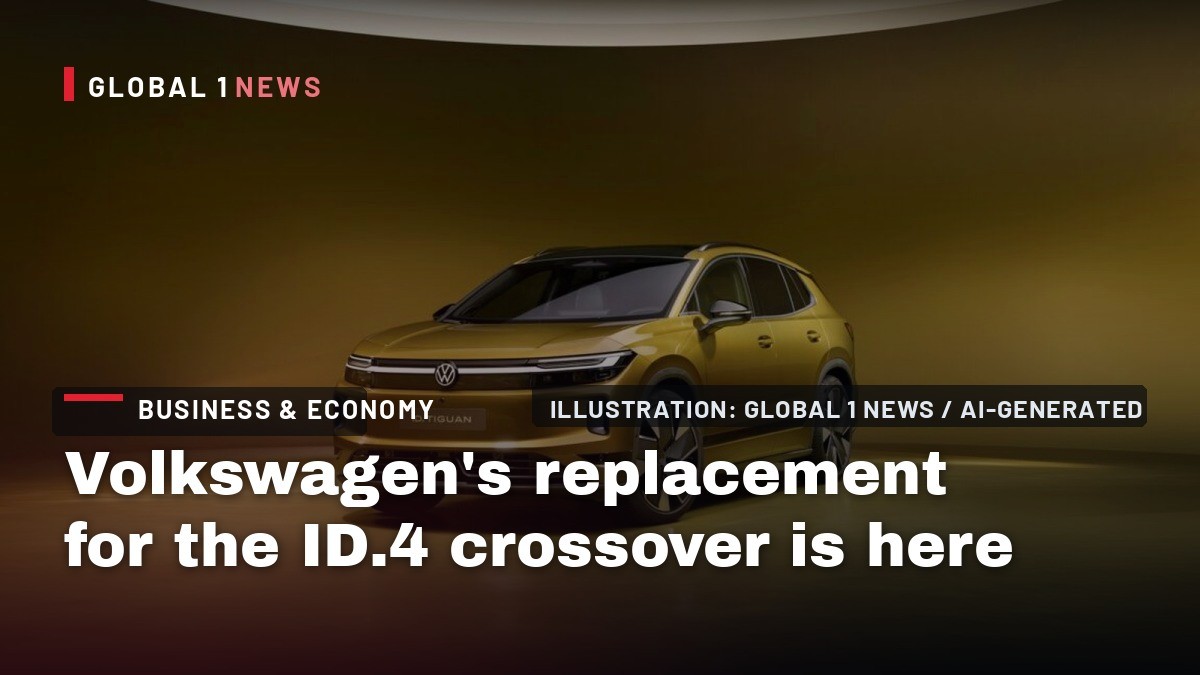
Volkswagen has finally pulled the plug on the ID.4, the electric crossover that has been the poster child of its post‑dieselgate EV push. After a few years of production in Chattanooga and a facelift that added a beefier rear drive unit, the German giant is now rolling out a replacement that leans on its biggest name‑plate: the ID. Tiguan. From a founder’s perspective, the move is a textbook case of brand‑leveraging over pure engineering, and it raises a host of questions for anyone running a data‑center or a hosting business that depends on predictable, cost‑effective hardware roadmaps.
Why the ID.4 is gone and why that matters to us
The ID.4 debuted in 2021 as one of VW’s first purpose‑built electric models. It quickly became a workhorse, with sales edging toward the million‑unit mark globally, including the near‑identical ID.5. That volume gave VW the confidence to invest in a dedicated plant in Chattanooga, Tennessee, and later to add a more powerful rear drive unit. Yet, as the article notes, “Chattanooga turned its attention away from the ID.4 earlier this year.” The shift signals that VW sees the ID.4 platform as a stepping stone rather than a long‑term foundation.
For us in the hosting world, this is a cautionary tale. When a massive OEM decides a platform is obsolete, the supply chain can contract overnight, leaving spare‑part inventories stranded. We’ve seen similar fallout when hyperscalers retire a server generation before the end of its typical five‑year depreciation schedule. The lesson? Don’t tie your infrastructure strategy to a single vendor’s product lifecycle. Diversify, and keep an eye on the roadmaps of the hardware you depend on.
The ID. Tiguan’s specs: a modest upgrade or a strategic pivot?
The new ID. Tiguan rides on VW’s updated MEB+ platform, offering two battery sizes: 58 kWh and 77 kWh. The smaller pack pairs with a 187 hp (140 kW) rear‑motor, while the larger pack can be mated to either a 281 hp (210 kW) rear‑wheel‑drive or a 295 hp (220 kW) all‑wheel‑drive setup. VW claims a WLTP‑tested range of up to 373 miles (600 km). Those numbers are respectable, but they’re not a quantum leap over the ID.4’s 2022‑2024 specs, which topped out around 260 miles on a similar 77 kWh pack.
From a risk‑management angle, the modest performance bump means the underlying architecture hasn’t changed dramatically. That’s good news for suppliers and, by extension, for hosting providers that rely on the same silicon and battery chemistry across multiple OEMs. It also suggests VW is not betting on a radical redesign that could disrupt the supply chain – a relief for anyone watching the ripple effects of automotive component shortages on data‑center cooling and power.
Design language and the “Pure Positive” gamble
VW is branding the Tiguan under its new “Pure Positive” design language, aiming to give the vehicle a premium feel despite its mass‑market pricing. The article points out that the interior, especially the R‑Line trim, looks “rather good,” and that VW has re‑introduced “normal door handles” and a slew of physical controls – real buttons for climate, windows, and air vents. The inclusion of tactile switches is a direct response to consumer fatigue with over‑digitalized cabins.
This focus on tangible controls mirrors a broader trend in enterprise hardware: the resurgence of physical knobs and switches for critical functions. In the data‑center, we’ve seen a swing back to hardware‑level failsafes after a decade of software‑only controls that proved fragile under load spikes. VW’s move is a reminder that customers still value the reliability of a physical interface, a principle that should guide how we design our own management consoles and network gear.
Pricing and market timing: a test of VW’s risk appetite
The ID. Tiguan will launch in Europe next week with a starting price of €42,695 in Germany, roughly $44,716 at current exchange rates. VW has not yet announced a North American rollout, stating that timing, pricing, and structure will be disclosed “in due course” after the European launch in early 2027. This staggered approach is a classic risk‑mitigation play: test demand in the home market before committing to the costly re‑tooling required for U.S. production.
For independent hosting firms, the lesson is clear: phased rollouts can protect cash flow. When evaluating new hardware – whether it’s a server blade or an edge‑router – consider a pilot program in a low‑risk region before scaling globally. It reduces exposure to unexpected cost overruns and lets you gather real‑world performance data before committing to large‑scale purchases.
The retro dial option: nostalgia as a product differentiator
One quirky feature VW highlights is the optional “retro dials” for the 10‑inch digital instrument cluster. Buyers can choose to emulate classic VW models – from the Mk1 Golf to the original Beetle – on a modern digital display. While this is a stylistic flourish, it underscores a broader market insight: nostalgia sells.
In the hosting arena, we see a parallel in legacy protocol support. Companies that maintain backward‑compatible APIs or offer “classic” UI skins often retain customers who would otherwise jump ship to newer platforms. It’s a low‑cost way to differentiate without reinventing the wheel. Keep an eye on those legacy features in your product stack; they can be a hidden moat against churn.
Supply‑chain implications of the MEB+ platform
The MEB+ platform is VW’s evolution of its mass‑market EV architecture, and the ID. Tiguan is the first model to debut on it. By standardising battery sizes and motor outputs across multiple models, VW hopes to achieve economies of scale. However, the shift also concentrates demand for specific components – 58 kWh and 77 kWh battery packs, 140 kW rear motors, and 210‑220 kW drivetrain units.
From a hosting provider’s perspective, this concentration mirrors the current bottleneck in high‑density GPU supply. When a single platform dominates orders, any hiccup – be it a raw‑material shortage or a factory fire – can cascade through the entire ecosystem. The prudent move is to maintain a buffer stock of critical components and to diversify suppliers where possible. In practice, that means not relying solely on a single battery vendor for UPS systems, and keeping an eye on second‑source options for power‑electronics.
Actionable takeaways for independent providers
Volkswagen’s pivot from the ID.4 to the ID. Tiguan is more than a branding exercise; it’s a strategic realignment that carries concrete lessons for anyone building a business on hardware reliability. First, monitor OEM product cycles closely – a sudden platform retirement can strain your spare‑part inventories. Second, favour platforms that evolve incrementally rather than those that promise radical overhauls; incremental upgrades tend to preserve supply‑chain stability.
Third, embrace physical controls and legacy compatibility as differentiators. Whether it’s a tactile power‑button on a rack or a retro‑dial UI theme, tangible interfaces build trust. Fourth, adopt phased rollout strategies for new equipment, testing in a limited geography before a full‑scale deployment. Finally, diversify your component sources and keep a safety stock for high‑risk items like batteries and power modules.
In short, the ID. Tiguan’s launch is a reminder that even the world’s biggest automaker is still playing a game of risk management, brand leverage, and supply‑chain optimisation. As founders, we need to apply the same rigor to our own hardware decisions, or we’ll end up scrambling when the next “platform shift” hits the market.
— Allan Ali, Founder
This article was produced with AI-assisted research and editorial support. Reporting is based on the source material cited below. Sources: Ars Technica; arstechnica.com; Global1.News (11 October 2026).
By Allan Ali, Global1.News
What's Your Reaction?
 Like
0
Like
0
 Dislike
0
Dislike
0
 Love
0
Love
0
 Funny
0
Funny
0
 Wow
0
Wow
0
 Sad
0
Sad
0
 Angry
0
Angry
0

Publisher of Global1.News. Automation architect, systems builder, and the guy making sure the truth gets published.













Comments (0)