
Riyadh Airport Attack Kills 12 and Wounds 309 as Trump Weighs Joining the Houthi War
Saudi Arabia's civil aviation authority says 12 people were killed and 309 injured in a missile attack on Riyadh's King Khalid International Airport, the third strike on the airport this week. The Saudi-led coalition blames the Houthi rebels; President Trump says the US may join the fight.
Folks, the third attack in a single week on Saudi Arabia's biggest airport has killed 12 people and wounded more than 300, shut the kingdom's capital to air traffic, and pulled Washington to the edge of a war it has spent months trying to keep at arm's length.
Riyadh Airport Attack Kills 12 and Wounds 309 as Trump Weighs Joining the Houthi War
Riyadh, Saudi Arabia — A missile tore through the domestic terminal complex at King Khalid International Airport on Saturday afternoon, and by nightfall the Saudi authorities had confirmed the deadliest attack on the kingdom in more than a decade.
What Happened at King Khalid Airport
Saudi Arabia's General Authority of Civil Aviation said in an initial statement that the airport "was targeted by an attack, amid continued attacks targeting civilian aviation facilities in the kingdom." Later that night, GACA announced that 12 people were killed and 309 injured. The dead included four Saudi citizens, two Bangladeshi nationals, and one person each from the United States, Egypt, Jordan, Syria, Palestine and Sudan. GACA said all injured individuals were receiving the necessary medical care at several hospitals, and that some of the injured were in critical condition. A missile struck an airport complex housing Terminals 3 and 4 for domestic flights, a regional official said, speaking on condition of anonymity because they were not authorised to speak to the media. Saturday's attack occurred without warning, with no alert issued by Saudi Arabia's threat warning system.
The Week Saudi Arabia Lost Control of Its Airspace
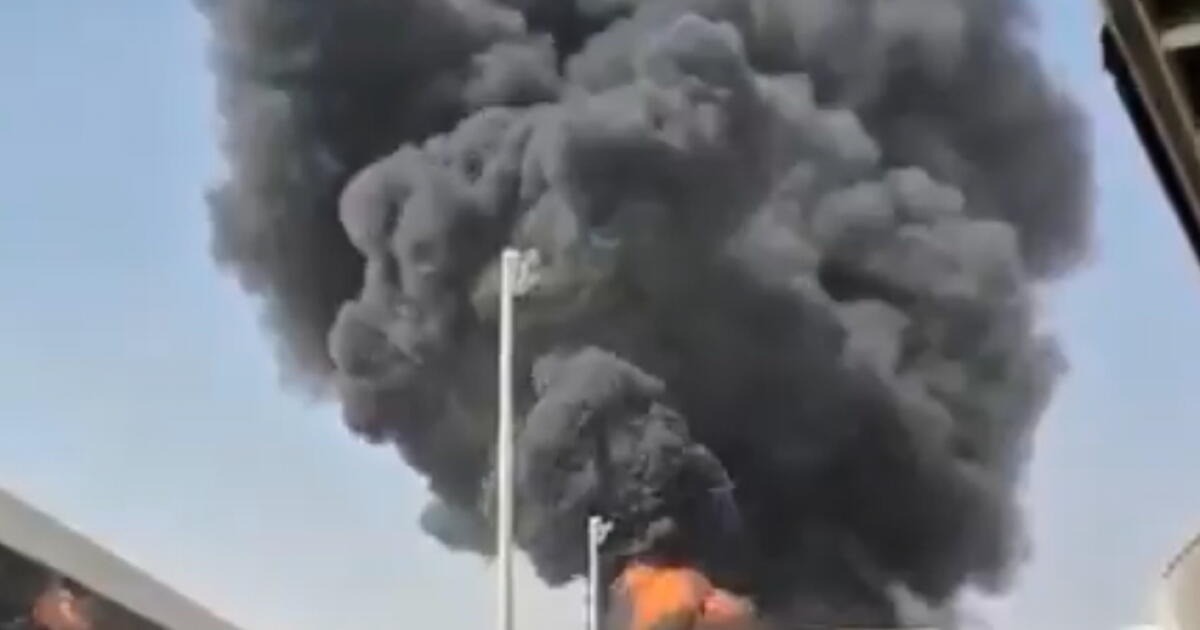
Saturday's strike was not an isolated event. It was the third attack on King Khalid International Airport in a single week, and it landed on a kingdom already struggling to shield its own capital. An eyewitness at the airport reported seeing an explosion and then multiple people lying injured on the ground inside. More than a dozen ambulances were seen rushing towards the facility, and a video verified by Reuters showed ambulances at the airport. An injured traveller told Reuters they saw something fly across the sky outside the airport before part of the ceiling near a departure gate collapsed. Hospitals were flooded with wounded brought by ambulance and helicopter, people briefed on the matter said. AFP, via DW, quoted a local medical source: "ER doctors are being called to hospitals across Riyadh. We were told we are dealing with a 'serious emergency situation'. Injured are being moved to hospitals across Riyadh." The airport serves a city of roughly 8 million people.
The Claim, and the Dispute Over It
Who claimed Saturday's attack is disputed, and the sources do not agree. Shafaq News reports that Yemen's Houthi military spokesman, Yahya Saree, claimed responsibility, saying the group fired two cruise missiles at Riyadh airport, a ballistic missile at Najran airport and another at the air base in Khamis Mushait, "disrupting air traffic at both airports and damaging the base." ABC News (Australia) states the Iran-backed Houthis claimed responsibility for the strike in a major escalation of their campaign against the Saudis. Al Jazeera's live blog titled it "the latest Houthi attack." But Al Jazeera's earlier report and DW both note the Houthis did not immediately claim responsibility for Saturday's strike, and CBS News reported: "The Houthis have not yet claimed responsibility for Saturday's strike." The Associated Press noted there was no immediate statement from the rebels, who earlier Saturday accused Saudi Arabia of striking Sanaa International Airport, adding the rebels at times take days to claim responsibility. The head of the Houthi media office said in a post on X that the group had "shut down Riyadh International Airport."
The Highest Toll of the Iran War
The numbers carry weight beyond Riyadh. The Associated Press called the attack "the deadliest in any Gulf Arab country since the start of the Iran war." Reuters, via Al-Monitor, called it "the deadliest in the kingdom in more than a decade." The earlier attacks in the same week carry their own toll, and the framing of those figures is contested. Gulf Business reported two women died following an attack on Abha International Airport on Tuesday, and that a Sudanese national was killed in an earlier attack on Riyadh airport on Wednesday. On Thursday, at least three Saudi citizens, including a pilot, were killed in Houthi attacks at the airport, according to GACA. Gulf Business named him as Saudia pilot Captain Hamoud Ali AlKalthami, who died when an aircraft on the ground was struck. Reuters framed the earlier week differently: "This week's two previous attacks on King Khalid International Airport left four people dead and caused heavy damage to a Saudi commercial plane parked on the tarmac."
Washington Weighs In
US President Donald Trump, asked outside the White House whether Washington planned to join Saudi strikes on the Houthis, said: "We may. We're going to look at it. We just found out about the recent attack, so we'll make a decision. We move very quickly." Trump also called the attack "terrible" and said he "will be speaking" with Saudi Arabia's de facto leader, Crown Prince Mohammed bin Salman, soon. Asked whether the Riyadh strike would change his previously announced decision not to launch potential strikes on Iran until after the midterms, Trump said: "Well, we're gonna take a look." On the Saudis, he said: "Look, the Saudis are good fighters. But I think the attack was a terrible thing." US Secretary of State Marco Rubio said the attack killed an American and called for an end to "these reprehensible attacks," writing on X: "We stand with the Kingdom of Saudi Arabia and its people and extend our condolences to the victims and their families."
The Interceptor Problem
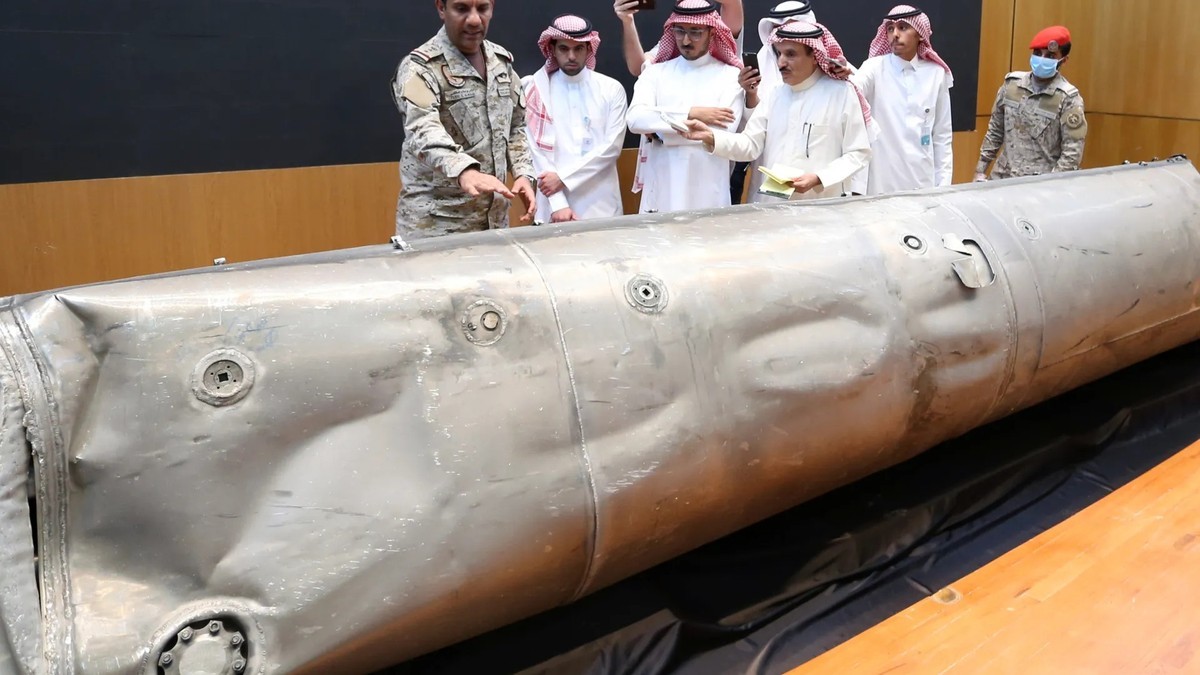
Behind the diplomacy sits a defence picture under strain. Reuters reported that the deadly strikes exposed vulnerabilities in the kingdom's defence capabilities as it wages an air campaign against the Houthis to support a ground war by the Yemeni government against the Iran-backed group. Saudi Arabia is running low on missile interceptors and has asked France, Britain, Pakistan and Egypt to deploy air defence support to the region, regional officials told the AP last month, with one noting that the US has seen its own stock dwindle during the war with Iran. Officials have said US assistance has included intelligence sharing, target identification and planning for the latest offensive against the Houthis. The European Union Aviation Safety Agency expanded its guidance on Saudi airspace, noting the Houthis' ability to strike deeper inside the kingdom, including Riyadh, and a "greater focus on aviation infrastructure."
How Yemen's War Restarted
The current escalation traces back to a collapsed truce. Saudi Arabia entered the Yemen war in 2015 at the head of an Arab coalition to try to force the Houthis out of Sanaa, after the Houthis stormed the capital the previous year. The war was fought to a bloody stalemate, with hundreds of thousands of Yemenis killed by fighting and famine, and Saudi Arabia struck a 2022 deal with the Houthis, freezing the conflict. That ceasefire unravelled over the summer, culminating in a lightning Houthi advance that took the Red Sea chokepoint of Bab el-Mandeb from Saudi-backed government forces. The Saudi-backed Yemeni government began an offensive this week to try to retake that territory, which has so far made slow gains, even as the Houthis put the country's third-largest city, Taiz, under siege. The Institute for the Study of War wrote that the Houthis "believe that they can maximise Saudi economic costs and compel Saudi Arabia to surrender to Houthi demands by striking civilian infrastructure, such as oil facilities and airports."
The Flight Map and the Conference Calendar
All flights were diverted from Riyadh on Saturday and operations at the airport were temporarily suspended, the Saudi civil aviation authority said. An official notice to aviators said the suspension was through midnight. The airport had a heavy police presence, with all entrances blocked, and lights around the complex were dimmed. Flight-tracking site Flightradar24 showed all flights to Riyadh had either been diverted or cancelled, with only a helicopter hovering over the airport at one point. The cancellation counts differ by source. Flightradar24 data recorded at 5.34am Saudi time on 11 October showed 271 departing flights cancelled, 73 per cent of departures listed for the day, with the airport's disruption index at 5.0, per Gulf Business. FlightAware data cited by Arab News recorded at least 291 flights cancelled over the preceding 24 hours, while ABC News (Australia) reported at least 225, according to FlightAware.
The World's Condemnations
Condemnations arrived from across the region and beyond. Hans Grundberg, the UN special envoy for Yemen, said the deadly strikes on civilian airports in Saudi Arabia represent "a grave escalation," adding: "Such actions pose a serious threat to regional security, perpetuate cycles of violence and complicate even more peace efforts for Yemen." Egypt's foreign ministry expressed "strong condemnation" of the Houthi attacks, denouncing their "flagrant violation" of international law. Qatar's foreign ministry condemned the attacks as a "serious violation of Saudi sovereignty and a direct threat to the security of the region." Pakistan's foreign ministry called it a "heinous act of terrorism," noting Islamabad has recently activated a mutual defence pact with Riyadh. Jordan's King Abdullah offered condolences to King Salman and Crown Prince Mohammed bin Salman. Oman urged "the necessity of prioritising the voice of wisdom and self-restraint."
What Comes Next
The Saudi-led coalition blamed the Iran-backed Houthi rebels in neighbouring Yemen, called the attack a "fully-fledged war crime" and vowed a firm response, saying "The airport has no military facilities." GACA's statement itself did not assign blame. Later on Saturday, the coalition said a Houthi-launched ballistic missile had been intercepted in Al-Kharj governorate, southeast of Riyadh. Coalition spokesman Major General Turki al-Maliki said a projectile had fallen near King Fahd International Airport in Dammam. The Houthis this week warned global airlines "for the last time" about operating in Saudi airspace, which they described as a theatre for their military operations. The Saudi energy ministry, hours after the latest attack, was still promoting a major international energy conference set to begin in Riyadh on Sunday. Organisers said ahead of the strikes on Saturday they would go ahead as planned.
By Jessica Ali, Staff Writer
This article was produced with AI-assisted research and editorial support. Sources: The Associated Press, Reuters, Al Jazeera, DW, CBS News, ABC News, Gulf Business, Euronews and Shafaq News.
What's Your Reaction?
 Like
0
Like
0
 Dislike
0
Dislike
0
 Love
0
Love
0
 Funny
0
Funny
0
 Wow
0
Wow
0
 Sad
0
Sad
0
 Angry
0
Angry
0

Editor-in-Chief at Global1.News. Atlanta-based journalist who cuts through the BS and tells it like it is. Lead anchor, host, and the voice you hear when the spin stops and the truth starts.














Comments (0)