
Ombudsman, GSIS inspect Jinggoy’s office
In a scene that underscores the tangled web of politics, propriety and public resources, the Office of the Ombudsman and the Government Service Insurance System (GSIS) jointly inspected the former Senate office of detained Senator Jinggoy Estrada.
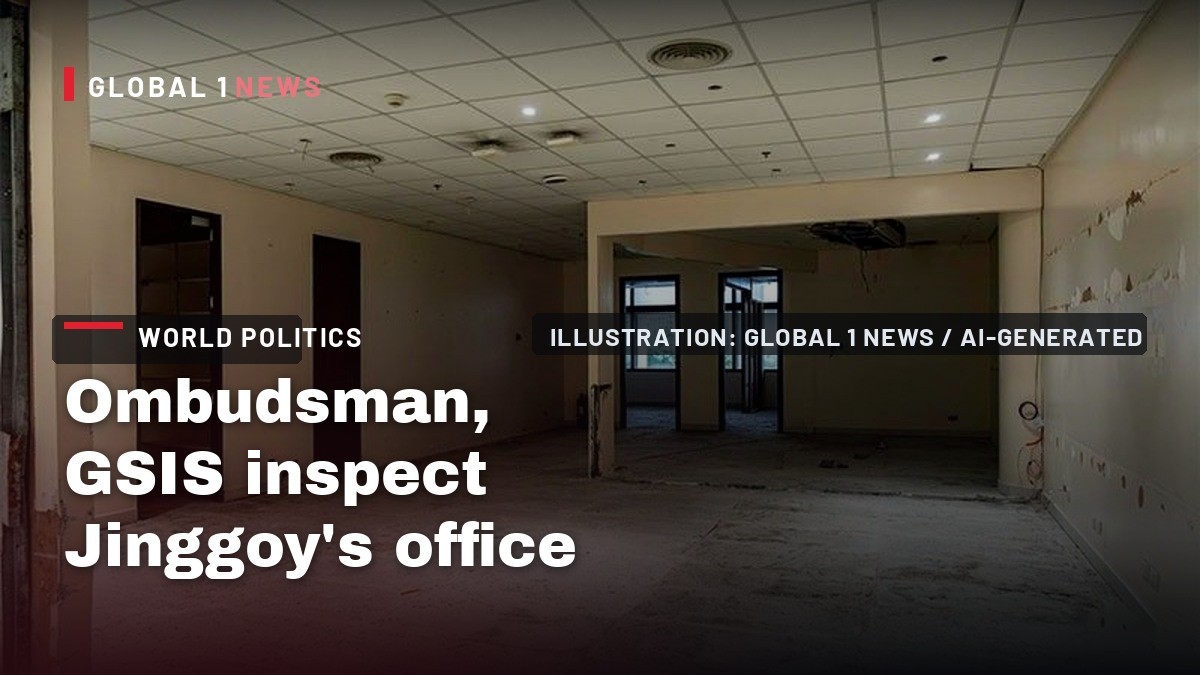
In a scene that underscores the tangled web of politics, propriety and public resources, the Office of the Ombudsman and the Government Service Insurance System (GSIS) jointly inspected the former Senate office of detained Senator Jinggoy Estrada. The visit, confirmed by Senate President Sherwin Gatchalian on radio dzMM, was aimed at probing possible legal violations and assessing the structural soundness of a space that has been stripped of its fixtures. The episode brings to light the everyday consequences of high‑level disputes for ordinary Filipinos, from the barangay hall to the sari‑sari store, as public funds and trust hang in the balance.
Background of the inspection
Senator Jinggoy Estrada, currently detained, had vacated his Senate office on the sixth floor of the Batasang Pambansa building. Rather than handing over the room in a usable state, he removed furnishings, fixtures and even the toilet, leaving a bare shell for his successor, Senate President Pro Tempore Vicente Sotto III. The decision prompted Senate President Sherwin Gatchalian to summon both the Ombudsman and the GSIS for a joint inspection, a move that signals the seriousness with which the Senate is treating the matter.
According to Gatchalian, the Ombudsman’s team arrived last Thursday to examine the stripped office, while the GSIS team made a separate visit a few days earlier after seeing photographs of the room’s condition. Both agencies were tasked with distinct but overlapping mandates: the Ombudsman to investigate any possible breach of law, and the GSIS to verify that the structural integrity of the office—property that belongs to the agency—remains intact.
The Ombudsman’s mandate
The Office of the Ombudsman, charged with safeguarding public officials from corruption and misconduct, is looking into whether Senator Estrada’s removal of the office’s furnishings constitutes a legal violation. Gatchalian noted that the Ombudsman’s purpose was “obvious,” implying that the agency is probing the legality of stripping a public office of its assets. While the exact legal provisions under review were not disclosed, the investigation aligns with the Ombudsman’s broader mandate to ensure that public officials do not misuse government property for personal gain.
In the Philippines, the Ombudsman’s investigations often carry weighty implications, ranging from administrative sanctions to criminal prosecution. Should the inquiry find that Estrada’s actions breached the law, the case could proceed to the Department of Justice for further action, underscoring the importance of accountability in the public sector.
GSIS concerns over structural integrity
The Government Service Insurance System, which holds ownership of the Senate office space, sent its own team to assess the condition of the stripped room. Gatchalian explained that the GSIS’s interest stemmed from photographs that raised concerns about the safety of the space. The agency’s focus on structural integrity reflects its responsibility to protect assets that fund the retirement and benefits of millions of government employees.
By inspecting the office, the GSIS aims to ensure that the removal of fixtures—such as wall panels and electrical sockets—has not compromised the building’s safety standards. Any damage discovered could necessitate repairs funded by the agency, potentially diverting resources away from its core mission of providing insurance benefits to public servants.
Implications for the incoming occupant
Senate President Pro Tempore Vicente Sotto III, who is slated to take over the office, now faces the prospect of a major renovation. The stripped space lacks basic amenities, including a toilet and functional electrical outlets, meaning that Sotto’s team will have to invest time and money to restore the room to a usable condition. Gatchalian emphasized that the government will shoulder the cost of this renovation, a point that highlights the fiscal impact of the dispute on public coffers.
For ordinary Filipinos, the cost of renovating a Senate office may seem distant, yet it reflects a broader pattern where mismanagement of public assets translates into higher taxes or reduced services. The need for a fresh renovation also raises questions about the efficiency of asset turnover within government institutions, an issue that resonates with citizens who demand transparent and responsible use of state resources.
Political context and Estrada’s defense
Senator Estrada has defended his actions by claiming that he used personal funds to renovate the office, thereby justifying the removal of its furnishings. Gatchalian, however, rebutted this argument, stating that turning over a dismantled office is not standard practice. The Senate’s stance underscores a principle that personal contributions do not grant a public official the right to alter or deplete government property for personal convenience.
This clash reflects a broader political tension in the Philippines, where allegations of misuse of public office often intersect with personal narratives of service and sacrifice. While Estrada’s supporters may view his use of personal money as a gesture of dedication, the Senate’s insistence on proper handover procedures underscores the rule of law that must govern all public officials, regardless of personal intent.
Public reaction and the role of oversight
The joint inspection by the Ombudsman and GSIS has drawn attention from civil society groups and ordinary citizens who monitor the stewardship of public assets. In a country where the concept of bayanihan—community cooperation—extends to holding leaders accountable, such oversight actions are seen as essential safeguards against the erosion of public trust.
Community leaders and local barangay officials often echo the sentiment that public officials should be exemplars of integrity. The inspection serves as a reminder that the actions of a senator in Manila can ripple through the nation, influencing how citizens perceive the fairness of institutions like the Senate, the Ombudsman and the GSIS.
Looking ahead: accountability and reform
As the investigation proceeds, the outcome will likely influence future protocols for the turnover of Senate offices. Should the Ombudsman find legal violations, it could prompt stricter guidelines to prevent similar incidents, reinforcing a culture of accountability within the legislative branch.
Meanwhile, the GSIS’s assessment may lead to recommendations on how government agencies safeguard structural integrity when offices are vacated. For the Filipino people, these steps represent a hopeful sign that the mechanisms of oversight are active and responsive, ensuring that public resources—whether a Senate office or a community health center—are managed with transparency and respect for the common good.
This article was produced with AI-assisted research and editorial support. Reporting is based on the source material cited below. Sources: Philstar.com; Global1.News (11 October 2026).
By Bella Reyes, Staff Writer
What's Your Reaction?
 Like
0
Like
0
 Dislike
0
Dislike
0
 Love
0
Love
0
 Funny
0
Funny
0
 Wow
0
Wow
0
 Sad
0
Sad
0
 Angry
0
Angry
0

Philippines/Southeast Asia Correspondent at Global1.News. Manila-based journalist covering Philippine politics, environment, maritime security, and social issues. Passionate about marine conservation and the communities protecting the Philippines' natural heritage.













Comments (0)