
Mediazona Identifies 20 Russian Officers Killed in One Donetsk Strike
Mediazona, working with the BBC's Russian Service, identified at least 20 Russian officers killed when Ukrainian missiles hit two command posts in occupied Donetsk on 26 August 2026, the war's largest single loss of Russian officers.
Russia's army lost more officers in a single missile strike on occupied Donetsk in late August than in any other attack of the war, and on Thursday the independent monitors who count Russia's dead published the names. Mediazona, working with the BBC's Russian Service, identified 20 Russian officers killed when Ukrainian cruise missiles hit two command posts in the city on 26 August 2026. Eighteen died that day; two died of their wounds later. It is the largest single loss of Russian army officers since the full-scale invasion began, and Moscow still has not acknowledged a single one of them.
Mediazona Identifies 20 Russian Officers Killed in One Donetsk Strike
Kyiv, Ukraine — Mediazona is an independent Russian outlet that tracks Russian military deaths with the BBC's Russian Service, and it does its work the hard way: obituaries, social media, leaked databases, and the paper trail the Russian state leaves behind when a soldier dies. What it published on 9 October is a roster of the dead from one night in Donetsk, and the ranks on it read like a staff college. Seven colonels. Six lieutenant colonels. Five majors, a captain and a senior lieutenant. The data in the personnel lists Mediazona worked from is current as of July 2025 and covers the headquarters of the Central Military District and the headquarters of the 41st Combined Arms Army — the two headquarters that make up the staff of Russia's Centre Group of Forces. Ukraine's General Staff said its forces struck the main and reserve command posts of Russian troops in the city on the night of 26 August and again overnight into 27 August.
A Strike on Command Posts, Not a Shopping Mall
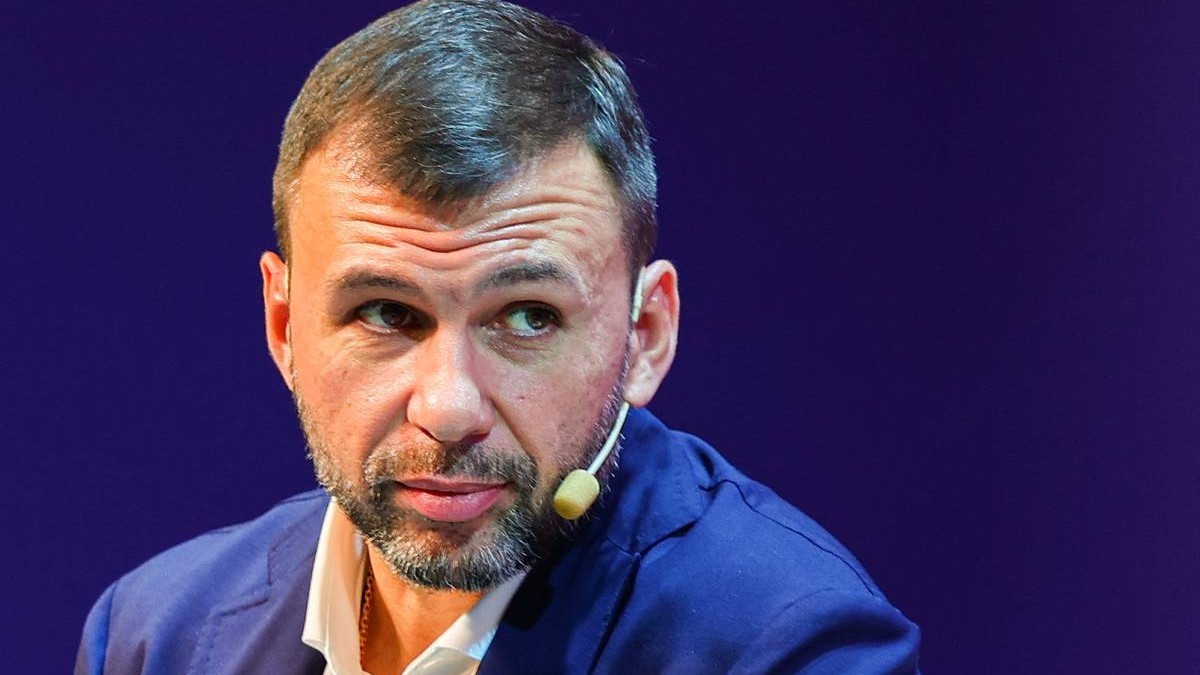
The two accounts could not be further apart. Ukraine said it hit military command posts; Russia said the target was a shopping centre. Mediazona's finding fills in the consequence: those were working headquarters, and the men inside them were staff officers whose jobs were planning, intelligence, electronic warfare and logistics. Denis Pushilin, the head of the Russian-installed administration in Donetsk, said the strike hit the area of the "Donetsk City" shopping and entertainment centre and that Anglo-French Storm Shadow and SCALP-EG air-launched cruise missiles were used. He listed eight wounded civilians — a girl born in 2016, a teenage girl born in 2010, two women and four men — and said nothing at all about military casualties. The Russian state news agency TASS reported the same number of civilian injuries and added that eight residential buildings and eleven civilian infrastructure facilities were damaged.
How the Count Was Made
Mediazona did not estimate. It obtained personnel rosters for the two headquarters — military unit No. 33303, with 856 individuals, and military unit No. 44424, with 206 — then cross-referenced those lists against the register of inheritance cases and other Russian state databases, and checked them against obituaries of senior officers published over the past month. Names, ages, ranks and postings all matched, and the outlet concluded that at least 20 officers were killed in the Donetsk strike. That word, "least", is doing real work here. Mediazona's method finds the dead the Russian state records through property and probate paperwork; it does not find everyone, and it does not pretend to.
The Officers, and the Jobs They Held
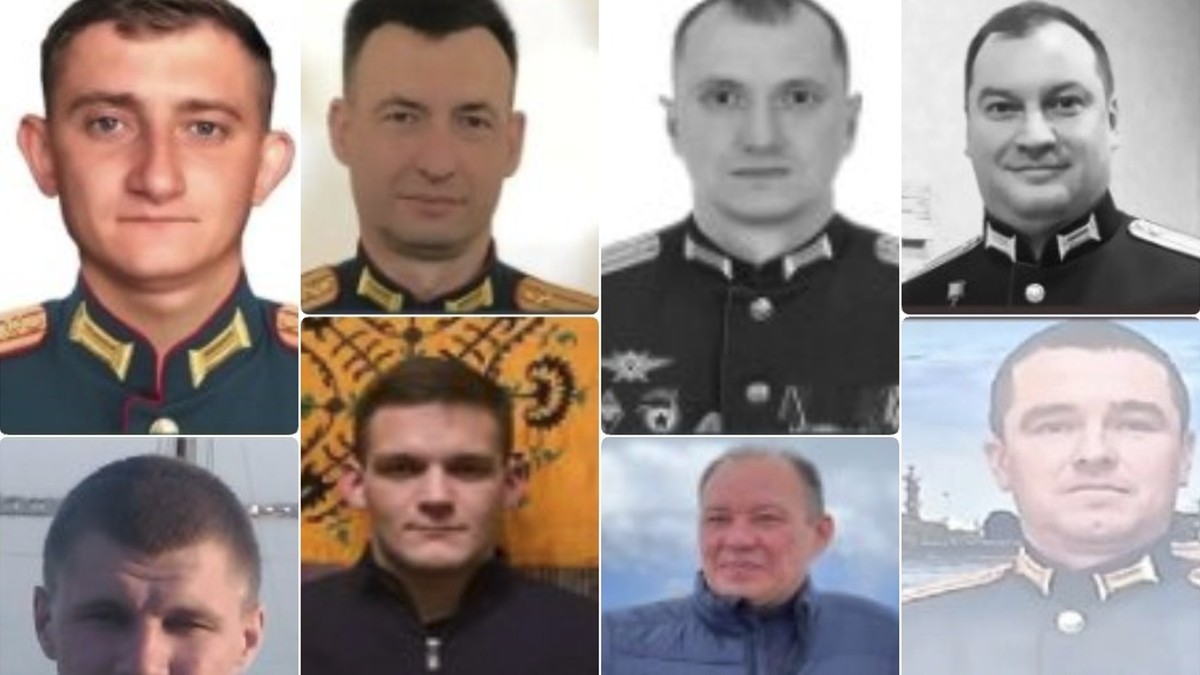
The list is a map of what the strike took out, and Mediazona published all 20 names. Colonel Artyom Berdyugin, 38, ran the planning and coordination division of an intelligence directorate. Colonel Alexander Kalyanov, 50, ran its special intelligence division. Colonel Sergei Legky, 47, was a deputy chief of electronic warfare troops. Lieutenant Colonel Yury Zhigalov, 39, headed joint training and inter-service coordination in a combat training directorate. Lieutenant Colonel Andrei Moiseyenko, 42, was a senior officer in the operations department of the army headquarters. At the 41st Army's headquarters, Colonel Sergei Laptev, 48, was deputy chief of the operations department, and Colonel Vasily Latyshev, 55, was deputy commander of missile troops and artillery. Captain Kirill Polozkov was 28. Senior Lieutenant Oleg Golubenko was 26.
The Same Headquarters, Hit Before
Digging through the same rosters turned up a pattern the Russians have not advertised. Mediazona found two earlier mass-casualty incidents among staff officers of the 41st Combined Arms Army: eight officers killed on 4 August 2026, and four on 8 September 2025. That is three heavy losses at one formation's headquarters in roughly a year. To put the August figure in perspective, Mediazona reckons at least 276,113 Russian soldiers have been killed in Ukraine since 2022 — a figure built by counting individuals, not by accepting any official total. Ukraine's General Staff, for its part, has said the targets were command posts, which is exactly the kind of target that produces a death toll like this one rather than a line of body bags.
The Post That Said Ten, Then Disappeared
The earliest account of a military toll came from a Russian reporter on the ground. An Izvestia correspondent at the scene in Donetsk posted that ten people had been killed, according to Meduza, which tracked the post through the Telegram channel astrapress. The post was later deleted. Around the same time, monitoring channels close to the Ukrainian side were reporting a higher number still: the OSINT project Exilenova+ said the strikes killed 27 people and wounded 58, with two generals among the seriously wounded. None of those figures has been independently confirmed, and the gap between 20 officers identified by paperwork and the larger counts circulating from the ground is the honest measure of how much is still unknown.
What the Site Itself Shows
The physical evidence points at military infrastructure, not a shopping centre. The monitoring channel Exile+ said one strike hit a building at 97 Ilyich Avenue, a site that housed research and industrial facilities before the war. The Ukrainian OSINT group CyberBoroshno said a second target was an underground parking garage with 600 spaces beneath an unfinished residential complex, and that six missiles struck it. Militarnyi's own geospatial analysis identified the same two locations — the parking area of an unfinished residential building and the building of the former UkrDerzhNDIplastmas research institute — and noted that Exilenova+ believed a command post of Russia's 51st Guards Combined Arms Army may have been at one of the sites. Satellite imagery later showed holes punched through the concrete ceiling of that parking garage.
Why the Shopping Centre Comes Up at All
That is because the two sites sit close to the Donetsk City mall, and Russia has leaned hard on the proximity. Russian investigators said the Donetsk City shopping centre — which RIA Novosti describes as the largest in the city, at more than 115,000 square metres — was damaged in the attack. By the evening of 26 August, the Russian outlet EADaily reported that the citywide civilian injury count had risen to eleven. Ukraine has made no claim about civilian casualties in Donetsk, and has said nothing to suggest a mall was targeted. The two narratives are not competing versions of the same event so much as two entirely different events, and the one thing they share is a location in the same few blocks of a city that has been on the front line for more than a decade.
Why a Roster of Staff Officers Matters
Officers are not interchangeable with infantry. A colonel who runs an intelligence directorate or a lieutenant colonel who plans artillery employment takes years to train and cannot be replaced by the next conscript through the door. Losing seven colonels in one night, in buildings a belligerent treats as its own command architecture, is a deeper cut than the raw number suggests. Ukraine has been hunting exactly this kind of target for months: hardened, high-value nodes where a single missile can remove a dozen trained decision-makers at once. The strike fits a campaign aimed at the architecture of command, not the trench line — and the people who plan Russia's war are now dying in the buildings where they plan it.
What Neither Side Is Saying
Russia's Defence Ministry has published no military casualty figures for the strike, and has not responded to Mediazona's list. Ukraine has confirmed the target category but not a toll, and its General Staff has not claimed a number of officers killed. Mediazona's figure remains a floor, not a ceiling: the outlet says at least 20, and its method is built to undercount rather than to overstate. Independent monitors have been unable to verify how many Russian personnel were in the two headquarters on the night of 26 August, how many were wounded, or whether the formations have since moved again. What can be said with confidence is narrower and still significant — these 20 officers are named, their ages are known, their positions are known, and their employers have yet to admit that any of them are gone.
The Names Russia Will Not Publish
For the families who have spent six weeks without an answer, a list of names in a Russian exile publication may be the closest thing to an accounting they will get. Mediazona's count is not a verdict on the war, and it is not the end of the story: the two headquarters it examined have not published a roll of their own, and the wider toll from the same night is still being argued over by the monitors who watch the ground. But 20 colonels and majors, tied to one night, at two command posts, is a sentence Russia's own paperwork has been forced to write. Count the names, because the Kremlin will not. Then watch the next roster, because if this war has taught us anything, it is that the number only ever grows.
By Jessica Ali, Staff Writer
This article was produced with AI-assisted research and editorial support. Sources: Mediazona, BBC Russian Service, Meduza, Kyiv Independent, United24 Media, Ukrinform, Militarnyi, Mezha, Ukraine Today, Ukrainian News Agency (UNN), EADaily, TASS, RIA Novosti, OstroV, NV, Exilenova+ and CyberBoroshno.
What's Your Reaction?
 Like
0
Like
0
 Dislike
0
Dislike
0
 Love
0
Love
0
 Funny
0
Funny
0
 Wow
0
Wow
0
 Sad
0
Sad
0
 Angry
0
Angry
0

Editor-in-Chief at Global1.News. Atlanta-based journalist who cuts through the BS and tells it like it is. Lead anchor, host, and the voice you hear when the spin stops and the truth starts.









Comments (0)