
Voter List Cleanup Sparks Massive Protest and Detentions in Delhi
In a scene that recalls the bustling tianguis of Mexico City, the streets of Delhi became a flashpoint this week as thousands of demonstrators gathered to contest a sweeping removal of names from India's electoral rolls.
In a scene that recalls the bustling tianguis of Mexico City, the streets of Delhi became a flashpoint this week as thousands of demonstrators gathered to contest a sweeping removal of names from India's electoral rolls. The DW News footage captured a tense standoff in which security forces detained a large number of participants while the crowd shouted that millions of voters were being unjustly erased from the lists that determine who can vote. Officials, on the other hand, framed the operation as a necessary "clean‑up" of outdated or duplicate entries. The clash, now reverberating across the subcontinent, raises profound questions about the balance between administrative efficiency and the fundamental right to political participation.
Background to the Voter Purge
The controversy erupted after the Election Commission of India launched a nationwide audit of voter registers, a process described by authorities as a routine update to remove deceased voters, duplicate records, and entries with inaccurate addresses. In the DW News report, officials emphasized that the goal was to ensure the integrity of future elections by eliminating potential sources of fraud. This narrative mirrors similar efforts in other democracies, where periodic revisions of electoral rolls are standard practice.
However, the scale of the operation, combined with a lack of clear communication to affected citizens, has fueled suspicion. Protesters claim that the purge is sweeping away legitimate voters, particularly in marginalized neighborhoods where documentation is often incomplete. The sense of disenfranchisement is palpable, echoing the concerns of many Latin American communities who have faced similar struggles when bureaucratic reforms intersect with everyday life.
In Delhi, the tension is heightened by the city's dense population and its role as the political heart of India. The capital's neighborhoods, from the historic lanes of Old Delhi to the sprawling colonies of the outskirts, are home to a mosaic of workers, migrants, and families who rely on the vote as a primary means of influencing policy that affects their daily lives—much like the Mexican ejido system where land rights and political voice are intertwined.
The Protest and Its Suppression
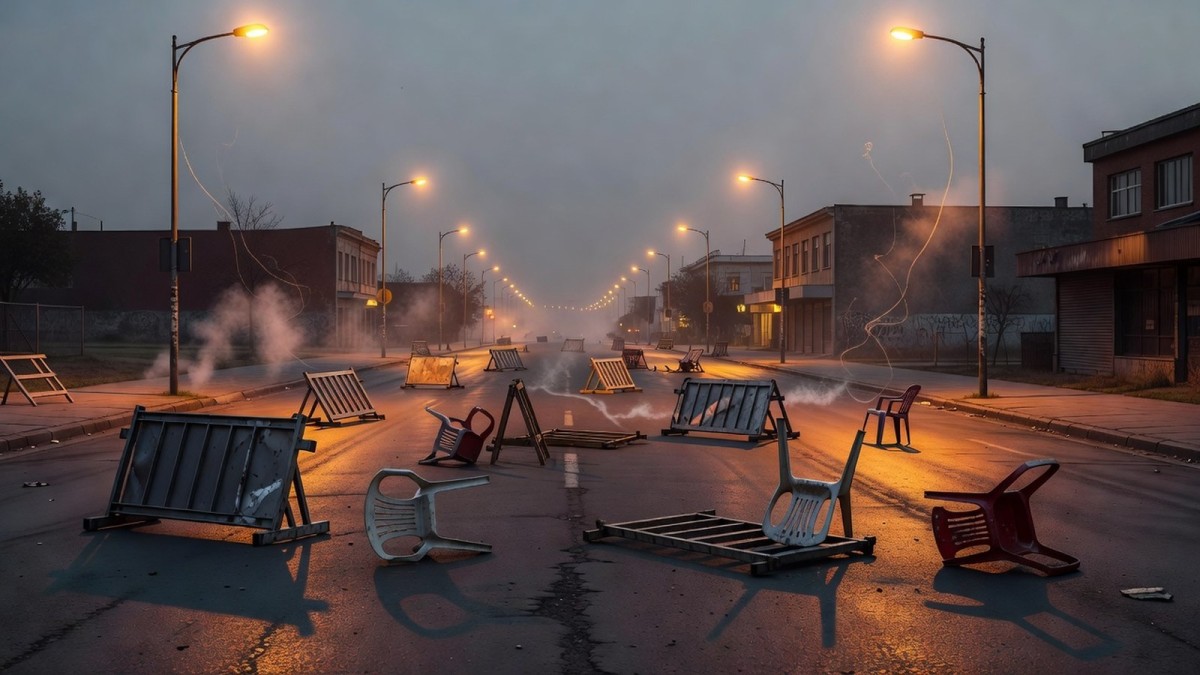
On the evening of 10 October 2026, thousands of citizens gathered near the central administrative district, demanding transparency and a halt to the purge. According to the video, the crowd carried placards and chanted slogans that highlighted the fear of being erased from the democratic process. The atmosphere was charged, reminiscent of a mañanera where citizens confront power directly.
Security forces, described in the footage as a mix of police and paramilitary units, responded by moving in to disperse the assembly. The DW News correspondents reported that thousands were detained as authorities moved to stop the protest. While the exact number of arrests was not disclosed, the scale of the detention suggests a significant mobilization of law‑enforcement resources, akin to the deployment of the Guardia Nacional in Mexico during large‑scale demonstrations.
The detentions have sparked a broader debate about the right to protest in India's largest democracy. Critics argue that the heavy‑handed response undermines civil liberties, while supporters of the crackdown claim it was necessary to maintain public order. The episode has drawn comparisons to past incidents where the Indian state has faced accusations of suppressing dissent, adding another layer to the ongoing discourse about democratic health in the region.
Voices from the Streets
Among the demonstrators were ordinary families, street vendors, and workers from the informal sector—people whose daily livelihood depends on the stability that a fair electoral system promises. In the video, several participants voiced a deep sense of betrayal, stating that the purge threatened to strip them of their voice in the very system that governs their access to public services such as health care, education, and employment.
One woman, speaking in Hindi with a thick accent, explained that her father’s name had been removed from the list without any notice, leaving her unable to vote in the upcoming elections. Her story resonated with many in the crowd, who saw the purge as a bureaucratic overreach that ignored the lived realities of citizens in densely populated neighborhoods, where proof of residence can be as fluid as the daily market in a tianguis.
These personal testimonies echo the experiences of many Mexican families who have faced similar obstacles when trying to register to vote, especially in remote pueblos mágicos where documentation is scarce. The common thread is the fear that administrative actions, however well‑intentioned, can inadvertently marginalize those already on the periphery of political power.
Government Justifications
Officials, as reported by DW News, maintain that the purge is a routine administrative measure aimed at "cleaning up" the electoral rolls. They argue that outdated entries, duplicate registrations, and deceased voters can compromise the credibility of elections, and that removing them is essential for a transparent democratic process. This stance aligns with the Election Commission’s broader mandate to ensure that every vote cast is legitimate and that the system is not vulnerable to manipulation.
The government’s narrative also highlights the technical challenges of maintaining accurate voter databases in a country of over a billion people. With constant migration, urbanization, and changes in household composition, keeping the rolls up to date is a massive undertaking. From this perspective, the purge is presented as a necessary modernization effort, similar to the periodic updates of the INE’s voter registry in Mexico.
Nevertheless, critics point out that the lack of clear communication about the criteria for removal, the appeals process, and the timeline for notifying affected individuals creates an environment ripe for confusion and mistrust. The tension between efficiency and inclusivity is at the heart of the debate, and the current episode in Delhi may serve as a cautionary tale for other democracies grappling with similar issues.
Implications for Indian Democracy
The fallout from the Delhi protest could have far‑reaching consequences for India’s political landscape. Public confidence in the electoral system is a cornerstone of democratic legitimacy, and any perception that voters are being arbitrarily excluded can erode that trust. The DW News footage captured a palpable sense of anger that, if left unaddressed, may translate into broader civic unrest or a decline in voter turnout.
Moreover, the incident arrives at a critical juncture as India prepares for upcoming national elections. The timing intensifies the stakes, as political parties may seek to capitalize on the controversy, either by defending the purge as a safeguard against fraud or by condemning it as an affront to democratic rights. This dynamic mirrors the way Mexican political parties have historically leveraged electoral reforms to rally support among disenfranchised voters.
International observers are also watching closely. India's reputation as the world’s largest democracy carries weight in global forums, and any perception of democratic backsliding can affect its diplomatic standing. The episode may prompt calls from civil society groups, both within India and abroad, for greater transparency and safeguards to protect voter rights.
Looking Ahead: Possible Paths Forward
In the wake of the mass detentions, civil society organizations have begun to demand a more transparent and participatory process for updating voter rolls. Proposals include establishing clear guidelines for removal, providing advance notice to affected individuals, and creating an accessible appeals mechanism. Such measures could help balance the need for administrative accuracy with the fundamental right to vote.
One potential avenue is the involvement of independent watchdogs, akin to Mexico’s CONEVAL, to audit the purge process and ensure that it does not disproportionately impact vulnerable populations. By introducing third‑party oversight, the government could rebuild trust and demonstrate a commitment to democratic principles.
Ultimately, the resolution of this crisis will depend on dialogue between authorities and the citizens they serve. The DW News report underscores the intensity of the public’s reaction, and the sheer number of detentions signals that the issue cannot be brushed aside. As India moves toward its next electoral cycle, the way it addresses the concerns raised in Delhi will be a litmus test for the health of its democracy, echoing the broader Latin American struggle to safeguard voting rights amid bureaucratic reforms.
By Rosa Martinez, Staff Writer
This article was produced with AI-assisted research and editorial support. Reporting is based on the source material cited below. Sources: DW News video report (10 October 2026); DW News; Global1.News
What's Your Reaction?
 Like
0
Like
0
 Dislike
0
Dislike
0
 Love
0
Love
0
 Funny
0
Funny
0
 Wow
0
Wow
0
 Sad
0
Sad
0
 Angry
0
Angry
0
Latin America/Andes Correspondent at Global1.News. Based in Bogota, covering politics, environment, energy, and social movements across the Andean region. Passionate about environmental journalism and communities protecting their land.










Comments (0)