
Friendship Inn seeing increase in demand ahead of Thanksgiving Weekend
As Thanksgiving approaches, Saskatoon’s Friendship Inn is bracing for what its director describes as the busiest meal‑service day of the year. “Thanksgiving is always our favourite event of the year.
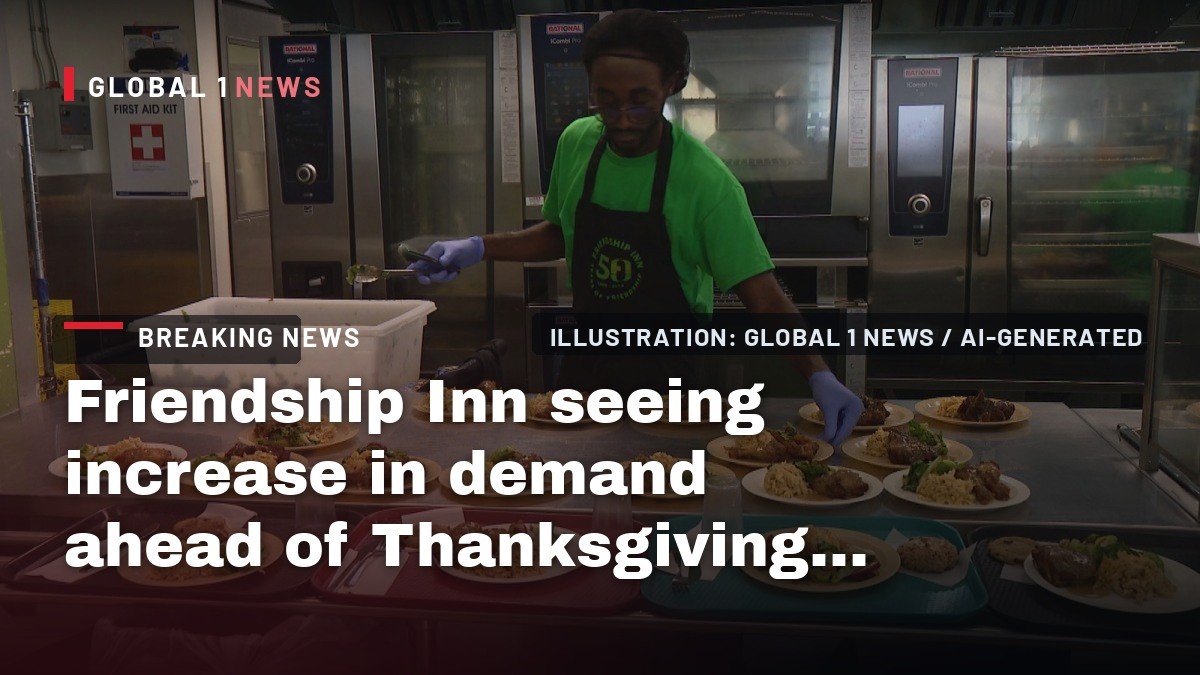
As Thanksgiving approaches, Saskatoon’s Friendship Inn is bracing for what its director describes as the busiest meal‑service day of the year. The nonprofit kitchen, which has been feeding thousands of residents for decades, reported serving 55,000 meals in September – the third straight month it has crossed the 50,000‑meal threshold. That steady climb in volume, coupled with a growing appetite for the annual turkey dinner, is prompting both staff and volunteers to prepare for what could be a record‑breaking weekend.
Thanksgiving demand hits new heights
Friendship Inn’s CEO, Sandra Kary, says the Thanksgiving turkey dinner has become the organisation’s flagship event. “Thanksgiving is always our favourite event of the year. I mean, Christmas is fantastic, but Thanksgiving has its own really special charm,” Kary told Global News Canada. She added that the holiday carries “a really great vibe in the community to come together and offer that wonderful traditional turkey dinner.”
Last year the inn served close to 2,500 meals on Thanksgiving, and Kary anticipates that figure will be surpassed this year. “This is probably our highest one… and we might go over that this time,” she said, noting that each successive year brings a larger crowd and a more complex logistical challenge.
Scaling up: from 50,000 to 55,000 meals
The September tally of 55,000 meals marks the third consecutive month the inn has plated more than 50,000 servings. That consistency reflects a broader trend of rising demand for food‑bank services across Canada, where cost‑of‑living pressures have forced many households to rely on charitable food programmes. Kary linked the uptick directly to local economic conditions: “When those costs increase and people are struggling to make ends meet or they’re on a fixed income… food is the first thing that gets pushed to the side.”
For a city like Saskatoon, which has seen steady population growth in recent years, the combination of higher housing costs and a growing senior demographic on fixed pensions creates a perfect storm for increased reliance on community‑run kitchens. The inn’s experience mirrors that of other urban centres where food‑security agencies report similar spikes in client numbers.
Volunteer mobilisation and preparation
Preparing for the Thanksgiving rush begins roughly a week in advance. The kitchen staff and volunteers coordinate to pre‑cook and portion meals so that the service can run smoothly on the day itself. “The team works to prepare the food about a week in advance, so they are ready to go on the day,” Kary explained. This lead‑time allows the inn to manage the high volume without compromising food safety or quality.
Volunteer recruitment is a critical component of that preparation. The inn relies on community members to staff the kitchen, serve meals, and handle the inevitable surge of diners. While the inn already has a robust volunteer base, Kary emphasised that “we are always excited when the community still supports us with turkeys or whatever else is on our wish list for donations.” The call for hands‑on help underscores the collaborative spirit that sustains many Canadian charitable operations.
Funding the plates: the cost of a meal
Financial support remains the most pressing need for Friendship Inn. Kary disclosed that it costs five dollars per plate to produce a meal. “Finances is the best way you can help us right now,” she said, highlighting the direct link between donor contributions and the ability to serve each guest. While the inn welcomes in‑kind donations such as turkeys, coffee, peanut butter and jam, cash gifts enable the organisation to purchase bulk staples, maintain kitchen equipment, and cover utility expenses.
In the broader Canadian context, charitable food providers often operate on thin margins, with each dollar stretching to feed multiple individuals. The five‑dollar per‑plate figure aligns with national averages reported by food‑bank networks, illustrating the modest yet essential financial requirements that keep community kitchens afloat.
Community response and donor engagement
The inn’s wish list reflects the practical needs of a large‑scale kitchen. Apart from fresh turkeys, the organisation frequently seeks pantry staples and beverage items that can be stored and used throughout the year. “We’re always looking for things like coffee and peanut butter and jam,” Kary noted, indicating that even small, everyday items play a vital role in meal preparation.
Local businesses and individual donors have historically stepped up during the holiday season, providing both monetary and material support. This pattern of generosity is part of a wider Canadian tradition of community solidarity during festive periods, where charitable giving often spikes in tandem with personal celebrations.
Implications for Saskatoon’s social safety net
The rising demand at Friendship Inn raises questions about the adequacy of existing social assistance programmes in Saskatoon and the province of Saskatchewan. As Kary observed, “when those costs increase and people are struggling to make ends meet… food is the first thing that gets pushed to the side.” The inn’s growing client numbers suggest that many households are experiencing food insecurity despite provincial support mechanisms such as income assistance and seniors’ benefits.
Policy analysts point to the need for coordinated action between municipal governments, provincial ministries, and non‑profit organisations to address the root causes of hunger. While charitable kitchens provide essential stop‑gap relief, sustainable solutions require affordable housing, wage growth, and targeted subsidies for low‑income families. The Thanksgiving surge at Friendship Inn serves as a micro‑cosm of a larger national conversation about how to protect vulnerable Canadians from the impacts of rising living costs.
Looking ahead: sustaining the momentum
With Thanksgiving just around the corner, Friendship Inn is poised to meet, and possibly exceed, its historical service levels. The organisation’s ability to adapt – scaling up meal production, mobilising volunteers, and courting donors – will be a test of its operational resilience. “Every year grows, and every year we’re just amazed at how it all comes together,” Kary reflected, capturing the blend of optimism and realism that defines the inn’s approach.
Beyond the holiday, the inn’s leadership is already planning for the next quarter, anticipating that the post‑Thanksgiving period will bring its own set of challenges as families stretch limited resources into the winter months. Continued community support, combined with strategic advocacy for stronger social policies, will be essential to ensure that the inn can keep feeding Saskatoon’s most vulnerable residents well into the future.
This article was produced with AI-assisted research and editorial support. Reporting is based on the source material cited below. Sources: Global News Canada; globalnews.ca; Global1.News (10 October 2026).
By Alex Thompson, Staff Writer
What's Your Reaction?
 Like
0
Like
0
 Dislike
0
Dislike
0
 Love
0
Love
0
 Funny
0
Funny
0
 Wow
0
Wow
0
 Sad
0
Sad
0
 Angry
0
Angry
0

Canada Correspondent at Global1.News. Based in Toronto, covering Canadian politics, energy, trade, and US-Canada relations. Provides the Canadian perspective on North American and global affairs.















Comments (0)