
a16z’s Olivia Moore on the state of consumer AI
Olivia Moore’s latest take on consumer AI reads like a pep‑talk for the VC‑fed hype machine, but from where I sit running a real data centre, the story is a lot less rosy.
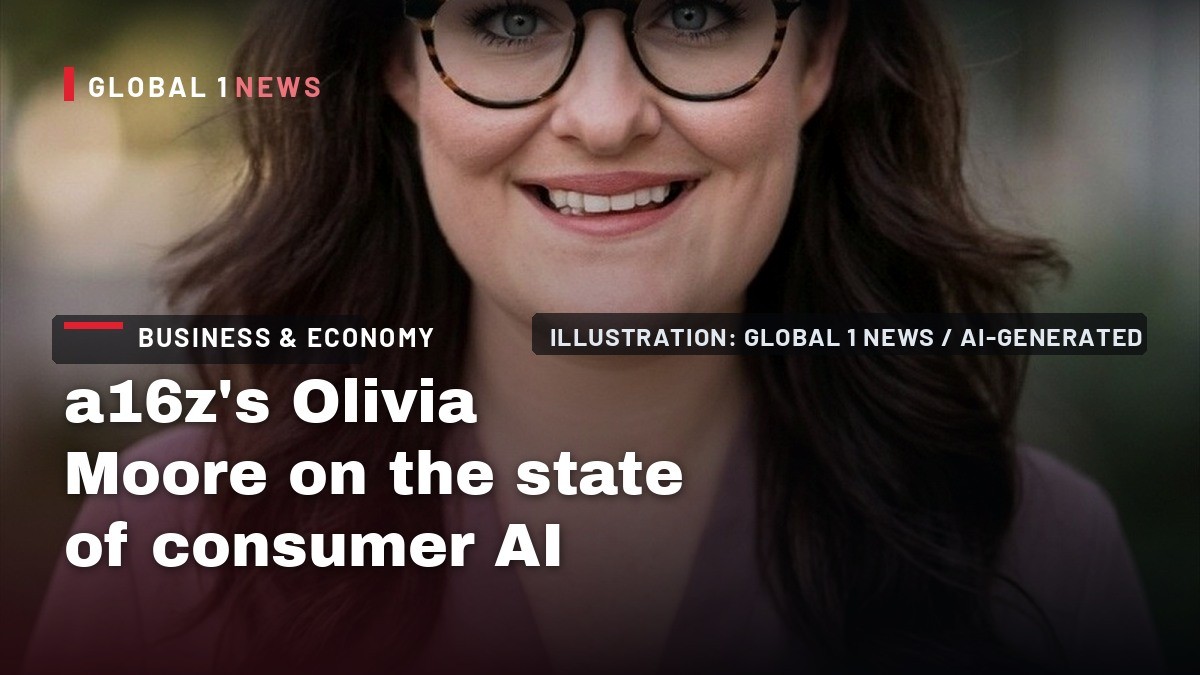
Olivia Moore’s latest take on consumer AI reads like a pep‑talk for the VC‑fed hype machine, but from where I sit running a real data centre, the story is a lot less rosy. The a16z partner points to a “huge opportunity” if the sector can move beyond subscriptions and token‑based API charges. She flags a tiny adoption rate – just 2.2 % of U.S. households paying for AI – and notes that most revenue still comes from enterprise‑oriented plans. That sounds promising on paper, but when you strip away the buzz, the economics still leave independent hosting providers and boot‑strapped founders staring at a cost curve that dwarfs classic internet services.
Why the 2.2 % Adoption Figure Matters
The 2.2 % number isn’t a typo; it’s the hard‑won reality that Moore herself cites. In a market where only a handful of households are actually paying for AI, the upside for any new consumer‑facing app is limited unless you can monetize at scale. The report’s own data shows ChatGPT still dominates the top‑100 list, with smaller players like Suno and ElevenLabs holding modest but real staying power. For a founder with a shoestring budget, that means you’re competing not just for users but for the sliver of the market that’s willing to open their wallets.
From a risk perspective, betting on a subscription‑only model is a gamble. Even the “Go” plan Moore mentions – $8 a month – is a price point that many consumers balk at if there’s no clear value proposition. If you’re trying to run AI workloads on your own servers, that $8 per user translates into a per‑user cost that can easily outstrip the revenue you can collect, especially when you factor in the marginal cost of running large language models.
Cost Structures: AI vs. Classic Internet Services
Moore acknowledges that the marginal cost of AI services remains “a lot higher” than the likes of Facebook or Google Search. That’s a blunt truth that the hype‑driven press releases often gloss over. When you’re paying for GPU cycles, high‑speed networking, and the electricity to keep those chips cool, the per‑request cost can be an order of magnitude higher than serving a static web page.
For independent hosting firms, this cost gap forces a hard choice: either absorb the expense and hope volume makes up for it, or push for cheaper models. Moore hints at a shift – “cheaper models, especially for some consumer use cases” – but she doesn’t spell out how fast that transition will happen. In practice, you’ll see a lag as developers re‑engineer pipelines to run lighter models, and that lag can be fatal for a startup trying to move quickly.
The “Pro‑Consumer” Reality Check
Moore’s own language reveals a key insight: most “consumer AI” today is really “prosumer AI.” She breaks the top‑100 apps into three revenue‑generating categories – product‑building tools, AI ad generators, and work‑management assistants – all of which cater to power users who are willing to pay for productivity gains. The average consumer, however, is still looking for free access with ads, a model Moore herself says “most people would actually rather have free access to something and see some ads.”
This split matters because it dictates the infrastructure you need. Power‑user tools demand low latency, high reliability, and often run on the latest models. Ad‑supported free apps can get away with older, cheaper models but must handle massive traffic spikes. If you’re a small hosting outfit, you’ll need to juggle both worlds or pick a niche and stick to it.
Speed of Adoption: 18 Months to Enterprise, Six Months to Whitespace
Moore points out a pattern: companies like Gamma, ElevenLabs, and Cursor start as consumer‑first and become “majority‑enterprise businesses” within about 18 months. That rapid transition suggests a funnel where consumer traction is a stepping stone to higher‑margin enterprise contracts. It also means that the window for pure consumer monetisation is narrow – you have to either pivot fast or secure a sustainable revenue stream early on.
She also flags a glaring gap: “no entrants in our top 100 list” for categories like social, dating, marketplaces, retail, travel, finance, and health. That’s a six‑month opportunity horizon, according to Moore. For a founder with a real‑world data centre, that’s a tempting bet, but it also carries risk. Those verticals are heavily regulated, data‑intensive, and often require domain‑specific models – all of which drive up costs and complexity.
Open‑Source Models: A Possible Cost‑Escape Hatch?
When asked about keeping AI costs down, Moore mentions “open source or other lightweight models.” The idea is that by moving off the pricey frontier models, startups can shave margins and stay competitive. In practice, open‑source models still need robust hardware to run at scale, and the support ecosystem is thin compared to the commercial offerings from OpenAI or Anthropic.
From an operational standpoint, you’ll need to weigh the savings on model licensing against the engineering overhead of maintaining and updating those models. For a small team, the latter can become a hidden cost that erodes the headline savings. Still, the trend toward lighter models is real, and we’re already seeing “Go” plans that likely run on cheaper back‑ends, so there is a path forward if you can align your product to those use cases.
Strategic Takeaways for Independent Founders
First, don’t chase the subscription‑only dream. If you’re targeting the 2.2 % of households that currently pay for AI, you need a compelling value proposition that justifies the $8‑plus monthly price. Second, consider an ad‑supported freemium tier to capture the broader audience that Moore says prefers free access with ads. That model can subsidise the heavy compute costs while you build a user base.
Third, pick a vertical wisely. The whitespace categories Moore highlights are tempting, but they demand domain‑specific data and compliance work that can quickly overwhelm a small operation. If you do go there, start with a lightweight model and plan a rapid migration to a more capable one as you lock in enterprise contracts.
Finally, keep an eye on the 18‑month horizon. If you can prove product‑market fit with a consumer‑first app, you’ll likely attract enterprise interest – and that’s where the real margins lie. Build your infrastructure with that pipeline in mind: modular, scalable, and ready to handle a shift from high‑volume, low‑value traffic to lower‑volume, high‑value enterprise workloads.
Actionable Advice: Build for the Long Haul
Start by auditing your compute costs. Compare the price of running a frontier model versus a lightweight open‑source alternative for your core use case. If the gap is too wide, pivot your product to a task that can be handled by the cheaper model – think text summarisation, simple chat, or audio‑to‑text, rather than full‑blown generative writing.
Next, design a tiered pricing strategy from day one. Offer a free, ad‑supported tier to capture the mass market, a modest subscription tier at $8‑plus for power users, and an enterprise tier with SLA guarantees. This layered approach spreads risk and gives you multiple revenue levers.
Finally, invest in monitoring and automation. The cost of a single mis‑configured GPU node can eat into your margins faster than a bad marketing campaign. Use the lessons from a decade of running production servers – redundancy, proactive alerts, and capacity planning – to keep your infrastructure lean and your service reliable.
In short, the consumer AI boom is still in its infancy, and the hype is only part of the story. The real challenge for founders and independent hosting providers is to turn that hype into a sustainable business model that survives the inevitable cost pressures. If you can do that, you’ll not only ride the wave – you’ll help shape where it goes.
— Allan Ali, Founder
This article was produced with AI-assisted research and editorial support. Reporting is based on the source material cited below. Sources: TechCrunch; techcrunch.com; Global1.News (10 October 2026).
By Allan Ali, Global1.News
What's Your Reaction?
 Like
0
Like
0
 Dislike
0
Dislike
0
 Love
0
Love
0
 Funny
0
Funny
0
 Wow
0
Wow
0
 Sad
0
Sad
0
 Angry
0
Angry
0

Publisher of Global1.News. Automation architect, systems builder, and the guy making sure the truth gets published.














Comments (0)