
Why Is China Proposing Reciprocal Nuclear Laboratory Visits?
In the wake of the September 2024 China‑U.S. leaders’ summit, which pledged to construct “a constructive relationship of strategic stability on the basis of respect, fairness, and reciprocity,” a new diplomatic overture has emerged: reciprocal visits to each other’s nuclear laboratories.
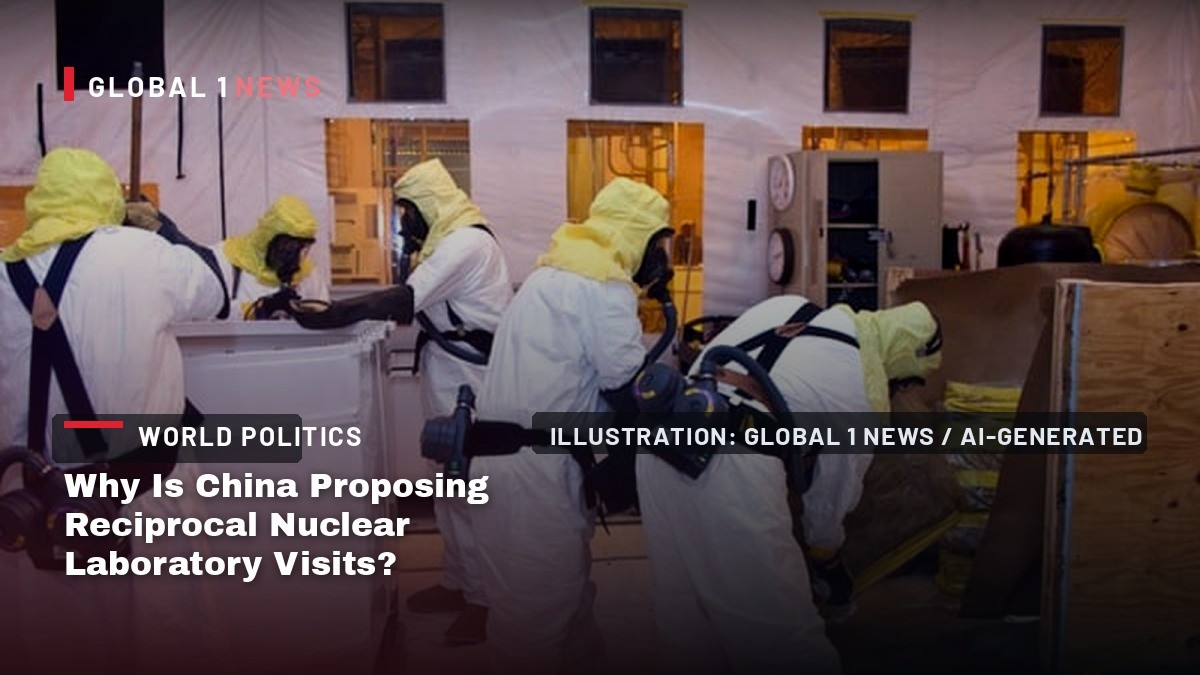
In the wake of the September 2024 China‑U.S. leaders’ summit, which pledged to construct “a constructive relationship of strategic stability on the basis of respect, fairness, and reciprocity,” a new diplomatic overture has emerged: reciprocal visits to each other’s nuclear laboratories. The proposal, first raised by Chinese officials in meetings earlier this year, has been reported by CNN and subsequently examined by The Diplomat. This development revives a historical pattern of limited technical exchange that dates back to the mid‑1990s, while also reflecting China’s evolving articulation of transparency and security in its 2025 White Paper on Arms Control and the 2026 NPT Compliance Report. The following analysis situates the current initiative within that legacy, assesses its potential to deepen limited nuclear transparency, and considers the broader strategic implications for Northeast Asian security.
Historical Roots of Lab‑to‑Lab Exchanges
The United States and China inaugurated the “U.S.–China Lab‑to‑Lab Technical Exchange Program” (CLL) in the mid‑1990s. Under this arrangement, scientists from the U.S. Department of Energy’s nuclear weapons laboratories and Chinese institutions such as the China Academy of Engineering Physics engaged in supervised technical dialogues. The program’s stated purpose was the exchange of information concerning the operation and management of nuclear facilities, explicitly framed to safeguard each side’s national security interests.
During the early phase of CLL, Chinese hosts escorted American scientists through the Lop Nur test site and other active facilities, offering a limited view of China’s nuclear infrastructure. Conversely, the United States initially consented to host Chinese researchers at the Nevada Test Site, though that commitment was later withdrawn. The asymmetry of participation—exemplified by the China Academy of Engineering Physics’ refusal in 1996 to join a joint seismic‑data analysis and the Northwest Institute of Nuclear Technology’s concern over yield‑estimation risks—underscored the delicate balance between technical cooperation and strategic sensitivity.
Why the 1990s Experience Matters Today
Although the CLL program was suspended in the late 1990s amid deteriorating bilateral relations and a 1999 U.S. Congressional report accusing China of illicit technology transfer, its legacy endures as a precedent for “limited transparency.” The earlier exchanges demonstrated that scientific dialogue could proceed without divulging core warhead counts, deployment patterns, or readiness postures. Moreover, they revealed the procedural safeguards—government supervision, restricted scopes, and confidentiality agreements—necessary to protect sensitive information while fostering mutual understanding.
When contemporary Chinese officials propose reciprocal laboratory visits, they are invoking this historical template. The current diplomatic climate differs markedly from the late‑1990s, yet the fundamental question remains: can technical engagement be calibrated to enhance confidence without compromising strategic deterrence? The CLL experience suggests that a narrowly defined agenda—focused on arms‑control verification technologies, facility management practices, and export‑control procedures—might be feasible if both sides agree on strict parameters.
China’s Contemporary Transparency Narrative
China’s 2025 White Paper on Arms Control emphasizes “transparency in intentions and policies” as the most practical contribution to international security, while the 2026 NPT Compliance Report cautions that “inappropriate transparency may also undermine strategic stability.” This duality reflects Beijing’s attempt to balance openness with the preservation of its strategic deterrent. In March 2026, China organized a high‑level visit to the decommissioned 816 nuclear facility in Chongqing, inviting permanent UN representatives, disarmament ambassadors, and delegations from nearly twenty nations. The visit was framed as a confidence‑building measure, illustrating China’s willingness to showcase non‑operational sites as a gesture of goodwill.
However, the 816 tour also delineates the limits of China’s current transparency posture. While decommissioned sites can be displayed without revealing active warhead production or testing capabilities, opening an operational laboratory would entail a qualitatively different level of disclosure. The Chinese authorities have consistently stressed that any step toward openness must be “step by step” and calibrated to their “security environment and actual circumstances.” This language, drawn directly from official documents, signals a cautious, incremental approach to any future reciprocal visits.
The U.S. Position and Prospects for Reciprocity
According to the October 6 CNN report, U.S. officials have expressed willingness to discuss visits to nuclear test sites, indicating an openness to reciprocal access that mirrors China’s earlier invitation to American scientists. Yet the United States’ historical reticence—evident in the withdrawal of the Nevada Test Site commitment during the original CLL—suggests that any contemporary arrangement will be subject to rigorous inter‑agency review, likely involving the Department of Energy, the State Department, and the National Nuclear Security Administration.
U.S. policymakers may view reciprocal visits as a practical avenue to test the feasibility of limited nuclear transparency, complementing the broader strategic nuclear dialogue that has been ongoing since the 2014 Strategic Stability Dialogue. By gaining first‑hand insight into Chinese laboratory organization, staffing, and arms‑control workflows, American experts could refine verification methodologies and reduce misperception risks. Nonetheless, the United States will likely insist on safeguards that prevent the inadvertent exposure of classified design information or operational data.
Potential Content of Future Laboratory Visits
If the proposed exchanges move beyond symbolic tours, the substantive agenda could resemble the 1997 CLL export‑control workshop, which helped Chinese participants understand the functional relationships among U.S. laboratories, government agencies, and technical experts. Topics might include: (1) best practices for managing nuclear‑material protection and accounting; (2) protocols for arms‑control verification technology development; (3) organizational structures for integrating arms‑control responsibilities within a weapons research institution; and (4) export‑control compliance mechanisms.
Such a curriculum would avoid direct discussion of warhead inventories, targeting systems, or deployment strategies—areas that both sides consider core to their deterrent credibility. Instead, the focus would be on procedural and technical aspects that are relevant to confidence‑building and verification, thereby aligning with the “limited transparency” model articulated in both the 1990s CLL and China’s recent white papers.
Strategic Implications for Northeast Asia
Enhanced laboratory dialogue between the United States and China could reverberate across the broader Northeast Asian security architecture. Regional actors such as South Korea, Japan, and the Republic of Korea’s Ministry of Unification have long monitored U.S.–China nuclear interactions as a barometer of strategic stability. A successful reciprocal visit framework might encourage similar confidence‑building measures among other nuclear‑armed states, potentially reducing the incentive for regional arms races.
Conversely, any perception that one side is gaining undue insight into the other’s nuclear capabilities could provoke counter‑measures, including accelerated modernization of missile forces or heightened alert postures. Think tanks such as the Asan Institute for Policy Studies and the Korea Development Institute (KDI) have warned that misinterpretations of limited transparency initiatives can exacerbate security dilemmas. Therefore, the diplomatic choreography of these visits must be meticulously managed to ensure that the intended confidence‑building effect is not undermined by regional mistrust.
Forward‑Looking Assessment
The resurgence of reciprocal nuclear laboratory visits reflects a nuanced evolution in U.S.–China strategic engagement. Drawing on the historical CLL experience, both sides appear to be testing a calibrated pathway toward limited transparency—one that respects national security while fostering technical understanding. China’s recent emphasis on “step‑by‑step” transparency, coupled with the United States’ expressed willingness to discuss test‑site access, suggests a tentative convergence of interests.
Future success will hinge on several variables: the establishment of clear, mutually agreed scopes; robust verification and confidentiality protocols; and the integration of these exchanges into the broader strategic nuclear dialogue framework. If managed effectively, laboratory visits could become a cornerstone of confidence‑building, reducing the risk of miscalculation in a region where nuclear posturing remains a central strategic calculus. For policymakers in Seoul, Tokyo, and beyond, monitoring this development will be essential, as it may shape the contours of Northeast Asian security for the coming decade.
This article was produced with AI-assisted research and editorial support. Reporting is based on the source material cited below. Sources: The Diplomat; thediplomat.com; Global1.News (11 October 2026).
By Prof. David Park, Staff Writer
What's Your Reaction?
 Like
0
Like
0
 Dislike
0
Dislike
0
 Love
0
Love
0
 Funny
0
Funny
0
 Wow
0
Wow
0
 Sad
0
Sad
0
 Angry
0
Angry
0

East Asia/Technology Correspondent at Global1.News. Seoul-based voice covering Korean politics, technology, business, and culture. Analyzes how technology and geopolitics intersect across East Asia.















Comments (0)