
Owner, businessman & player: Messi has big plans as a golden era ends
Lionel Messi, the 39‑year‑old Argentine icon, will step onto the pitch for the last time in a Buenos Aires friendly against Benin. The match, his 208th cap, marks the end of a national team career that has made him the country’s most‑capped player and record scorer.
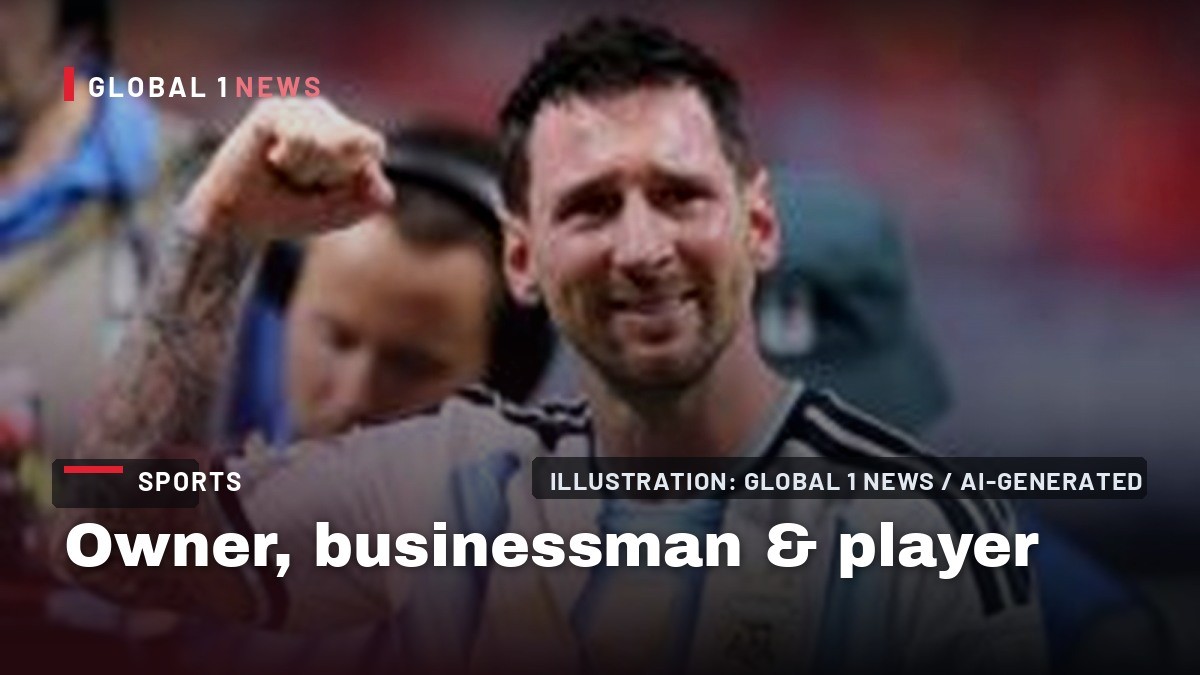
Lionel Messi, the 39‑year‑old Argentine icon, will step onto the pitch for the last time in a Buenos Aires friendly against Benin. The match, his 208th cap, marks the end of a national team career that has made him the country’s most‑capped player and record scorer. Six weeks after Argentina’s World Cup final loss to Spain, Messi announced his retirement on 31 August, saying he had “nothing more to give.” While coach Lionel Scaloni left the door ajar for a possible comeback, the sentiment among those closest to the star is that the chapter is truly closed. Yet the story does not end at the national jersey; Messi’s next act is already taking shape, and it is as much about business as it is about football.
From the Field to the Boardroom: Why Messi Chose Ownership
When asked whether he preferred coaching or club ownership, Messi’s answer was decisive: he sees himself as an owner. He explained that a coach lives and dies by each Saturday, juggling endless tactical decisions, whereas an owner can shape a club’s direction from a broader perspective. Yet he does not intend to be a distant absentee. Messi wants to be involved in every facet of a club’s life, from managerial appointments to day‑to‑day operations, while still avoiding the relentless travel that defines a coach’s routine.
This preference reflects a pattern that has already emerged in his post‑national team plans. Messi’s first foray into ownership began in Spain, where he purchased UE Cornellà – a fifth‑tier side on Barcelona’s outskirts – in April. The club serves as a nursery for young talent, a project that aligns with his long‑standing commitment to youth development. Soon after, on 1 October, he was announced as the new owner of CD Eldense, a second‑division team, pending approval from the Spanish sports council (CSD). Eldense will become the flagship of his football operation, with former Villarreal boss Javi Calleja appointed manager to steer the club away from relegation threats.
Building a European Football Network
Messi’s European ambitions are anchored by a two‑pronged strategy. First, he will run both UE Cornellà and CD Eldense through trusted intermediaries who act as liaisons between him and the clubs. This structure allows him to maintain oversight without being mired in daily minutiae, a balance that suits his desire for involvement without the grind of a coaching schedule.
Second, Messi’s brand power has already begun to attract commercial interest. Within days of his Eldense acquisition, roughly a dozen sponsors approached, including brands that had previously courted the club’s former owners. Some of these sponsors already have relationships with Messi, underscoring how his name can catalyse revenue streams that might otherwise take years to develop.
South American Roots: The LSM Project in Uruguay
Messi’s football footprint extends beyond Europe. In May 2025, he and former teammate Luis Suárez co‑founded Deportivo LSM in Uruguay. The club achieved promotion to the country’s third tier in its inaugural season, a testament to the duo’s ability to translate star power into tangible sporting success. Early discussions hinted at a broader network of clubs, but the financial demands of climbing multiple divisions proved a deterrent, and the plan was scaled back. For now, Messi’s focus remains on Eldense’s ascent to La Liga, while LSM serves as a proof‑of‑concept for his vision of cross‑border club development.
The Uruguay venture also illustrates Messi’s commitment to nurturing talent in his native continent. By investing in a club that competes at a modest level, he creates pathways for South American players to showcase their abilities, potentially feeding talent into his European projects or the Messi Cup, a youth tournament he champions.
The Messi Cup: From Eight Teams to a Continental Showcase
Parallel to his ownership ambitions, Messi has poured resources into youth football through the Messi Cup, an under‑16 academy tournament that launched in 2025 with eight teams. Last year, his attendance was limited to a final or two matches, but this year he surprised observers by sitting through every game each day. The tournament expanded to 16 teams, beginning on 25 October at Inter Miami’s facilities in Florida, and featured elite academies from clubs such as Atlético Madrid, Chelsea, Barcelona, Inter Milan, Arsenal, and UE Cornellà.
The Messi Cup reflects a personal passion: Messi regularly attends his son’s games and values the role of grassroots development. By hosting the tournament in Miami, he links his American club commitments with his broader youth‑football agenda, creating a bridge between the United States, Europe, and South America.
Business Ventures Beyond the Pitch
Messi’s commercial empire has grown substantially since his father, Jorge Messi, first managed his affairs. Forbes estimated his net worth at around $1.1 billion in June, with earnings of roughly $140 million in the prior year split between football and business. While the exact figures are not disclosed in the source, the breadth of his portfolio is evident.
His most visible non‑football asset is the MiM Hotels collection, a six‑property boutique chain spanning from Ibiza to Andorra. Operated under a rental agreement with the Majestic hotel group since 1 November 2025, the brand leverages Messi’s name – “MiM” combines his initials with the hotel group’s moniker. In his hometown of Rosario, a family‑run development called Carrasco M, comprising 24 homes along the Paraná River, is marketed by Ángel Di María’s agency, further cementing Messi’s ties to Argentine real estate.
Additional ventures include a partnership in the restaurant chain El Club de la Milanesa, which plans to open five Catalan locations, the first slated for Castelldefels. He also holds a multi‑year drinkware deal with Stanley, marking the brand’s first long‑term athlete partnership, where Messi contributed to product design decisions.
Inter Miami: A Club with Shared Ownership
Messi’s contract with Inter Miami runs through the 2028 season, with annual reviews. A clause grants him a share of the club upon retirement, though he has no intention of launching a separate franchise. This arrangement ensures that his involvement with the MLS side will continue in a governance capacity, aligning with his broader ownership aspirations while keeping his focus on the European projects that dominate his post‑playing plans.
The Miami connection also reinforces his transatlantic lifestyle. His family resides in Castelldefels, near Barcelona, but the club’s facilities host the Messi Cup, intertwining his American and European commitments. This dual presence reflects a modern football executive’s reality: operating across continents, leveraging brand equity, and maintaining personal roots.
Looking Ahead: What the End of an Era Means for Messi and Latin America
Messi’s farewell to the Argentine shirt closes a chapter that defined a generation of South American football. Yet his trajectory illustrates a new model for Latin American stars: transitioning from on‑field legend to multi‑sector entrepreneur and club owner. By investing in youth academies, European clubs, and diversified businesses, Messi is building a legacy that extends beyond trophies.
For the region, his moves signal both opportunity and caution. The Eldense venture shows how a global brand can attract sponsorships and elevate a modest club, offering a template for other Latin American investors. At the same time, the early setbacks in scaling a network of clubs, as seen with the LSM project, remind us that financial realities can temper ambition.
Messi’s story, now shifting from the roar of the stadium to boardrooms and hotel lobbies, will be watched closely across the continent. It underscores how the fame earned on the pitch can be harnessed to shape economies, nurture talent, and influence the sport’s future. As the world says goodbye to his Argentina jersey, the next act promises to be equally consequential – not just for Messi, but for the broader Latin American football ecosystem.
This article was produced with AI-assisted research and editorial support. Reporting is based on the source material cited below. Sources: BBC News Latin America; bbc.co.uk; Global1.News (08 October 2026).
By Elena Vasquez, Staff Writer
What's Your Reaction?
 Like
0
Like
0
 Dislike
0
Dislike
0
 Love
0
Love
0
 Funny
0
Funny
0
 Wow
0
Wow
0
 Sad
0
Sad
0
 Angry
0
Angry
0

Latin America Correspondent at Global1.News. Based in Mexico City, covering politics, economics, energy, and culture across the region. Brings an on-the-ground perspective to stories spanning from the Rio Grande to Patagonia.










Comments (0)