
Gaza Still Reeling as West Bank Violence Escalates One Year After Ceasefire
In the latest Al Jazeera English report aired on 10 October 2026, correspondents Tareq Abu Azzoum and Nour Odeh painted a stark picture of a region still caught in the throes of conflict a full year after the ceasefire that was meant to usher in a new era of calm.
In the latest Al Jazeera English report aired on 10 October 2026, correspondents Tareq Abu Azzoum and Nour Odeh painted a stark picture of a region still caught in the throes of conflict a full year after the ceasefire that was meant to usher in a new era of calm. From the battered streets of Gaza City to the increasingly volatile settlements of the West Bank, the footage and interviews reveal a landscape where humanitarian relief struggles to keep pace with renewed hostilities, and where political promises of a two‑state solution appear ever more distant. As a Nigerian correspondent for Global1.News, I find it essential to connect these developments to broader African concerns about conflict resolution, post‑war reconstruction, and the role of international actors in fragile states.
Gaza’s Ongoing Humanitarian Crisis
The video opens with Tareq Abu Azzoum walking through a devastated neighbourhood in Gaza, where the remnants of homes shattered by recent Israeli strikes still litter the streets. He notes that despite the ceasefire signed in 2025, Israeli air raids have continued to target what the Israeli defence ministry describes as “militant infrastructure,” leaving civilian areas exposed to repeated damage. The report underscores that the destruction has not been limited to a single episode; rather, it is part of a pattern of intermittent attacks that have prevented any sustained period of rebuilding.
Abu Azzoum’s commentary highlights the stalled reconstruction effort, pointing to the fact that many of the rubble‑filled sites remain untouched because essential building materials and permits have not been allowed to enter Gaza. He cites the ongoing blockade as a key factor, noting that the flow of construction supplies is tightly controlled, which in turn hampers the ability of families to return to their homes. The footage shows families living in makeshift shelters, children playing amid broken walls, and humanitarian convoys that appear overwhelmed by the scale of need.
From an African perspective, the situation mirrors challenges faced in post‑conflict zones across the continent, where access restrictions and politicised aid delivery often delay reconstruction. The report’s emphasis on the “stalled reconstruction” resonates with experiences in places like South Sudan and the Central African Republic, where peace agreements have not automatically translated into tangible rebuilding on the ground. The Gaza case, as presented by Al Jazeera, underscores how fragile ceasefires can become a pretext for continued pressure tactics, rather than a genuine pathway to peace.
Escalating Settler Violence in the West Bank
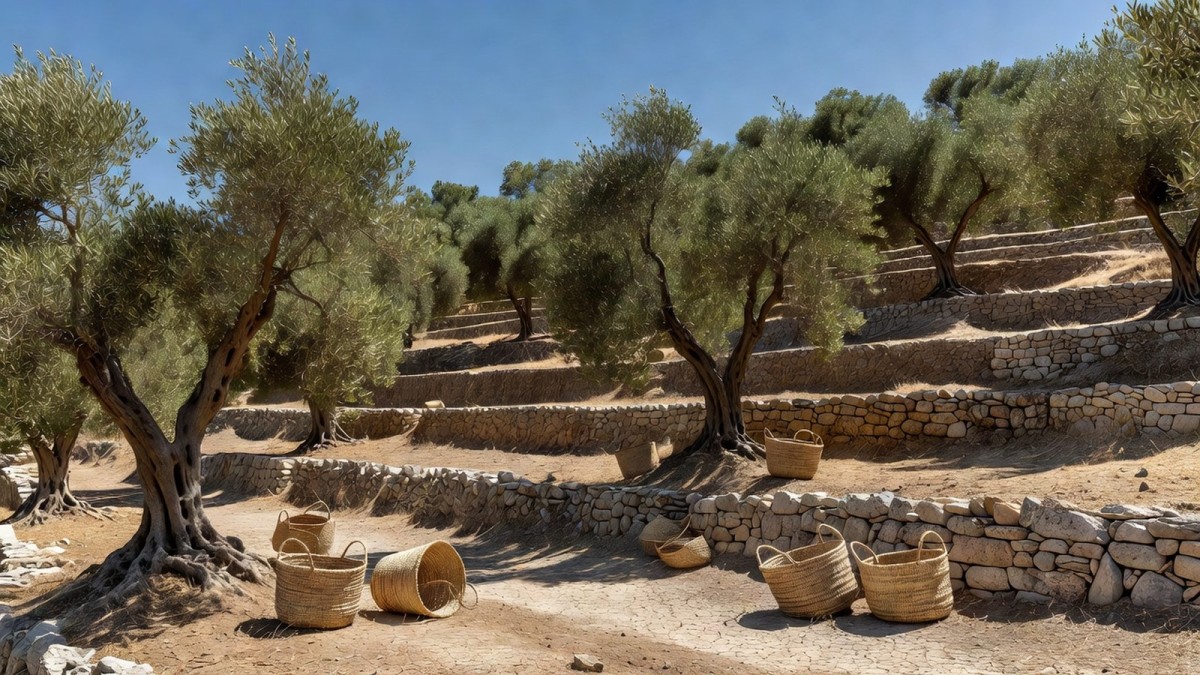
Switching focus, the report’s second correspondent, Nour Odeh, takes us to Ramallah, where she documents a surge in settler violence and settlement expansion across the occupied West Bank. She describes a series of incidents in which Israeli settlers have attacked Palestinian farmers, vandalised olive groves, and erected new outposts on land claimed by Palestinians for future statehood. The footage captures tense confrontations, with Palestinian residents shouting slogans of resistance as they attempt to protect their fields.
Odeh notes that the pattern of violence has intensified since the ceasefire, suggesting that the lull in large‑scale military operations has emboldened settler groups to pursue more aggressive expansionist policies. She points to the fact that Israeli security forces often intervene only after violence erupts, and that many of the attacks go unpunished, fostering a climate of impunity. This dynamic, according to the report, threatens the security of Palestinian communities and undermines any realistic prospect of a contiguous, viable Palestinian state.
The rise in settler aggression is not simply a local phenomenon; it reflects a broader trend of demographic engineering that has implications for regional stability. In Africa, similar tactics have been observed where state‑backed settlement projects have displaced indigenous populations, as seen in Ethiopia’s expansion into the Ogaden region. The West Bank’s situation, as depicted by Al Jazeera, therefore serves as a cautionary tale about how settlement policies can exacerbate conflict and stall diplomatic solutions.
Impact on Palestinian Civil Society
Both correspondents converge on the theme that the ongoing violence is taking a heavy toll on Palestinian civil society. In Gaza, Abu Azzoum interviews local health workers who describe an overburdened medical system still coping with the aftermath of previous bombardments. Clinics are operating at capacity, with shortages of essential medicines and equipment that have not been replenished due to the blockade. The report underscores that mental health services are also strained, as children and adults alike grapple with the trauma of repeated attacks.
In the West Bank, Odeh captures the voice of community leaders who warn that settler attacks are not only destroying property but also eroding the social fabric of villages. She highlights that many NGOs are forced to operate under severe restrictions, limiting their ability to document abuses or provide legal assistance to victims. The report notes that the fear of retaliation has forced some activists to curtail their public demonstrations, thereby stifling the already limited space for dissent.
These observations echo the challenges faced by civil societies across Africa that are caught in protracted conflicts. The erosion of civic space, coupled with limited humanitarian access, hampers the ability of local actors to hold authorities accountable and to rebuild trust within their communities. The Al Jazeera footage, therefore, not only documents immediate suffering but also signals a longer‑term weakening of the societal structures needed for any future peace.
International Response and Diplomatic Stalemate
The report touches on the role of the international community, noting that while there have been numerous calls for renewed negotiations, concrete actions remain limited. Abu Azzoum mentions that United Nations agencies continue to provide emergency aid, yet their capacity to fund large‑scale reconstruction is constrained by donor fatigue and political gridlock at the Security Council. He also points out that the United States, a key ally of Israel, has not shifted its policy stance despite the ongoing humanitarian concerns.
Odeh adds that European nations have expressed condemnation of settler violence, but have stopped short of imposing substantive measures that could alter settlement policies. The footage includes statements from diplomats urging restraint, yet the report suggests that these diplomatic overtures have not translated into tangible pressure on Israeli authorities. The lack of decisive international leverage, as highlighted in the video, leaves the Palestinian population vulnerable to continued encroachment.
From an African diplomatic lens, the situation underscores the limitations of multilateral mechanisms when powerful states wield veto power or when geopolitical interests outweigh humanitarian imperatives. The Gaza‑West Bank narrative, as presented, illustrates how international actors can become spectators rather than facilitators of peace, a pattern that has repeated itself in various African conflicts where external powers have prioritized strategic interests over conflict resolution.
Economic Consequences for the Palestinian Territories
The Al Jazeera report also hints at the economic fallout of the ongoing hostilities. In Gaza, Abu Azzoum observes that the destruction of infrastructure has crippled key sectors such as fishing, agriculture, and small‑scale manufacturing. He notes that many fishermen are unable to venture out to sea due to naval blockades, while farmers struggle to access markets because of damaged roads and checkpoints. The result is a sharp decline in household incomes and rising food insecurity.
In the West Bank, Odeh points out that settlement expansion often comes at the expense of Palestinian agricultural land, reducing the area available for cultivation. She records testimonies from farmers who have lost olive trees and vineyards, assets that traditionally provide both sustenance and a source of cash flow. The report indicates that these economic pressures are deepening poverty and fueling resentment among the population.
The economic dimension of the conflict is crucial for understanding the broader stability of the region. In Africa, prolonged conflict often translates into chronic underdevelopment, as seen in the Democratic Republic of Congo where war has devastated mining and agricultural output. The Gaza and West Bank economies, as depicted in the footage, are being systematically eroded, which not only hampers immediate livelihoods but also diminishes the capacity for future state‑building.
Prospects for the Future and the Path Forward
Concluding the report, both correspondents reflect on the uncertain horizon ahead. Abu Azzoum stresses that without a genuine commitment to halt attacks and to allow reconstruction materials into Gaza, the humanitarian crisis will only deepen. He calls for renewed international engagement that moves beyond symbolic statements to actionable support for rebuilding homes, schools, and health facilities.
Odeh, meanwhile, urges that any lasting peace must address the root causes of settler violence, including the halting of settlement expansion and the enforcement of legal protections for Palestinian civilians. She emphasizes that the security of Palestinian communities cannot be guaranteed without a credible deterrent against unlawful settler actions.
From a broader African standpoint, the narrative presented by Al Jazeera serves as a reminder that ceasefires, while essential, are only the first step toward sustainable peace. The report’s focus on the lived realities of Gaza’s residents and West Bank villagers underscores the need for comprehensive strategies that combine humanitarian aid, reconstruction, legal accountability, and political negotiation. As the region marks the first anniversary of its ceasefire, the world must decide whether to let the fragile calm dissolve into a new cycle of violence, or to invest in the hard work of rebuilding societies torn apart by decades of conflict.
By Sarah Okafor, Staff Writer
This article was produced with AI-assisted research and editorial support. Reporting is based on the source material cited below. Sources: Al Jazeera English video report (10 October 2026); Al Jazeera English; Global1.News
What's Your Reaction?
 Like
0
Like
0
 Dislike
0
Dislike
0
 Love
0
Love
0
 Funny
0
Funny
0
 Wow
0
Wow
0
 Sad
0
Sad
0
 Angry
0
Angry
0

Africa Correspondent at Global1.News. Based in Lagos, covering politics, business, technology, and culture across the continent. Focused on telling African stories beyond the headlines — the innovation, entrepreneurs, and communities shaping the region's future.












Comments (0)