
The Strategic Implications of China’s Military Facility in Laos
China’s inauguration of an air‑force support and training centre at Ban Keun Airport in Laos on 29 September marks the country’s third overseas military facility and the first explicitly centred on air power.
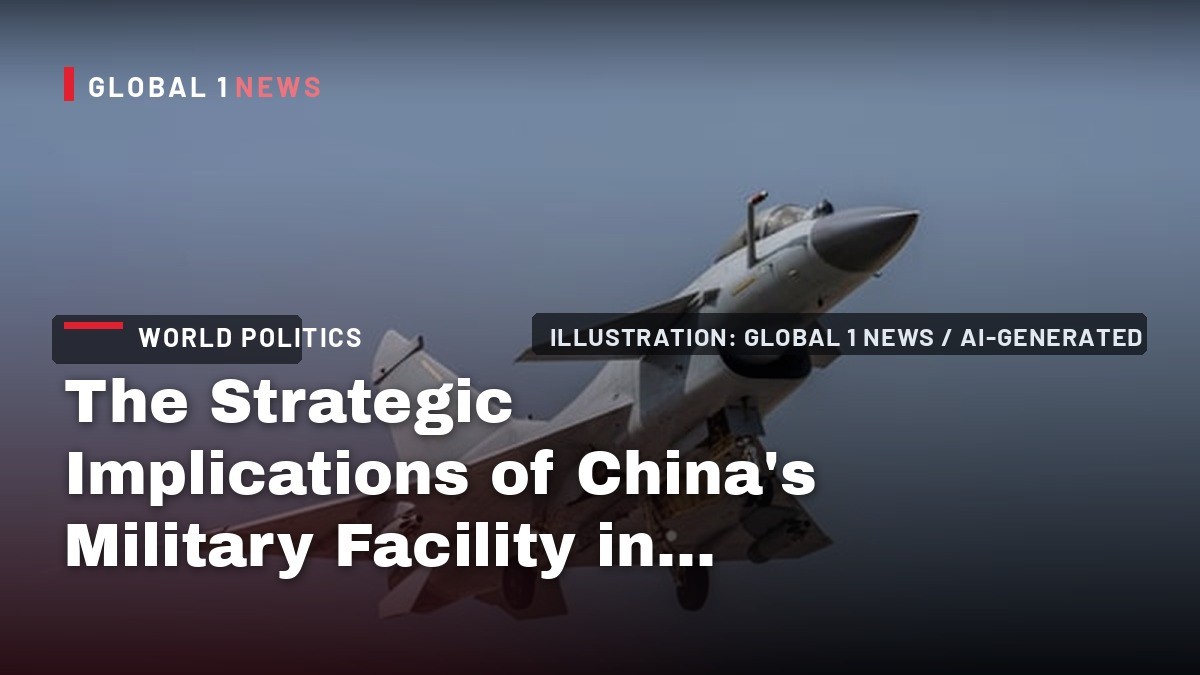
China’s inauguration of an air‑force support and training centre at Ban Keun Airport in Laos on 29 September marks the country’s third overseas military facility and the first explicitly centred on air power. While Beijing stresses that the site is a joint venture with the Lao government and is “not directed against any third party,” the strategic implications for regional security, particularly for U.S. naval forces, merit close scrutiny. This article examines the operational profile of Ban Keun, its logistical advantages, and the broader context of China’s gradual expansion of overseas bases in Southeast Asia.
From joint training to a foothold in the skies
The China‑Laos Joint Support and Training Center and the China‑Laos Friendship Aviation Academy began formal operations at Ban Keun Airport under a bilateral arrangement that emphasises pilot training for the Lao Air Force. Both facilities are jointly maintained and operated, yet Beijing has not disclosed the number of Chinese personnel or the specific equipment stationed there. The lack of transparent figures suggests a deliberate ambiguity, allowing China to expand its presence without triggering immediate alarm.
Analysts note that this “joint training centre” model mirrors the arrangement already in place at Ream in Cambodia, signalling a pattern: China first establishes a cooperative framework, then incrementally deepens its military footprint. In the case of Ban Keun, the initial focus on training could serve as a cover for the gradual introduction of additional assets, personnel, and logistical capabilities.
Geography and logistics: a central hub in mainland Southeast Asia
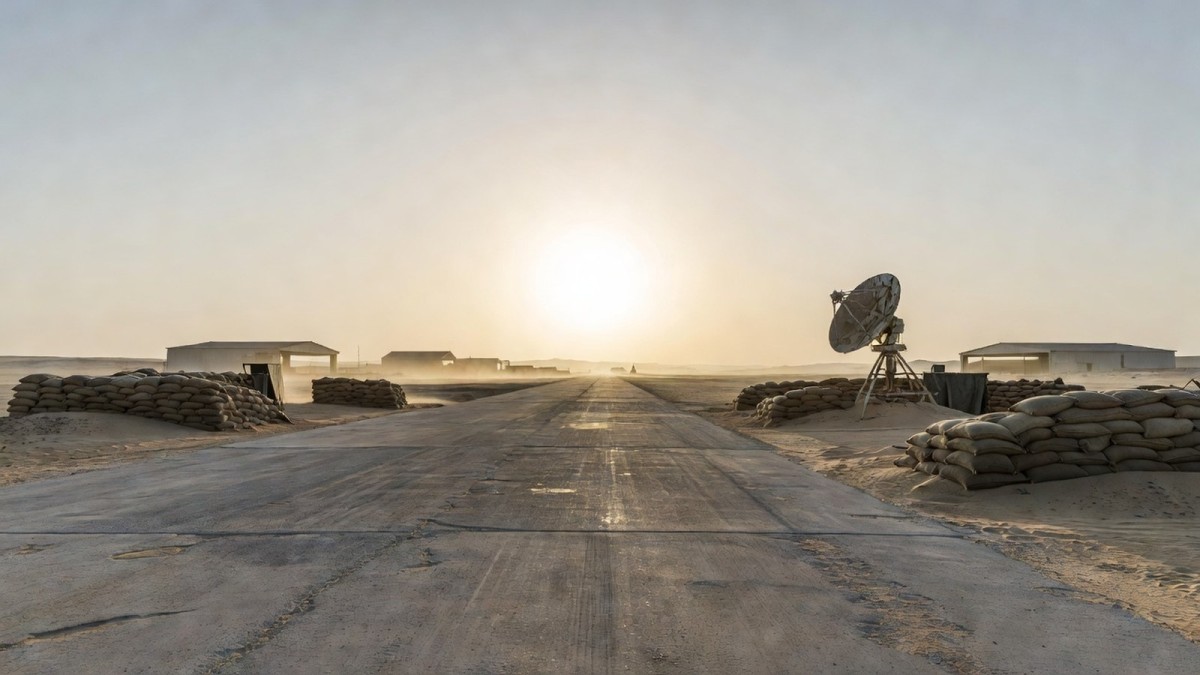
Ban Keun Airport lies in Vientiane Province, roughly 45 kilometres north of Laos’s capital. Historically, the site formed part of a network of airfields used during the Vietnam War and the Laotian Civil War, before falling into disuse. Satellite imagery shows construction commencing around October 2025, with the runway—about 2,000 metres long—completed by September 2026, indicating a rapid build‑out.
The airport’s proximity to the China‑Laos Railway, which runs just north of Vientiane, provides a critical logistical advantage. Personnel and equipment can be moved overland from China, reducing reliance on air transport. This rail link, combined with the airfield’s central location, positions Ban Keun as a potential transit hub for PLA forces moving deeper into Southeast Asia, a factor that could shape future deployment patterns.
Operational reach: beyond the South China Sea
From an operational radius perspective, Ban Keun is unlikely to serve as a primary launch point for missions in the South China Sea, where China already fields bases such as those on Woody Island. Instead, the airfield offers a staging point for operations extending toward Myanmar, the Andaman Sea, and further south to Singapore. This reach enables the PLA Air Force to project power across a swath of the region without relying solely on maritime platforms.
The strategic value lies in the ability to support aircraft that can operate within the flight range of U.S. naval assets stationed in Singapore and Thailand. These locations are pivotal for U.S. carrier replenishment and logistics. By situating an airfield within striking distance, China could complicate U.S. operational planning, forcing the United States to account for an additional potential threat axis in its regional posture.
Comparative analysis: Ban Keun versus other Chinese overseas bases
China’s overseas facilities have so far been concentrated in Djibouti (a naval hub) and Cambodia (a mixed‑use site at Ream). Ban Keun differs by being the first publicly acknowledged air‑centric base, reflecting a diversification of China’s overseas force projection. While Djibouti provides a foothold in the Horn of Africa and Ream offers a foothold on the Gulf of Thailand, Ban Keun sits near the centre of the mainland, granting the PLA a more flexible platform for regional operations.
The shared “joint training centre” model suggests a strategic calculus: by embedding Chinese personnel within a host nation’s military structure, Beijing can normalise its presence and mitigate diplomatic pushback. Over time, the joint nature may erode, allowing China to increase its unilateral control while still operating under the veneer of bilateral cooperation.
Implications for U.S. naval logistics and regional balance
U.S. naval forces rely heavily on forward logistics hubs in Singapore and Thailand for replenishment during carrier rotations. The operational range of aircraft based at Ban Keun could encompass these ports, potentially enabling the PLA to monitor, shadow, or even challenge U.S. naval movements. While the current facility does not host large‑scale Chinese forces, its existence adds a layer of strategic depth to China’s ability to place pressure on U.S. assets in the region.
From a broader perspective, the airfield could also be leveraged to complicate U.S. operations in the Gulf of Thailand, the Andaman Sea, and the Strait of Malacca—key maritime chokepoints for global trade. By establishing a transit base within reach of these waterways, China enhances its capacity to influence sea‑lane security and to contest freedom of navigation, albeit indirectly.
Potential future developments and regional reactions
The gradual approach observed at Ban Keun suggests that China may continue to expand its footprint incrementally. The logistical advantage of the China‑Laos Railway could be further exploited, perhaps by extending rail links deeper into Laos or even towards the Vietnamese border, creating a land corridor that complements the airfield’s capabilities. Such infrastructure upgrades would lower the cost and time required to move materiel, reinforcing the base’s utility.
Regional actors are likely to watch these developments closely. Laos, for its part, has framed the partnership as a mutual benefit for pilot training, but the strategic calculus may evolve as Chinese presence grows. Neighboring countries, particularly Vietnam and Thailand, may perceive the facility as a subtle shift in the balance of power, prompting them to reassess their own defence postures and diplomatic engagements with both Beijing and Washington.
Strategic assessment: a modest yet meaningful addition to China’s overseas posture
In sum, Ban Keun Airport does not yet constitute a direct threat to the Taiwan Strait or the South China Sea, but it represents a significant step in China’s broader strategy of establishing a network of overseas bases that support power projection across Southeast Asia. Its central location, rail connectivity, and joint‑training framework provide China with a flexible platform that can be scaled up over time.
For policymakers in Washington and Tokyo, the key takeaway is not the immediate operational capability of the Ban Keun facility, but its potential to evolve into a logistical hub that can support PLA air operations throughout the region. Monitoring the pace of Chinese personnel deployment, equipment arrivals, and any shifts in the joint‑training narrative will be essential to gauge whether Ban Keun will remain a modest training site or become a more pronounced element of China’s overseas military architecture.
This article was produced with AI-assisted research and editorial support. Reporting is based on the source material cited below. Sources: The Diplomat; thediplomat.com; Global1.News (10 October 2026).
By Kenji Tanaka, Staff Writer
What's Your Reaction?
 Like
0
Like
0
 Dislike
0
Dislike
0
 Love
0
Love
0
 Funny
0
Funny
0
 Wow
0
Wow
0
 Sad
0
Sad
0
 Angry
0
Angry
0

Japan Correspondent at Global1.News. Tokyo-based voice covering Japanese politics, technology, economy, and culture. Tracks the intersection of tradition and innovation in one of the world's most dynamic societies.














Comments (0)