
Man named Hitler Mussolini elected mayor in Peru
In the remote Andean district of Queropalca, a name that echoes the darkest chapters of European history has just become the centerpiece of a local political contest.
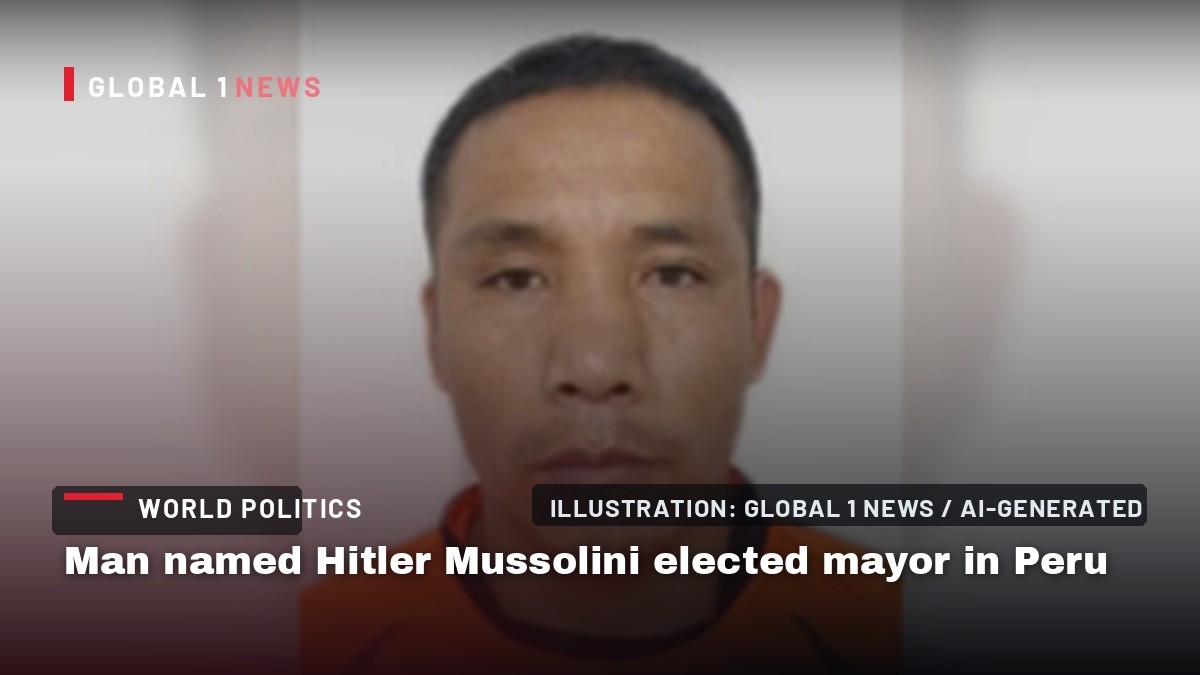
In the remote Andean district of Queropalca, a name that echoes the darkest chapters of European history has just become the centerpiece of a local political contest. Hitler Mussolini Simeon Flores, a 45‑year‑old candidate for the centre‑left Ahora Nación party, secured a narrow victory in the recent Peruvian municipal elections, according to exit polls released on 9 October 2026. While the electorate numbered just a few hundred, the symbolism of his forenames has propelled this modest municipal win onto the international stage, raising questions about identity, memory, and the peculiar ways in which global narratives intersect with the daily realities of rural Peru.
From a tiny ballot box to worldwide headlines
The election results, as reported by the BBC’s Latin America desk, show that roughly 229 residents cast their vote for Flores, giving him a lead of about 25 votes over his nearest rival from the right‑wing Renovación Popular Perú. The official elections office data indicates that just over 700 people participated in the vote across the district, with Flores capturing roughly a third of the total share. In a community of fewer than 1,000 inhabitants, such numbers translate into a decisive, though razor‑thin, mandate.
What has turned this local contest into a story that reverberates far beyond the Andes is the candidate’s striking name. Sharing the first names of Adolf Hitler and Benito Mussolini—figures synonymous with 20th‑century European totalitarianism—has drawn “outsized international attention,” as the BBC notes. The juxtaposition of a democratic ballot in a remote Peruvian highland with the specter of fascist dictators is a narrative that media outlets worldwide have seized upon, often without delving into the local context that produced this unlikely candidate.
Local roots and personal background
Flores was born in the district of Queropalca, located in the central department of Huánuco, about 360 kilometres from Lima. His candidate profile, released during the campaign, emphasizes his deep ties to the community, positioning him as a native son who understands the specific challenges of high‑altitude rural life. The election office data does not disclose his professional background, but his age—45—places him in the middle generation of local leaders, bridging the older, traditionalist cohort and the younger, increasingly mobile population.
While the name on the ballot sparked curiosity, local media have reminded observers that the phenomenon of politically active individuals bearing historically loaded names is not new in the region. In 2018, a candidate named Hitler Guesclin Alba Sánchez won the mayoralty of Yúngar, also in the Peruvian highlands, campaigning under the slogan “I’m the good Hitler.” This precedent suggests that the name, while provocative to external audiences, may carry a different resonance within the local cultural fabric, perhaps seen more as a personal identifier than a political statement.
The political landscape of Queropalca
Queropalca’s electorate is small, but the political contest reflects broader national currents. The centre‑left Ahora Nación party, for which Flores ran, positions itself as a progressive alternative to the right‑leaning Renovación Popular Perú. The latter’s candidate finished second, trailing by a narrow margin. The close result indicates a community divided along ideological lines, with neither side commanding an overwhelming majority.
Given the limited number of voters, personal relationships, local reputation, and community service often outweigh party branding in such districts. The fact that Flores secured roughly a third of the vote suggests that his personal appeal—perhaps rooted in his local origins and familiarity with district concerns—was enough to tip the balance in a tightly contested race.
Names, memory, and the politics of symbolism
The international fascination with Flores’ name underscores a broader tension between global historical memory and local lived experience. For many outside Peru, the names Adolf Hitler and Benito Mussolini evoke the horrors of the Holocaust, World War II, and fascist oppression. Yet in remote Andean communities, where daily life revolves around agriculture, access to basic services, and the rhythms of the mountains, such historical connotations may be less immediate.
Local outlets, such as Peru21, have described the candidacy as a “striking event,” highlighting the curiosity rather than condemning the name outright. This framing suggests that, within the community, the name functions more as a curiosity than a manifesto. It also reflects a regional pattern where European names, even those linked to notorious figures, can appear detached from their original historical weight, especially when they have been adopted generations ago and integrated into local naming practices.
Comparative cases: naming quirks across continents
The phenomenon is not confined to Peru. In 2020, a politician named Adolf Hitler Uunona won a local election in Namibia, a former German colony where Germanic first names are relatively common. The BBC’s coverage of that case similarly noted the surprise of international observers, while local narratives focused on the candidate’s qualifications and community ties rather than the shock value of his name. These parallel cases illustrate how names that carry heavy historical baggage in one part of the world can be normalized in another, especially when they have been part of local naming traditions for decades.
Such examples invite a nuanced discussion about the role of historical memory in contemporary politics. While the global community may view the use of such names as a provocative or even offensive act, the individuals themselves often present themselves as ordinary citizens whose names are inherited rather than chosen for ideological reasons. This dissonance highlights the importance of contextualizing political stories within their local realities rather than filtering them solely through a global lens.
Implications for local governance
Beyond the name, Flores now faces the practical challenges of governing a remote Andean district. Queropalca, like many high‑altitude communities, grapples with limited infrastructure, scarce health services, and the need for sustainable agricultural support. As mayor, Flores will be responsible for coordinating with regional authorities in Huánuco and navigating the national political environment to secure resources for his constituents.
The narrow margin of his victory also means that he must work to bridge the divide between his supporters and those who backed the opposing candidate. In a community where personal relationships are paramount, fostering inclusive governance will be essential to maintaining social cohesion and delivering the basic services that residents need.
What the international spotlight reveals about Peru’s political fabric
The sudden global attention on a tiny Andean election underscores how media narratives can amplify seemingly peripheral events when they intersect with broader cultural symbols. While the name of the new mayor has become a headline, the underlying story is one of ordinary citizens exercising democratic choice in a remote part of the country. It reminds us that Peru’s political tapestry is woven from countless small districts, each with its own histories, challenges, and aspirations.
For observers outside the region, the lesson is to look beyond the sensational and ask what the election says about local priorities, how candidates connect with voters, and what governance will look like in the months ahead. As Flores steps into his mayoral role, the focus should shift from his forenames to his policies, his ability to address the concrete needs of Queropalca, and his capacity to navigate the complex interplay of local identity and national politics.
This article was produced with AI-assisted research and editorial support. Reporting is based on the source material cited below. Sources: BBC News Latin America; bbc.co.uk; Global1.News (10 October 2026).
By Elena Vasquez, Staff Writer
What's Your Reaction?
 Like
0
Like
0
 Dislike
0
Dislike
0
 Love
0
Love
0
 Funny
0
Funny
0
 Wow
0
Wow
0
 Sad
0
Sad
0
 Angry
0
Angry
0
Latin America Correspondent at Global1.News. Based in Mexico City, covering politics, economics, energy, and culture across the region. Brings an on-the-ground perspective to stories spanning from the Rio Grande to Patagonia.











Comments (0)