
Türkiye sack Montella after dismal run, TFF rocked by resignations
Turkey’s footballing turmoil cannot be examined in isolation from the broader currents shaping the Middle East. The sport, a cultural touchstone across the region, often mirrors the political and institutional challenges that define national narratives.
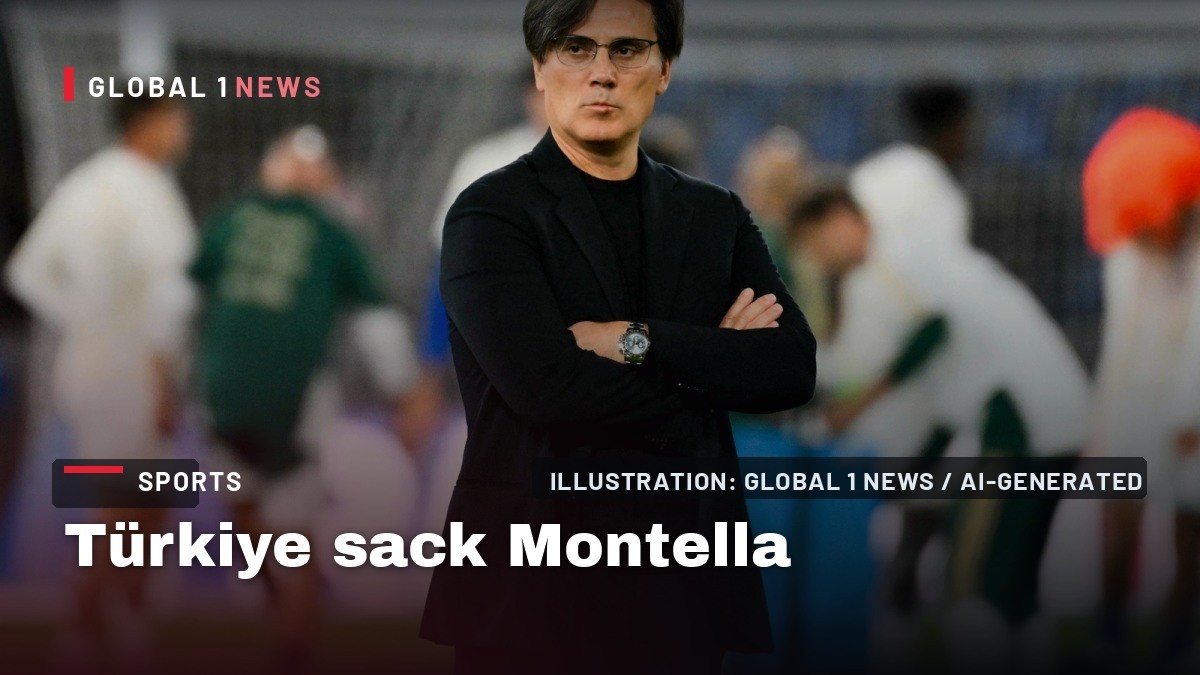
Turkey’s footballing turmoil cannot be examined in isolation from the broader currents shaping the Middle East. The sport, a cultural touchstone across the region, often mirrors the political and institutional challenges that define national narratives. In October 2026, the Turkish Football Federation (TFF) found itself at the centre of a leadership crisis that culminated in the dismissal of national team coach Vincenzo Montelli and the resignation of five senior officials. This episode, while rooted in the specifics of football performance, also reflects deeper patterns of governance disputes, patronage politics, and the strategic importance of sport as a vehicle for national prestige in a region where soft power is increasingly contested.
From the Pitch to the Boardroom: The Immediate Catalyst
The catalyst for the recent upheaval was Turkey’s elimination from the World Cup and a string of four consecutive defeats in the UEFA Nations League. These results intensified scrutiny of Montelli’s tenure, prompting the TFF board to convene at the Hasan Doğan National Teams Training and Education Facilities in Riva, Istanbul. The meeting, held on 9 October 2026, was marked not only by a technical assessment of the team’s performance but also by a sharp divergence of opinion among federation leaders regarding the future direction of Turkish football.
Following the meeting, the federation announced that Montelli would no longer continue as head coach. The decision was framed as a collective board resolution, yet the timing coincided with a wave of resignations that underscored a deeper fissure within the organisation. The resignations were not limited to peripheral staff; they involved senior figures who wielded considerable influence over the federation’s strategic agenda.
Resignations that Reshaped the Federation
Five senior officials stepped down in rapid succession: First Deputy Chairman Mecnun Otyakmaz, and board members Mustafa Temel Bozbağ, Zafer Bahadır Saraç, Bilal Arslan, and Murat Şahin. In a statement to reporters, Otyakmaz explained that the resignations were driven by “differences of opinion” and a perceived inability to secure sufficient support for an extraordinary general assembly. Their departure effectively vacated a substantial portion of the federation’s decision‑making core.
The resignations also triggered a cascade of replacements. Substitute board members Ibrahim Özbay and Metin Akyüz were appointed to fill the two full‑member seats left vacant by the departing officials. Additionally, Ahmet Erzurumlu, who had been serving as the TFF’s registration affairs director, was named to replace Secretary‑General Abdullah Ayaz, who had also tendered his resignation. These personnel shifts signal a reconfiguration of the federation’s internal power balance, with new actors poised to shape policy in the aftermath of the crisis.
Strategic Implications for Turkish Football
The abrupt termination of Montelli’s contract raises questions about the strategic direction of Turkey’s national team. Montelli, an Italian coach, had been tasked with revitalising a side that had struggled to translate domestic talent into competitive results on the international stage. His dismissal, announced alongside the board’s restructuring, suggests a possible pivot toward a different coaching philosophy, perhaps one more closely aligned with domestic expectations or a new administrative vision.
While the TFF has not disclosed the next steps regarding the coaching vacancy, Otyakmaz hinted that discussions about Montelli’s future were already underway before the resignations occurred. The lack of a clear succession plan at this juncture could affect the team’s preparation for upcoming qualification cycles, especially as the UEFA Nations League continues to serve as a pathway to major tournaments. The federation’s ability to stabilise its leadership will be crucial for maintaining player morale and ensuring continuity in training programmes.
Governance Turbulence and Regional Parallels
Turkey’s internal federation drama mirrors a broader regional pattern where sports bodies often become arenas for political contestation. In several Gulf states, for example, football federations have been reshaped by shifts in ruling elite preferences, reflecting the intertwining of sport with national identity projects and diplomatic signalling. The Turkish case, with its abrupt board resignations and rapid appointment of interim members, underscores how governance structures can be vulnerable to internal factionalism, especially when performance pressures mount.
Moreover, the timing of the crisis—coinciding with Turkey’s broader diplomatic recalibrations in the Middle East—adds a layer of strategic significance. As Ankara seeks to balance relations with both Western allies and regional powers, the management of high‑profile institutions like the TFF can serve as a barometer of domestic stability. A cohesive sports administration projects an image of organisational competence that can bolster Turkey’s soft power, particularly in a region where football fandom transcends borders.
Institutional Reforms and the Path Forward
In its official statement, the TFF emphasized that the Board of Directors would remain in office until the next ordinary elective general assembly. This pledge suggests an intention to maintain continuity while navigating the immediate fallout. The appointment of substitute board members and the promotion of internal staff to senior roles indicate a short‑term strategy of filling gaps with familiar personnel, potentially to preserve institutional memory and avoid further disruption.
However, the resignations also expose underlying governance challenges, notably the difficulty of securing consensus for extraordinary assemblies—a mechanism that could have facilitated broader reforms. The board’s inability to muster sufficient support points to a fragmented stakeholder landscape, where competing visions for Turkish football’s future remain unresolved. Addressing this fragmentation will likely require a more inclusive dialogue that incorporates club representatives, player associations, and perhaps civil society actors who have a stake in the sport’s development.
Public Reaction and Media Narratives
The public response to the federation’s turmoil has been characterised by a mix of disappointment and speculation. Turkish media outlets have highlighted the “dismal run” under Montelli and framed the resignations as a symptom of deeper mismanagement. Social media commentary reflects a yearning for decisive leadership that can restore the national team’s competitiveness, while also expressing concern over the perceived instability within the TFF’s hierarchy.
International observers, particularly those covering the broader Middle Eastern sports scene, have noted the episode as part of a series of recent governance crises across the region’s football bodies. The pattern underscores how performance failures can quickly translate into institutional crises, especially when the sport occupies a prominent place in national consciousness. For Turkey, the challenge will be to translate the current upheaval into an opportunity for structural reform rather than a recurrent cycle of short‑term fixes.
Looking Ahead: Implications for Regional Sports Diplomacy
Turkey’s football federation stands at a crossroads that will shape not only its own sporting fortunes but also its diplomatic posture within the Middle East. Successful navigation of the current crisis could reinforce Ankara’s image as a nation capable of managing complex institutions, thereby enhancing its credibility in regional sports collaborations, such as joint training programmes or hosting of international tournaments.
Conversely, prolonged instability may weaken Turkey’s leverage in the soft‑power arena, where football remains a potent conduit for cultural exchange and diplomatic outreach. As regional powers continue to invest in sports infrastructure and leverage major events for geopolitical signalling, Turkey’s ability to present a stable and forward‑looking football administration will be a key factor in its broader strategic calculus. The coming months, therefore, will be decisive not only for the selection of Montelli’s successor but also for the federation’s capacity to rebuild trust among its stakeholders and reaffirm its role in the regional sports landscape.
This article was produced with AI-assisted research and editorial support. Reporting is based on the source material cited below. Sources: Daily Sabah Middle East; dailysabah.com; Global1.News (10 October 2026).
By Malik Hassan, Staff Writer
What's Your Reaction?
 Like
0
Like
0
 Dislike
0
Dislike
0
 Love
0
Love
0
 Funny
0
Funny
0
 Wow
0
Wow
0
 Sad
0
Sad
0
 Angry
0
Angry
0

Middle East Correspondent at Global1.News. Based in Beirut, covering politics, conflict, energy, and society across the Middle East. Brings context and depth to a region often reduced to headlines.













Comments (0)