
What's been driving Hawaii's lava fountains?
When the ground beneath Hawaii’s Big Island trembles and a plume of molten rock rockets sky‑high, it’s a stark reminder that volcanoes can be both beautiful and terrifying.
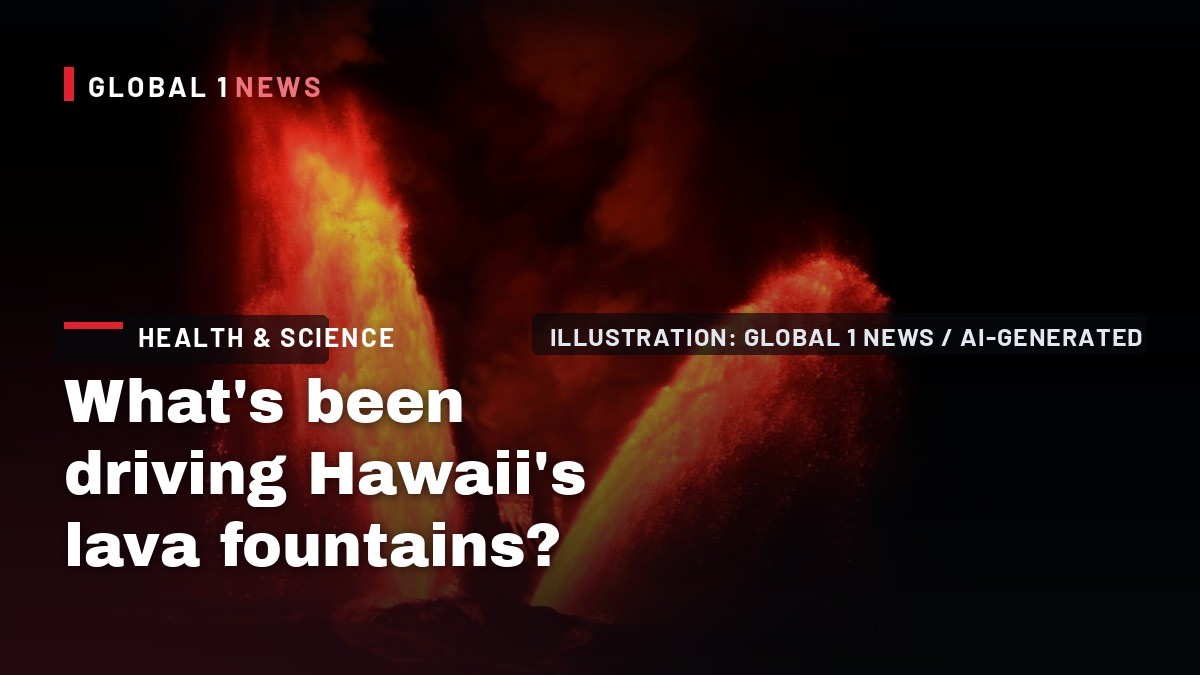
When the ground beneath Hawaii’s Big Island trembles and a plume of molten rock rockets sky‑high, it’s a stark reminder that volcanoes can be both beautiful and terrifying. For decades scientists have watched Kilauea, the island’s youngest and most active volcano, as it quietly oozes lava down its slopes. Yet in the past few years the volcano has turned into a natural fireworks display, blasting lava fountains that soar hundreds of meters. Thanks to an unprecedented network of sensors and a series of eruptions that began in 2024, researchers now have the most detailed look yet at what actually drives these spectacular jets.
Fountains in a Hotspot World
Most hotspot volcanoes, like those that form the Hawaiian chain, are relatively sedate. Lava typically flows down the mountain in a slow, walk‑able stream. That changes dramatically at a handful of locations—Mount Etna, Iceland, and Hawaii—where eruptions can launch lava fountains that reach “several hundred meters in height,” according to a recent Science paper. The physics behind those towering jets has long been a mystery, with two main theories vying for dominance: steam‑driven eruptions and carbon‑dioxide foam bursts.
Steam‑driven models argue that water trapped in the magma turns to steam as pressure drops near the surface, fragmenting the magma and creating a rapid jet. The alternative suggests that carbon dioxide builds up a foamy magma “roof” that bursts when the gas can no longer be contained. Until now, the data have been too sparse to tip the scales decisively.
Kilauea’s New Data Arsenal
What sets the 2024‑2026 episode apart is the sheer density of monitoring equipment. The US Geological Survey (USGS) had already installed 35 stations on Kilauea, covering seismic, infrasound, geodetic, gas, visual, and thermal measurements. This network captured the volcano’s behavior before, during, and after each fountain, providing a continuous record that is rare for any active volcano.
In addition to the fixed stations, a camera sacrificed itself to capture “red‑hot, semi‑molten rock falling from the sky,” delivering visual proof of the violent ejection. Even with that impressive array, researchers admit the infrared environment during a fountain makes gas sampling difficult, and the sheer height of some jets—over 400 meters—limits the placement of additional hardware.
Chronology of the Recent Fountaining
After the 2018 eruption that partially drained an underground lava reservoir, Kilauea began refilling. Between 2019 and 2023 the refill rate accelerated dramatically, first rising at “more than 22 cm a year” and then doubling to “57 cm a year” by 2023, spreading into a nearby caldera. That rapid inflation set the stage for the 2024 series of eruptions.
In 2024 a “large series of earthquakes” opened a vent, and a 900‑meter‑long fissure erupted, sending lava fountains as high as 160 meters into the sky over a 13‑hour window. Within a day a second eruption followed, and by the end of the month scientists had logged 52 additional fountain eruptions, the most violent of which propelled lava over 400 meters high. Since 1823 Kilauea has recorded only three fountaining episodes, making this recent cluster an unprecedented laboratory.
Predicting the Unpredictable
The most practical breakthrough from the monitoring effort was the ability to forecast when a fountain would erupt. Each eruption caused a rapid deflation of Kilauea’s summit, followed by a slower refilling of the Halemaʻumaʻu magma reservoir. By tracking summit tilt, USGS analysts noticed that consecutive eruptions occurred when the tilt reached similar thresholds. Although the exact tilt value has drifted downward over time, the “difference between consecutive eruptions was relatively small,” providing a reliable precursor.
This tilt‑based pattern proved especially valuable because “there were no clear seismic signals immediately before fountains restarted.” In other words, the volcano gave no obvious warning tremors, but its subtle shape change was a tell‑tale sign. The ability to issue alerts based on tilt could give residents and emergency managers precious minutes to prepare for the next high‑altitude blast.
Steam vs. Carbon Dioxide: What the Gases Say
Gas chemistry offers the most direct clue to the eruption mechanism. Throughout the eruption cycle, sulfur dioxide (SO₂) levels rose during eruptions and fell afterward, yet remained “high throughout the entire period.” Since SO₂ is released when magma degasses, its persistent presence signals continuous magma‑gas interaction.
Carbon dioxide, the key player in the foam hypothesis, stayed “low throughout the eruption cycle.” That low, steady level undermines the foam model, which would require a buildup of CO₂ to generate the explosive burst. By contrast, the steam model gains support because water‑derived steam can be produced without a dramatic rise in CO₂, and the observed gas pattern aligns with a steady release of SO₂ rather than a sudden CO₂ surge.
Temperature Shifts and Magma Refreshment
Beyond gases, the chemistry of erupted material offers insight into the magma’s thermal state. Magnesium oxide (MgO) levels fluctuated during the eruption cycle, reflecting temperature changes as the reservoir was drained and then refilled with hotter magma. Meanwhile, other oxides “rose over time,” indicating that the incoming magma had a distinct composition from the resident melt.
This chemical dance suggests a two‑stage process: an eruption depletes the shallow reservoir, lowering MgO, then a refill introduces hotter, compositionally different magma that raises other oxide concentrations. The cycle repeats, creating the periodic pressure build‑up that eventually forces a fountain.
What Remains Unanswered
Even with the richest dataset ever collected from a Hawaiian volcano, scientists admit the picture is incomplete. The steam‑driven model fits the observed gas trends, yet it does not explain why a “process that is occurring throughout the cycle suddenly triggers fountains when it rises a bit.” In other words, the trigger that flips a steady degassing system into a violent jet remains elusive.
Future work will need to address the infrared interference that hampers gas sampling during active fountains and find ways to safely place instruments closer to the vent. Until then, Kilauea will continue to be both a spectacular natural laboratory and a reminder that even the best‑equipped volcano can keep some of its deepest secrets hidden beneath the lava.
This article was produced with AI-assisted research and editorial support. Reporting is based on the source material cited below. Sources: Ars Technica; arstechnica.com; Global1.News (10 October 2026).
By Jessica Ali, Staff Writer
What's Your Reaction?
 Like
0
Like
0
 Dislike
0
Dislike
0
 Love
0
Love
0
 Funny
0
Funny
0
 Wow
0
Wow
0
 Sad
0
Sad
0
 Angry
0
Angry
0

Editor-in-Chief at Global1.News. Atlanta-based journalist who cuts through the BS and tells it like it is. Lead anchor, host, and the voice you hear when the spin stops and the truth starts.











Comments (0)