
University opens government-funded lab to help train biomedical scientists
The University of Essex has opened a new £2.5 million laboratory funded by the Office for Students, designed to train biomedical scientists for roles in the NHS and the life sciences sector. The Bioscience Skills Training and Research Laboratory, known as BioSTAR-Lab, includes dedicated facilities for cancer diagnostics and will support students on biomedical science, biotechnology and cancer biology degrees.
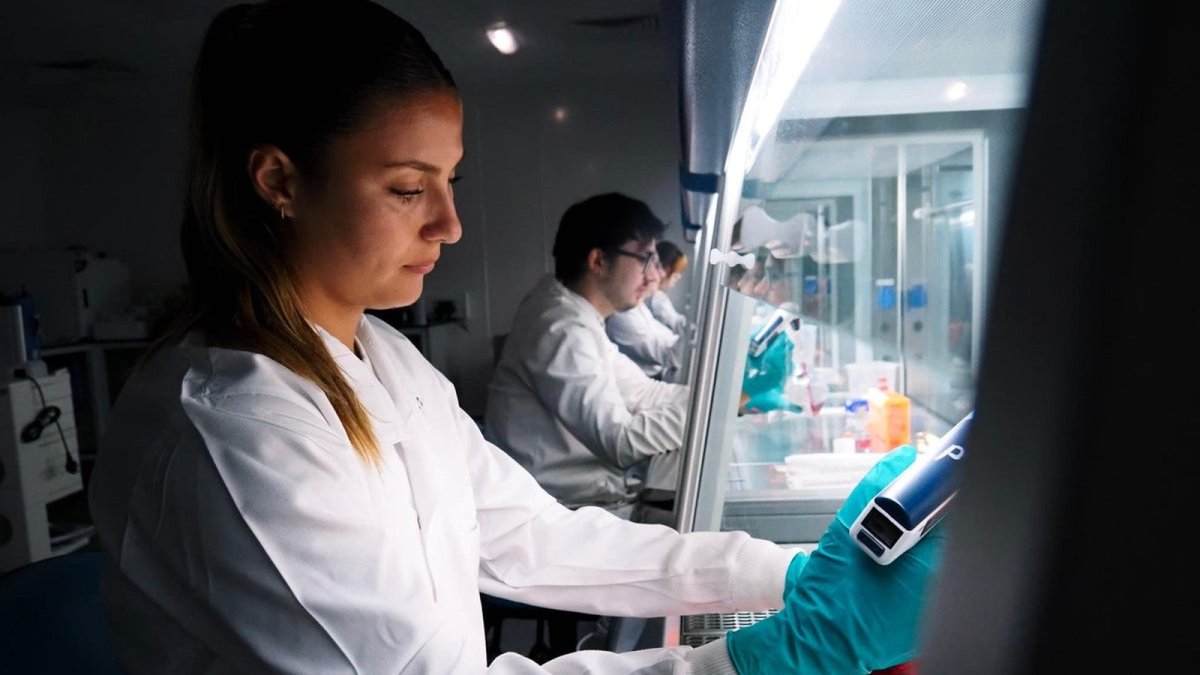
The University of Essex has opened a new £2.5 million laboratory funded by the Office for Students, designed to train biomedical scientists for roles in the NHS and the life sciences sector. The Bioscience Skills Training and Research Laboratory, known as BioSTAR-Lab, includes dedicated facilities for cancer diagnostics and will support students on biomedical science, biotechnology and cancer biology degrees. The development arrives as demand grows for skilled healthcare professionals whose work underpins the majority of NHS diagnostic decisions.
Essex Opens £2.5m Lab to Train NHS Scientists
Colchester, UK — The University of Essex today formally opened the BioSTAR-Lab on its Colchester Campus, marking the completion of a government-backed project announced last November. The facility will provide hands-on training in microbiology, molecular biology and cancer diagnostics for undergraduates and masters students preparing for careers in the NHS and biotechnology industries. Officials say the investment responds directly to workforce shortages in areas critical to national health security and economic growth.
Facilities inside the BioSTAR-Lab
The new laboratory comprises a Microbiology and Cancer Diagnostics Laboratory alongside an open-plan Molecular Biology Laboratory equipped with bio-secure facilities. Students will analyse tissue samples, study infectious diseases and apply molecular techniques used in modern genomics and cell biology. The bio-secure design supports specialised research training and simulated practice in microbiology, cell biology and genomics, giving students exposure to the controlled environments and safety protocols that define real diagnostic and research laboratories.
The setup allows final-year undergraduates and masters students to conduct research projects alongside academic experts, developing technical and analytical skills required in NHS laboratories and pharmaceutical companies. University leaders argue that hands-on, lab-based research is transformative precisely because it lets students apply what they have learned in lectures to genuine scientific problems, rather than encountering laboratory techniques for the first time on the job.
Direct support for NHS diagnostic capacity
Healthcare scientists underpin 80 per cent of NHS diagnoses, yet persistent shortages in blood science, infection science, cellular science and genomics continue to constrain pathology services across England. The new BioSTAR-Lab at the University of Essex directly targets these gaps by providing purpose-built microbiology, cancer diagnostics and molecular biology facilities where students gain practical experience unavailable through textbook study alone. Hands-on work in bio-secure laboratories equips graduates to handle real diagnostic workflows, reducing the time between qualification and effective contribution to NHS laboratories already managing significant backlogs.
Essex students already train extensively with NHS partners, and the addition of the £2.5 million facility strengthens this pipeline by allowing undergraduates and masters students to conduct authentic research in priority diagnostic areas. Professor Terry McGenity, head of the School of Life Sciences, notes that such training helps fill gaps in diagnosing disease, particularly in the NHS priority areas of blood science, infection science, cellular science and genomics, where demand for skilled staff continues to outstrip supply. This practical preparation matters because diagnostic delays directly affect treatment timelines and patient outcomes throughout the health service.
Government funding and industrial strategy
The £2.5 million award forms part of an £88.5 million government package designed to align higher education capital investment with industrial strategy priorities and regional employer needs. Bids were required to demonstrate clear links to economic growth sectors, ensuring public funds support skills development in areas such as life sciences rather than general campus improvements. The Office for Students administered the allocation, reflecting a deliberate Whitehall strategy to treat universities as engines of productivity and workforce supply.
Skills Minister Jacqui Smith said the Government was committed to supporting colleges and universities as "engines of opportunity and growth up and down the country", arguing that the cash boost ensures young people train on up-to-date equipment and secure well-paying, highly skilled jobs central to the Government's Plan for Change. The Prime Minister's target of two-thirds of young people achieving a gold-standard qualification or apprenticeship by 2035 provides the broader policy frame. This approach signals that higher education funding is now explicitly judged on its contribution to national economic objectives and local labour market gaps rather than institutional prestige alone.
Regional life sciences developments
The UK Health Security Agency's planned relocation to Harlow places a major national public health body within 40 miles of the Colchester Campus. This proximity creates immediate opportunities for students at the new BioSTAR-Lab to engage with UKHSA scientists on infection surveillance and diagnostic development. The move forms part of the wider government programme to shift public bodies out of London, concentrating life sciences expertise in the East of England.
Combined with the new laboratory, the region is developing a concentrated corridor of diagnostic training, research and operational capacity. Professor Silke Paulmann, executive dean of the Faculty of Science and Health, highlights that the facility strengthens the talent pipeline linking education, research and real-world application, positioning Essex to supply skilled graduates directly into this emerging cluster and supporting economic growth across the East of England.
University strengths and new degree programmes
The University of Essex ranks sixth in the UK for biology according to The Guardian University Guide and first according to the Daily Mail University Guide. It already leads the country in providing NHS placements through its applied biomedical science course, a record that underpins its claim to be among the most employment-focused life sciences departments in the country.
The lab's opening coincides with the launch of the university's first undergraduate biotechnology degree, reflecting growing demand for graduates in a sector that develops vaccines, medicines and diagnostic technologies. The move signals that universities are broadening their teaching beyond traditional biomedical routes to meet an industry that increasingly prizes interdisciplinary skills spanning molecular biology, data analysis and clinical application.
Implications for the national skills pipeline
More than 300,000 people already work in the UK life sciences sector, yet sustained skills shortages threaten both diagnostic capacity and the country's competitive position in biotechnology. Targeted investment in university laboratory infrastructure, such as the BioSTAR-Lab, addresses these gaps by expanding hands-on training in vaccines, medicines and diagnostic technologies. For the NHS, the prize is a steadier supply of laboratory scientists ready to step into pathology services at a time of acute pressure; for industry, it is a workforce capable of supporting research and manufacturing that the Government has identified as central to growth.
Professor Silke Paulmann states that the laboratory will help strengthen the talent pipeline underpinning innovation, economic growth and improved health outcomes. Over the coming decade, a stronger flow of skilled biomedical scientists into the NHS and industry could ease diagnostic pressures while supporting the Government's wider ambitions for life sciences expansion. By aligning university facilities with national priority areas, this model of funding offers a template for addressing workforce shortfalls that have constrained both health services and economic performance.
The timing is significant. As the NHS grapples with diagnostic backlogs and the life sciences industry competes internationally for skilled researchers, the opening of a dedicated training laboratory of this kind gives Essex a distinctive position in the East of England's expanding health economy. For students, the facility offers a route into careers that are both secure and socially valuable; for the wider country, it represents a tangible return on public investment in skills. The real test, as ever, will be whether the graduates produced can move quickly into the laboratories that need them — and whether this model is replicated across other universities facing the same shortages.
By Erica Thornton, Staff Writer This article was produced with AI-assisted research and editorial support. Sources: The Independent, University of Essex.What's Your Reaction?
 Like
0
Like
0
 Dislike
0
Dislike
0
 Love
0
Love
0
 Funny
0
Funny
0
 Wow
0
Wow
0
 Sad
0
Sad
0
 Angry
0
Angry
0

US Politics and Policy Correspondent at Global1.News. Based in Washington DC, covering American politics, policy, elections, and the courts. Knows how the system works and tells you what it actually means.















Comments (0)