
Taking Korea's toughest exam from behind bars
In the austere corridors of Seoul’s Southern Correctional Institution, a cohort of teenage inmates is preparing for the nation’s most demanding academic hurdle – the Suneung, South Korea’s university entrance examination.
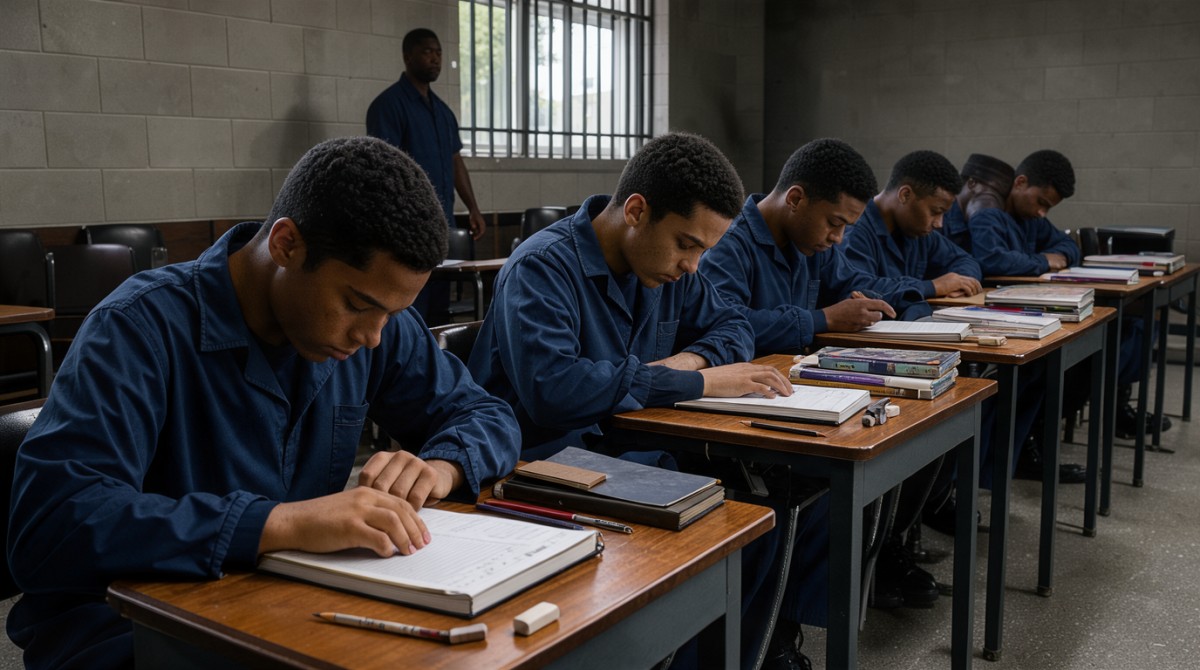
In the austere corridors of Seoul’s Southern Correctional Institution, a cohort of teenage inmates is preparing for the nation’s most demanding academic hurdle – the Suneung, South Korea’s university entrance examination. The Mandela Boys’ School, an education facility opened by the Ministry of Justice in March 2023, offers these young offenders a chance to study for the exam while serving their sentences. The programme, now in its third year, reflects a broader policy drive to integrate education into correctional rehabilitation, aiming to give inmates a pathway to a new life after release.
The prison classroom: a juxtaposition of discipline and aspiration
Inside the metal‑framed classrooms, the scene resembles any other high‑school lecture hall: a teacher writes mathematics formulas on a board, students lower their heads to take notes, and the scratch of pens fills the air. Yet the windows are barred, and the students wear blue prison uniforms and rubber shoes marked “Korea Correctional Service”. The stark contrast underscores the dual reality of these youths – they are simultaneously under custodial authority and pursuing academic goals.
Jeong Yeo‑gyeong, a correctional officer in the social reintegration division, explains that the inmates have been convicted of serious offences, including theft, violence, bodily injury, sexual violence and robbery. By providing structured education, authorities hope to mitigate the risk of recidivism, offering a constructive focus during incarceration.
The Suneung: national stakes and personal stakes
The Suneung, held every November, is an eight‑hour marathon of back‑to‑back examinations covering Korean language, mathematics, English, social sciences and natural sciences. On 19 November 2026, a total of 551,864 applicants registered for the exam, reflecting its status as a pivotal gateway to higher education and future employment. The nation’s infrastructure pauses for the test – construction halts, flights are grounded and military drills are suspended – to ensure an optimal testing environment.
At Mandela Boys’ School, around thirty prisoners are enrolled in the Suneung preparation class, with eleven having formally applied to sit the exam this year. For these young men, the stakes are personal as much as academic; success could mean a credible route to university and, ultimately, a break from the environments that contributed to their criminal behaviour.
A day in the life of an inmate scholar
Park Soo‑young, a 17‑year‑old inmate (a pseudonym), has been attending the preparation class for two months. His daily routine begins at 06:30 with a morning check by prison officers, followed by self‑directed study of English vocabulary and Korean reading passages before breakfast. By 08:00, he joins the classroom for formal lessons after another security check.
The schedule is rigorous: after lessons, inmates may make phone calls to families or attend scheduled visits during breaks. Evening study sessions resume under supervision, and the day concludes with a return to the cells. Park studies until 22:00, and any extension beyond that requires explicit permission from a prison officer. This disciplined timetable mirrors the broader emphasis on structure within the correctional education model.
Motivation behind the bars
Park’s motivation is rooted in a personal narrative of loss and regret. He recalls the moment his mother wept at his sentencing, an experience that left him “crying for about a week” while detained. He describes feeling “very ashamed” for failing to control his impulse that led to the offence. In his own words, he hopes the Suneung and subsequent university education will enable him to “cut ties with the friends and people I used to know and start a new life.”
He envisions university as a vehicle for geographic and social mobility, allowing him to leave his former neighbourhood and forge a new identity. This aspiration aligns with the correctional service’s objective: to equip inmates with qualifications that broaden post‑release opportunities, thereby reducing the allure of returning to criminal networks.
Teaching staff and support mechanisms
The instructional team comprises seven prison officers, each holding a teaching certificate and assigned to a specific subject. Complementing them are visiting instructors who deliver humanities, arts and sport lessons, as well as university student volunteers who assist with learning. Professional psychological counselling is also available, acknowledging the emotional and mental health challenges faced by young offenders.
Science teacher Park Min‑yong, who joined the programme in 2023, emphasises the broader purpose of the curriculum: “learn how to become adults.” He argues that while academic study alone does not guarantee desistance from crime, the process of persevering through difficult material cultivates stamina and patience—qualities he believes are transferable to life after release.
Outcomes and future prospects
According to the Ministry of Justice, some former Mandela Boys’ School students have successfully entered university, while others have continued their studies after release by enrolling in residential exam preparation academies. These pathways suggest that the correctional education model can produce tangible academic achievements, even if the transition to higher education is not immediate.
Park himself will not be released until 2028, but he intends to use the 2026 Suneung experience as a benchmark, planning to sit the exam again next year and aim for admission the following year. His long‑term strategy reflects a broader trend among inmates to view education as a cumulative process rather than a single event.
Implications for correctional policy and society
The Mandela Boys’ School initiative illustrates a shift in South Korea’s correctional philosophy, from punitive confinement toward rehabilitative engagement. By integrating formal education into the prison environment, the justice system acknowledges that young offenders, many of whom are still adolescents, retain the capacity for academic development and personal transformation.
From a societal perspective, the programme raises questions about the balance between public safety and reintegration. The Suneung’s national significance means that allowing inmates to sit the exam underscores a belief in their potential contribution to society. If the model proves effective in reducing recidivism and facilitating post‑release employment, it could inform similar initiatives across the region, aligning with broader Asian trends toward restorative justice and skill‑based rehabilitation.
This article was produced with AI-assisted research and editorial support. Reporting is based on the source material cited below. Sources: BBC News Asia; bbc.co.uk; Global1.News (18 November 2026).
By Kenji Tanaka, Staff Writer
What's Your Reaction?
 Like
0
 Dislike
0
 Love
0
 Funny
0
 Wow
0
 Sad
0
 Angry
0

Japan Correspondent at Global1.News. Tokyo-based voice covering Japanese politics, technology, economy, and culture. Tracks the intersection of tradition and innovation in one of the world's most dynamic societies.









Comments (0)