
Turkish artist Özcan blends art, climate action at COP31
As the United Nations Climate Change Conference convened in Antalya this November, the familiar choreography of diplomatic negotiations was accompanied by an unexpected yet resonant overture: art.
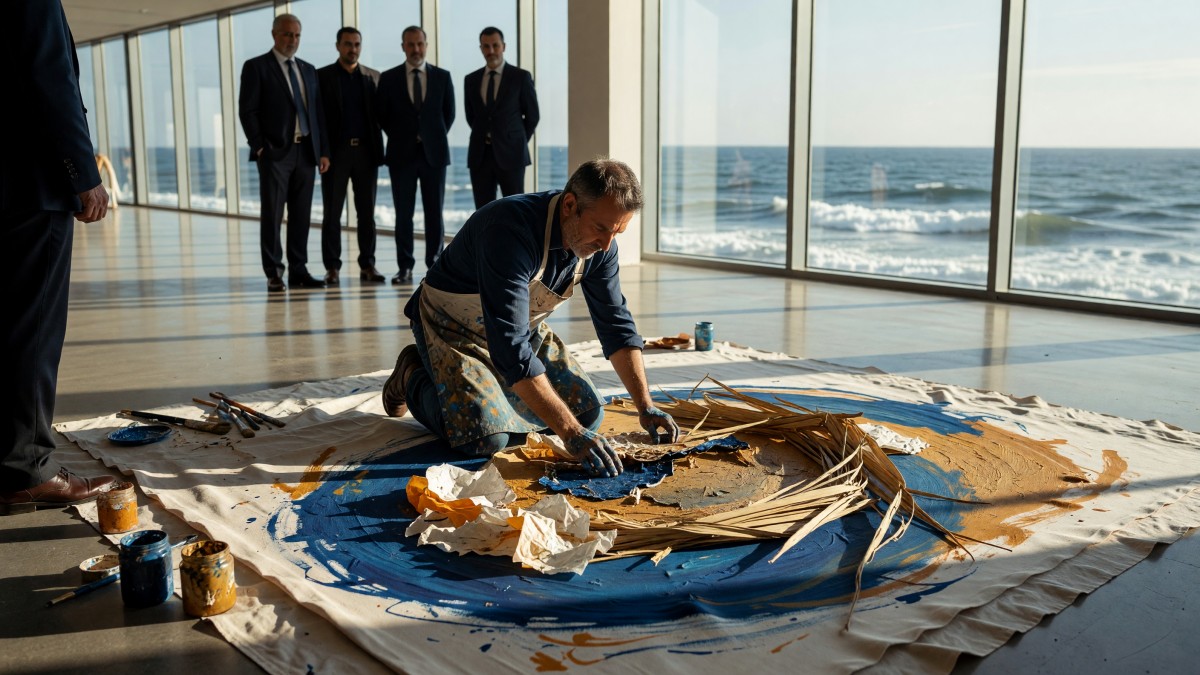
As the United Nations Climate Change Conference convened in Antalya this November, the familiar choreography of diplomatic negotiations was accompanied by an unexpected yet resonant overture: art. In a region where environmental policy often intertwines with geopolitical calculations, the presence of Turkish artist Seval Özcan on the COP31 stage underscored a broader strategic shift. By embedding her installations and workshops within both the Blue Zone and the Green Zone, Özcan not only amplified the climate agenda but also illustrated how cultural expression can serve as a bridge across the competing narratives that dominate Middle Eastern discourse.
Artistic Intervention in the Heart of the Summit
Özcan’s work was prominently displayed across the two principal precincts of COP31. In the Green Zone, the hub traditionally reserved for technical sessions and side events, her three‑part spherical installation titled “DOT: Connectivity, Wholeness and Curiosity” occupied the COPArt section, a dedicated space for creative interventions. Alongside the sculpture, a digital artwork further underscored the thematic focus on interconnection—a concept that resonates with the summit’s emphasis on integrated climate solutions.
Meanwhile, the Blue Zone, which houses national pavilions and high‑level diplomatic meetings, featured Özcan’s piece “No:1 Liberation” within the Turkish Pavilion’s meeting hall. The artwork, rendered in the palette of the COP31 logo, was curated by the Ministry of Environment, Urbanization and Climate Change, signalling official endorsement of the artistic narrative as part of Turkey’s diplomatic presentation.
Symbolism and Messaging in “No:1 Liberation”
The “No:1 Liberation” installation, positioned in a venue frequented by ministers, delegates and media, carried symbolic weight beyond its aesthetic appeal. By employing the conference’s colour scheme, the piece visually linked Turkey’s national pavilion to the broader climate discourse, suggesting a convergence of domestic policy ambitions with the global agenda. The artwork’s title, evoking notions of emancipation, can be read as an invitation to liberate societies from the constraints of carbon‑intensive development pathways.
The presence of Vice President Cevdet Yılmaz among the visitors further elevated the piece’s political resonance. While the source material does not detail Yılmaz’s remarks, his attendance alone signals that the Turkish leadership regards artistic expression as a complementary channel for climate communication, reinforcing the state’s narrative of proactive engagement.
Interactive Workshops: “Surprise Me” and Public Engagement
Beyond static displays, Özcan extended her impact through hands‑on workshops titled “Surprise Me.” Organized by the ministry’s Department of Education, the sessions were held in two distinct settings: the Blue Zone and the Zero Waste Village, an area dedicated to showcasing circular‑economy solutions. By integrating fan design—a popular cultural motif in Turkey—with artistic activities, the workshops attracted participants across a broad age spectrum, reflecting an inclusive approach to climate education.
The workshops emphasized colour and creativity as entry points for expressing concerns about climate change. This methodological choice aligns with research suggesting that visual and participatory media can foster deeper emotional connections to environmental issues, especially in societies where abstract policy language may not readily translate into everyday action.
Continuity of Artistic Diplomacy: From COP29 to COP31
Özcan’s involvement at COP31 builds on a trajectory established at prior climate gatherings. At COP29 in Azerbaijan, she represented Turkey as a speaker, exhibited her works and organized similar workshops. This continuity demonstrates a strategic use of cultural diplomacy by the Turkish Ministry of Environment, Urbanization and Climate Change, positioning artists as informal ambassadors who can navigate the cultural sensitivities of the region while reinforcing Turkey’s commitment to climate initiatives.
The repetition of artistic interventions across successive COPs suggests an institutional recognition that soft power tools—such as art—can complement hard‑line policy negotiations. In a geopolitical context where Turkey balances its aspirations for EU alignment, regional leadership, and energy security, the cultivation of a culturally resonant climate narrative serves multiple diplomatic objectives.
Regional Implications of Cultural Climate Messaging
Within the broader Middle Eastern tableau, the integration of art into climate forums reflects a nuanced response to the Sunni‑Shia competition and great‑power rivalry that shape regional priorities. While Gulf states invest heavily in renewable energy projects, Turkey’s emphasis on cultural outreach offers an alternative avenue to assert influence, particularly among younger demographics that are increasingly attuned to climate anxieties.
By showcasing installations that blend scientific themes with local artistic idioms, Turkey can project a narrative of innovation that aligns with its broader geopolitical strategy of positioning itself as a bridge between East and West. The artistic dimension thus becomes a subtle instrument in the contest for regional soft power, complementing more overt diplomatic and economic levers.
Energy Security and the Artistic Narrative
The timing of COP31 in Antalya—a city known for its tourism and coastal ecosystems—highlights the intersection of climate policy with energy security concerns that dominate the Eastern Mediterranean. Turkey’s energy strategy, historically reliant on imported hydrocarbons, has increasingly pivoted toward diversification, including renewable investments. Özcan’s installations, with titles invoking connectivity and wholeness, metaphorically echo the need for integrated energy grids and cross‑border cooperation.
In this sense, the artistic narrative dovetails with technical discussions taking place in the conference halls. By framing climate action through the lens of collective curiosity and shared creativity, the installations subtly reinforce the argument that regional energy transitions require collaborative, rather than unilateral, approaches—a point that resonates with Turkey’s diplomatic posture toward its neighbours.
Assessing the Impact of Art on Climate Dialogue
While the source material does not quantify visitor numbers or survey responses, the qualitative description of “strong interest” from participants of varied ages suggests that Özcan’s workshops succeeded in fostering engagement. The inclusion of the Zero Waste Village as a venue further implies that the artistic activities were deliberately linked to concrete sustainability practices, reinforcing the message that climate action is both cultural and practical.
In the longer view, the legacy of such interventions may be measured by their capacity to embed climate consciousness within the public imagination. By offering a tactile, visual language for abstract environmental challenges, art can lower the threshold for participation, especially in societies where policy discourse is often dominated by elite diplomatic circles. As Turkey continues to navigate its role within the shifting sands of Middle Eastern geopolitics, the strategic deployment of cultural tools like Özcan’s installations may prove to be an understated yet potent component of its climate diplomacy.
This article was produced with AI-assisted research and editorial support. Reporting is based on the source material cited below. Sources: Daily Sabah Middle East; dailysabah.com; Global1.News (20 November 2026).
By Malik Hassan, Staff Writer
What's Your Reaction?
 Like
0
 Dislike
0
 Love
0
 Funny
0
 Wow
0
 Sad
0
 Angry
0
Middle East Correspondent at Global1.News. Based in Beirut, covering politics, conflict, energy, and society across the Middle East. Brings context and depth to a region often reduced to headlines.











Comments (0)