
Mexico in Numbers: Just how big is Mexico’s tourism economy?
Mexico’s tourism sector continues to pulse like a vibrant tianguis, drawing visitors from every corner of the globe to its sun‑kissed beaches, ancient ruins, and bustling ciudades.
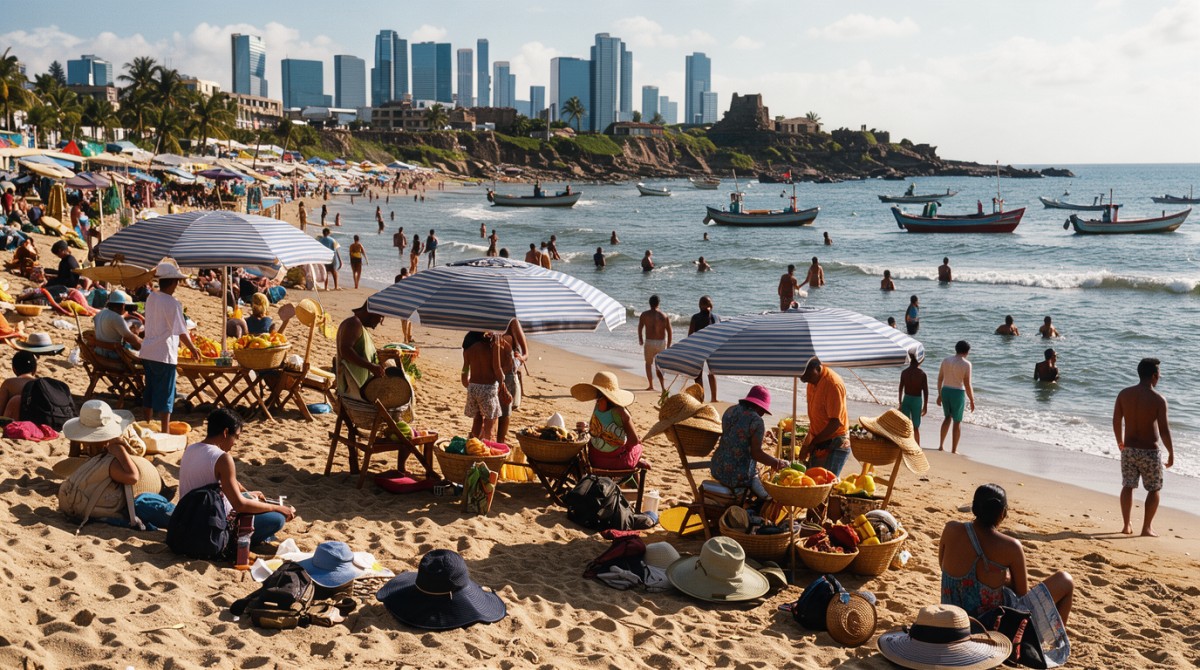
Mexico’s tourism sector continues to pulse like a vibrant tianguis, drawing visitors from every corner of the globe to its sun‑kissed beaches, ancient ruins, and bustling ciudades. In 2025 the country welcomed a record‑high 47.8 million international travelers, a figure that placed Mexico as the sixth most‑visited nation worldwide. That flow of people translates into a powerful economic engine, one that now accounts for a larger slice of the national pie than any other OECD member.
Tourism’s share of the national economy
Federal Tourism Minister Josefina Rodríguez Zamora disclosed in December that tourism generated 2.71 trillion pesos in 2024, a real‑terms increase of 2.5 % over the previous year. Using the Bank of Mexico’s closing exchange rate of 18.53 pesos per U.S. dollar, that amount equals roughly US $146.25 billion. More importantly, tourism’s contribution to Mexico’s gross domestic product (GDP) reached 8.7 % in 2024.
This proportion places Mexico shoulder‑to‑shoulder with Iceland at the top of the OECD rankings for tourism’s share of GDP, according to the OECD’s “Tourism Trends and Policies 2026” report. Portugal follows as the only other OECD country where tourism exceeds an 8 % share, underscoring how central travel and hospitality have become to Mexico’s economic fabric.
Regional dependence: Quintana Roo leads the way
Within Mexico, the Caribbean coast state of Quintana Roo stands out as the most tourism‑dependent. Sectur’s 2024 data show that tourism activities accounted for 49.2 % of the state’s GDP in 2022, a figure that dwarfs the national average. The state’s fame rests on world‑class destinations such as Cancún, Playa del Carmen, Tulum, and Cozumel, where the rhythm of the waves matches the rhythm of local commerce.
Following Quintana Roo, Baja California Sur and Yucatán rank next in tourism dependence, with tourism representing 17.3 % and 16.1 % of their respective GDPs in 2022. Baja California Sur’s attractions include the resort towns of Los Cabos and La Paz, while Yucatán draws visitors to Mérida and the iconic Maya ruins of Chichén Itzá.
States with modest tourism footprints
At the opposite end of the spectrum, Campeche posted the smallest tourism share of any Mexican state in 2022, with tourism contributing just 2.8 % of its GDP. The Gulf‑coast state’s economy leans heavily on offshore oil production, though it still boasts two UNESCO World Heritage sites: the historic fortified town of Campeche and the ancient Maya city of Calakmul.
Trailing closely behind are Coahuila and Durango, where tourism accounted for 3 % and 3.2 % of state GDP respectively in 2022. These figures illustrate the uneven geographic distribution of tourism’s economic impact across Mexico’s 32 federal entities.
Why tourism matters for ordinary families
Beyond the headline numbers, tourism’s reach touches everyday Mexican families. In Quintana Roo, nearly half of the economic activity stems from hotels, restaurants, and tour operators, creating jobs for thousands of workers in coastal towns and rural comunidades. In Baja California Sur, the rise of boutique hotels and fishing charters has opened new avenues for small‑scale entrepreneurs, while in Yucatán the demand for guided tours of Maya sites fuels employment for local guides and artisans.
Even in states where tourism’s share is modest, the sector still injects cash into local markets. In Campeche, for example, the modest flow of visitors to its heritage sites supports a handful of hotels and restaurants, providing supplemental income for families that otherwise rely on the oil industry.
Challenges and opportunities ahead
The sector’s growth is not without hurdles. Seasonal fluctuations, climate risks to coastal infrastructure, and the need for sustainable practices loom large. Yet the 2.5 % real‑terms growth reported for 2024 signals resilience. As Mexico continues to market its cultural and natural assets, there is room to expand tourism in less‑visited regions, diversifying income sources for states like Coahuila and Durango.
Investments in transportation, digital promotion, and community‑based tourism can help spread the benefits more evenly. By integrating local producers—such as tortilla makers, artisans, and small farms—into the tourist experience, Mexico can turn each visit into a broader economic stimulus that reaches beyond the traditional hospitality corridor.
Comparative perspective within the OECD
Mexico’s 8.7 % tourism share ties it with Iceland, a nation whose economy also leans heavily on visitors drawn by natural wonders and cultural heritage. Portugal, the only other OECD country surpassing an 8 % share, illustrates how a focused tourism strategy can lift a nation’s GDP contribution from the sector. These parallels highlight that Mexico’s tourism performance is not an isolated phenomenon but part of a broader pattern where countries with rich cultural landscapes and natural beauty can leverage tourism as a pillar of growth.
For policymakers, the lesson is clear: maintaining a competitive edge requires continual investment in quality, safety, and sustainability. Mexico’s record‑high visitor numbers in 2025 demonstrate that the world still craves the country’s unique blend of flavors, history, and hospitality.
Looking forward: 2026 and beyond
As we file this story in November 2026, the tourism sector stands at a crossroads. The record‑high influx of 47.8 million international travelers in 2025 set a new benchmark, and the sector’s 8.7 % share of GDP underscores its central role in Mexico’s economic narrative. The challenge now is to translate that macro‑level success into tangible improvements for workers, families, and small businesses across all states.
With strategic support, especially in states where tourism remains a modest contributor, Mexico can deepen the benefits of its vibrant tianguis of visitors. By nurturing sustainable practices, expanding regional offerings, and ensuring that the economic windfall reaches the people who keep the country’s cultural heart beating, Mexico can turn its tourism boom into a lasting engine of inclusive growth.
This article was produced with AI-assisted research and editorial support. Reporting is based on the source material cited below. Sources: Mexico News Daily; mexiconewsdaily.com; Global1.News (20 November 2026).
By Rosa Martinez, Staff Writer
What's Your Reaction?
 Like
0
 Dislike
0
 Love
0
 Funny
0
 Wow
0
 Sad
0
 Angry
0

Latin America/Andes Correspondent at Global1.News. Based in Bogota, covering politics, environment, energy, and social movements across the Andean region. Passionate about environmental journalism and communities protecting their land.















Comments (0)