
Spanish Police Dismantle €24m Mediterranean Smuggling Network in Europol-Led Strike
UK small boat arrivals have fallen sharply this summer, yet the criminal networks exploiting desperate migrants remain deeply entrenched across Europe. The dismantling of a major Western Mediterranean smuggling operation this week reveals how these syndicates operate with ruthless efficiency, offering direct lessons for British authorities confronting similar threats in the Channel.
UK small boat arrivals have fallen sharply this summer, yet the criminal networks exploiting desperate migrants remain deeply entrenched across Europe. The dismantling of a major Western Mediterranean smuggling operation this week reveals how these syndicates operate with ruthless efficiency, offering direct lessons for British authorities confronting similar threats in the Channel.
Spanish Police Dismantle €24m Mediterranean Smuggling Network in Europol-Led Strike
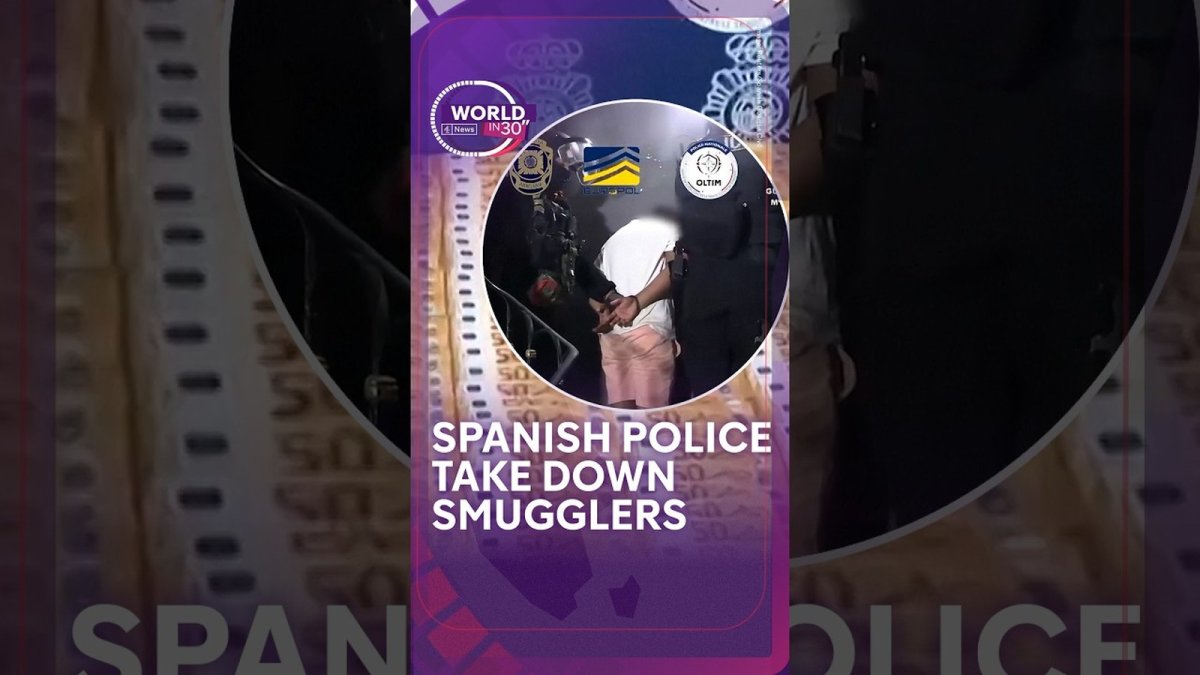
Madrid, Spain – 9 August 2026 — Spanish National Police and Guardia Civil, supported by Europol and forces from France, Portugal and Poland, have dismantled one of the largest people-smuggling networks operating in the Western Mediterranean, arresting 78 people. The operation, announced on 7 August, targeted a sophisticated “double-flow” enterprise that ferried synthetic drugs to Algeria before returning with migrants to Spanish shores.
Coordinated International Operation Yields Major Arrests
The arrests spanned multiple Spanish regions with precise distribution: eleven in Alicante, thirty-six in Almería and thirteen in Murcia, alongside further detentions in Ibiza, Cartagena, Mallorca and other mainland sites. One additional suspect was taken into custody in Algeria. Four individuals identified as High-Value Targets, regarded as the network’s key leaders, were among those held, together with the hawaladar responsible for managing its informal financial infrastructure.
The investigation, which began in 2023, reached its operational climax on the action day of 16 June 2026. Europol’s newly established Taskforce, housed within its European Centre Against Migrant Smuggling, coordinated the effort. French National Police units from Police aux Frontières and OLTIM worked alongside Spanish National Police from Comisaría General de Extranjería y Fronteras and UCRIF, with Guardia Civil, Portuguese Judicial Police and Polish Border Guard providing specialist support. This multinational structure exposed the professional coordination now typical of Mediterranean smuggling enterprises.
British authorities monitoring similar Channel networks will note how sustained intelligence sharing across borders produced these results. The layered approach, combining long-term surveillance with a single decisive strike, offers a template for disrupting the organised groups that continue to target UK shores despite falling arrival numbers.
Double-Flow Smuggling Model Exposed
The network ran a calculated two-way system. High-powered boats carried MDMA and other synthetics from Spain to Algeria, then returned loaded with migrants destined for Almería, Cartagena, Murcia, Alicante and Ibiza. Investigators recorded at least 64 smuggling voyages that brought more than 2,000 people to Spain, generating over €24 million from migrant fees alone.
Massive Seizures Highlight Scale of Enterprise
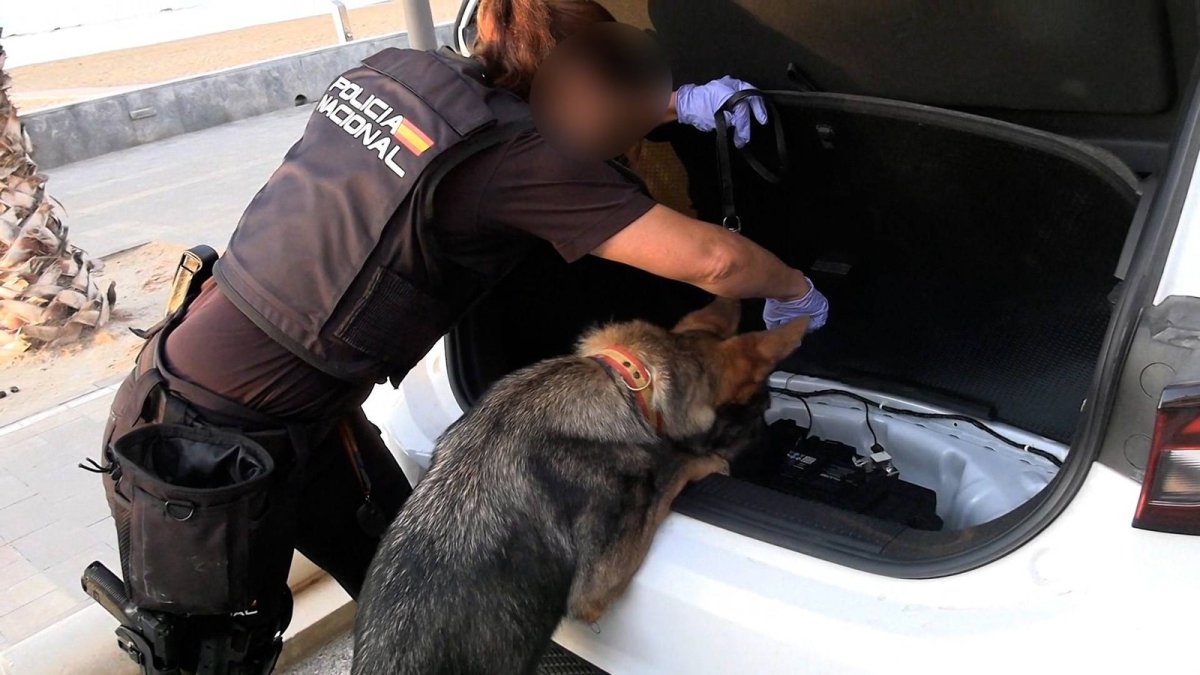
Officers searched seventeen properties and recovered eighteen high-speed vessels, some fitted with four engines and measuring up to fourteen metres, valued collectively at more than five million euros. Among the haul was a .38-calibre revolver and specialist communications and navigation equipment, including satellite antennas and geolocation devices. These assets formed the backbone of an operation run with the precision of a maritime logistics company.
The network was not a single-crime outfit. Its diversification into drugs, weapons and migrant-smuggling for hire illustrates how such syndicates embed themselves within wider criminal economies rather than operating in isolation.
For UK border officials, the scale of these seizures underscores the importance of targeting not only boats but the entire support infrastructure that sustains crossings. Removing engines, fuel supplies and safe-haven facilities can disrupt multiple routes simultaneously, a lesson already informing National Crime Agency tactics in the Channel.
Brutal Tactics and Human Cost Revealed
Passengers paid up to €12,000 each and were often crammed 50 to a vessel for night crossings in rough seas without lights or lifejackets. Some were tied down to prevent them falling overboard. For many, the sea journey was merely the final leg of an odyssey that had already taken them through several African countries before they reached the Algerian coast, where they were held in overcrowded, unsanitary accommodation waiting for a boat.
The human cost was matched by a culture of violence. Investigators found an internal system enforced through intimidation, threats, coercion and physical violence, with references uncovered during the inquiry to kidnappings, assaults, reprisals and death threats — directed both at migrants and at the network's own members. Skippers were reportedly instructed to ram law-enforcement vessels rather than be intercepted, and pilots were trained to confront police at sea.
Links to Organised Crime Syndicates
The group maintained alleged ties to the Mocro Maffia and the Marseille underworld, with reports that contract killers were used to enforce discipline. Investigators described an organisation that combined the ruthlessness of a street gang with the operational discipline of a commercial shipping firm.
Beyond its own operations, the group sold vessel storage, transportation, refuelling, maritime transfers, boat maintenance and counter-surveillance services to other organised crime groups. It also moved cannabis, weapons and even fugitives across the Western Mediterranean, and was linked to violent robberies, extortion, illegal detentions and money laundering.
Implications for UK Border Security
The National Crime Agency recorded around three hundred people-smuggling arrests in the year to April 2026, a fifty-five per cent increase on the previous year’s one hundred and ninety. Fifty-nine individuals were convicted of organised immigration crime, while four hundred network disruptions were achieved in financial year 2025/26, up from three hundred and fifty. Organised immigration crime now accounts for roughly a quarter of the agency’s operational activity, with approximately one hundred top-tier investigations under way.
Director General Operations Rob Jones stated: “The NCA’s role is to target the organised gangs behind people smuggling, and we use our full range of law enforcement tactics to disrupt and dismantle networks wherever they operate, preventing harm to those they exploit for profit, protecting lives and the UK’s border security.” Minister for Border Security and Asylum Alex Norris added: “This government is delivering the biggest crackdown on people smuggling ever seen… Make no mistake, we will track down, detain and arrest the vile criminals who bring illegal migrants to our shores.”
Recent cases demonstrate the approach. Egyptian national Ahmed Ramadan Mohamad Ebid received a twenty-five-year sentence in May 2025 after NCA work with Italian partners. Adam Savas was jailed for eleven years in January 2026 for supplying boats and engines. Operations in Dover, Germany and through international partners have removed more than five hundred vessels and over ten thousand linked social-media accounts. These efforts mirror the coordinated European model now yielding results in Spain.
Europol Taskforce Signals Strengthened European Response
The dismantled network followed a strict three-level hierarchy: strategic leadership under a single central figure handling planning, financing and logistics; operational teams of pilots and transporters; and support roles covering recruitment, supply, logistics, fuel handling, financial management and front operations. Branches operated across Andalusia, Murcia, Valencia and the Balearic Islands, with documented links to criminal groups in France, Belgium, Portugal, Italy and Poland.
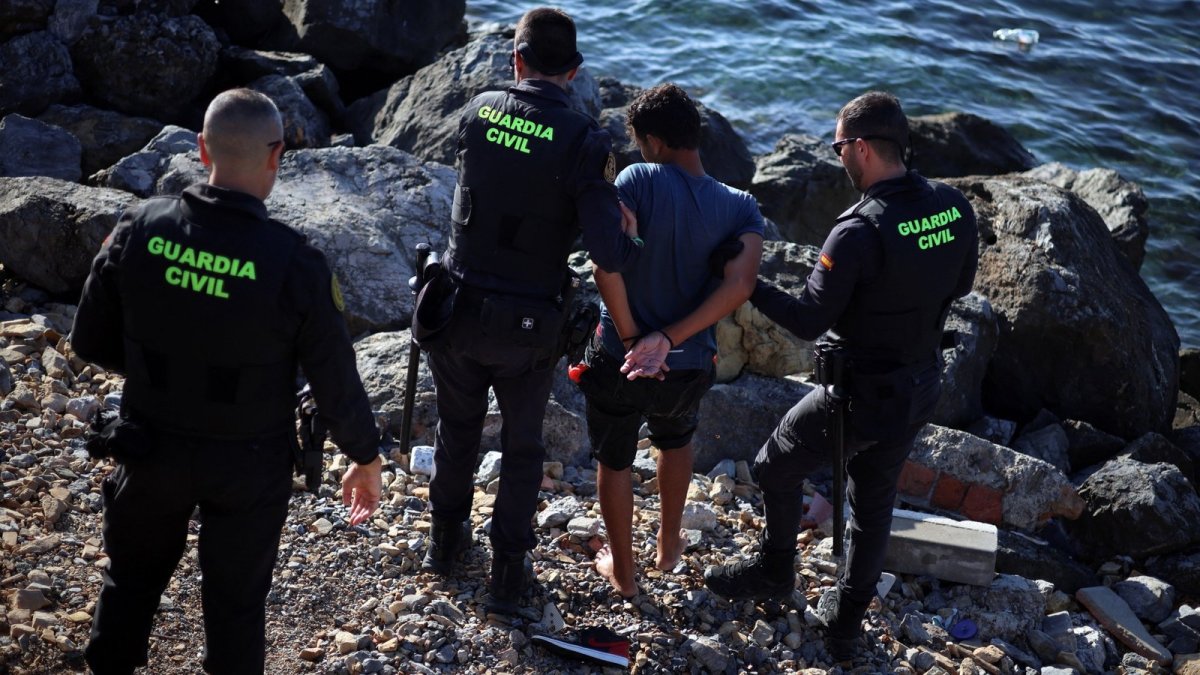
Encrypted communications, satellite phones and secure safe houses protected the enterprise, while pilots received training to confront law-enforcement vessels if intercepted. Funds moved through informal hawala networks that left minimal traces. The announcement arrives a week after an estimated fifty thousand to eighty thousand migrants entered Spain’s North African enclave of Ceuta from Morocco in late July 2026, with at least sixty-seven confirmed dead and some reports reaching one hundred and eleven by early August.
The western Mediterranean route from Algeria continues to rise even as Atlantic arrivals to the Canary Islands decline. Madrid's interior ministry has long pointed to organised smuggling as the driver of the surge, and the convergence of this bust with the Ceuta emergency — detailed below — underscores how central the trade has become to Europe's migration politics, and to the pressure on Britain's own borders.
The Bottom Line — What Comes Next
The dismantling of this network is a significant blow, but it is one battle in a wider war. Spanish Interior Minister Fernando Grande-Marlaska has blamed people-smuggling networks for exploiting vulnerable migrants, and the timing is acute: the operation was announced barely a week after an estimated 50,000 to 80,000 people entered Ceuta from Morocco in late July, a surge that left at least 67 dead and forced Spain to install a 500-metre floating barrier off the Tarajal breakwater. Twenty-two EU member states have sought coordinated border action, and Ireland, holding the EU presidency, convened an emergency meeting of interior ministers after Pedro Sánchez criticised Italy's one-month suspension of Schengen travel with Madrid.
For Britain, the lesson is that smuggling is a business model, not a border accident. With Channel arrivals down 43 per cent this year, the National Crime Agency's strategy of targeting the networks' finances, boats and recruiters is showing results — but the Spanish case shows how quickly syndicates adapt, diversifying into drugs, weapons and maritime services for hire. The networks will reorganise. The question for European and British agencies is whether the coordination that broke this one can be sustained.
By Erica Thornton, Staff Writer
This article was produced with AI-assisted research and editorial support. Sources: Channel 4 News, Europol, Reuters, Al Jazeera, Euro Weekly News, Sur in English, OCCRP, National Crime Agency, Home Office.
What's Your Reaction?
 Like
0
Like
0
 Dislike
0
Dislike
0
 Love
0
Love
0
 Funny
0
Funny
0
 Wow
0
Wow
0
 Sad
0
Sad
0
 Angry
0
Angry
0

US Politics and Policy Correspondent at Global1.News. Based in Washington DC, covering American politics, policy, elections, and the courts. Knows how the system works and tells you what it actually means.











Comments (0)