
Can a US-backed mineral highway bring peace and prosperity to DR Congo?
When the train whistles through Catumbela, a small town near Angola’s Atlantic port of Lobito, the sound carries more than the clatter of wheels on rails.
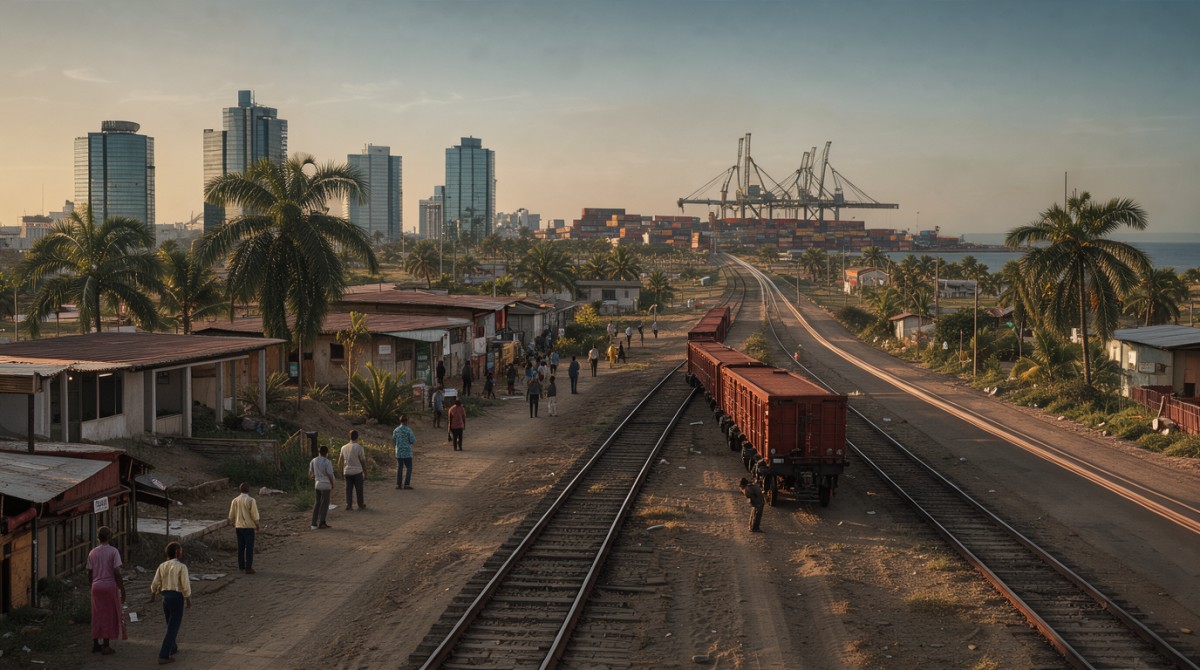
When the train whistles through Catumbela, a small town near Angola’s Atlantic port of Lobito, the sound carries more than the clatter of wheels on rails. For 20‑year‑old Manuela Julia, the railway simply means a cheaper ride to the market, but for policymakers in Washington and Kinshasa the same line is being pitched as a lifeline for peace and prosperity in the Democratic Republic of Congo (DRC). The Lobito Corridor, a US‑backed initiative that stitches together Angola’s historic Benguela Railway, the Port of Lobito and a new mineral terminal, sits at the crossroads of Africa’s booming demand for copper and cobalt, the geopolitics of supply‑chain diversification, and the lingering shadows of conflict in the eastern DRC.
From Colonial Relic to Modern Artery
The Benguela Railway was laid in 1902 under Portuguese colonial rule to ferry Central African minerals to the Atlantic. Decades of war in Angola left the line in disrepair, but a full reopening in 2015 marked a new chapter. Today, the track is being upgraded with more than $750 million in financing from the US International Development Finance Corporation and the Development Bank of Southern Africa. The funds target track renewal, modern signalling and new rolling stock, aiming to transform a historic conduit into a 21st‑century logistics backbone.
State‑owned operator Caminho de Ferro de Benguela (CFB) now runs passenger services that carried a record 1.6 million travelers in 2025, illustrating how the railway has already begun to knit together remote Angolan communities. For residents like Domingos Canhama, a forklift operator at CFB, the railway provides a reliable wage that supports his family of six. With nearly 1,000 Angolans employed directly by the Lobito Atlantic Railway (LAR) and 98 % of those jobs held by locals, the line is also a source of tangible, everyday employment.
Strategic Mineral Highway
The corridor’s most visible cargo is copper. During a recent BBC visit, a train loaded with about 12,000 tonnes of copper cathodes from the DRC arrived at Lobito’s mineral terminal. LAR, which holds a 30‑year concession to operate freight services and manage the terminal, reports that freight volumes have more than doubled since it took over in January 2024. The company projects the movement of roughly 200,000 tonnes of copper through the corridor in 2026, a figure that underscores the line’s growing importance for mineral exporters.
For the United States, the corridor is a strategic alternative to the China‑dominated east‑west routes that currently dominate African mineral exports. By channeling copper and cobalt—both essential for the global energy transition—through an Atlantic gateway, Washington hopes to diversify supply chains and reduce reliance on Chinese processing hubs. The US‑DR Congo strategic partnership specifically highlights the Sakania‑to‑Lobito route as a priority for mineral exports, linking the DRC’s mineral‑rich south directly to Western markets.
Regional Cooperation and the Rwanda Link
Under agreements brokered by former President Donald Trump, the DRC and neighbouring Rwanda have pledged deeper economic cooperation, including more transparent mineral supply chains and joint infrastructure projects. The broader vision is to tie these bilateral commitments to the Lobito Corridor, creating a regional network that can channel minerals from the interior of Central Africa to the Atlantic while bypassing conflict‑prone routes.
Rwanda’s involvement is significant because it sits along the corridor’s eastern flank, where armed groups have long profited from illicit mineral trading. By formalising trade routes and encouraging investment, the corridor aims to choke off the financial lifelines that fuel rebel activity. Political risk analyst Wellington Muzengeza notes that the timing is crucial: “Electrification and the energy transition have increased the strategic importance of copper, cobalt and reliable mineral supply chains.” The hope is that a legitimate, well‑managed trade corridor will undercut the black market that has financed conflict for decades.
Economic Promise Beyond Mining
While the corridor’s mineral traffic garners most headlines, many Angolans see broader development potential. Businessman Adérito Areias describes the railway as a “corridor of development,” emphasizing its passage through some of Angola’s most productive agricultural zones. Better transport links could help farmers move produce to larger markets, reducing post‑harvest losses that currently see crops rot in the fields.
Areias stresses that the corridor’s value hinges on complementary infrastructure: feeder roads, reliable electricity, storage facilities and predictable services. The Port of Lobito handled about 1.8 million tonnes of cargo in 2025, with roughly 158,000 tonnes classified as minerals. Yet the terminal’s design capacity reaches 3.6 million tonnes annually, suggesting ample room to expand both mineral and non‑mineral cargo if ancillary services keep pace.
Challenges of Industrialisation
Despite the optimism, experts caution that a new railway alone will not industrialise the region. Muzengeza warns, “Joining a corridor is not the same as industrialising.” For Zambia, Africa’s second‑largest copper producer, the corridor offers a shorter route to the Atlantic, but the real test lies in whether this route catalyses local manufacturing, value‑addition and job creation beyond the railway itself.
The proposed 830 km rail link from Zambia’s Copperbelt to Lobito illustrates the ambition to weave a trans‑national network. Yet without investment in downstream processing facilities, the corridor risks remaining a conduit for raw exports rather than a catalyst for broader industrial development. The challenge, therefore, is to translate logistical efficiency into tangible economic diversification for the communities along the line.
Peace Prospects for Eastern DRC
The ultimate promise of the Lobito Corridor is its potential to contribute to peace in the eastern DRC, where control over mineral resources has fueled armed conflict for decades. By providing a transparent, state‑controlled export route, the corridor could reduce the profitability of illicit mining that funds rebel groups such as the M23. However, the link between rail traffic and peace is indirect; it depends on the ability of the DRC and Rwanda to enforce transparent supply chains and on the international community’s willingness to purchase minerals through the corridor rather than via smuggled channels.
In practice, the corridor’s impact on security will be measured over years, as mineral revenues flow through formal channels and, ideally, fund public services and development projects in the east. If the corridor can help the DRC government consolidate legitimate revenue streams, it may weaken the economic incentives that sustain armed groups. Yet the road to lasting peace remains fraught, requiring sustained political commitment, robust monitoring, and continued investment in local governance.
Looking Ahead: A Corridor in Transition
The Lobito Corridor stands at a pivotal moment. With freight volumes rising, passenger services thriving, and significant foreign financing underpinning upgrades, the railway is poised to become a central artery for Central African trade. Yet its success will depend on more than tracks and trains; it will hinge on the ability of governments, businesses and communities to harness the corridor for broader development, industrialisation and, ultimately, stability.
For Manuela Julia, the railway’s greatest benefit remains a cheaper taxi ride. For policymakers in Washington, Kinshasa and Kigali, the line is a strategic lever in the global race for critical minerals. And for Angolans like Domingos Canhama, it is a source of steady income. As the whistle blows across the savannah, the Lobito Corridor carries with it the hopes of a continent seeking to turn its abundant resources into shared prosperity and lasting peace.
This article was produced with AI-assisted research and editorial support. Reporting is based on the source material cited below. Sources: BBC News Africa; bbc.co.uk; Global1.News (20 November 2026).
By Amara Diop, Staff Writer
What's Your Reaction?
 Like
0
 Dislike
0
 Love
0
 Funny
0
 Wow
0
 Sad
0
 Angry
0

West Africa/Sahel Correspondent at Global1.News. Dakar-based journalist covering politics, security, climate, and development across Francophone and Anglophone West Africa. Tells the stories of a region undergoing profound transformation.














Comments (0)