
Lords Committee Tells Ministers: Inaction on Childhood Vaccines Is Not an Option
A House of Lords committee says England's childhood vaccination rates have fallen for more than a decade, measles is back with more than 4,000 cases and three deaths this year, and the UK has lost its elimination status. Its report tells ministers that inaction is not an option.
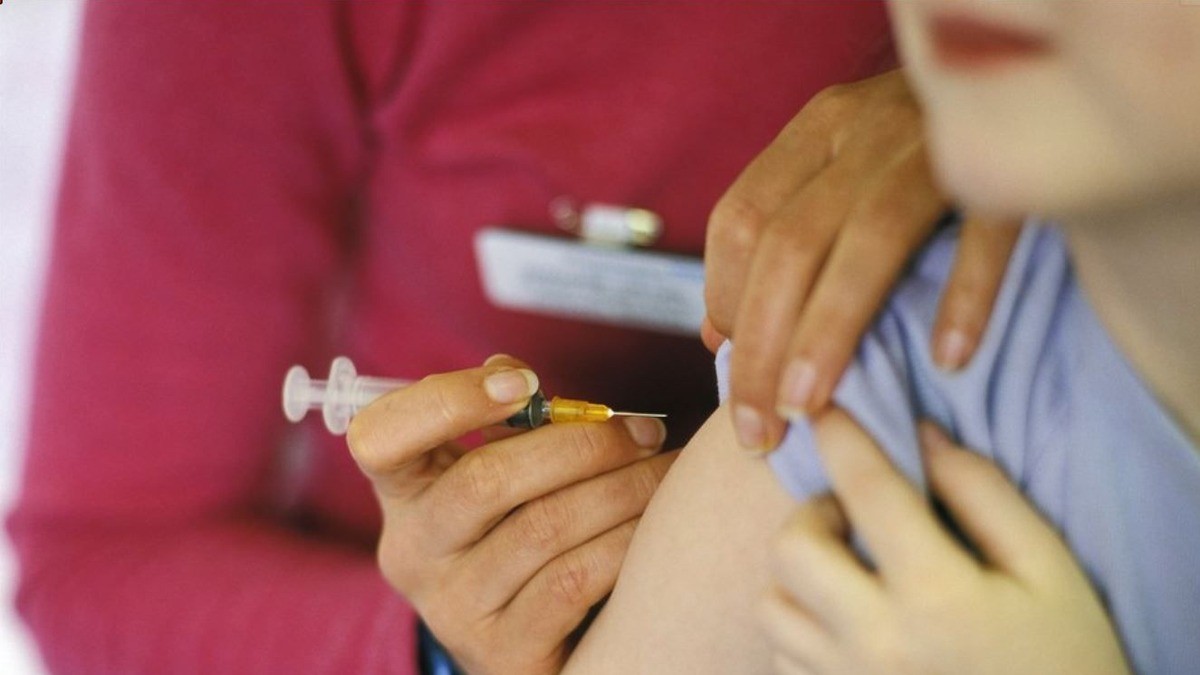
Childhood vaccination rates in England have been falling for more than a decade, and on Wednesday a House of Lords committee said the consequences are no longer theoretical. Measles has killed three people this year. The committee published its report at one minute past midnight, and its message to ministers is blunt: inaction is not an option.
Lords Committee Tells Ministers: Inaction on Childhood Vaccines Is Not an Option
London, United Kingdom - The report is called "No time to lose: reversing the decline in childhood vaccination rates." It was published today by the House of Lords special inquiry committee on childhood vaccination in England. The committee took evidence across the country and visited Leicester and a GP practice in Hackney, London. Its conclusion is that coverage now falls short of the level required to protect the population against several serious infectious diseases.
What the Report Says, and Why Its Chair Says Time Has Run Out
The report opens by naming what is at stake. Its summary begins with a sentence worth reading twice: "Reducing preventable suffering and death through childhood vaccination is one of our greatest public health achievements." Then comes the warning: "That success is now at risk." Baroness Walmsley, who chairs the committee, said on Wednesday that families want to keep their children safe and value time to talk with trusted healthcare professionals. "However, growing pressures on professionals and parents mean those conversations don't always happen." She went further: "Too often, services have simply not kept up with families' lives." Her conclusion carries the weight of the inquiry's title. "Inaction is not an option." She said the Government "must act now to improve access to childhood vaccinations, sustain trust, and reverse the decline." The committee's findings trace a decade-long slide, one that has not fallen evenly across the country and has widened gaps between rich and poor communities.
What a Vaccination Programme Prevents, and What Its Absence Costs
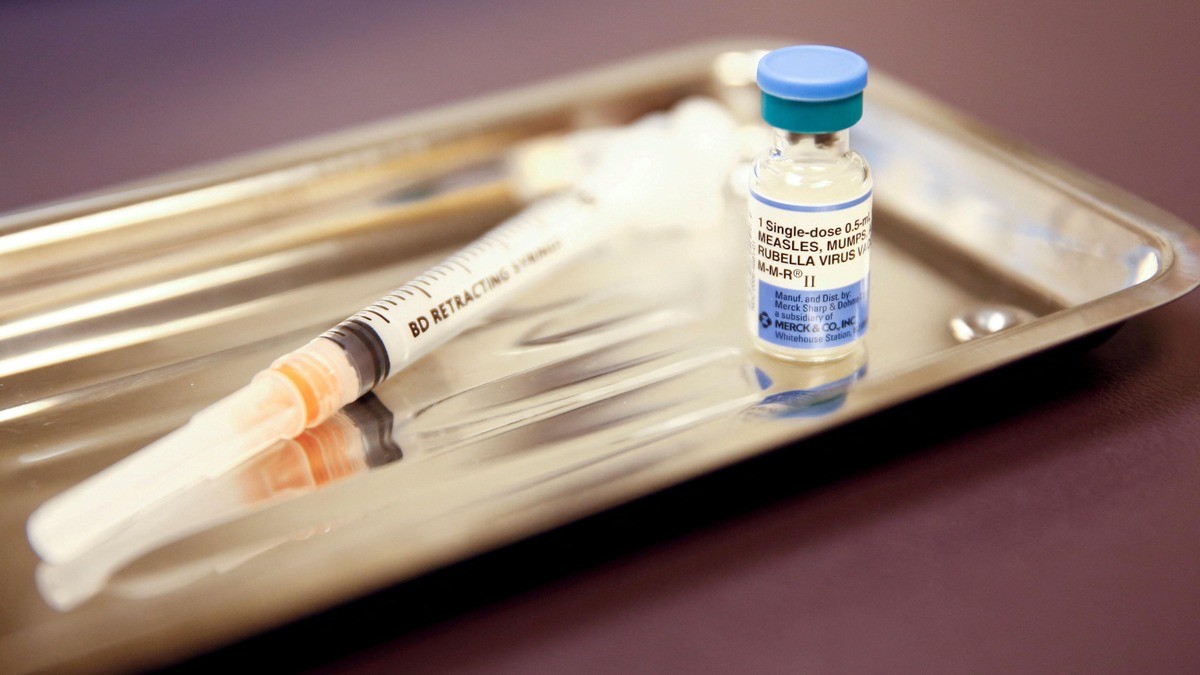
The numbers behind the programme are large, and the report keeps them human. Vaccinating children in England is estimated to prevent more than 200,000 hospitalisations and 5,000 deaths each year. The report says that behind those figures are "a baby protected from serious birth defects, a child protected from polio, a young woman protected from cervical cancer." Reporting on the report also calculates that every thousand childhood vaccinations prevent about four hospital admissions. Those gains are now being eroded. Pre-school vaccination rates have fallen below the 95% World Health Organization optimal performance standard, and adolescent rates sit under the 90% target. The committee's conclusion is unambiguous: coverage "now falls short of the level required to provide population protection against several serious infectious diseases." The slide, the report says, is not something to be accepted: falling rates and widening inequalities "are not inevitable and should not be accepted as the new normal."
The Gap Between the Poorest Communities and the Rest
The decline has not treated every community the same, and the report measures the distance between them. In 2016/17, measles, mumps and rubella vaccination rates were similar in the most and least deprived areas. By 2024/25, the gap had widened to nearly eight percentage points. The disparity in HPV vaccination is starker still, growing to more than 22 percentage points over the same period. The committee says inequalities by deprivation, geography, ethnicity and other population characteristics have widened substantially. It also cites rising relative child poverty and widening disparities between ethnic groups among the contextual factors behind the trend. The report's fortieth paragraph concludes that coverage has fallen steadily for more than a decade, that the decline has not occurred evenly, and that "England now lags behind comparable high-income countries." The pattern, the committee says, is not accidental. It is the measurable result of a system that reaches some families and misses others.
Measles Returned First, and This Time It Killed
The clearest evidence of consequence arrived this year. In January 2026, the World Health Organization announced the UK had lost measles elimination status. By October there had been more than 4,000 measles cases and three deaths. The committee calls this "a stark demonstration of the fact that there are now real consequences of declining coverage." Provisional data reported this week put the figure at more than 4,400 reported measles cases in England and Wales this year. For comparison, reporting gives 6,294 cases in 2025, 15,825 in 2024, and 360 in 2021. The outbreak that began in 2023 is the biggest in more than three decades. The three deaths this year were two children and one immuno-compromised adult, according to that reporting. The warning in the report is not about one outbreak. It is about what happens once coverage slips below the level that keeps a disease contained.
Half the Girls in the Poorest Areas, and a 2040 Deadline
The HPV numbers carry their own deadline. Only about half of girls in the most deprived local authorities are being vaccinated against HPV, the virus that causes cervical cancer, and the committee says that puts at risk the target of eliminating cervical cancer in England by 2040. This is a school-age programme, delivered through school-aged immunisation services rather than at the family doctor's surgery, which is why the committee's answer keeps returning to the school gate. It wants every child's vaccination status checked and catch-up offered at key educational stages, so that a girl who misses the team's visit is not missed for good. The report places HPV alongside measles as evidence of the same problem: a programme that once reached most children now reaches some far better than others, and the girls in the poorest communities are the ones the service is losing.
Most Parents Trust Vaccines. It Is the System That Fails Them.
The report pushes back on the simplest explanation for falling rates. It says most parents want their children protected from disease and choose for them to be vaccinated. UKHSA survey data suggests 84% of parents trust vaccinations, although that has declined slightly since before the COVID-19 pandemic. The committee says access and trust should not be seen as separate issues. The report states the link plainly. "Talking to trusted people like nurses, doctors and community leaders can make parents more confident and therefore more likely to take up vaccinations." "Conversely, inflexible services, rushed appointments, or dismissive or discriminatory treatment can damage trust and make them more likely to disengage." The barriers it identifies are practical: inflexible booking systems, inconvenient appointment times, and difficulty with consent forms. Its chapter on access also covers costs in time and money, digital exclusion, and language and literacy barriers. The problem, in the committee's reading, is not parental refusal. It is a system that has become harder to use.
A Workforce Cut in Half and Caseloads of a Thousand Families
The report calls for rebuilding the children's public health workforce and reversing "steep falls in the number of health visitors." Reporting on the report says health visitor numbers have halved over the past decade. BBC analysis in April 2026 found the number in England had fallen from 10,200 a decade earlier to 5,575 in January 2026, a drop of 45%. The Institute of Health Visiting has said some health visitors are now responsible for more than 1,000 families each, and has called for limits on "unmanageable" caseloads. Other UK nations have safe staffing limits of about 250 caseloads per health visitor. No such limit applies in England. Alison Morton, the institute's chief executive, said: "We need to set a benchmark, otherwise we're just going to continue to see this decline with hugely unmanageable, unsafe caseloads which are impossible for health visitors to work within." She added: "Health visitors are having to prioritise, and actually prioritisation has a human cost."
Reform Could Turn This Around, and the Committee Is Alarmed It Is Already Hurting
The report sees both opportunity and danger in the government's restructuring of the health service. The report notes that "Major new NHS reforms are now underway", which could be a chance to make vaccination a priority again. But it "also risks causing further fragmentation if funding, staff and expertise are lost." The committee concluded it was "alarmed" to find that reforms are already causing disruption in the health systems that underpin childhood vaccination services, which "represents a serious risk to efforts to improve coverage and reduce disparities." It warns that, left unmitigated, the disruption could "cause lasting damage." The report also finds "convincing evidence that structural changes to the NHS and public health systems since 2013 have contributed significantly to the decline, resulting in the loss of clarity and fragmentation of responsibility for childhood vaccination." It adds: "While many high-income countries face comparable challenges, there has been a distinctive decline in vaccination rates in England since 2013."
Five Priorities, Seven Demands, and No Timetable
The committee organizes its recommendations around five priorities: make core services more accessible, simplify catching up on missed vaccinations, expand targeted outreach for the communities with the lowest rates, rebuild the children's public health workforce, and strengthen responsibility and accountability. From those it draws seven demands on ministers. Among them: make the 95% WHO target for pre-school coverage a top priority for the NHS, with stepped targets for improving rates and reducing inequalities; establish a national training programme so staff can hold respectful, informative conversations with parents; produce a new communications strategy, developed with communities, that tests how to monitor and respond to false and misleading content; modernize data systems so parents and professionals can check a child's status; and ensure provider contracts reward action to improve access. The report also says the GP contract does not clearly incentivize practices to improve coverage from a low base or to reduce inequalities.

What the Colleges and the Department Say
A Department of Health and Social Care spokesperson said vaccinations "play a vital role in protecting children when they are at their most vulnerable" and that improving rates is "a major priority for this department." The spokesperson pointed to a digital consent process being rolled out across thousands of schools and said: "We therefore welcome this report and look forward to engaging with the committee on their findings and recommendations." The department's other answer is a £2 million pilot, announced on 1 January 2026, in which health visiting teams offer vaccinations to families who face travel costs, language difficulties or vaccine hesitancy: 12 schemes in five regions, evaluated before any rollout from 2027. Dr Helen Stewart of the Royal College of Paediatrics and Child Health said: "As a paediatrician, I am horrified by falling vaccination rates, the resurgence of diseases that were once eliminated, and the fact that I am seeing children suffering from measles."
By Jessica Ali, Staff Writer
This article was produced with AI-assisted research and editorial support. Sources: House of Lords Childhood Vaccinations Committee, UK Parliament publications, Department of Health and Social Care, BBC, Pulse, The Pharmacist, Pharmacy Business, Royal College of General Practitioners, Royal College of Paediatrics and Child Health. Photographs: BBC (vaccination); UK Parliament, CC BY 3.0 (House of Lords chamber).
What's Your Reaction?
 Like
0
 Dislike
0
 Love
0
 Funny
0
 Wow
0
 Sad
0
 Angry
0

Editor-in-Chief at Global1.News. Atlanta-based journalist who cuts through the BS and tells it like it is. Lead anchor, host, and the voice you hear when the spin stops and the truth starts.












Comments (0)