
Mamdani Sets Rikers' Closure at 2032, More Than Five Years Past the Deadline
New York Mayor Zohran Mamdani has published a plan to end incarceration on Rikers Island by the end of 2032, but the legal deadline of 31 August 2027 has not moved and only the City Council can change it, with no bill yet introduced.
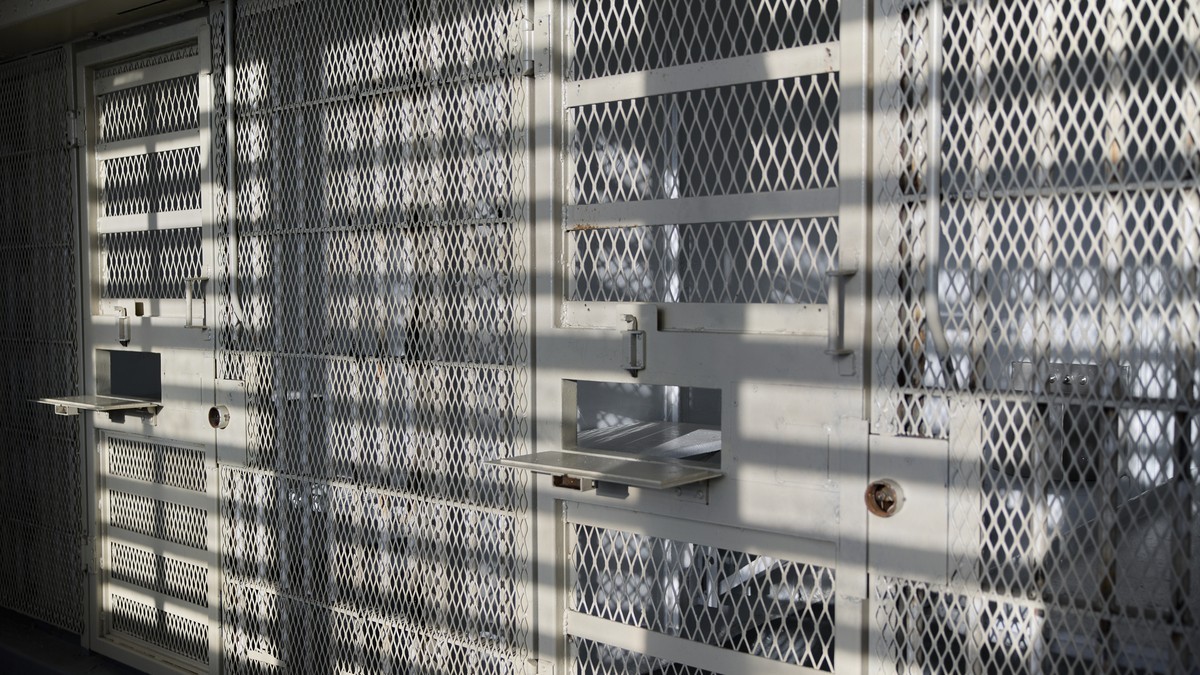
Mayor Zohran Mamdani unveiled a plan Friday to end incarceration on Rikers Island by the end of 2032, more than five years past the deadline the City Council wrote into law in 2019. The deadline itself has not moved. It remains 31 August 2027, and only the Council can change it.
Mamdani Sets Rikers' Closure at 2032, More Than Five Years Past the Deadline
New York — The plan, published at closerikers.nyc.gov by the Mayor's Office of Criminal Justice, calls for four borough-based jails, with Brooklyn opening first in 2029 and Manhattan last in 2032. City Hall says the Council would introduce legislation to revise the legal deadline, but no bill has been reported as introduced and no vote date exists.
A Date in the Law, a Date in a Plan
Local Law 2021/016 requires all portions of Rikers Island to be transferred to the Department of Citywide Administrative Services by 31 August 2027 and no longer used by the Department of Correction for housing. The administration cannot rewrite that date on its own. ABC7 reported plainly that "Changing the closure deadline will require approval from the City Council." The plan's 2032 target is a proposal, not a change in law. The Council has not approved it, and it is not fully funded. Councilmember Selvena Brooks-Powers, who chairs the Committee on Criminal Justice, said: "The deadline for 2027 is, at this point, not going to happen. We all have recognized we'll have to push back the deadline." She added: "I don't want to throw out an arbitrary deadline." The plan the city is now stretching was approved by the full Council on 17 October 2019, after members invoked the names of people who had died on the island, including Kalief Browder, who took his own life at 22 after three years at Rikers. The city also missed a May 2026 deadline to release two reports outlining its closure plan.
What the Plan Says It Will Do
Mamdani's administration describes it as "the city's first comprehensive plan to close Rikers Island". It pairs a construction schedule, with Brooklyn first in 2029, with investments meant to shrink the number of people held in custody. Mamdani, speaking to NPR, said: "It is long past time to close what's been a moral stain on our city." He also said: "We cannot simply accept the old approaches to public safety just because they've always been done that way." And: "We have a legal and moral obligation to close Rikers." The plan commits to quarterly public updates and states: "This report is only the beginning." It also sets out planning "for the Future Reuse of Rikers Island" and says the administration is "exploring near-term renewable energy and sustainability projects for Rikers Island". The document also commits the administration to working closely with the City Council on legislation to bring it into law, alongside the remediation manager, the federal monitor and the Board of Correction.
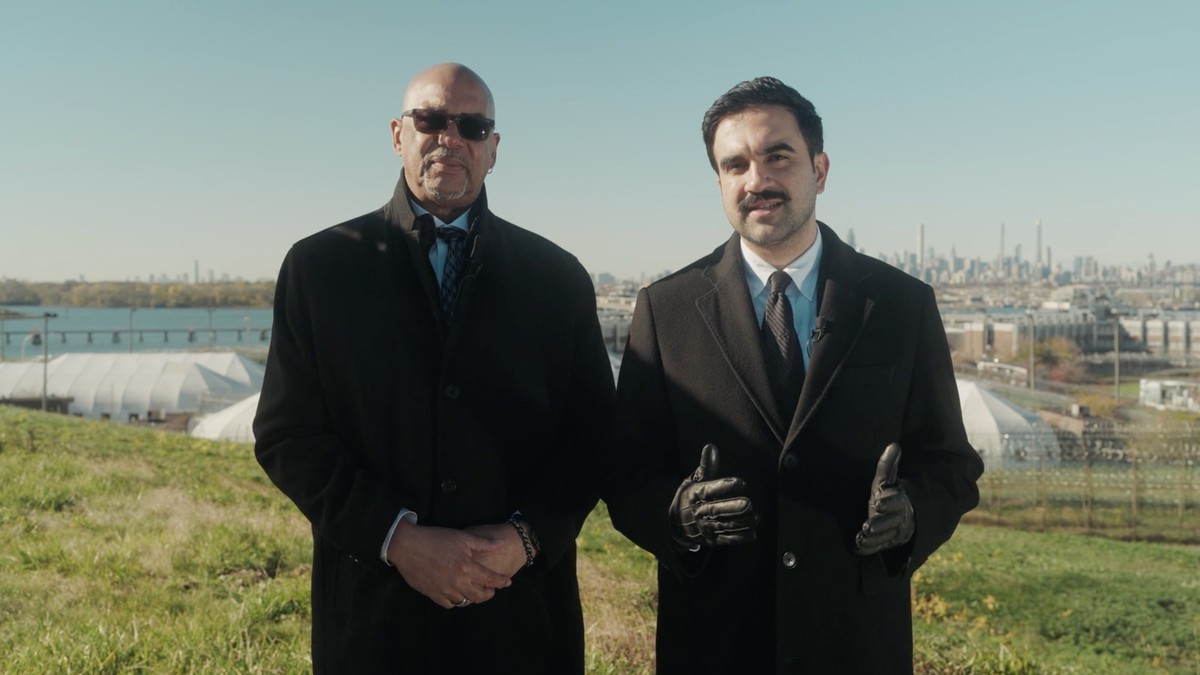
Four Jails, Brooklyn First in 2029
The replacement system is four borough-based jails. Brooklyn opens first in 2029 at 275 Atlantic Avenue. The Bronx, at 745 E 141st Street, and Queens, at 126-02 82nd Avenue in Kew Gardens, follow in 2031. Manhattan, at 124-125 White Street, opens in 2032. Together with three hospital-based therapeutic housing units, the system would have a capacity of 4,500 beds, amNewYork and The Guardian reported. The Queens Daily Eagle put the borough jails alone at 4,400. The four jails together will cost around $16 billion, according to the Queens Daily Eagle. The facilities are meant to sit closer to courts, attorneys, families and transit, with individual cells, vocational and educational space and areas designated for community use. The women's facility planned for Queens drops from 450 beds to 250, amNewYork reported. The city has committed $67.5 million in capital funding for demolition, with a first demolition project planned for 2027. As of late October, some 2,450 doors across the complex still needed replacing.
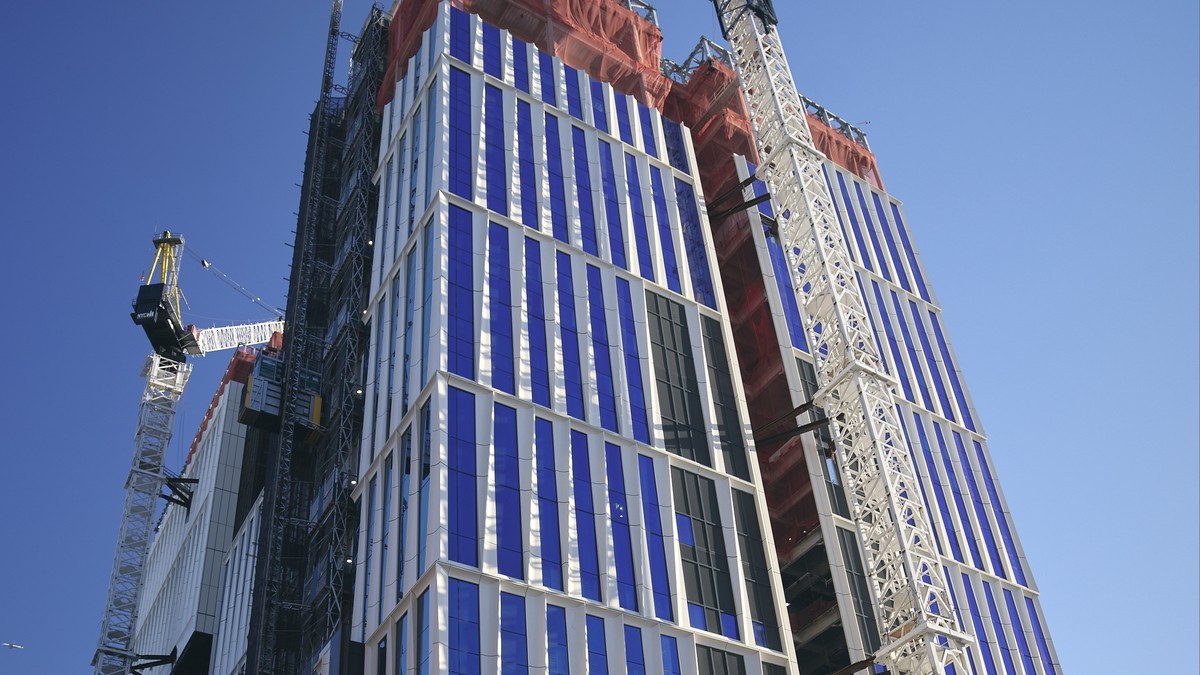
The Number That Has to Fall
The jail population stood at 6,651 on Wednesday 18 November, according to THE CITY Reporter. The plan sets a ceiling of no more than 5,500 when Brooklyn opens in 2029, and no more than 4,100 by the end of 2032, amNewYork and The Guardian reported. That is a reduction of nearly 40 percent, amNewYork noted. About 85 percent of people in city jails are held pretrial, amNewYork reported. According to the plan, 56 percent fewer people were sent to Rikers pretrial in 2025 than in 2017, yet the population was only 22 percent smaller, because the average length of stay among people leaving rose from 63 days to 102 days. The median time from arrest to final disposition in an indicted felony case was 431 days last year, 115 days longer than in the rest of the state. More than 840 people held on murder charges had spent an average of 690 days in custody awaiting resolution of their cases. The Close Rikers Coalition has called on the mayor and Council to reduce the jail population to at least 4,000 in the coming year.
Three Totals That Should Not Be Blended
The money comes in three totals with three different scopes, and they should not be blended. amNewYork reported the plan outlines $290 million in investments through fiscal 2030. The Guardian and ABC7 reported a $146 million investment next fiscal year covering mental health care, substance use treatment, educational and vocational programming and victim services. NPR reported the city invests more than $250 million across the next several years in efforts to reduce the number of people in jail. The Guardian broke down the $146 million: $50 million for programming and treatment, $76 million for community-based services and diversion, and $16 million for crime victims and survivors. amNewYork listed nearly $8 million to expand supervised release and $12.5 million for reentry services.
The Ninth Death Came Ten Days Before the Announcement
Cesar Gabriel Medero Curet, 36, was found in his bed at the Robert N. Davoren Center on Rikers Island early on Tuesday 10 November 2026 and pronounced dead at 6:03 a.m., according to a Department of Correction notice. No cause of death has been established. He was the ninth person to die in city custody in 2026, matching the city's total for all of 2023 and nearly twice the five recorded in 2024, though below the 15 in 2025, Bushwick Daily reported, citing the city comptroller's count. Commissioner Stanley Richards said: "The Department mourns the loss of Mr. Medero Curet who died while in our care. We will investigate the circumstances surrounding his death in coordination with city and state authorities." Public Advocate Jumaane D. Williams said: "We do not yet know the circumstances of his death."
The Architect of the First Plan Says Rebuild on Rikers
Elizabeth Glazer, who led the Mayor's Office of Criminal Justice under Bill de Blasio and is one of the chief architects of the original closure plan, has broken with that approach. In a New York Times opinion essay published Tuesday 17 November 2026, she argued Mamdani should abandon the current strategy and instead rebuild or renovate jails on Rikers Island to create safer, more humane facilities, THE CITY Reporter reported. Glazer told NPR she hopes the mayor will be pragmatic about contingency plans, including building again on Rikers. She said it requires "relentless attention, coordination and organization around a common goal to get it done". She also said: "If you're going to move the very same system into the new buildings, you're going to move the problem of violence as well."
A Federal Judge Took the Keys Away
In May 2025, under former mayor Eric Adams, a federal judge moved Rikers Island out of the city's direct control and placed it under the authority of an outside official, The Guardian reported. That official, the remediation manager Nicholas Deml, was appointed in January 2026, according to The Guardian, citing the New York Times; Bushwick Daily dates his tenure from February. Operations are now controlled by the remediation manager, who released his own plan earlier this year for bringing the jail system into legal compliance, independent of the city's plan. Deml wrote: "While German correctional systems are not directly transferable to New York, they reflect a fundamentally different orientation — one that places human dignity at the center of incarceration." Deml and Richards traveled to Germany this year on a trip organized by the Vera Institute.
What the Council Has to Pass
Nothing in the plan takes effect without the Council. Council Speaker Julie Menin said: "Delays under previous administrations have made it clear that more time is needed to fulfill the commitment the City Council made to New Yorkers in 2019 when we legislated closing Rikers Island." She added that with Rikers under federal court-ordered oversight, "we must bring this troubling chapter in our city's history to an end once and for all." City Hall said Friday the Council would introduce legislation to revise the legal deadline in line with the construction schedule, amNewYork reported. Asked at a Thursday briefing about the extension, a city official said discussions would continue in the coming weeks and months but gave no timetable for introducing legislation. The Queens Daily Eagle reported in September that the bill is likely to be sponsored by Councilmember Sandy Nurse and expected before the end of the year, with specifics still under negotiation. Nurse said: "I feel really optimistic about the way the administration is approaching this, but we need to see a clear plan."
What Happens if the Population Does Not Fall
The administration did not outline a contingency plan when asked what would happen if the number of people in custody still exceeded the capacity of the replacement facilities in 2032, amNewYork reported. Vincent Schiraldi, who runs a philanthropic fund to close Rikers, told NPR: "It's really hard to have the guts to forecast lower incarceration numbers. Because if you are wrong, then you have crowded jails and you're in trouble." He added: "Then we deal with it. What is the scenario by which the government spends billions of dollars just in case?" In a joint statement, the Bronx, Brooklyn, Manhattan and Queens district attorneys welcomed the plan but warned there is "a long way to go and many obstacles to overcome to do it correctly and preserve the tremendous progress in public safety our city is experiencing."
By Jessica Ali, Staff Writer
This article was produced with AI-assisted research and editorial support. Sources: NPR, The Guardian, ABC7 New York, amNewYork, the Associated Press, THE CITY Reporter, the Queens Daily Eagle, the New York City Council, the Office of the New York City Public Advocate and closerikers.nyc.gov.
What's Your Reaction?
 Like
0
 Dislike
0
 Love
0
 Funny
0
 Wow
0
 Sad
0
 Angry
0

Editor-in-Chief at Global1.News. Atlanta-based journalist who cuts through the BS and tells it like it is. Lead anchor, host, and the voice you hear when the spin stops and the truth starts.











Comments (0)