
Trump admin still won't let Wi-Fi giant TP-Link sell its latest routers in US
In a move that underscores the Trump administration’s hard‑line stance on foreign‑made networking gear, TP‑Link—arguably the nation’s leading supplier of home and small‑business routers—has been barred from importing its newest Wi‑Fi 8 devices.
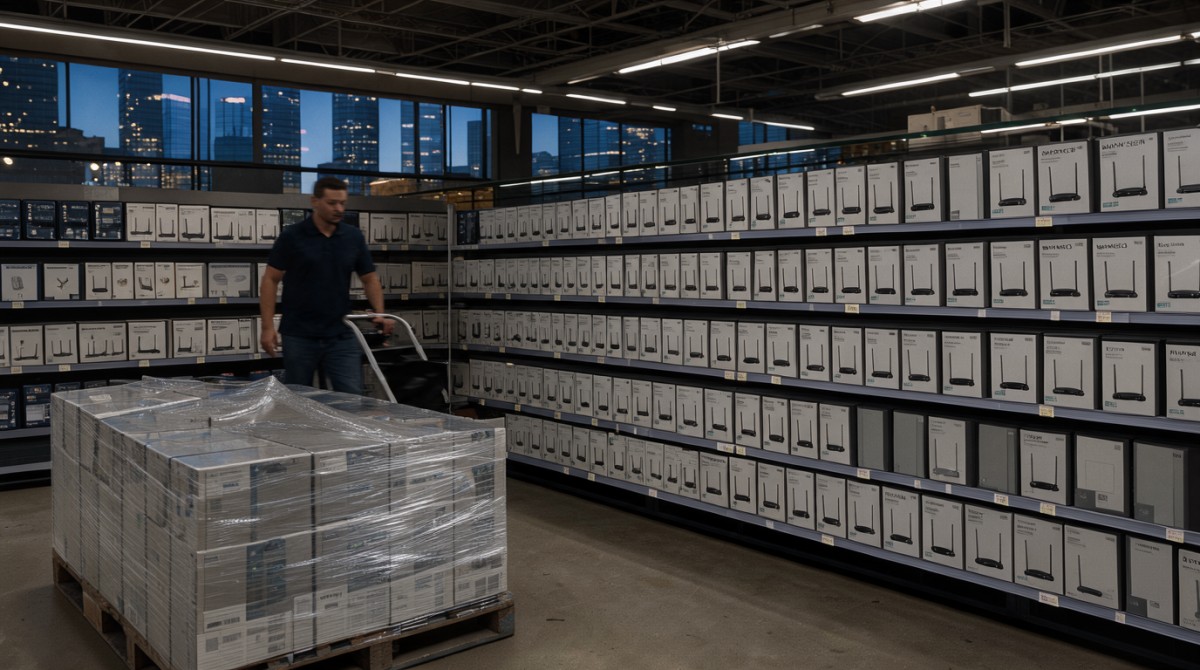
In a move that underscores the Trump administration’s hard‑line stance on foreign‑made networking gear, TP‑Link—arguably the nation’s leading supplier of home and small‑business routers—has been barred from importing its newest Wi‑Fi 8 devices. The ban, which took effect in March 2026, blocks any consumer router that is manufactured, assembled, designed or developed outside the United States unless a special waiver is granted. TP‑Link’s latest Archer 8 Ultra, already on pre‑order in Europe, cannot legally cross the border, leaving American consumers with only legacy models approved before the ban.
The Policy Behind the Ban
The administration’s sweeping prohibition stems from an expansion of the FCC‑managed “Covered List,” a roster originally created by a 2020 law to isolate products that pose an “unacceptable risk” to national security. While the list initially targeted specific firms—Huawei, ZTE, Kaspersky Lab, among others—it has since been broadened to entire categories, including routers, drones, robotic devices and power inverters. Under the current policy, any new router model that originates abroad automatically lands on the ban list, regardless of whether a particular vendor has been singled out as a threat.
To carve out an exception, a company must navigate a secretive waiver‑review process that involves the Federal Communications Commission, the Department of Defense and the Department of Homeland Security. The criteria are opaque, and the administration retains sole discretion over which firms receive “conditional approvals.” So far, 26 waivers have been issued to firms such as Netgear, Asus, Nokia and Zyxel, but TP‑Link has yet to secure one.
TP‑Link’s Corporate Split and Its Implications
Founded in China in 1996, TP‑Link has long been a staple of American households, offering affordable, reliable Wi‑Fi. In October 2024, the company completed a formal organizational separation, establishing a U.S. entity headquartered in California. The split was marketed as a clean break: “TP‑Link has split from and no longer has any affiliation with TP‑LINK Technologies Co., Ltd., which serves the mainland Chinese market,” the company asserted.
Despite the structural separation, the Trump administration remains skeptical. Officials are tasked with confirming that the U.S. operation is fully insulated from any Chinese control or influence—a standard that has proven difficult for any former Chinese‑origin firm to satisfy. The lingering perception that TP‑Link’s technology could be leveraged in a foreign hacking campaign, a concern raised at a Congressional hearing last year, continues to shadow its waiver request.
Economic Stakes for Consumers and the Company
TP‑Link’s newest Wi‑Fi 8 router, the Archer 8 Ultra, launched for pre‑order in September and is slated to ship later this month in the United Kingdom at a price of £899.99 (approximately $1,178). While the price point positions the device as a premium offering, the inability to sell it in the United States removes a potential revenue stream for a company that already commands a sizable share of the domestic market.
For American consumers, the ban means a narrower selection of high‑performance routers. Existing TP‑Link models remain on shelves, but they lack the advanced features of Wi‑Fi 8, such as higher throughput and lower latency—capabilities that could become increasingly important as smart‑home devices proliferate. The restriction also reinforces a broader market shift toward domestic or allied‑nation brands that have secured waivers, such as Netgear, Asus and Amazon’s Eero line.
Political Landscape Shaping the Waiver Process
The waiver system appears to favor firms with strong political connections. Companies led by Trump allies—SpaceX’s Starlink division and Amazon’s Eero subsidiary—have already secured exemptions. This pattern fuels criticism that the process lacks transparency and may be influenced by relationships rather than objective security assessments.
Legislators on both sides of the aisle are reacting. House Commerce Committee Ranking Member Frank Pallone, Jr. (D‑N.J.) and Chairman Brett Guthrie (R‑Ky.) introduced legislation in September to curb the FCC’s authority to blanket‑ban entire product categories. Their bill would require the FCC to notify Congress a week before adding any new technology to the Covered List and restrict bans to equipment produced by entities controlled by “foreign adversaries” such as China, Russia, North Korea or Iran. The proposal reflects growing unease that the current approach is too blunt and could stifle innovation and competition.
Industry Perspectives on the Covered List
Legal and industry experts see the Covered List as a double‑edged sword. Betsy McIntyre, a former FCC telecom‑mergers official and DOJ national‑security reviewer, praised the list’s original intent as a simple, useful tool for guiding procurement decisions across the spectrum—from small businesses to individual shoppers. “The government needs to be able to quickly identify national security risks and, to the extent that they can, you’ve got to give the public and industry guidance on what to do in order to avoid that risk,” she told Ars Technica.
However, McIntyre also warned that expanding the list to entire categories dilutes its effectiveness. When every foreign‑made router is automatically barred, the list loses the granularity that allows regulators to target truly high‑risk devices while leaving lower‑risk products on the market. The lack of clear, consistent criteria for waivers further erodes confidence among manufacturers seeking to do business in the United States.
What Lies Ahead for TP‑Link and U.S. Consumers
TP‑Link has pledged to assemble all future routers in the United States, a move designed to address the administration’s on‑shoring agenda. Yet the company still faces an uphill battle to prove that its products are free from foreign influence and that they meet the security standards demanded by the waiver review. With the process shrouded in secrecy and no comment from the Pentagon, FCC or Department of Homeland Security, the timeline for any exemption remains uncertain.
For now, American shoppers will continue to choose from the limited pool of exempted routers, while TP‑Link’s Wi‑Fi 8 offering remains a European exclusive. The episode highlights a broader tension between national‑security imperatives and market freedom—a tension that will likely shape future policy debates, especially as lawmakers push to refine the Covered List’s scope. Until the administration either grants TP‑Link a waiver or revises the ban’s parameters, the company’s flagship router will stay out of reach for U.S. consumers, and the debate over how to balance security with competition will keep raging in the halls of Congress and the corridors of the FCC.
This article was produced with AI-assisted research and editorial support. Reporting is based on the source material cited below. Sources: Ars Technica; arstechnica.com; Global1.News (20 November 2026).
By Jessica Ali, Staff Writer
What's Your Reaction?
 Like
0
 Dislike
0
 Love
0
 Funny
0
 Wow
0
 Sad
0
 Angry
0

Editor-in-Chief at Global1.News. Atlanta-based journalist who cuts through the BS and tells it like it is. Lead anchor, host, and the voice you hear when the spin stops and the truth starts.















Comments (0)