
Claude and an Anthropic Mathematician Claim Math's Most Famous Open Problem
Levent Alpöge, a mathematician at Anthropic, says he and the company's Claude model found a proof of the Riemann Hypothesis, and released only machine-checked code. Independent mathematicians say it compiles; the final check is unfinished.

A mathematician employed by Anthropic says he and the company's AI model Claude have found a proof of the Riemann Hypothesis, the classic open problem in number theory. Instead of a paper, he released a note and a body of machine-checkable code. The claim arrived unverified, and the field spent Friday deciding how seriously to take it.
Claude and an Anthropic Mathematician Claim Math's Most Famous Open Problem
Friday, November 20, 2026 — Four pages went up on a personal website, and within hours mathematicians were downloading code and arguing about what it meant. The author is a staff mathematician at Anthropic, the AI company. What the note claims to resolve is the biggest open problem in number theory.
A Four-Page Note and No Paper
Levent Alpöge posted the note on alpo.ge, his personal website, under the title "Remark." It runs four pages, and its first paragraph goes past the headline claim. "In fact, the method easily extends much further, resolving the so-called Generalized Riemann Hypothesis, and I expect, with more time, the Extended Riemann Hypothesis too," he writes. "Claude and I have also formalized the arguments without assumptions."
Beside the note sits that formalization: 14 compressed archive parts, alpo.ge/lean.tar.gz.part01 through part14. There is no human-readable paper. Alpöge took a Princeton PhD in 2020 under Manjul Bhargava and was a junior fellow at the Harvard Society of Fellows before joining Anthropic. He won the 2015 Morgan Prize, the top U.S. award for undergraduate research in mathematics. On his site he calls himself "an old school mathematician" and says he returned to computer science after GPT-4.
What Riemann Actually Asked
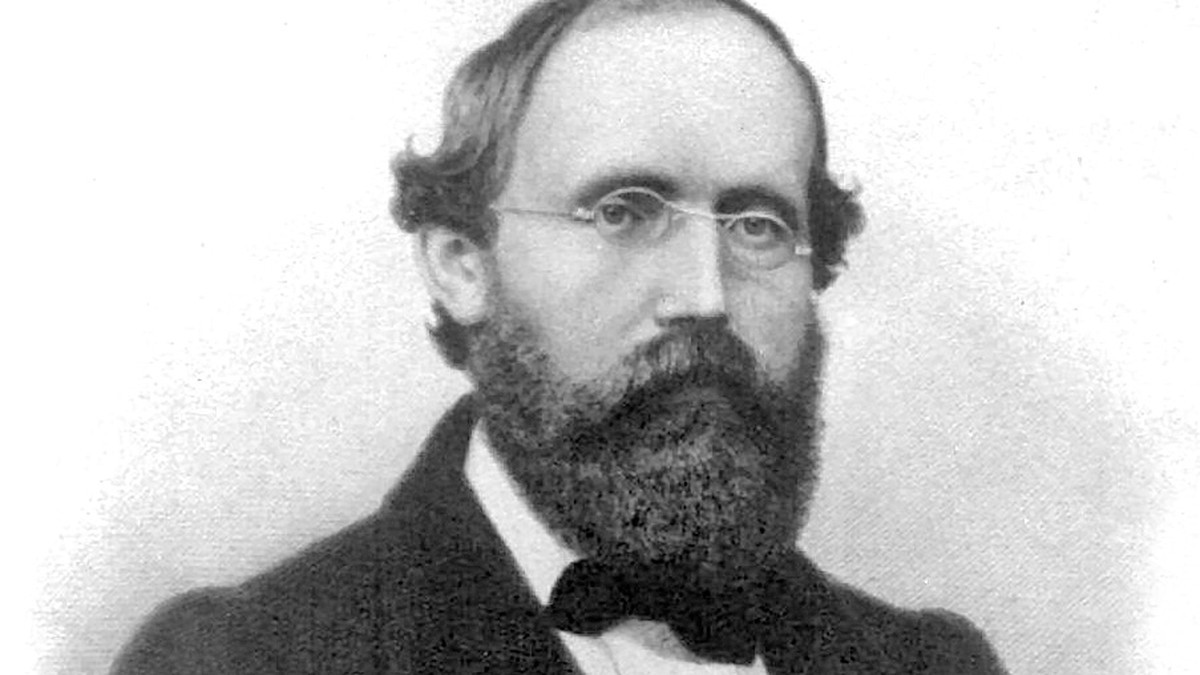
Bernhard Riemann proposed the hypothesis in 1859, 167 years ago. It concerns the Riemann zeta function, whose behavior encodes information about the distribution of the primes: every nontrivial zero of the function, the hypothesis says, lies on a single vertical line in the complex plane, the critical line, where the real part equals one-half. If true, it predicts that the primes are spread along the number line about as evenly as they possibly could be.
Alpöge's note frames it plainly. "The Riemann Hypothesis is the classic problem in number theory," he writes. "It asks for optimal control on the count of prime numbers of a given size. Its shadows have guided mathematicians for 150 years, and its many rhymes and reflections, even reaching physics, taught us the unity of our fields."
It is one of seven Millennium Prize Problems designated by the Clay Mathematics Institute in 2000, 26 years ago, each carrying a $1 million award. Only one has been solved: Grigori Perelman proved the Poincaré conjecture in 2003 and declined the prize.
Why He Released Code Instead of Prose
Alpöge answers that in the note itself. "The argument is incredibly long at the moment, and while its formalization is finished and it is routine to produce a huge, unreadable document containing sufficient detail, in my view of my path I have just taken a step," he writes. He adds: "It being obviously inappropriate to attempt to post some massive unreadable travesty of 'slop', I decided to only present Lean."
A footnote records the size of the draft he set aside. "I of course amused myself, and hit 250,000+ pages," Alpöge writes. "Claude cutely called it the GRH... 'book'." By his own description, that is an unpublished, AI-generated informal draft, not a document anyone has been handed.
Thomas Bloom, a Royal Society University Research Fellow at the University of Manchester, said of the claim: "I don't know whether I'm more surprised that (a) AI claims to have proved the Riemann Hypothesis or (b) that it claims to have produced a coherent proof that, written out in human-readable format, is 250,000+ pages long."
The Files Compiled
Early Friday, no outside expert had confirmed anything. Harry Stoltz, a mathematician at NYU's Courant Institute, was among the first to flag the note; his post has been viewed nearly 200,000 times. Elliot Glazer said the formalized statement in the release is in fact the Generalized Riemann Hypothesis, which answers the first worry, whether the theorem being proved is the one claimed. He said the code was still compiling and would take a few hours, and put the chance of the result resting on a bug in Lean at well under 1%.
Then the reports turned. Andrew Sutherland, a mathematician at MIT, said: "The Lean proof has been compiled and independently re-checked by the Lean kernel with only the three standard axioms." He added: "Honestly the chance that anything is fishy here is approximately zero." Scientific American's headline on Friday read: "The AI Riemann hypothesis proof is almost certainly true, independent mathematicians attest." A comparator run was still awaited.
What Lean Cannot Tell You
Lean is a proof assistant. If a Lean-coded proof compiles error-free, that is usually taken as confirmation that the logic and math in each step is correct. What it confirms is that an argument establishes the claim written at the top of a file. It cannot confirm that the claim is the famous problem. That takes a person reading the top of the file.
Kevin Buzzard of Imperial College London put the test bluntly in a blog post: "The first question which one has to ask when judging a PDF which comes with some Lean code is: 'what is the statement of the theorem in the Lean code, and does this correspond to the actual theorem statement'." On the Lean community chat, he wrote that "we still await a successful comparator run," which checks that the code redefines nothing in the statement and compiles under several independent kernels. Kit Yates wrote on his Substack that a claimed proof is not yet an accepted one, and that the hedge in Alpöge's opening line, "I believe," carries less weight than it would have a few years ago.
The Document Nobody Has Read
Alpöge concedes the gap himself, describing himself as "presenting the world with a complete argument before having mastered a massive neighborhood around its mathematics." He says he intends to do his best "to understand and impart understanding of this argument and its certain simplifications, to speak about it, to write it properly." A footnote is franker still. "The parts in which Claude is the expert and not me I am sort of paraphrasing a 'slop' summary, which might make zero sense, and I apologize, though the Lean should suffice to clarify everything," he writes.
The note also carries a 20-step timeline that Alpöge says Claude compiled, running from 10/6/26, "Stepanov determinant," to the final entry, "20. 11/16/26: GRH," 41 days from first entry to last. The method, as he describes it, descends from Sergei Stepanov's 1969 proof, which resolves Riemann over function fields using a divisor involving multiplicity. Multiplicity is hard to find over the integers, so Alpöge says he found a substitute: a chain of iterated theta lifts, which move automorphic forms between symmetry groups. Claude worked out how long the chain needed to be.
Conrey: 'I Really Did Not See This Coming'
Brian Conrey, a leading specialist on the Riemann hypothesis, told AFP that the news was seismic. "It's a monumental moment in human history. It's really the biggest thing I think that's ever happened in mathematics," he said. Then the caveat that has trailed the claim all day: "I really did not see this coming at all."
Conrey said he had not yet seen a manuscript, only the remarks Alpöge posted on his website, and had asked for a copy. "It looks like it's seriously complicated," he said. "I don't think any human was about to find this," he added, and said he believed "there will be simpler ways to do it." Elsewhere the reaction ran from delight to caution. Ayush Khaitan, who works on math and AI at Princeton Language and Intelligence, said Alpöge deserves as much credit as Claude. Pierre Richemond, multimodal lead at Cohere and a former Google DeepMind scientist, described a strange new state of knowledge: work that is unmistakably serious mathematics but has not been verified in human terms at all.
One Day After the Listing
The timing drew its own scrutiny. Anthropic listed on Nasdaq on Thursday, November 19, 2026, one day before the note. Reuters reported the company's market value hit $2 trillion in its debut, soaring past SpaceX's June listing; the stock opened at $111.50, 34% above the $83 IPO price. AP called it the biggest public stock offering ever.
Alpöge says he messaged chief executive Dario Amodei late Sunday, five days before the announcement, asking "Hypothetically, if I were to have..." and eventually about his ability to announce. "We went and figured it out and the fact is that there was a constraint to respect," he writes. "The precise timing is horrible. If I could have, I'd have finished this all much earlier." And: "There is an obvious cynical view, to do with the timing, but it is false, and I am pleased that I am in circumstances where it is obviously false." New Scientist said he appears to suggest he waited to announce until after the listing.
A Second Claim, the Same Day
The same day brought a second claim. Alpöge and NYU mathematician Tristan Buckmaster posted a 79-page paper, "Finite-time blow-up for the Navier–Stokes equations," with a Lean 4 formalization, on a GitHub repository. The repository lists its own holes: the certificate whose hash the paper gives is not included and will be released, the interval-arithmetic computation that checks it is not part of the formalization, and the patched Lean package "was not rebuilt" when the repository was assembled. No independent check has been reported.
That pairing has history. On September 7, 2026, 74 days before the announcement, the two men reported a blowup result for the forced Euler equations. The next day, OpenAI announced that 10,000 autonomous AI agents had found a singularity in the Navier–Stokes equations in three dimensions, and a public dispute over credit followed; Buckmaster questioned whether OpenAI's systems had seen the pair's work, and OpenAI denied its agents had direct access to it.
What the Million Dollars Requires
The Clay Mathematics Institute's rules are explicit, and they are slow. A proposed solution must be published in a qualifying peer-reviewed journal and survive two years of general acceptance in the mathematical community before the prize is considered. No journal submission has been reported. Anthropic did not immediately respond to a request for comment from AFP, and Nacionale found no company statement on the claim.
In September 2026, a declaration signed by 25 Fields medalists warned against rushed AI proof releases. Terence Tao has raised the concern that AI proofs arriving as black boxes may settle whether a theorem is true while saying almost nothing about why. James McKee of Royal Holloway University of London told New Scientist: "What is both unsettling and tremendously exciting, is the rapid progress in recent months towards automated proofs of significant mathematical results." He added: "It is both a wonderful time and a terrible time to be a research mathematician."
By Jessica Ali, Staff Writer
This article was produced with AI-assisted research and editorial support. Sources: Agence France-Presse; Scientific American; New Scientist; OfficeChai; Nacionale; Alpöge's statement at alpo.ge; Anthropic; Clay Mathematics Institute; Reuters. Photographs: Reuters/Shannon Stapleton (cover); Smithsonian Institution Libraries, public domain.
What's Your Reaction?
 Like
0
 Dislike
0
 Love
0
 Funny
0
 Wow
0
 Sad
0
 Angry
0

Editor-in-Chief at Global1.News. Atlanta-based journalist who cuts through the BS and tells it like it is. Lead anchor, host, and the voice you hear when the spin stops and the truth starts.














Comments (0)