
Prisons get OK to jam contraband phones. CTIA says nearby phones will be jammed too.
The FCC just gave state and local prisons a green light to jam contraband cellphones, and the fallout is already spilling out of the courtroom and into the streets.
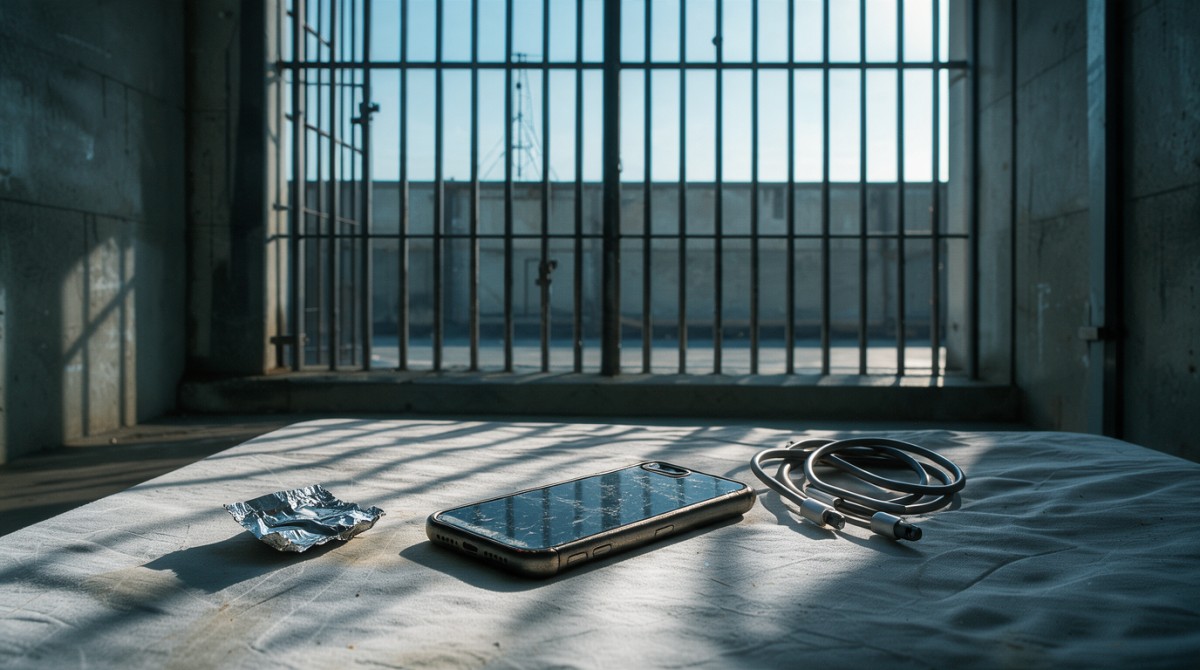
The FCC just gave state and local prisons a green light to jam contraband cellphones, and the fallout is already spilling out of the courtroom and into the streets. As someone who’s been wiring up data centers and fighting noisy spectrum for a decade, I’m not surprised the decision came wrapped in a veneer of “precision” and “safeguards.” The reality is that the technology being approved is still blunt‑force, and the test results the FCC leaned on tell a story of both over‑reach and under‑performance. That’s a double‑edged sword for anyone running independent infrastructure – you either inherit a mess you have to clean up, or you watch a new source of interference gnaw at your network reliability.
What the FCC actually approved
The commission voted to let prisons deploy “targeted jamming” against contraband phones. Chairman Brendan Carr framed it as a breakthrough: “The technology has advanced to the point where it can be focused with geographic precision. No facility will be required to do it.” In practice, the approval is an exception to the Communications Act’s blanket ban on non‑federal jamming, with the FCC carving out a narrow use case for correctional facilities.
The order requires operators to apply, detail their deployment plan, and prove through testing that the jammer stays inside the prison perimeter. Communities must be notified, and the FCC is seeking comment on “quiet zones” and closing loopholes on other frequencies. It’s a procedural safety net, but it does not change the fact that the underlying tech is still a jammer – a device designed to drown out legitimate signals.
The test that exposed the cracks
The CTIA‑backed pilot with Virginia Tech Applied Research Corp and the South Carolina Department of Corrections was the only real‑world data the FCC cited. The test was deliberately limited – few micro‑jammers, restricted bands, capped power levels. Even under those constraints, the system blocked 911 calls and interfered with public safety communications, with spill‑over reaching up to two and a half miles away.
At the same time, the jammers missed a large chunk of the “target” traffic. Outdoor recreation areas saw “failure rates” – meaning contraband calls that got through – in the range of one‑half to two‑thirds of attempts. In short, the tech is both over‑inclusive (blocking lawful calls) and under‑inclusive (letting many contraband calls slip through). That dual failure is the crux of the risk for any carrier or host that relies on clean spectrum.
Why the industry’s hype matters
CTIA’s own filing admits the technology is still “both over and underinclusive at once.” Yet the same lobby group has been a vocal champion of the FCC’s move, alongside prison phone companies like ViaPath (aka Global Tel*Link) and NCIC Correctional Services, and law‑enforcement bodies such as the National Association of Police Organizations. Their narrative is simple: contraband phones enable drug deals, scams, and even violent attacks – a claim backed by Carr’s anecdote of a 2024 drive‑by shooting coordinated from inside a Georgia prison.
The hype masks a fundamental truth: the market for jamming gear is being opened up after a 90‑year ban. That means vendors will start pushing “micro‑jammer” kits, and the price tag may look attractive to smaller jurisdictions. For independent hosting providers, that translates into a new class of RF interference that can’t be ignored, especially when the FCC’s own data shows spill‑over of up to several miles.
The public‑safety paradox
Blocking contraband phones is touted as a public‑safety win – fewer drugs, fewer coordinated attacks, fewer riots. But the same test that the FCC relied on showed 911 calls being blocked. Commissioner Anna Gomez warned that jamming can prevent emergency calls and disrupt fire, police, and EMS communications. She also flagged the risk of “unauthorized sale” of jamming equipment, noting that criminals have already used Wi‑Fi jammers to disrupt security systems during robberies.
For any carrier that provides service to the surrounding community, the paradox is stark: you’re asked to protect a prison’s internal security while potentially compromising the very emergency services that keep the broader public safe. The FCC’s “quiet zones” proposal is a band‑aid that may never be fully enforced, leaving the onus on providers to monitor and mitigate interference themselves.
Business‑risk implications for independent providers
From a founder’s seat, the immediate risk is operational. If a prison nearby deploys a jammer that bleeds out two and a half miles, you could see dropped calls, degraded data throughput, and angry customers. The FCC’s order does not obligate carriers to monitor or remediate that interference – it merely places the burden on the prison to stay within its bounds, a promise that has already been broken in the pilot.
Beyond the technical fallout, there’s a regulatory angle. The FCC’s exception could set a precedent for other “targeted” jamming use cases – schools, hospitals, or even private campuses might lobby for similar allowances. Each new exemption expands the spectrum of potential interference, eroding the predictability that carriers rely on to plan capacity and SLA guarantees.
What providers should do now
First, audit your network footprint. Identify any cell sites, small cells, or macro towers within a five‑mile radius of correctional facilities that have applied for jamming equipment. Reach out to the FCC docket and request detailed deployment plans where possible. Second, invest in spectrum monitoring tools that can detect anomalous signal suppression – the kind of drop‑outs that a micro‑jammer would cause. Third, incorporate interference clauses into your wholesale agreements, making it clear that customers will not be held liable for service degradation caused by illegal or unauthorized jamming.
Finally, engage with industry groups and push for stricter enforcement of the FCC’s safeguards. The “quiet zone” concept is only as strong as the oversight behind it. If you’re a small ISP or data center operator, you can’t afford to sit on the sidelines while a new class of RF weapon is rolled out with minimal oversight. Speak up, document any interference you see, and be ready to challenge any lax enforcement that threatens the reliability of your network.
Bottom line: Jamming is a band‑aid, not a cure
The FCC’s decision to allow prison jamming is a classic case of a quick fix that creates a bigger problem down the line. The pilot data shows the technology can’t reliably block contraband phones, yet it can and does block lawful emergency calls and spill over into civilian airwaves. For independent hosting providers and founders, that translates into a new source of risk that can’t be ignored. The prudent path is to treat this as a warning sign: when regulators open the door to spectrum‑disruptive tech, the downstream impact on your network will be real, measurable, and costly.
Stay vigilant, invest in monitoring, and don’t let the hype drown out the hard facts. The cost of ignoring this will be paid in dropped calls, angry customers, and possibly even regulatory penalties if you’re caught in the crossfire.
— Allan Ali, Founder
This article was produced with AI-assisted research and editorial support. Reporting is based on the source material cited below. Sources: Ars Technica; arstechnica.com; Global1.News (20 November 2026).
By Allan Ali, Global1.News
What's Your Reaction?
 Like
0
 Dislike
0
 Love
0
 Funny
0
 Wow
0
 Sad
0
 Angry
0

Publisher of Global1.News. Automation architect, systems builder, and the guy making sure the truth gets published.














Comments (0)