
UK wildfires rage as fifth heatwave hits record 38.1C
The United Kingdom is burning. As the mercury hit a record-breaking 38.1C at Kew Gardens on Thursday, fire crews across the country battled more than a thousand wildfires, the NHS buckled under unprecedented heat-related admissions, and nearly three-quarters of England officially entered drought. This is not a freak weather event; it is the fifth heatwave of a summer that is on course to be the hottest in British history.
The United Kingdom is burning. As the mercury hit a record-breaking 38.1C at Kew Gardens on Thursday, fire crews across the country battled more than a thousand wildfires, the NHS buckled under unprecedented heat-related admissions, and nearly three-quarters of England officially entered drought. This is not a freak weather event; it is the fifth heatwave of a summer that is on course to be the hottest in British history.
Britain's Fifth Heatwave: A Nation on Fire
London, UK – 13 August 2026 — The amber extreme heat warning issued by the Met Office stretched from London to Sheffield, covering a vast swathe of central England, as Kew Gardens provisionally recorded the UK's hottest day of the year at 38.1C. The reading, which surpasses the 38C recorded in Lingwood, Norfolk on 26 June, marks the fifth heatwave of 2026 and the fifth hottest day in UK history. Only four days have ever been hotter, with the national record of 40.3C set at Coningsby, Lincolnshire on 19 July 2022 still standing.

The 'New Wildfire Era': 1,017 Blazes and Counting
The tinder-dry conditions have created a national fire risk unlike anything the UK has faced. National Fire Chiefs Council data confirms that 1,017 wildfires have been recorded in England and Wales this year — already matching last year's record total with months still to go. Fire chiefs have warned that Britain is entering a "new wildfire era" as drought, repeated heatwaves and severe blazes pressure emergency services to breaking point.
In the New Forest, 130 firefighters battled a wildfire affecting an area roughly the size of 230 football pitches. The blaze began on Sunday 9 August when a van caught fire on the A31, forcing 23 drivers to abandon their vehicles. The New Forest National Park Authority has warned that the protected heathland — home to a number of rare species — has been badly hit, and repairs to the A31 are not expected to begin until Friday at the earliest.
The West Midlands has been particularly hard hit. Around 100 firefighters were deployed to a huge grass fire near Stourbridge Golf Course, where six homes were affected and two people injured. In Castle Vale, Birmingham, homes were badly damaged and one woman was seriously injured. Warwickshire Fire and Rescue Service declared a major incident for a large fire at Tothall Lane, Salford Priors, near Alcester, with further blazes reported in Sandyford, Stoke-on-Trent and Pershore, Worcestershire.
In South Wales, helicopter footage captured crews fighting flames and underground peat fires across more than 200 hectares of mountainside — an area equivalent to roughly 300 football pitches, spanning 5km. At one stage, crews from every fire station in south Wales were involved, with the Snowdonia National Park also affected.
NHS on the Brink: Staff Collapsing, A&E at Breaking Point
The health service is paying a devastating price for the extreme heat. The Royal College of Nursing has issued a stark warning that hospitals and care homes are so hot that some nursing staff are passing out while on shift. This is not an isolated incident; it is a systemic failure to adapt to a changing climate.
NHS England data reveals that A&E departments recorded their busiest period ever in July, with 2.49 million people attending emergency departments. Preliminary figures suggest more than 2,800 heat-related deaths in May and June alone — almost double last year's total. Health Secretary Yvette Cooper has acknowledged the figures show the "additional burden" placed on the NHS during extreme heat, stating that the service must now plan for summer pressures with the same rigour as winter.
The amber heat health alert remains in place across the whole of England until 21:00 BST Friday, with the UK Health Security Agency warning of significant impacts on the health and social care sector. Care homes, already struggling with staffing shortages, are facing impossible conditions as they try to keep vulnerable residents cool without adequate ventilation or air conditioning.
Drought Declared: 45 Million People Affected
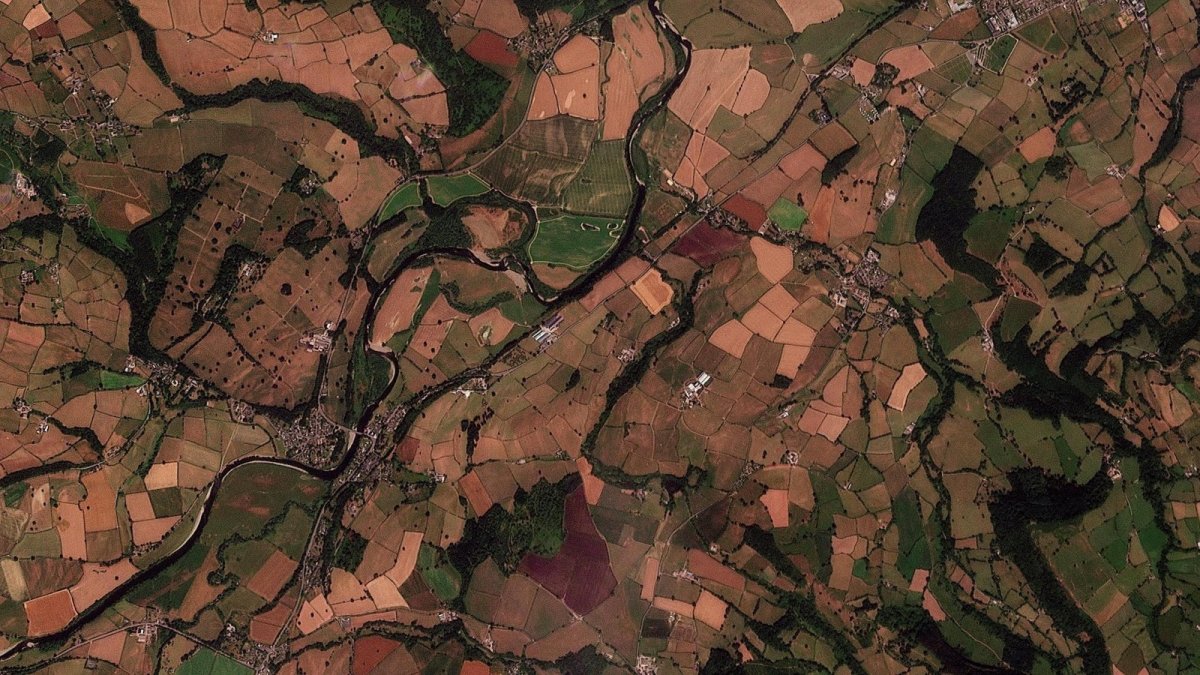
The heatwave has pushed the country into a water crisis of historic proportions. Nearly three-quarters of England — around 45 million people — are now living in drought conditions, following the driest July in England and Wales since records began. More than 27 million people face water use restrictions, including hosepipe bans, as water companies struggle to maintain supply.
Thames Water, the country's largest water company, is facing particular scrutiny. Thousands of homes in east London and Essex are still without full water supply almost a week after pipes burst in South Woodford. The company has apologised but cannot say when full service will be restored, leaving families in the capital without water for basic hygiene and drinking during the hottest week of the year.
Wales has declared drought across the whole country, with temperatures forecast to reach 35C. Northern Ireland is under a yellow thunderstorm warning, while rain is forecast for much of Scotland — a stark illustration of the uneven impact of this summer's extreme weather.
The Climate Question: Fossil Fuel Pollution and Extreme Heat
This latest heatwave has been made more extreme by fossil fuel pollution, according to climate scientists. The Met Office has confirmed that 2026 is the first year on record with three separate days reaching the 37C threshold, and this summer is on course to be the UK's hottest since records began. The pattern is clear: these events are no longer anomalies but the new normal.
The impact extends beyond humans. As Channel 4 News reported, zoos across the country are having to adapt how they care for animals unaccustomed to such extreme conditions, with keepers adjusting routines and enclosures to keep species cool. The RSPCA has reported a surge in calls about wildlife suffering from heat stress, including birds struggling in the heat and hedgehogs dehydrated in gardens.
The political response has been slow to match the scale of the crisis. While Yvette Cooper has called for the NHS to plan for summer pressures like winter, environmental groups argue that without serious action on fossil fuel emissions, the NHS and emergency services will be permanently overwhelmed. The Department for Environment, Food and Rural Affairs (Defra) has activated its drought management plan, but critics say it is reactive rather than preventative.
Fire Services Under Pressure: A System at Breaking Point
The National Fire Chiefs Council has been explicit: Britain is facing a "new wildfire era" and current resources are not sufficient. Fire services across the country are being forced to prioritise, with crews from every station in south Wales deployed to a single blaze. The New Forest fire alone required 130 firefighters, and the West Midlands fire near Stourbridge required 100.
This is placing enormous strain on local fire services, many of which have seen real-terms budget reductions over the past decade. Fire chiefs argue the UK is ill-prepared for the scale of the challenge, pointing to the need for specialist wildfire units, aerial firefighting capability and better equipment for crews working in extreme heat. The National Fire Chiefs Council has been clear that repeated heatwaves and severe blazes are placing growing pressure on emergency services across the country.
For residents in affected areas, the impact is immediate and devastating. In Castle Vale, Birmingham, families have lost their homes. In the New Forest, a protected landscape that has taken centuries to develop has been destroyed in hours. The A31 remains closed, cutting off a major transport route and affecting businesses and commuters across Hampshire.
The Bottom Line — What Comes Next
Britain is facing a future of hotter summers, drier landscapes and more frequent wildfires. The evidence is no longer a matter of debate: 2026 has already seen three days above 37C, a record number of wildfires, and the driest July on record. The NHS is struggling, water supplies are under threat, and fire services are at breaking point.
The government's response — a drought management plan here, a heat health alert there — is no longer sufficient. What is needed is a fundamental rethink of how the UK prepares for extreme heat: investment in hospital cooling systems, mandatory wildfire training for all fire services, a national water strategy that addresses leakage and demand, and a serious commitment to reducing fossil fuel emissions.
As the amber warning expires on Friday and temperatures are forecast to ease slightly, the immediate crisis may pass. But the underlying conditions remain. The tinder-dry landscapes, the depleted reservoirs, the overheated hospitals — all are symptoms of a country that has not yet come to terms with the reality of climate change. The question is no longer whether Britain can cope with extreme heat, but whether it is willing to do what is necessary to survive it.
By Erica Thornton, Staff Writer
This article was produced with AI-assisted research and editorial support. Reporting is based on sources cited in the article.
What's Your Reaction?
 Like
0
Like
0
 Dislike
0
Dislike
0
 Love
0
Love
0
 Funny
0
Funny
0
 Wow
0
Wow
0
 Sad
0
Sad
0
 Angry
0
Angry
0

US Politics and Policy Correspondent at Global1.News. Based in Washington DC, covering American politics, policy, elections, and the courts. Knows how the system works and tells you what it actually means.













Comments (0)