
Sponsored: Solving cabling challenges behind AI data center growth
AI‑driven data centers are booming, and the real bottleneck isn’t the GPUs – it’s the cabling that has to stitch everything together. The latest Leviton brief makes it clear: fiber is no longer a nice‑to‑have, it’s the backbone of any facility that wants to stay relevant in 2026.
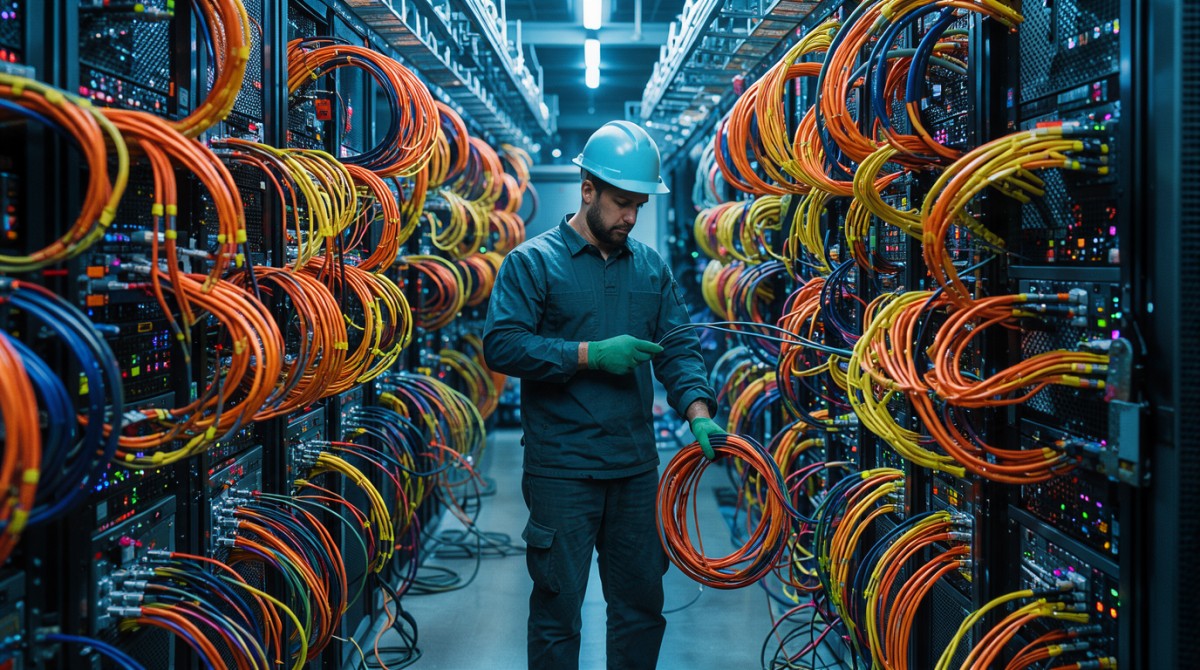
AI‑driven data centers are booming, and the real bottleneck isn’t the GPUs – it’s the cabling that has to stitch everything together. The latest Leviton brief makes it clear: fiber is no longer a nice‑to‑have, it’s the backbone of any facility that wants to stay relevant in 2026. As a founder who’s been wiring up racks from a cramped basement in Port of Spain to a hyperscale campus in the US, I’ve seen the same hype‑driven shortcuts that promise cheap fiber but deliver chaos. The lesson here is simple – if you’re not planning for density, speed and skilled labor now, you’ll be paying for fire‑fighting later.
Why Fiber Has Become Non‑Negotiable
Mike Connaughton of Leviton makes a point that resonates with anyone who’s tried to push a 10 Gbps copper link past a few meters: “As bandwidth and network distances increase, you’ve got to use fiber.” In AI‑heavy racks, the number of physical connections explodes. Where a traditional rack might have needed a dozen to a few dozen fibers, today’s high‑performance racks are pulling in “thousands of fibers.” That jump isn’t a nice‑to‑have upgrade; it’s a hard requirement for the massive data flows AI workloads generate.
For operators, the shift means re‑thinking everything from rack layout to splice trays. Copper still has its place for power and short‑reach links, but the core data plane is now fiber‑first. The implication for independent hosting providers is stark: you can’t compete on price if you’re still feeding customers copper‑centric designs that choke under AI traffic.
The Real‑World Constraints: Power, Cooling and Space
Leviton’s Michael Lawrence flags the broader picture: AI data centers demand unprecedented power, which in turn drives cooling and space pressures. “We’re seeing data centers in many new places, and they need to be connected over greater distances,” he says, underscoring that the cabling challenge is just one piece of a larger puzzle. The “gray space” – the area taken up by power and cooling – is expanding, squeezing the “white space” where you lay your cables.
From my own deployments, I’ve watched the cooling load double when we added a new GPU cluster, and the floor space needed for power distribution units balloon. The result is a tighter corridor for fiber trays, which forces you to choose high‑density solutions or accept a chaotic spaghetti mess that slows down every upgrade cycle.
Speed of Deployment Is No Longer Optional
Time‑to‑market is the new currency. Leviton notes that “large, complex data center projects are being built on aggressive schedules,” putting pressure on supply chains and on‑site labor. In practice, that means you can’t afford a multi‑week cabling rollout that stalls the whole build. The industry’s answer is vertical integration – having a single vendor supply cable, connectors, enclosures and even the design services.
When I partnered with a vertically integrated supplier for a regional hub, we shaved three weeks off the schedule because the same team that designed the rack layout also delivered pre‑tested fiber assemblies. That’s the kind of efficiency the article hints at, and it’s a model independent providers should emulate, even if it means building in‑house expertise rather than relying on a patchwork of third‑party parts.
Labor Shortages and the Skills Gap
Both Leviton spokespeople agree that the shortage of skilled installers is a growing choke point. Lawrence says the industry “has moved quickly to upskill the workforce,” but the real issue now is “having enough people to address the volume of deployments happening globally.” In my own shop, we’ve had to cross‑train network engineers to handle fiber splicing because the traditional cable‑tech labor pool is drying up.
The takeaway for founders is to invest early in training programs or partner with vendors that provide “Vault” labs – collaborative spaces where you can get hands‑on with pre‑release products and upskill your crew. Leviton’s Vaults in the US and UK are exactly that, offering a practical route to bridge the skills gap before a project stalls.
Managing Ultra‑Dense Fiber Deployments
One of the most visible impacts of AI growth is the surge in fiber density per rack. Where a rack once needed “12 to 48 fibers,” today’s high‑performance environments can demand “thousands of fibers.” That shift creates a nightmare for routing, identification and ongoing management. Connaughton points out the difficulty: “Installers need to identify which specific fiber cable they’re holding and which port it goes into.” In a dense rack, a mis‑plug can bring down an entire AI workload.
Practical mitigation starts with standardized labeling and high‑density assemblies that bundle fibers into manageable units. Leviton’s STRATA platform offers “high‑fiber‑count assemblies and mass‑splicing solutions,” which can reduce the number of individual fibers you have to handle on site. In my experience, moving from individual fibers to ribbon‑cable bundles cut installation time by roughly half and slashed error rates dramatically.
Vertical Integration as a Competitive Lever
Leviton’s claim of “being able to offer and make the full chain of products” is more than marketing fluff. For hyperscale customers, a common global portfolio means you can roll out the same cable system across multiple regions without re‑engineering each site. That consistency translates into lower OPEX – fewer training variations, fewer spare‑part inventories, and smoother migrations.
Independent hosting firms can borrow this playbook by consolidating their supply chain. If you can source cable, connectors and enclosures from a single partner, you gain better pricing leverage, tighter quality control and a single point of accountability when something goes wrong. The result is a more predictable rollout and a clearer value proposition to your clients.
Actionable Steps for Founders and Operators
First, audit your current rack density. If you’re still planning on 12‑48 fibers per rack, you’re already behind the curve. Map out the projected fiber count for the next two AI generations – remember, each generation can double the connection count in months, not years.
Second, lock in a vertically integrated vendor that offers both the hardware and the design services. Leviton’s STRATA ecosystem, with its high‑density assemblies and Vault labs, is a concrete example of how that partnership can look.
Third, invest in upskilling your crew now. Leverage vendor‑run labs or set up an internal training program focused on fiber splicing, ribbon‑cable handling and identification best practices. The labor shortage will only tighten, and the cost of a mis‑installed fiber run far outweighs the training expense.
Finally, embed cabling considerations into every capacity‑planning exercise. Power, cooling and space are all interlinked, but fiber is the conduit that binds them. Treat it as a first‑class citizen in your design reviews, and you’ll avoid the “bottleneck” scenario that many hyperscalers still grapple with.
In short, the AI boom is not a fleeting hype wave – it’s a structural shift that forces us to rethink the very foundations of data‑center design. Fiber is the foundation; the rest of the stack must be built around it, not the other way around. Independent providers that act now, streamline their supply chain and upskill their teams will be the ones who turn the AI surge into a sustainable growth engine.
— Allan Ali, Founder
This article was produced with AI-assisted research and editorial support. Reporting is based on the source material cited below. Sources: Data Center Dynamics; datacenterdynamics.com; Global1.News (24 November 2026).
By Allan Ali, Global1.News
What's Your Reaction?
 Like
0
 Dislike
0
 Love
0
 Funny
0
 Wow
0
 Sad
0
 Angry
0

Publisher of Global1.News. Automation architect, systems builder, and the guy making sure the truth gets published.













Comments (0)