
Bok trio up for World Rugby awards
South African rugby fans are buzzing as three Springboks have been thrust onto the global stage for the 2026 World Rugby awards. Marx’s quest for a historic second award Malcolm Marx entered the 2026 awards as the reigning World Rugby and SA Rugby Player of the Year for 2025.
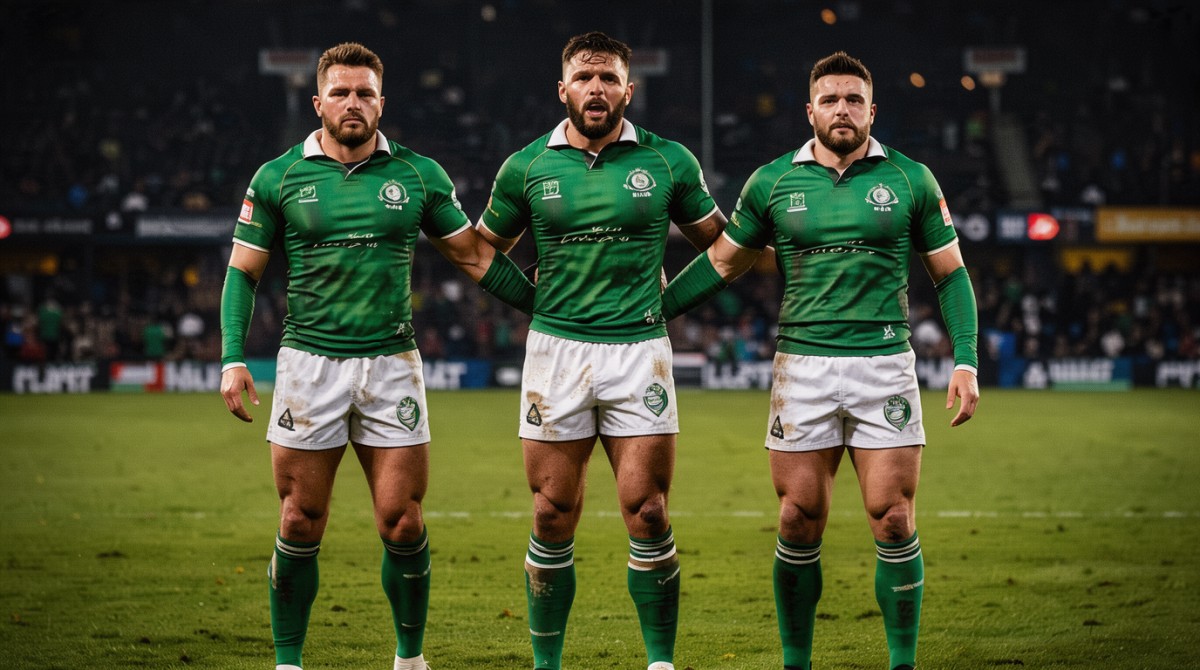
South African rugby fans are buzzing as three Springboks have been thrust onto the global stage for the 2026 World Rugby awards. Hooker Malcolm Marx and loose‑head prop Ox Nché are battling for the coveted World Rugby Player of the Year title for a second straight season, while dynamic flank Paul de Villiers has earned a spot in the Breakthrough Player of the Year shortlist. The nominations not only underline the depth of talent in the Springbok squad but also rekindle memories of past SA greats who have lifted the trophy, reminding us how sport can stitch together national pride, transformation narratives and the relentless pursuit of excellence.
Marx’s quest for a historic second award
Malcolm Marx entered the 2026 awards as the reigning World Rugby and SA Rugby Player of the Year for 2025. His performances in the test arena have been nothing short of electrifying – a relentless work rate at the breakdown, pinpoint line‑out throws and a surprising turn of pace that has seen him cross the try line more often than many backs. This year marks Marx’s third nomination for the top honour, having first been in the mix back in 2018. If he clinches the award again, he would join a very exclusive club: only Pieter‑Steph du Toit has previously won the accolade twice for South Africa, taking home the prize in 2019 and 2024.
Marx’s candidacy sits alongside a formidable All Blacks centre, Jordie Barrett, and a French wing, Louis Bielle‑Biarrey. Both opponents bring their own flair – Barrett with his incisive running lines and Bielle‑Biarrey with blistering speed on the wing. Yet Marx’s consistency across set‑pieces and open play gives him a strong case, especially as he has already proven he can dominate the physical battle in the front row while still offering a dynamic ball‑carrying threat. For Springbok supporters, his potential back‑to‑back triumph would be a testament to the forward‑driven style that has become a hallmark of South African rugby.
Ox Nché: a prop breaking new ground
Ox Nché’s nomination is historic in its own right. Last season, he became the first prop ever to be shortlisted for the World Rugby Player of the Year, a milestone that highlights the evolving appreciation for front‑row players beyond the traditional scrummaging duties. Nché’s scrummage has been a cornerstone of the Springbok set‑piece, delivering power and stability that have allowed the Boks to dominate opponents in the tight exchanges.
Facing the same opponents as Marx – Barrett and Bielle‑Biarrey – Nché’s challenge is to convince the global panel that a prop’s impact can be as game‑changing as a back’s. His work rate in the loose, tackling numbers and ability to generate momentum from the scrum make a compelling argument for a broader definition of “player of the year.” For South African fans, his presence on the shortlist signals a shift towards recognising the unsung heroes who lay the platform for the team’s attacking flair.
Paul de Villiers: the breakout star
Flank Paul de Villiers has burst onto the international scene this season, earning a regular spot in the Springbok match‑day 23 and catching the eye of the World Rugby awards panel as a Breakthrough Player of the Year nominee. The former Junior Boks captain brings a blend of physicality, ball‑carrying ability and a nose for the turnover that has made him a fan favourite in the domestic Currie Cup and now on the world stage.
De Villiers joins three other contenders for the breakthrough prize: France centre Fabien Brau‑Boirie, French wing Aaron Grandidier‑Nkanang and Japan fly‑half Ryunosuke Ito. While the French and Japanese players bring their own continental flair, de Villiers’ South African grit and his knack for making crucial tackles in the dying minutes of a match set him apart. His nomination reflects the Springboks’ emphasis on developing home‑grown talent that can transition seamlessly from junior ranks to senior internationals, a narrative that resonates deeply with grassroots rugby programmes across the country.
Historical context: South Africa’s award pedigree
Since the World Rugby Player of the Year award was introduced in 2001, only a handful of South Africans have lifted the trophy. Apart from du Toit’s double triumph, the list includes Schalk Burger (2004) and Bryan Habana (2007). Marx’s potential second win would place him alongside these legends, underscoring the continuity of South African excellence on the global stage.
The rarity of back‑to‑back winners – with only Richie McCaw (2009, 2010) and Beauden Barrett (2016, 2017) achieving the feat for the All Blacks – highlights how difficult it is to dominate the award across consecutive seasons. Marx’s bid, therefore, is not just a personal ambition but a national quest to cement South Africa’s standing among the elite rugby nations.
Implications for the Springbok calendar
The awards season arrives at a pivotal moment in the Springbok calendar. With the Rugby World Cup looming in 2027, performances that earn global recognition can boost player confidence and marketability ahead of the build‑up. A win for Marx or Nché would likely see them become the faces of upcoming Springbok campaigns, influencing selection decisions and contract negotiations within the United Rugby Championship and domestic franchises.
For de Villiers, the breakthrough nomination serves as a springboard into a more permanent role. Should he capture the award, it could accelerate his rise to a leadership position within the forward pack, echoing the pathway taken by former Junior Boks captains who have transitioned into senior stalwarts. The ripple effect would be felt in provincial unions, where young players look to these role models as proof that hard work in the junior ranks can lead to international acclaim.
Fan reaction and the broader cultural impact
Across South Africa, social media feeds are awash with hashtags celebrating the Springbok trio. From the townships of Soweto to the coastal clubs of the Western Cape, fans are rallying behind Marx’s quest for a second global accolade, while also championing Nché’s groundbreaking prop nomination. The narrative of a front‑row player breaking into the traditionally back‑line‑dominated award conversation resonates with the country’s ongoing transformation agenda, highlighting how sport can challenge entrenched perceptions and open doors for players from diverse backgrounds.
De Villiers’ story, too, strikes a chord. As a former Junior Boks captain, his journey embodies the pathway that SARU has promoted – a clear route from schoolboy rugby through age‑grade representation to senior honours. His breakthrough nomination fuels hope among aspiring youngsters that the national team is accessible to talent nurtured in community clubs and schools, reinforcing rugby’s role as a unifying force in a nation still healing from its past.
Looking ahead: what a win could mean for South African rugby
If any of the three Springboks secure a World Rugby award, the impact will reverberate beyond the trophy cabinet. A Marx victory would cement South Africa’s reputation for producing world‑class forwards capable of matching the best backs in skill and athleticism. It would also provide a morale boost ahead of the 2027 World Cup, galvanising the squad and the nation alike.
Should Nché clinch the Player of the Year, it would rewrite the narrative around prop play, encouraging coaches at all levels to develop front‑row players with a broader skill set, including ball handling and defensive versatility. This could lead to a new generation of dynamic props emerging from South African academies.
Finally, a breakthrough award for de Villiers would spotlight the effectiveness of South Africa’s talent identification and development structures, validating the investments made in junior programmes and community outreach. It would also inspire a fresh wave of youngsters to don the Springbok jersey, confident that their hard work can translate into global recognition.
Regardless of the final outcomes, the nominations themselves have already ignited a wave of pride and anticipation across the nation. As the awards ceremony approaches, South African fans will be watching with bated breath, ready to celebrate another chapter in the storied saga of Springbok rugby.
This article was produced with AI-assisted research and editorial support. Reporting is based on the source material cited below. Sources: SARugbyMag; sarugbymag.co.za; Global1.News (23 November 2026).
By Dante Williams, Staff Writer
What's Your Reaction?
 Like
0
 Dislike
0
 Love
0
 Funny
0
 Wow
0
 Sad
0
 Angry
0

Breaking News and Investigations Correspondent at Global1.News. Based in London, covering global breaking news, security, and investigative stories. Known for digging deeper and connecting the dots across continents.











Comments (0)