
Lebanon Seizes 264 kg of C4 and TNT From Syria the Same Weekend Aoun Told Iran to Back Off
Lebanon's army said it seized about 264 kilograms of C4 and TNT smuggled from Syrian territory and detained three men, the day after President Joseph Aoun declared the era of weapons outside the state over. No group has been named and nobody has been charged.
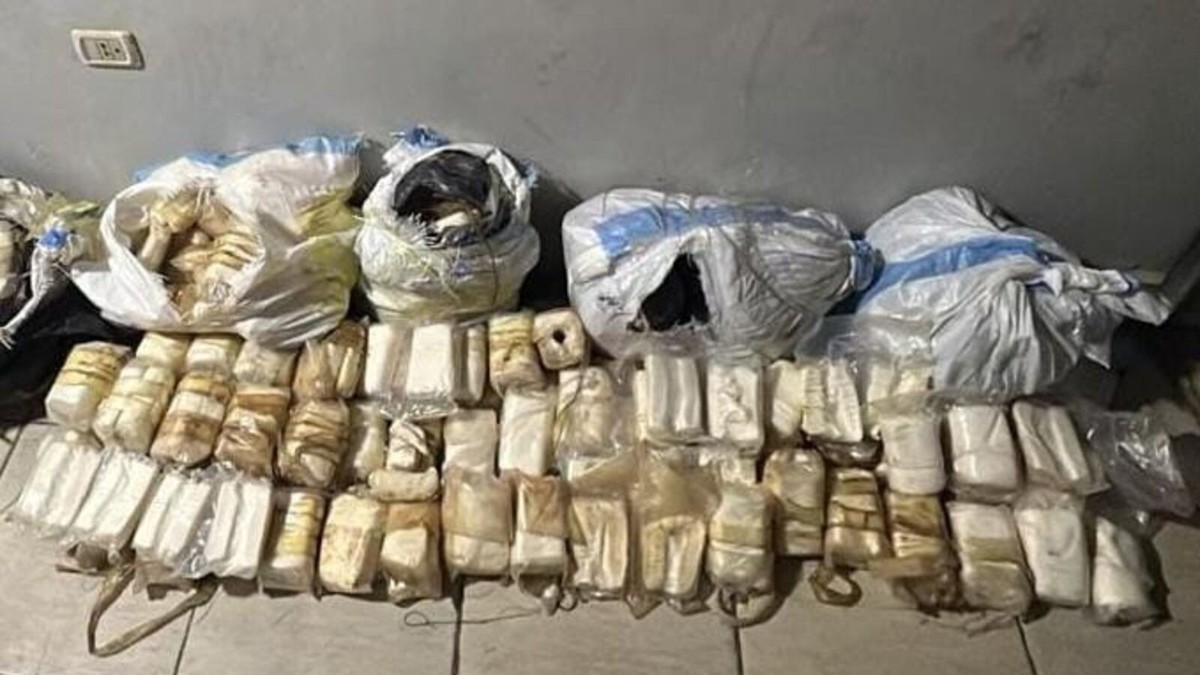
Lebanon's army said Sunday it had seized about 264 kilograms of explosives smuggled across the Syrian border and arrested three men - a haul announced the morning after President Joseph Aoun told Iran that the era of weapons outside the state was over. The cache, roughly 203 kilograms of C4 plastic explosive and 61 kilograms of TNT, was picked up on Saturday along the country's northern and eastern frontier, according to the military's own statement.
Lebanon Seizes 264 kg of C4 and TNT From Syria the Same Weekend Aoun Told Iran to Back Off
Beirut, Lebanon - The Lebanese Armed Forces announced the seizure on Sunday, one day after the operation itself, and handed the material to the judiciary. No group has been named in connection with the shipment, and nobody has been charged. What is established is the quantity, the route it came by, and the awkward fact that a state which spent the weekend promising to monopolize weapons still has a border across which high explosives travel.
What the Army Announced
The army's statement, issued by its Guidance Directorate and posted to X, gives the operation in its own words. After "surveillance and monitoring operations along the northern and eastern borders," an army unit in the Al Dawra-Mashari Al Qaa area seized about 264 kilograms of explosive material that the military said was "smuggled from inside Syrian territory". The breakdown is exact: about 203 kilograms of C4 and 61 kilograms of TNT. Three people were detained, identified only by the initials (A.F.), (Z.R.) and (Z.R.). The seized items were handed over, the army said, and an investigation with the detainees began "under the supervision of the competent judiciary." Daily Beirut reproduces the same statement and translates the place name as Doura - Marja' al-Qaa, another rendering of the same location on the northern and eastern border. The seizure happened on Saturday, November 21. The announcement came the following day.
How the Cache Came Across
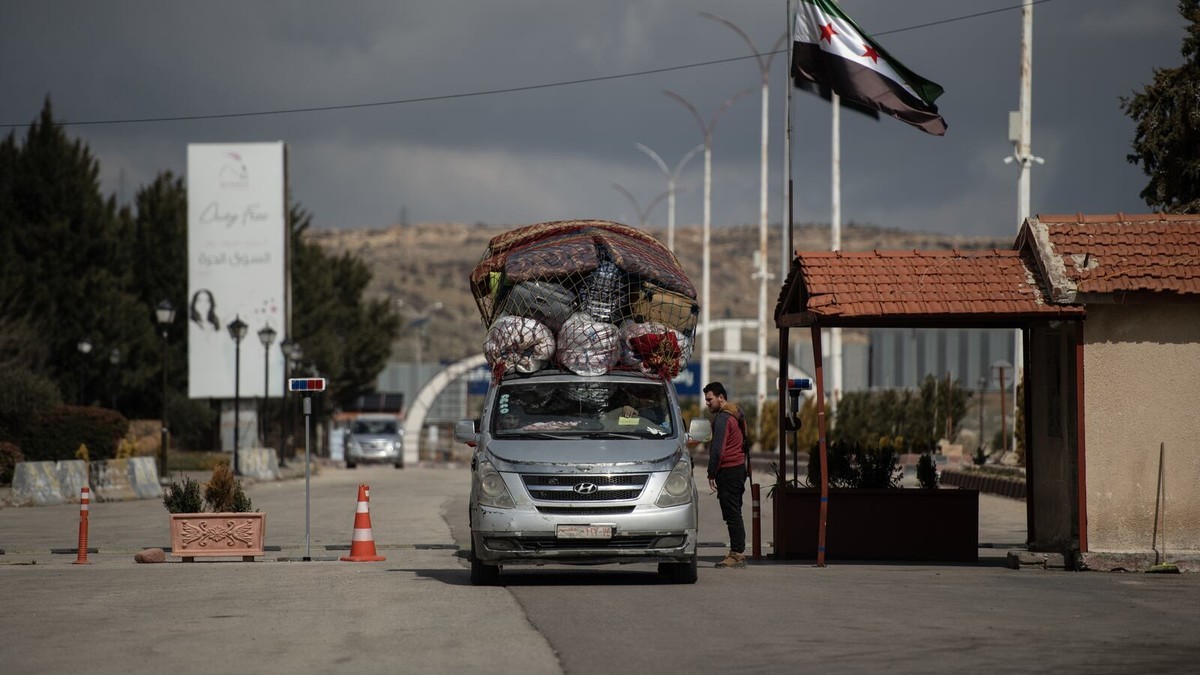
A Lebanese security source told AFP the explosives entered Lebanon from Syria through "rugged terrain and an 'illegal crossing point'", and described the three arrested men as "civilian smugglers with no party affiliation". A Lebanese source told Al-Arabiya that the detainees were from Arsal, the border town long associated with cross-border traffic, and that investigators were still working to establish who owned the shipment and where it was meant to go. Those two details - ownership and destination - are the ones that would turn a border-security case into something larger. Neither has been established. The army did not identify the suspects, did not name an owner and did not say where the explosives were headed, Arab News reported.
The Same Weekend, a President's Ultimatum
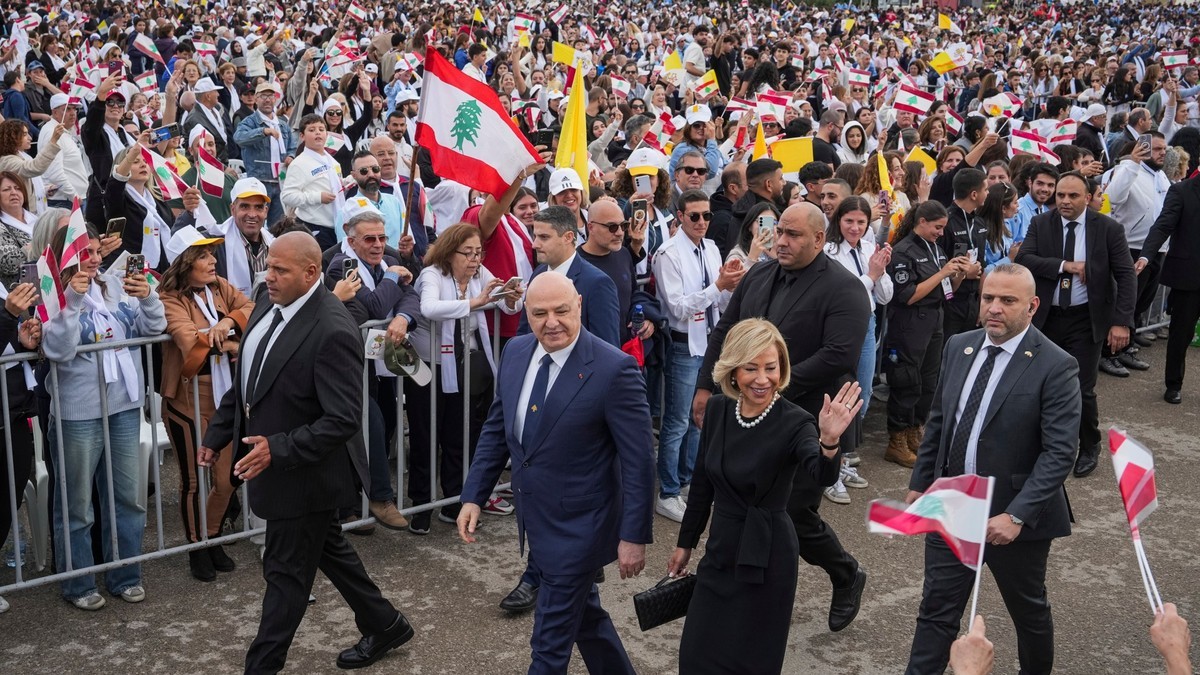
One day before the announcement, on Saturday evening, Aoun marked the eve of Lebanon's 83rd independence anniversary with a speech at a flag-raising ceremony at the Nahr el-Kalb tunnel, north of Beirut. He framed the country's predicament as two "fundamental obstacles, inseparably linked": "The Israeli occupation of parts of our territory", and foreign interference by "influential elements within the Iranian regime", exercised through "weapons and decisions outside the authority of the Lebanese state." Then came the line that carried the speech. Aoun said: "The era of weapons outside the state is over." He told armed groups, without naming Hezbollah, "You must hand over your weapons." To Israel he said: "Withdraw from every inch of Lebanese territory. Stop your attacks. And return our captives." On Iran he separated the people from the policy, saying Lebanon wanted friendship and mutual respect, but that "friendship between states does not give one the right to interfere in the decisions of another."
What the Army Did Not Say
The gaps in the announcement matter as much as its contents. The army named no group, no sponsor and no destination, and that silence is the state of the record rather than an omission in the reporting. AFP's security source described the detainees as unaffiliated civilians, a characterization that sits awkwardly beside the size of the haul but has not been contradicted by any official account. Asharq Al-Awsat noted pointedly: "While the army's statement did not mention Hezbollah, pressure has been mounting on the Iran-backed group." Anyone looking for the cache to be tied to a named actor will not find it here, because no source in the record does it. What the record does show is a run of interceptions on the same frontier - and a prosecutorial campaign gathering pace alongside them.
The October Haul on the Same Border
Saturday's seizure is the second large interception on this frontier in seven weeks. In the first days of October, after tracking smugglers' movements along the border, Lebanese troops seized what Arab News put at about 245 kilograms of TNT - The National describes the same operation as almost 250 kilograms - along with four explosive devices, eight detonators and electrical wires intended for use in detonations. That operation did not produce an announced arrest of the kind reported on Sunday. Taken together the two seizures describe a supply line rather than a single shipment: TNT in October, a C4-and-TNT mix in November, both moving in the same direction, both interdicted by the same institution. Neither announcement identified a buyer. The army has not said whether the two cases are connected, and no source in the record asserts that they are.
The Half-Ton Cargo and the Thirteen Charged
The political weight behind these seizures is easier to see in the courts than on the border. In October, a Lebanese court charged 13 people over their alleged involvement in shipping explosives to Hezbollah after authorities seized a half-ton cargo, Asharq Al-Awsat reported. That case produced a rare public acknowledgement from the group itself: Hezbollah said the vehicle and its load "belong to the resistance" against Israel and demanded that the shipment be returned. The admission is the clearest statement in the record of how armed movement across this border has been justified from inside Lebanon - not as smuggling for profit, but as logistics for a military project. It also explains why each new seizure lands as a political event and not merely a police one.
Five Members Charged, and the Party's Answer
The prosecutions have widened beyond the shipments themselves. A judicial source told AFP on Wednesday that five Hezbollah members had been charged with "forming an armed group, recruiting members, equipping them and supplying them with weapons". They were arrested earlier this month in northern Lebanon, a region far from the group's main strongholds. Hezbollah answered on Friday through MP Hussein al-Hajj Hassan, who said the five had been "arbitrarily detained". He called the case against them "This unacceptable and condemnable prosecution... constitutes a dangerous course of action", adding that it "raises serious questions about the motives and objectives behind these practices". The group's media officer, Youssef al-Zein, said last week that only one of the five was a member and that he was not carrying out a "party-related mission at the time of their arrest". On that account, four of the five are not members of the group.
The Other Side of the Border
Syria is making its own case from the other side of the line. On Sunday, its Internal Security Forces said that, working with the General Intelligence Service, they had seized assorted weapons in the Damascus countryside prepared for smuggling into Lebanon and arrested one suspect, with investigators working to uncover "the full extent of the cell's activities" and its links to smuggling networks, according to the state news agency SANA. A separate shipment was seized on Friday. The pattern is well established: in early August, security forces stopped an attempt in Tartous and seized assault rifles, rocket-propelled grenade launchers, magazines and ammunition; in July, customs officers found 226 grenades hidden in a vehicle bound for Lebanon at the Jdeidet Yabous crossing; in April, about 6,000 detonators were intercepted in the Al-Nabk area. The National notes that cross-border smuggling, "especially involving Lebanon's Hezbollah militia," has been one of Damascus's chief security concerns since the new government took power in December 2024.
The June Framework That Has Not Moved
All of this is happening inside an agreement that has not been implemented. In June, after US-mediated talks, Lebanon and Israel signed a framework that called for Hezbollah's disarmament, a gradual Israeli withdrawal from the south and the deployment of the Lebanese army to the areas Israel leaves. Implementation has stalled: Hezbollah has refused to surrender its weapons, and Israel has continued to strike Lebanon. The war that produced the framework began in February, when Hezbollah attacked Israel at the start of the conflict between the United States and Israel on one side and Iran on the other; the Israeli assault and invasion that followed displaced swathes of the south and killed thousands. Aoun's speech was an attempt to restate that bargain in public. Sunday's seizure is what the bargain looks like on the ground.
The Questions Left Open
Three questions decide what this seizure becomes. Who owned the 264 kilograms, and where was it going? The army has not said, and the source who spoke to Al-Arabiya said investigators did not yet know. Are the three detainees charged, and with what? The army has said only that a judicial investigation has begun under the competent judiciary. And does the state's control of the border now reach beyond interception to the prosecution of whoever is buying? On the evidence of the past two months the answer to the third is a qualified yes - a half-ton cargo produced 13 defendants, and five alleged members are now before a judge - but none of those cases touches this shipment yet. Until one does, Lebanon has another cache in a warehouse, another three men in custody, and the same open border.
By Jessica Ali, Staff Writer
This article was produced with AI-assisted research and editorial support. Sources: The National, Arab News, Asharq Al-Awsat, Daily Beirut, Al Jazeera, Anadolu Agency, SANA, and the Lebanese Armed Forces statement of November 22, 2026. Photographs: Lebanese Armed Forces handout via The National (seized material); Getty Images via The National (Masnaa border crossing); Adri Salido/Getty Images via Al Jazeera (President Joseph Aoun and his wife Nehmat, Beirut, December 2025, file photo). Social card: Global 1 News editorial image.
What's Your Reaction?
 Like
0
 Dislike
0
 Love
0
 Funny
0
 Wow
0
 Sad
0
 Angry
0

Editor-in-Chief at Global1.News. Atlanta-based journalist who cuts through the BS and tells it like it is. Lead anchor, host, and the voice you hear when the spin stops and the truth starts.











Comments (0)