
Iran Flogs Singer Parastoo Ahmadi and Four Band Members Over a Hijab-Free Concert
Iranian authorities carried out a sentence of 74 lashes against singer Parastoo Ahmadi and four members of her concert team in Qom on Monday, her lawyer said, almost two years after she sang without the hijab in a video posted online. Each was also banned for two years from artistic work and travel.
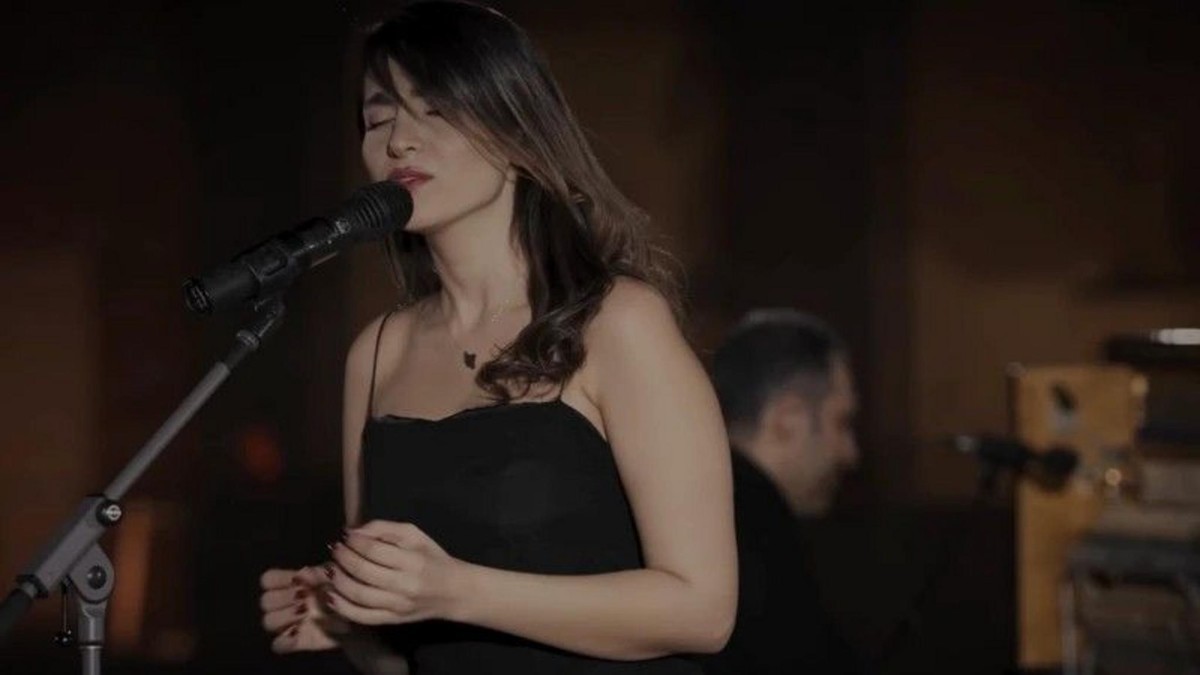
Iranian authorities carried out a sentence of 74 lashes against the singer Parastoo Ahmadi and four members of her concert team on Monday, her lawyer said, almost two years after she posted a performance online in which she sang without the mandatory hijab. The punishment was administered in Qom, the seminary city south of Tehran where the concert was filmed and where a criminal court convicted the group in June. Each of the five was also barred for two years from artistic and musical work and from leaving Iran.
Iran Flogs Singer Parastoo Ahmadi and Four Band Members Over a Hijab-Free Concert
QOM, Iran — The five reported to the sentence enforcement unit of the Qom prosecutor's office, and the lashes were administered there, according to the lawyer Mostafa Nili, quoted by the reformist outlets Emtedad, Etemad and the ISNA news agency. A member of the defence team told the BBC the punishment took place at the third branch of the Criminal Sentence Enforcement Office. Nine members of the concert team were sentenced to 74 lashes each in June. Five have now been punished, and it is not clear whether or when the other four will be.
Seventy-Four Lashes, Before the Working Day Began
Euronews reported that Nili told Emtedad the enforcement team carried out the sentence against Ahmadi in the early hours of Monday; the other four were flogged the same day. There was no announcement from the judiciary. The first word came from a defence lawyer speaking to a reformist news website, then was confirmed to the BBC by the defence team. Hengaw and Iran Human Rights also reported the sentences as carried out, citing Nili. The figure of 74 is the maximum for appearing in public without the hijab under Iranian law, which allows 10 days to two months in prison, up to 74 lashes, or a fine.
The Five Who Were Flogged Together
Ahmadi is 29 and from Nowshahr on Iran's Caspian coast, according to Hengaw. The BBC described the group as the singer, three musicians and a producer. The men named by Nili are Soheil Faghih-Nasiri, Amin Taheri and Amir-Ali Pirnia, all musicians, and Mohsen Lashkari, who organised the concert. Ahmadi, Faghih-Nasiri and the musician Ehsan Beyraghdar were arrested in December 2024, shortly after the video was released, and freed on bail several days later through the Morality Security Prosecutor's Office. Beyraghdar did not appeal his sentence, according to BBC Persian. The two-year bans apply to all five who reported to the enforcement office.
The Court That Set the Number
Branch 122 of the Qom Criminal Court of the Second Instance convicted the group in June, Hengaw reported, and sentenced nine people to 74 lashes each along with the two-year bans. The charge was "offending public decency by producing and publishing obscene and immoral content online," which the defendants denied, the BBC reported. Branch 16 of the Qom Provincial Court of Appeal upheld the verdict and referred the file for enforcement; The National reported that the appeal branch dismissed the defence's evidence and arguments as insufficient. When the sentences were first reported in June, a lawyer argued that singing and producing music by women is not criminalised under Iranian criminal law. Lawyers said the outcome was no surprise: the head of the judiciary had recently said the establishment should not fear the "uproar" from a harsher hijab crackdown.
An Empty Caravanserai and a Song That Travelled
Ahmadi performed on the evening of 11 December 2024 at the Deir-e Gachin Caravanserai, a fortified waystation on the ancient road network outside Qom. There was no audience. She wore a long black sleeveless dress with her hair uncovered and a necklace in the shape of the map of Iran, and sang with a band of male musicians. The performance was broadcast live on her YouTube channel, and Euronews reported it drew around three million views in the days that followed; The National put the figure at 3.2 million. The song was "Az Khoone Javanane Vatan," which translates as "From the Blood of the Youth of the Homeland." Ahmadi called the recording a "hypothetical concert." In a note posted with it she wrote: "I want to sing for the people I love. This is a right that I could not give up." The judiciary later sealed the caravanserai, according to Euronews.
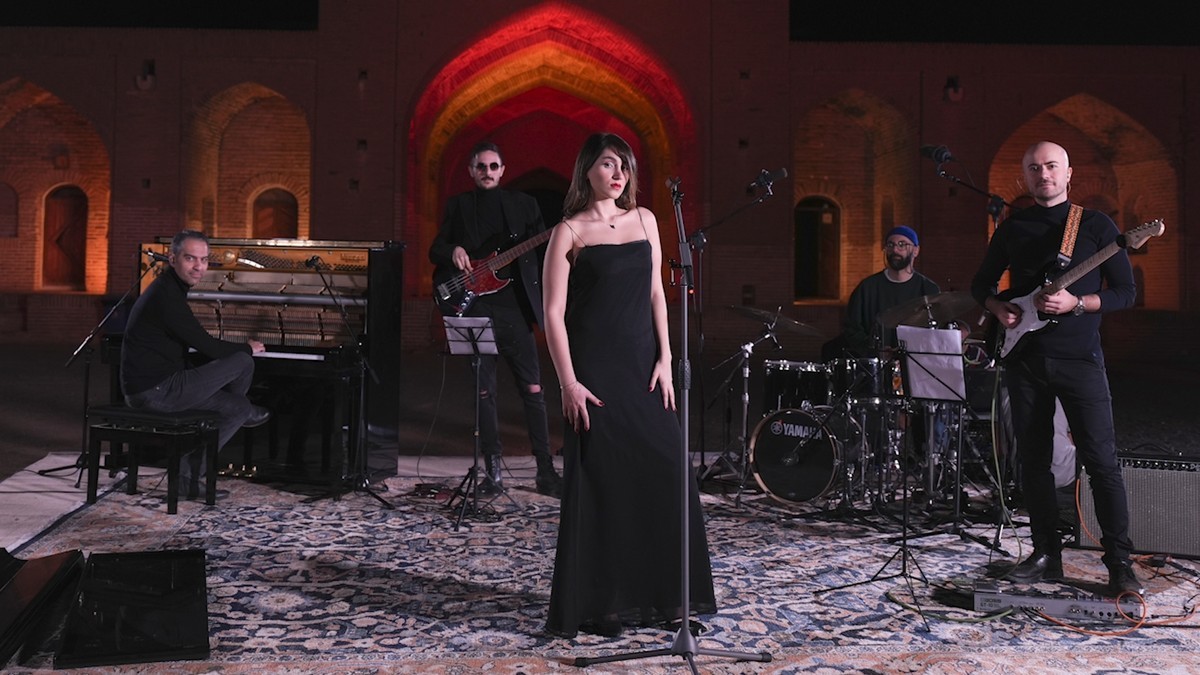
What the State Decided It Was
The judiciary-affiliated Mizan News Agency called the recording an "illegal concert" that did not comply with the country's "legal and religious standards," CNN reported. The court settled on the language of obscenity: vulgar and immoral content, produced and published online. Qom is a Shiite holy city and home to numerous Islamic seminaries, and CNN described it as a bastion of religious conservatism. Nobody was in the hall. No venue complained. The charge was framed around production and publication, which is why the file treated the five as a production team rather than performers alone.
The Law the Sentence Rests On
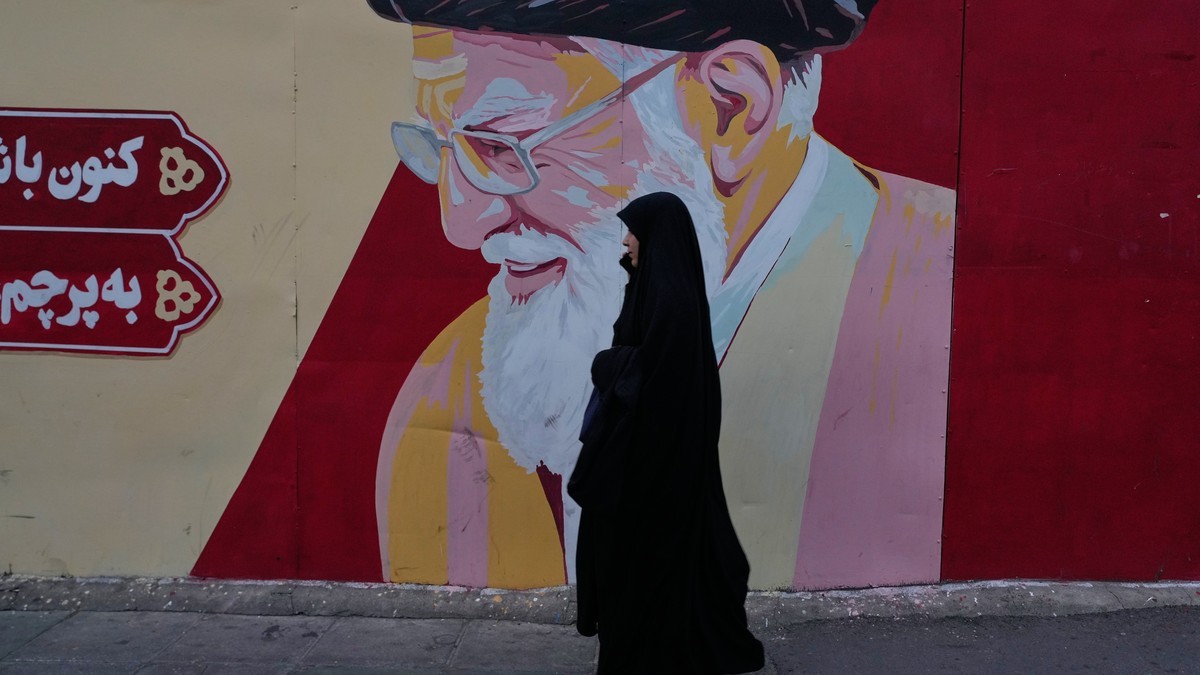
Iranian law bans women from singing in public in spaces where men are present, though criminal law does not explicitly criminalise women's singing as such, according to Euronews. Female performers are typically charged with encouraging corruption and prostitution, failing to observe the hijab, or offending public decency, and authorities have used those charges to close Instagram pages belonging to Iranian female singers. Compulsory veiling has been enforced since the 1979 revolution: women and girls above the age of puberty must cover their hair and wear loose clothing that disguises their figures. A "hijab and chastity" law passed in 2024 has not been officially implemented; it provides for fines, flogging and prison terms of five to 15 years for repeat offenders accused of promoting nudity or improper dressing.
The Lawyers Who Ran Out of Moves
"We did everything in our power to have the verdict overturned, or at least to secure a reduction in the sentence or a suspension, but it didn't work out," one of the defence lawyers told the BBC on Monday. "The other lawyers and I even tried to get the enforcement of the sentence postponed, but the enforcement branch insisted on carrying it out immediately." The appeal had already been exhausted in September. No further legal step was available to the defence, and the sentence was carried out in the same city where the concert was filmed.
"She Sang, the Islamic Republic Responded With the Lash"
Mahmood Amiry-Moghaddam, director of the Norway-based Iran Human Rights, told The Independent: "She sang, the Islamic Republic responded with the lash. A regime that cannot solve the crises of livelihoods, water and electricity, yet doesn't hesitate to flog a woman for her voice, has reached the end of its life." He told CNN that Ahmadi's clothing was an important factor, but that the prosecution also concerned her singing in public and, more broadly, her challenge to the authorities. Bahar Ghandehari of the Center for Human Rights in Iran called the flogging "a flagrant violation of her fundamental rights and a chilling demonstration of the Iranian authorities' determination to suppress women's freedoms." Hana Human Rights Organization said it violated Article 7 of the International Covenant on Civil and Political Rights, which bars torture and cruel, inhuman or degrading treatment, and called for the sentences to be annulled and the officials held accountable. Amnesty International had called in June for the sentences to be quashed.
A Campaign Wider Than One Singer
Ahmadi's case is not isolated. CNN reported that the singer Hiva Seyfizadeh was sentenced by a lower court to four years in prison for "encouraging corruption and prostitution" after performing traditional Iranian music in Tehran in February 2025; Seyfizadeh said in a video posted in August that she sang only several verses by the 13th-century poet Saadi Shirazi, questioned how that could amount to encouraging corruption, and said she intends to appeal. The wider record is harsher. Compulsory veiling became a flashpoint in 2022 after Mahsa Amini, a 22-year-old Kurdish Iranian woman, died in custody following her arrest for allegedly wearing her hijab improperly. The BBC reports that when security forces crushed a fresh wave of anti-establishment protests in January this year, thousands were killed and tens of thousands arrested. Iran Human Rights says at least 39 men convicted over January's protests have been executed, along with 16 accused of links to banned opposition groups and 17 convicted of espionage; a further 121 protesters detained in January, including six women and five juvenile offenders, have been sentenced to death.
What the State Has Not Said, and What Comes Next
Iranian authorities did not immediately comment on the reported implementation of the sentence, CNN reported, and the official media that usually publicises such punishments stayed quiet. Iran rejects criticism of its human rights record and says Western countries should address abuses of their own. Outside the country the reaction was immediate. The office of the exiled Crown Prince Reza Pahlavi said on X that the concert "remains a lasting symbol of the voices of Iranian women who cannot be silenced," adding: "Before 1979, Iran was a cradle of art and music and women were pioneers in these fields. Today, however, the regime flogs courage and beauty." The journalist Masih Alinejad wrote: "This regime is so afraid of a woman singing." For the four people still awaiting enforcement, and for every Iranian singer weighing whether to record again, the message from Qom is plain.
By Jessica Ali, Staff Writer
This article was produced with AI-assisted research and editorial support. Sources: BBC, BBC Persian, Al Jazeera, CNN, Euronews, The Guardian, The Independent, The National, CBC, Channel NewsAsia, Gulf News, Iran International, Hengaw Organization for Human Rights, Iran Human Rights, the Center for Human Rights in Iran, Hana Human Rights Organization, Amnesty International and the ISNA and Emtedad news agencies. Photographs: Parastoo Ahmadi's YouTube channel via BBC; The Independent; AP/Vahid Salemi via Al Jazeera. Social image: the same credited lead photograph.
What's Your Reaction?
 Like
0
 Dislike
0
 Love
0
 Funny
0
 Wow
0
 Sad
0
 Angry
0

Editor-in-Chief at Global1.News. Atlanta-based journalist who cuts through the BS and tells it like it is. Lead anchor, host, and the voice you hear when the spin stops and the truth starts.













Comments (0)