
Russia Says Cargo Vessel Struck by Drones in Gulf of Finland
The cargo vessel Sparta II, en route to Russia’s Kaliningrad enclave, was struck by unmanned aerial systems in the Gulf of Finland on Saturday, an incident that has quickly become a flashpoint in the widening maritime dimension of the war.
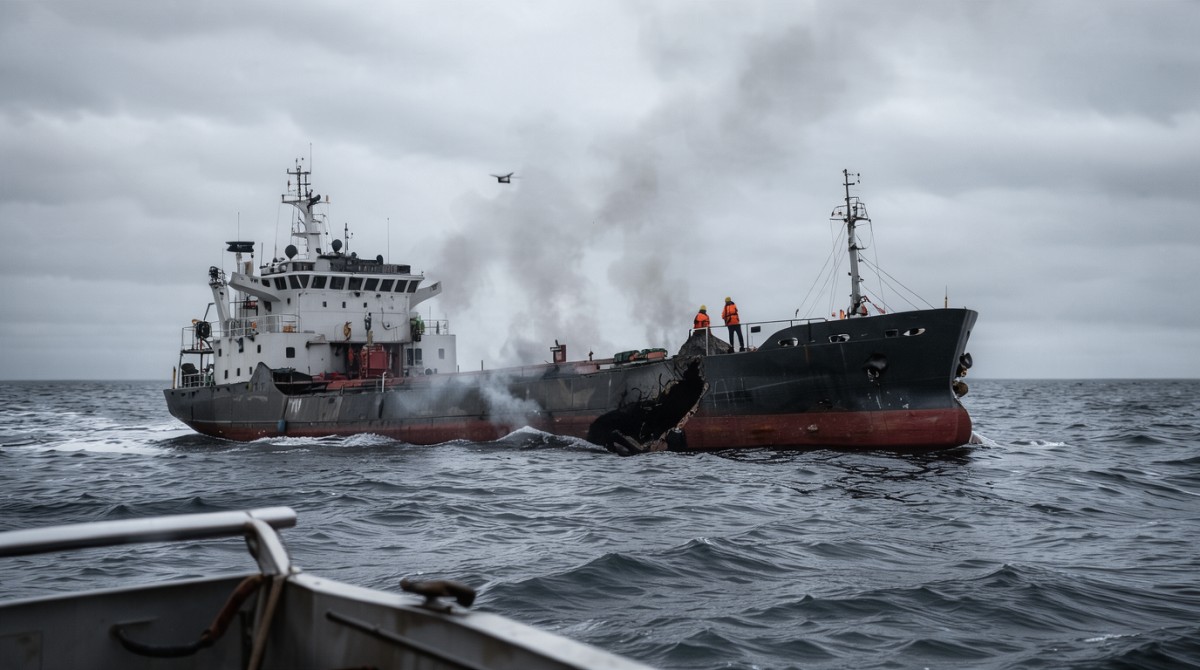
The cargo vessel Sparta II, en route to Russia’s Kaliningrad enclave, was struck by unmanned aerial systems in the Gulf of Finland on Saturday, an incident that has quickly become a flashpoint in the widening maritime dimension of the war. Both Russian and Finnish officials confirmed that the ship was hit in international waters west of Gogland island, caught fire and subsequently drifted into Finnish territorial waters. The episode underscores the increasingly porous nature of the conflict’s front lines and raises questions about the Kremlin’s ability to safeguard its critical supply routes to the Baltic exclave.
Details of the attack and immediate response
According to Leningrad region Governor Alexander Drozdenko, two drones struck the cargo ship in international waters roughly three nautical miles from Russia’s border. The impact ignited a fire aboard the vessel, prompting the crew’s evacuation and the ship’s uncontrolled drift toward Finnish waters. Finnish Defence Forces corroborated the account, confirming that the vessel entered Finnish territorial waters after the attack.
The Finnish Ministry of Defence announced the re‑introduction of temporary aviation and maritime restrictions in the eastern Gulf of Finland. These measures are described as a precaution to protect civilians and to allow Finnish authorities to intercept any further drone incursions. Finland also informed its NATO allies of the incident, signalling the broader security implications of a maritime drone strike in a region already under heightened alert.
Regional security reactions
Finland’s Prime Minister Petteri Orpo framed the incident as part of a broader spill‑over of the war into neighbouring areas, asserting Ukraine’s right to strike the aggressor. He emphasized that the situation posed no danger to other maritime traffic and that preparations for rescue operations were underway in cooperation with Finnish and international authorities.
Swedish Prime Minister Ulf Kristersson said Sweden was monitoring the situation and had offered assistance to Finland, though he provided no further details. The Finnish Border Guard echoed the government’s stance, noting that rescue preparations were being coordinated with other authorities, underscoring the collaborative nature of the response among NATO members.
Scale of the drone threat in the region
Governor Drozdenko reported that 80 drones had been shot down over the Leningrad region in the days surrounding the attack, prompting a heightened drone threat warning. While the exact timing of these interceptions relative to the Sparta II strike is not specified, the figure illustrates a substantial aerial threat environment around Russia’s north‑western frontier.
The concentration of drone activity near the Gulf of Finland aligns with recent intelligence indicating that both state‑backed and proxy forces are expanding the use of unmanned systems to target logistics corridors. The ability of drones to reach vessels in international waters marks a tactical escalation, potentially complicating Russia’s already strained supply lines to Kaliningrad.
Implications for Kaliningrad’s supply chain
Kaliningrad, Russia’s Baltic Sea exclave sandwiched between Poland and Lithuania, relies heavily on maritime deliveries for essential goods and military materiel. Governor Alexei Besprozvannykh downplayed the incident’s impact on supply flows, stating that the strike posed no threat to deliveries to the region.
Nevertheless, the attack highlights a vulnerability: any disruption to maritime routes could force Kaliningrad to depend more heavily on overland corridors through Belarus or on air transport, both of which are constrained by NATO’s eastern flank posture. The incident may prompt Moscow to reassess the security of its Baltic shipping lanes and consider additional defensive measures, such as expanded naval patrols or the deployment of electronic counter‑drone systems.
Geopolitical context of the Gulf of Finland
The Gulf of Finland has long been a strategic chokepoint, bordering both NATO members and Russian territory. Gogland island, located approximately 40 km (25 miles) from Finland’s coast, sits near the site of the strike and has previously featured in Russian naval exercises. The proximity of the attack to this island underscores the narrow margin between Russian and Finnish maritime zones.
Finland’s decision to tighten air and sea restrictions reflects a broader NATO concern about the potential for the conflict to spill into the Baltic Sea. The alliance’s collective response, including information sharing with Finland and the offer of assistance from Sweden, signals an intent to contain any further escalation that could threaten commercial shipping lanes vital to European energy and trade flows.
Domestic Russian narrative and media suppression
In the wake of the incident, Russian authorities have emphasized the external nature of the threat, linking the drone strike to Ukrainian actions. The statement from Governor Drozdenko that “the war is spilling over into our neighbouring areas” aligns with Moscow’s broader narrative that the conflict is being waged beyond Ukrainian borders, thereby justifying heightened security measures.
Simultaneously, the Russian government has intensified pressure on independent media, designating The Moscow Times as an “undesirable” organization and criminalising its work. This move, detailed in the source material, reflects an effort to control the domestic narrative surrounding incidents like the Sparta II strike, limiting public access to independent reporting on the war’s expanding front.
Prospects for future maritime security dynamics
The Sparta II drone strike may serve as a precedent for future attacks on commercial shipping in the Baltic Sea. If drone capabilities continue to proliferate, both NATO and Russian forces will likely invest in counter‑drone technologies and stricter maritime surveillance regimes. The temporary restrictions imposed by Finland could become more permanent, reshaping navigation patterns in the Gulf of Finland.
For Russia, protecting the supply lifeline to Kaliningrad will become a strategic priority, potentially prompting a reallocation of naval assets to the Baltic or the development of hardened coastal infrastructure. Conversely, NATO’s collective response will aim to ensure the safety of commercial vessels and to deter further aggression, reinforcing the alliance’s presence in the region.
In sum, the drone strike on the Sparta II illustrates how the conflict’s geography is expanding beyond land battles into critical maritime corridors. The incident’s handling by Finnish and Russian authorities, the broader NATO reaction, and the domestic media crackdown together reveal the layered complexities of a war that now increasingly threatens the security of the Baltic Sea and the stability of Europe’s northern flank.
This article was produced with AI-assisted research and editorial support. Reporting is based on the source material cited below. Sources: The Moscow Times; themoscowtimes.com; Global1.News (24 November 2026).
By Irina Volkov, Staff Writer
What's Your Reaction?
 Like
0
 Dislike
0
 Love
0
 Funny
0
 Wow
0
 Sad
0
 Angry
0
Russia/Eastern Europe Correspondent at Global1.News. Covering Russian politics, energy, security, and the shifting dynamics of the post-Soviet space. Provides clear-eyed analysis on one of the world's most opaque regions.














Comments (0)