
Why Nigeria cannot host World Cup - FIFA president, Infantino
When FIFA President Gianni Infantino stepped onto Nigerian soil this past weekend, the world’s most powerful voice in football delivered a candid assessment that has reverberated across the continent.
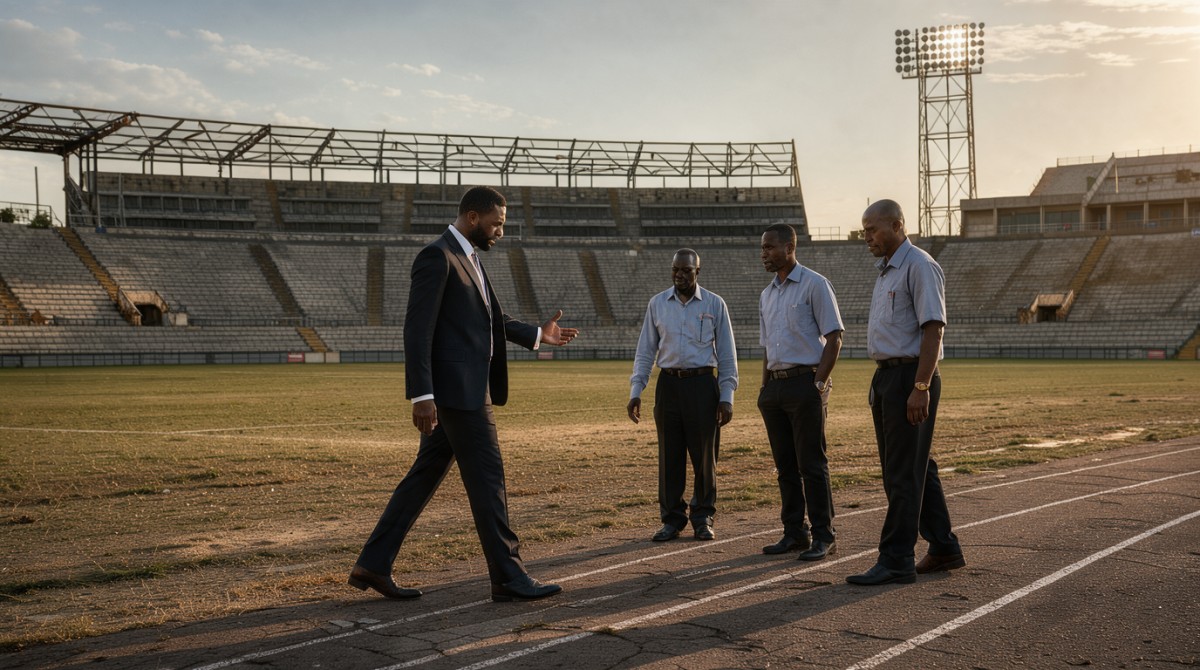
When FIFA President Gianni Infantino stepped onto Nigerian soil this past weekend, the world’s most powerful voice in football delivered a candid assessment that has reverberated across the continent. In an interview with Arise News, Infantino confirmed that Nigeria, despite its passionate fan base and rich football heritage, does not yet possess the infrastructure required to host a senior FIFA World Cup. His remarks, while sobering, also carried a note of optimism, suggesting that today’s shortcomings could be tomorrow’s opportunities if the right investments are made.
Infantino’s Core Message: Infrastructure Is the Decisive Factor
Infantino’s central thesis was unmistakable: the ability to stage a World Cup hinges on the quality and capacity of a nation’s stadiums, hotels, airports and transportation networks. He emphasized that “the key for hosting a World Cup is the infrastructure: the stadiums, hotels, airports, and transportation. This is where the investment is really necessary.” By foregrounding these elements, he placed the conversation squarely on tangible, capital‑intensive projects rather than on intangible factors such as fan enthusiasm or historical performance.
The president’s focus on infrastructure aligns with FIFA’s broader strategic framework, which has increasingly demanded that host nations demonstrate readiness across a suite of logistical benchmarks. In Nigeria’s case, the assessment underscores gaps that would need to be bridged before the country could realistically submit a bid for the 2030 edition or any subsequent tournament.
The Current State of Nigeria’s Football Facilities
During his visit, Infantino, accompanied by FIFA Secretary‑General Mattias Grafström, toured the newly remodelled Warri City Stadium. The inspection of this venue highlighted both progress and the distance still to travel. While the stadium’s refurbishment signals a willingness to upgrade existing assets, the fact that the FIFA president felt compelled to point out broader infrastructural deficiencies suggests that Warri alone cannot meet the comprehensive standards set for a World Cup.
Warri’s renovation, though commendable, is one piece of a larger puzzle. Nigeria’s stadium portfolio, hotel stock, airport capacity and inter‑city transport links collectively shape the nation’s hosting viability. Infantino’s remarks imply that, beyond isolated upgrades, a coordinated national strategy is required to align all these components with FIFA’s expectations.
Hospitality and Accommodation Gaps
One of the most pressing concerns highlighted by Infantino is the shortage of hotel capacity that can comfortably accommodate the influx of teams, officials, media personnel and millions of travelling fans. While Nigeria boasts a vibrant hospitality sector in major cities such as Lagos and Abuja, the president’s emphasis on “hotels” indicates that the current supply may fall short of the scale demanded by a World Cup.
Addressing this shortfall would likely involve public‑private partnerships to expand existing hotel chains, encourage new international brands to enter the market, and perhaps develop purpose‑built accommodation complexes near key venues. Such investments would not only serve a future World Cup but also bolster Nigeria’s broader tourism and business travel appeal.
Airports and Connectivity: The Gateway Challenge
Air travel forms the backbone of any World Cup logistics plan, and Infantino’s reference to “airports” underscores the importance of modern, high‑capacity gateways. Nigeria’s main international airports—Murtala Muhammed in Lagos and Nnamdi Azikiwe in Abuja—handle significant traffic, yet the president’s comments suggest that further enhancements are needed to meet FIFA’s standards for passenger flow, security and ancillary services.
Improvements could encompass runway expansions, terminal modernisation, and the integration of advanced baggage handling systems. Moreover, developing secondary airports in regions slated to host matches would distribute traffic more evenly and reduce congestion, a strategy successfully employed by previous hosts.
Transportation Networks: Linking Cities and Fans
Beyond air travel, the internal movement of fans, teams and equipment relies on robust road, rail and urban transit systems. Infantino’s call for investment in “transportation” points to a need for seamless connectivity between stadiums, hotels and airports. While Nigeria has made strides in road construction, the quality and reliability of inter‑city highways, as well as mass transit options within megacities, remain variable.
Future World Cup preparations would likely demand a coordinated upgrade of major highways, the introduction of high‑speed rail corridors linking host cities, and the expansion of urban transit such as bus rapid transit (BRT) and light rail. These projects would not only serve the tournament but also catalyse long‑term economic integration across the nation’s diverse regions.
Learning from the 2009 U‑17 World Cup Experience
The last time Nigeria hosted a FIFA tournament was in 2009, when the nation staged the U‑17 World Cup. That event demonstrated Nigeria’s capacity to organise a global football showcase on a smaller scale, delivering memorable matches and a vibrant fan atmosphere. However, the scale of a senior World Cup is exponentially larger, demanding a broader infrastructure footprint.
Reflecting on the 2009 experience offers valuable lessons: the importance of early planning, the benefits of leveraging existing stadiums while upgrading them, and the need for coordinated government support. By analysing the successes and challenges of that tournament, Nigerian authorities can chart a roadmap that addresses the gaps highlighted by Infantino.
Path Forward: Turning “No” into “Why Not?”
When asked directly whether Nigeria was ready to host the World Cup, Infantino’s answer was unequivocal: “Today, no, but tomorrow, why not?” This response, while acknowledging current deficiencies, also opens a window of possibility. It signals that FIFA is willing to consider future bids from nations that demonstrate tangible progress in the identified areas.
The onus now lies with Nigeria’s government, private sector and football federation to translate this encouragement into concrete action. Prioritising stadium upgrades, expanding hotel capacity, modernising airports and weaving together an integrated transport network will be essential steps. Moreover, aligning these projects with broader national development goals—such as job creation, regional connectivity and tourism growth—can ensure that the investments yield lasting benefits beyond the tournament itself.
This article was produced with AI-assisted research and editorial support. Reporting is based on the source material cited below. Sources: Daily Post Nigeria; dailypost.ng; Global1.News (23 November 2026).
By Sarah Okafor, Staff Writer
What's Your Reaction?
 Like
0
 Dislike
0
 Love
0
 Funny
0
 Wow
0
 Sad
0
 Angry
0

Africa Correspondent at Global1.News. Based in Lagos, covering politics, business, technology, and culture across the continent. Focused on telling African stories beyond the headlines — the innovation, entrepreneurs, and communities shaping the region's future.














Comments (0)