
Andrew Mountbatten-Windsor Must Explain the £750,000 He Never Accounted For as the Fraud Trial Opens
The High Court trial of Isbilen v Turk opened in London with a £750,000 payment to Andrew Mountbatten-Windsor at its center. He is not accused of wrongdoing and is due to give evidence on 14 December.
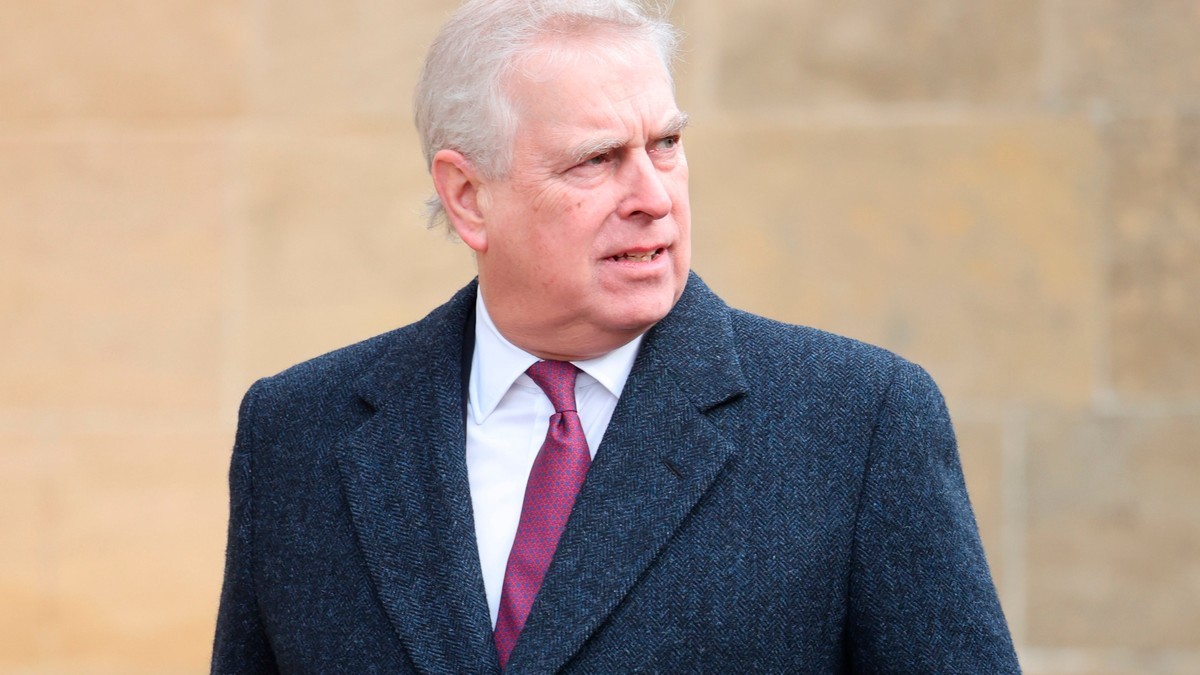
A former prince who has never publicly explained why £750,000 arrived in his bank account in November 2019 is about to be made to answer for it in a witness box, under compulsion, in a fraud trial he is not a party to. The man who sent the money says it was a wedding gift. The woman who paid it says it was a bribe for a passport. On Monday, a High Court judge began hearing both versions.
Andrew Mountbatten-Windsor Must Explain the £750,000 He Never Accounted For as the Fraud Trial Opens
London, England — The civil trial of Işbilen v Turk opened at the Rolls Building at 10:30 a.m. on Monday, and for the first time it put on the record, in open court, the payments that have followed Andrew Mountbatten-Windsor since 2022. He is not a defendant. He is not accused of any wrongdoing. He is, however, due in the witness box on 14 December, and the judge who cleared the way for that appearance said in October it was "highly unlikely" he would have turned up voluntarily.
The £750,000, and What Each Side Says It Bought
The sum is not in dispute. £750,000 left an account belonging to Nebahat Işbilen, a Turkish national, and reached Andrew Mountbatten-Windsor, then the Duke of York, on 15 November 2019. He repaid it in March 2021, after her solicitors wrote to him, according to reporting by The Telegraph. What the money was for is the whole case inside the case. Mrs Işbilen's lawyers told the court it was a "bribe", paid on the false assurance that the duke had helped her obtain a Turkish passport or would help with her UK residency, and that the go-between lied to her about its purpose. Mr Turk's lawyers say she authorized it herself, knowing exactly what it was: a gift made in the hope that a royal's contacts might help her imprisoned husband.
What the Court Heard on the First Morning
Simon Colton KC, for Mrs Işbilen, opened with a description of what he called a "major, cynical fraud". He told Mr Justice Adam Johnson that Mr Turk had "deliberately and systematically abused" his client's trust, moving her money into companies he owned or controlled and leaving her unable to account for it. The barrister said Mr Turk "persuaded Mrs Işbilen that her assets were at risk and that he was able to transfer them to a safe place", and then "induced" her to sign financial documents he described as "crude inventions" that "bore no relation to what Mr Turk told Mrs Işbilen was happening to her money". On the £750,000 specifically, Mr Colton accepted that his client approved the transfer, but said Mr Turk "lied to her" about why it was being made — "a further example of his dishonesty".
The Woman Who Says She Was Fleeced
Mrs Işbilen is 81. Her family founded the Evyap Group, the Turkish soap and cosmetics manufacturer, and her husband, Ilhan Işbilen, was a member of the Turkish parliament. He has been in custody since 2015 on terrorism charges her lawyers describe as politically motivated. She left Turkey for Greece in 2017 and moved to London the following year. She met Mr Turk in January 2017 and handed him control of most of her financial assets. The scale she alleges is large: her lawyers have put the missing money at around £40 million, while Outer Temple Chambers' summary of the October ruling records that she says Mr Turk dealt in breach of trust with around US$90 million of her family's funds. Mr Turk denies dishonesty and is contesting the claim.
The Adviser Who Denies Everything
Selman Turk is a former Goldman Sachs banker who founded Heyman AI, a digital bank aimed at millennials that later collapsed. In November 2019 his company won an award at Pitch@Palace, the duke's Dragons' Den-style initiative, at St James's Palace — an event Mrs Işbilen attended and where, she has said, she sat in the audience as he collected it. He has fought this litigation for years and has already served time inside it: in March 2024 he was jailed for 12 months for contempt of court after failing to produce evidence a judge had ordered him to hand over. He denies fraud. His case is that his client knew precisely what she was doing with her own fortune.
The Dinner That Was Filmed
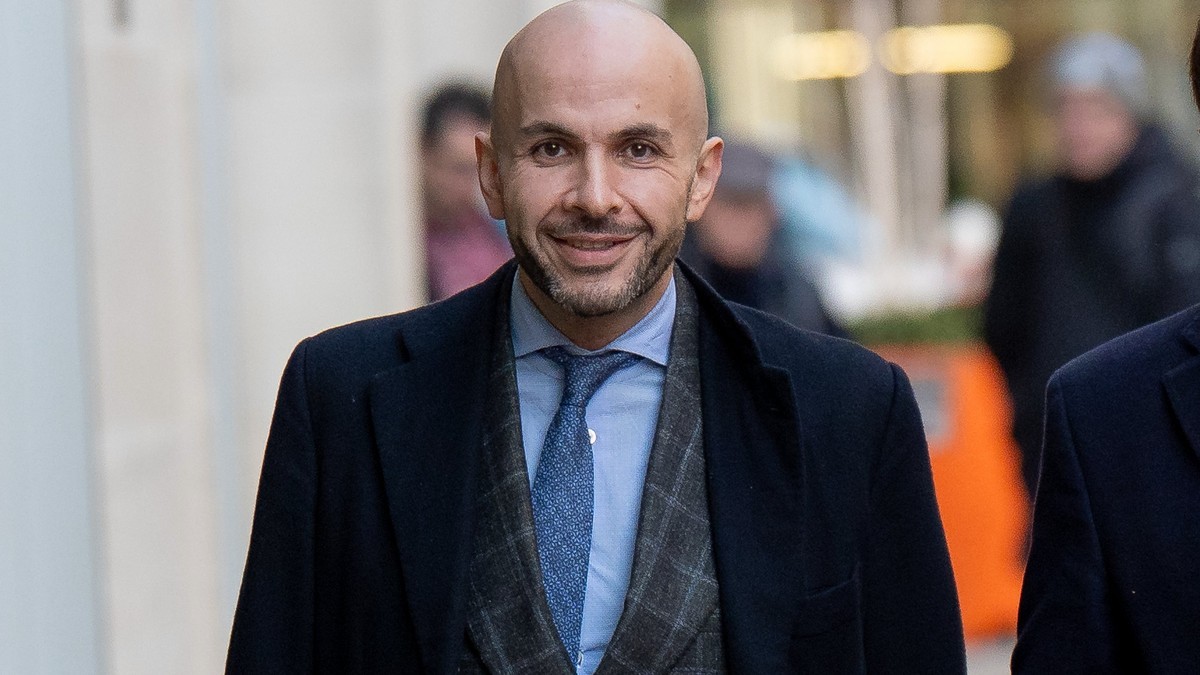
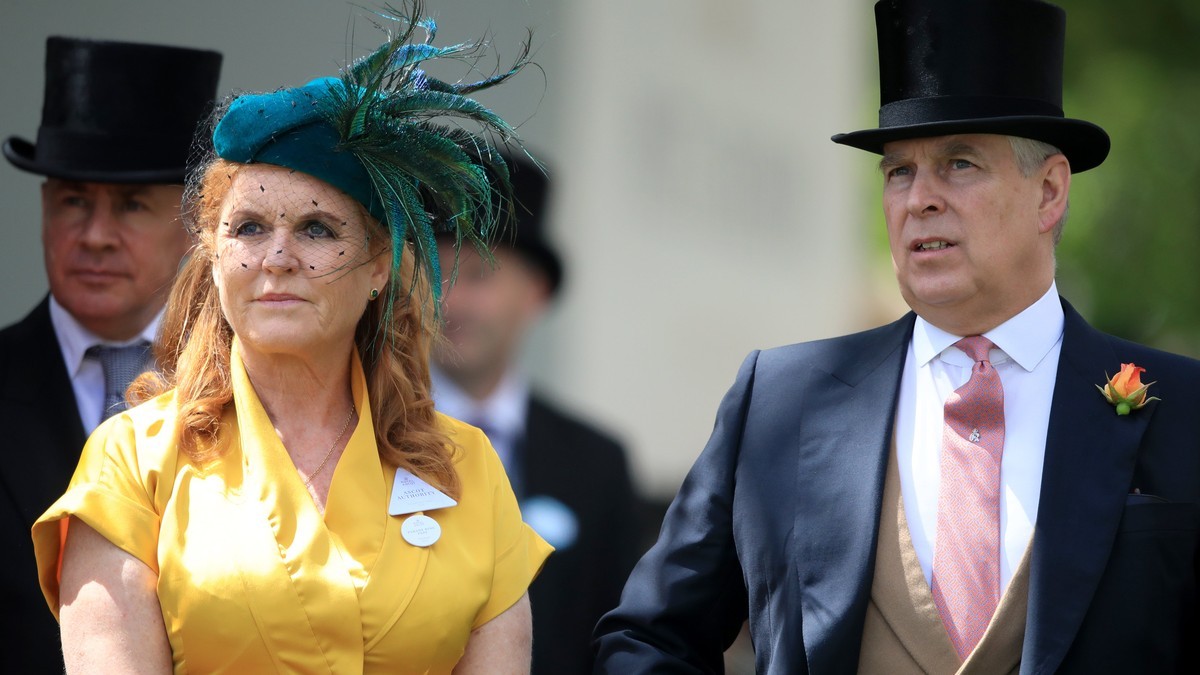
Central to that defense is one evening in December 2019. Joshua Hitchens, for Mr Turk, told the court that Mrs Işbilen spent "some five or six hours" at Mr Turk's London flat with the duke, Sarah Ferguson and Mr Turk's family, seated next to the duchess, having asked for the dinner to be held in private. "It is irrefutable that the dinner happened; it was filmed and photographed," he said. He accused her of "studied vagueness" about her contact with the duke and said the evening was omitted from her first witness statement because it was "inconsistent with the case being advanced that the Duke was a stranger to her". His written submissions put the defense's sharpest line bluntly: "Paying public figures for preferential treatment was well within the claimant's modus operandi."
The Money That Ran Through Alphabet Capital
The payments did not go only to the duke. Mr Colton told the court that documents obtained in the proceedings showed Mr Turk sent about £2 million to a company called Alphabet Capital, some of which reached Andrew Mountbatten-Windsor, and that one bank payment of about US$275,000, roughly £210,000, was made on Mr Turk's instruction, most of it then paid to Sarah Ferguson. Mrs Işbilen's lawyers also pointed to a £15,000 payment purportedly for the duchess's 60th birthday party in 2019 and an unquantified "wedding gift" for Princess Beatrice. Earlier reporting established further installments through the same company: up to £350,000 to the duke, £225,000 to the duchess and £25,000 to Princess Eugenie. Neither the duke nor the duchess is accused of wrongdoing.
The Ruling That Made the Summons Possible
The appearance in December did not happen by agreement. On 23 October, in a judgment cited as Işbilen v Turk [2026] EWHC 2704 (BP), Mr Justice Adam Johnson granted Mr Turk relief from sanctions and permission under the Civil Procedure Rules to rely on a witness summary for Andrew Mountbatten-Windsor and to call him at trial. The judge said he was satisfied that "had he been asked, Mr Mountbatten-Windsor would have declined to provide a witness statement", and that it was "highly unlikely that a person in the position of Mr Mountbatten-Windsor would wish voluntarily to provide a witness statement and give evidence at a trial in public proceedings". Outer Temple Chambers, which published a summary of the ruling, notes that he is understood to be the first member of the royal family summoned to give evidence since the future Edward VII was subpoenaed in the Mordaunt divorce case in 1870.
What Andrew Will Be Asked, and What He Will Not
The scope is deliberately narrow. Mr Justice Johnson indicated in October that the testimony would be "limited in scope", and witnesses compelled this way may give evidence by video link rather than in person. The court rules also allow a witness to be compelled to produce relevant documents. He is expected to be questioned on whether he used his position to obtain information that assisted Mrs Işbilen's husband while the transfers were being made. Sky News noted that the appearance will be the first public questioning he has faced since his BBC Newsnight interview in 2019. Neither the judge nor Mr Turk's legal team has been told the full terms of the confidential settlement Mrs Işbilen reached with the duke and duchess.
The Figures That Do Not Agree
Four years of litigation has produced a set of numbers that do not match each other, and the court will have to work through them. The sum said to be missing is "tens of millions" in The Independent's account, "around £40m" in The Telegraph's, and around US$90m of family funds in the October ruling summary; The Telegraph reported in 2022 that she had entrusted Mr Turk with US$87.5m, about £67m. The total said to have reached the duke and his family is "more than £1m" in Monday's reporting and £1.4m in earlier pieces. The date of the settlement also moves: The Independent reports the court was told in 2023 that she had settled with the duke and duchess, while The Telegraph's Monday report dates the settlement with Alphabet Capital and the Yorks to 2022.
What This Trial Can Establish, and What It Cannot
This is a civil claim for money, not a criminal prosecution, and the standard is the balance of probabilities. No finding of dishonesty against Mr Turk exists yet; his defense is that the transfers were hers to make and that he never lied about them. Nothing in the case alleges that Andrew Mountbatten-Windsor or his family knew, or should have known, where the money came from, and the £768,743 he is said by Mr Turk to have borrowed for a Swiss chalet is not shown in any document to have reached him. What the trial can do is force the one participant who has never given an account of the £750,000 to give one, on oath, in public, with a judge listening.
The trial is listed for 11 weeks, with The Independent reporting it is due to conclude in March and a written judgment to follow at a later date. Mrs Işbilen's husband remains in prison in Turkey. Mr Turk remains in the case he has fought since 2021. And on 14 December, barring a successful application to set the summons aside, the man who took the £750,000 will be asked, under compulsion, what he thought it was for.
By Jessica Ali, Staff Writer
This article was produced with AI-assisted research and editorial support. Sources: The Independent, BBC News, Sky News, The Telegraph, Outer Temple Chambers (Işbilen v Turk [2026] EWHC 2704 (BP)), GB News via AOL. A social card for this article is a Global 1 News editorial image.
What's Your Reaction?
 Like
0
 Dislike
0
 Love
0
 Funny
0
 Wow
0
 Sad
0
 Angry
0

Editor-in-Chief at Global1.News. Atlanta-based journalist who cuts through the BS and tells it like it is. Lead anchor, host, and the voice you hear when the spin stops and the truth starts.














Comments (0)