
Turkish drama 'Leyla' takes home International Emmy award
Turkey’s cultural export engine has once again turned a spotlight on the nation’s soft power, as the drama series “Leyla” clinched the International Emmy award for telenovela at the 54th ceremony in New York.
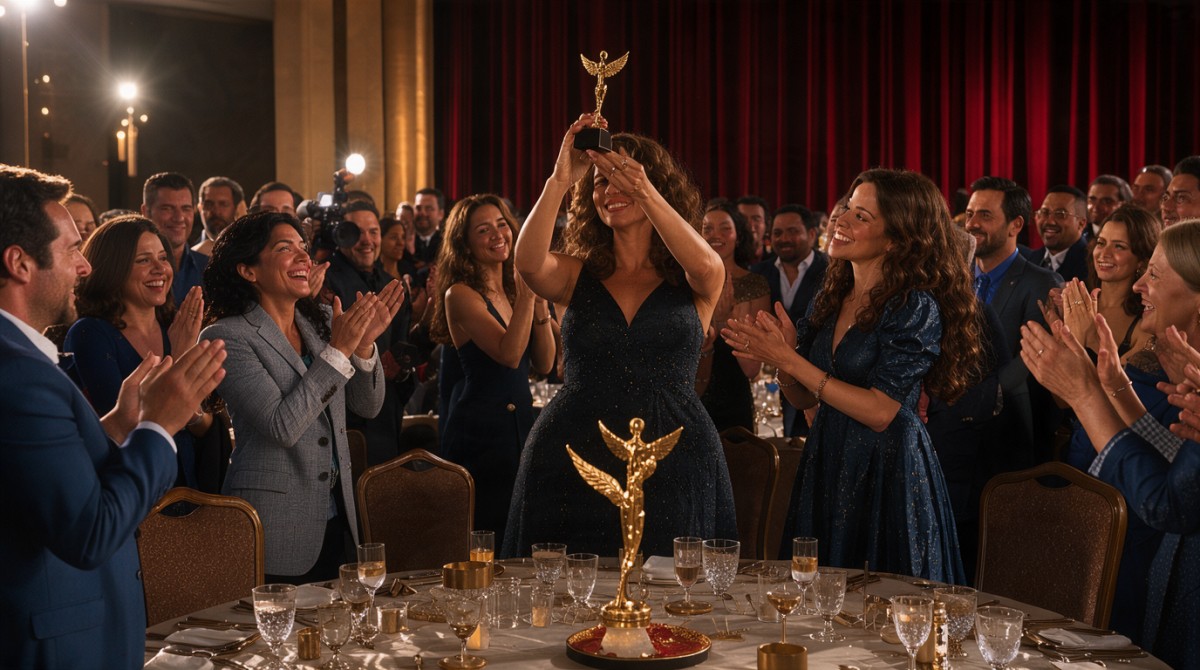
Turkey’s cultural export engine has once again turned a spotlight on the nation’s soft power, as the drama series “Leyla” clinched the International Emmy award for telenovela at the 54th ceremony in New York. The win, announced on 24 November 2026, adds a fresh layer to the evolving tapestry of Turkish media influence across the Middle East and beyond. While the accolade is a testament to the production values and storytelling prowess of Turkish television, it also arrives at a moment when regional media markets are increasingly intertwined with geopolitics, energy diplomacy and great‑power competition. The triumph of “Leyla” therefore merits a closer look not only as a cultural milestone but also as a strategic signal within the broader currents shaping the Gulf, the Levant and the wider Euro‑Atlantic sphere.
From Istanbul Studios to Global Stages
The series “Leyla: Hayat… Aşk… Adalet…”—translated as “Leyla: Life… Love… Justice”—was produced by the well‑established Ay Yapım house, with Kerem Çatay overseeing production and Hilal Saral directing. Its cast, featuring Cemre Baysel, Alperen Duymaz and Gonca Vuslateri, brings together a new generation of Turkish talent that has become familiar to audiences across the Arab world, the Balkans and Central Asia. The drama’s narrative, adapted from Brazil’s “Avenida Brasil,” follows a young woman abandoned at a garbage dump by her stepmother, who later returns to exact revenge while navigating themes of love and justice. This blend of personal drama and moral reckoning resonates with the emotive storytelling that has propelled Turkish series into prime‑time slots throughout the Middle East for the past decade.
The International Emmy win underscores the growing parity between Turkish productions and their global counterparts. In the telenovela category, “Leyla” competed against three other nominees: Turkey’s own “Uzak Şehir” (produced by AyNA Yapım), Brazil’s “Garota do Momento” and Spain’s “Valle Salvaje.” Turkish entries accounted for half of the nominees, reflecting a sustained presence in a category traditionally dominated by Latin American and European offerings. The victory also builds on Turkey’s earlier Emmy successes—“Kara Sevda” in 2017 and “Yargı” (Family Secrets) in 2023—highlighting a trajectory of consistent quality that has helped Turkey carve a niche in the global television market.
Soft Power and Regional Media Competition
Turkey’s media expansion must be viewed against the backdrop of Sunni‑Shia competition and the broader great‑power rivalry that defines the Middle East’s strategic environment. While Saudi Arabia and the United Arab Emirates have invested heavily in satellite networks and streaming platforms to project their own narratives, Turkey has leveraged its prolific drama industry to cultivate cultural affinity across the Arab world, especially in Egypt, Saudi Arabia and the Levant. The emotional appeal of Turkish series—rooted in family drama, romance and moral dilemmas—offers an alternative to the more overtly political programming of rival broadcasters, subtly shaping public perception of Turkish society and, by extension, its foreign policy posture.
In parallel, Iran’s state‑run media continues to promote content that aligns with its revolutionary ethos, while also importing popular Turkish dramas for domestic consumption. The cross‑border flow of Turkish series therefore operates within a complex media ecosystem where cultural products become instruments of influence, softening the terrain for diplomatic engagement or, conversely, for contestation. The International Emmy win amplifies Turkey’s cultural cachet, potentially granting it greater leverage in negotiations over media licensing, co‑production agreements and distribution rights in markets that remain contested by regional powers.
Economic Dimensions: Energy, Tourism and Media Exports
The success of Turkish drama dovetails with the country’s broader economic strategy, which seeks to diversify revenue streams beyond energy and tourism. The export of television formats and series has become a lucrative sector, with Turkish productions commanding significant licensing fees in the Gulf Cooperation Council (GCC) states, North Africa and even parts of South‑East Asia. While the source material does not disclose specific financial figures, the repeated recognition at prestigious forums such as the International Emmys signals a premium attached to Turkish content, encouraging broadcasters and streaming services to allocate larger budgets for Turkish titles.
Moreover, the cultural allure generated by series like “Leyla” fuels tourism, as fans travel to filming locations in Istanbul, Cappadocia and the Aegean coast. This tourism‑media synergy aligns with Turkey’s post‑COVID recovery plan, which emphasizes cultural tourism as a pillar of growth. The International Emmy accolade, therefore, serves not only as a symbolic triumph but also as a catalyst for ancillary economic activity, reinforcing Turkey’s position as a hub of creative industries in a region where cultural capital increasingly translates into hard power.
Implications for Turkish‑European Media Relations
The International Emmy ceremony, hosted by actor Michael Urie and attended by representatives from 22 countries, underscores the transatlantic dimension of Turkey’s media outreach. The United Kingdom led the night with nine awards, while other European nations such as France, Belgium and Germany also secured trophies. Turkey’s inclusion among the winners reflects a degree of acceptance within the European cultural sphere, despite ongoing political frictions over issues ranging from migration to energy policy.
European broadcasters have long been interested in Turkish formats, often adapting them for local audiences. The recognition of “Leyla” may encourage further co‑production ventures, especially as European media companies seek fresh content to compete with American streaming giants. Such collaborations could also serve as diplomatic bridges, fostering dialogue on shared cultural values while navigating contentious topics like the Eastern Mediterranean gas dispute or the status of Cyprus. In this sense, the Emmy win operates as a soft diplomatic conduit, subtly reinforcing Turkey’s engagement with Europe through the universal language of storytelling.
Media Awards as a Barometer of Global Influence
The International Emmy awards, presenting 16 honors across competitive categories and recognizing 64 nominated programs from 22 nations, function as a barometer of global media influence. Turkey’s tally this year—one trophy among a field that also included wins for Argentina, Belgium, France, Germany, South Africa and the United Kingdom—demonstrates the country’s sustained relevance in a crowded cultural marketplace. The ceremony also highlighted other notable winners: France’s “Careme” for drama, Argentina’s “Division Palermo” (season 2) for comedy, and a documentary on Israeli war dynamics titled “Breaking Ranks: Inside Israel’s War.” These selections reflect a broader thematic preoccupation with conflict, justice and societal transformation, themes that resonate deeply within the Middle Eastern context.
By securing the telenovela award, “Leyla” joins a lineage of Turkish series that have achieved international acclaim, reinforcing a narrative of cultural ascendancy that complements Turkey’s geopolitical ambitions. The award also signals to regional producers that high‑production values, compelling narratives and strategic adaptation of foreign formats can yield global recognition, potentially spurring a wave of investment in local content creation across the Arab world and beyond.
Strategic Outlook: Media, Diplomacy and the Future of Turkish Storytelling
Looking ahead, the triumph of “Leyla” suggests several strategic pathways for Turkey’s cultural diplomacy. First, the continued adaptation of successful foreign formats—evident in “Leyla’s” Brazilian source material—offers a proven formula for creating content that resonates both domestically and internationally. Second, the prominence of Turkish talent on the world stage may encourage the state and private sector to invest further in training, technology and distribution networks, ensuring that future productions can compete with Hollywood and Asian powerhouses.
Third, the integration of media achievements into broader diplomatic initiatives could see Turkish cultural attachés leveraging award wins to negotiate bilateral media agreements, especially with Gulf states seeking high‑quality entertainment that aligns with their own cultural policies. Finally, as great‑power rivalry intensifies—particularly between the United States, China and Russia—Turkey’s ability to project a distinct cultural identity through award‑winning series may become an increasingly valuable asset in its foreign policy toolkit, complementing its strategic positioning in energy corridors and its role as a bridge between East and West.
Conclusion: A Cultural Victory with Strategic Resonance
The International Emmy award for “Leyla” is more than a celebration of artistic merit; it is a reflection of Turkey’s evolving role as a cultural conduit within a region marked by competition, conflict and cooperation. By delivering a story that intertwines personal vengeance with universal themes of love and justice, the series has captured the imagination of a global audience while reinforcing Turkey’s soft‑power credentials. As the Middle East navigates a complex landscape of energy security, great‑power rivalry and shifting alliances, cultural achievements such as this award will continue to shape perceptions, open diplomatic channels and contribute to the broader tapestry of regional influence.
This article was produced with AI-assisted research and editorial support. Reporting is based on the source material cited below. Sources: Daily Sabah Middle East; dailysabah.com; Global1.News (24 November 2026).
By Malik Hassan, Staff Writer
What's Your Reaction?
 Like
0
 Dislike
0
 Love
0
 Funny
0
 Wow
0
 Sad
0
 Angry
0
Middle East Correspondent at Global1.News. Based in Beirut, covering politics, conflict, energy, and society across the Middle East. Brings context and depth to a region often reduced to headlines.














Comments (0)