
Three Minutes on Ulleungdo: Russian Jets, an Air-Raid Alert, and the Text That Named the Wrong Country
An air-raid alert sent Ulleungdo residents to shelter at 7:52 a.m. and was lifted three minutes later. South Korea's military says Russian aircraft entered its air defense zone but never its airspace, and a province's all-clear text wrongly named North Korea.
At 7:52 on Tuesday morning, phones across Ulleung County buzzed with a warning that Russian aircraft had violated South Korea's airspace and that residents should get underground. Three minutes later the government lifted it. Within the hour, a provincial authority had told the same islanders the planes were North Korean, and then corrected itself. The military now says the Russian aircraft did not enter South Korean airspace.
Three Minutes on Ulleungdo: Russian Jets, an Air-Raid Alert, and the Text That Named the Wrong Country
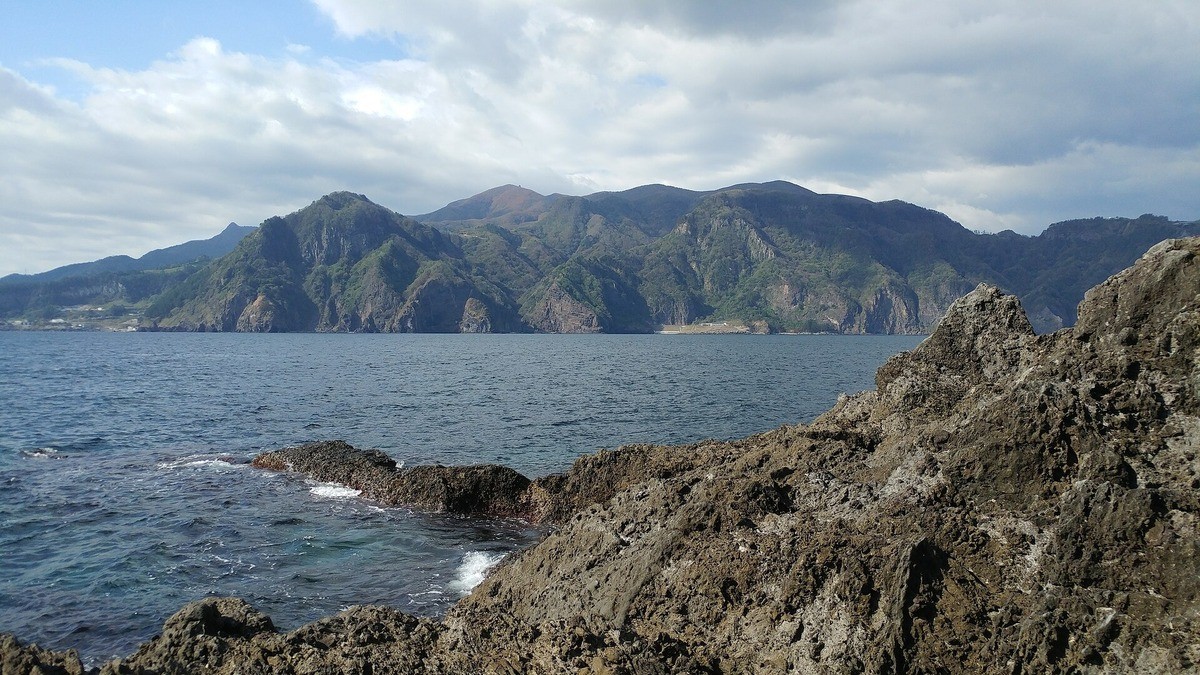
SEOUL, South Korea — The island of Ulleungdo sits roughly 120 kilometers off the country's east coast, in the waters where Russian and Chinese military aircraft routinely enter the country's air defense identification zone. On Tuesday morning, its roughly 9,000 residents became the audience for three contradictory official messages in under an hour, and for a question Seoul has not yet answered about who decided what, and when.
The Alert Came at 7:52, and It Was Wrong
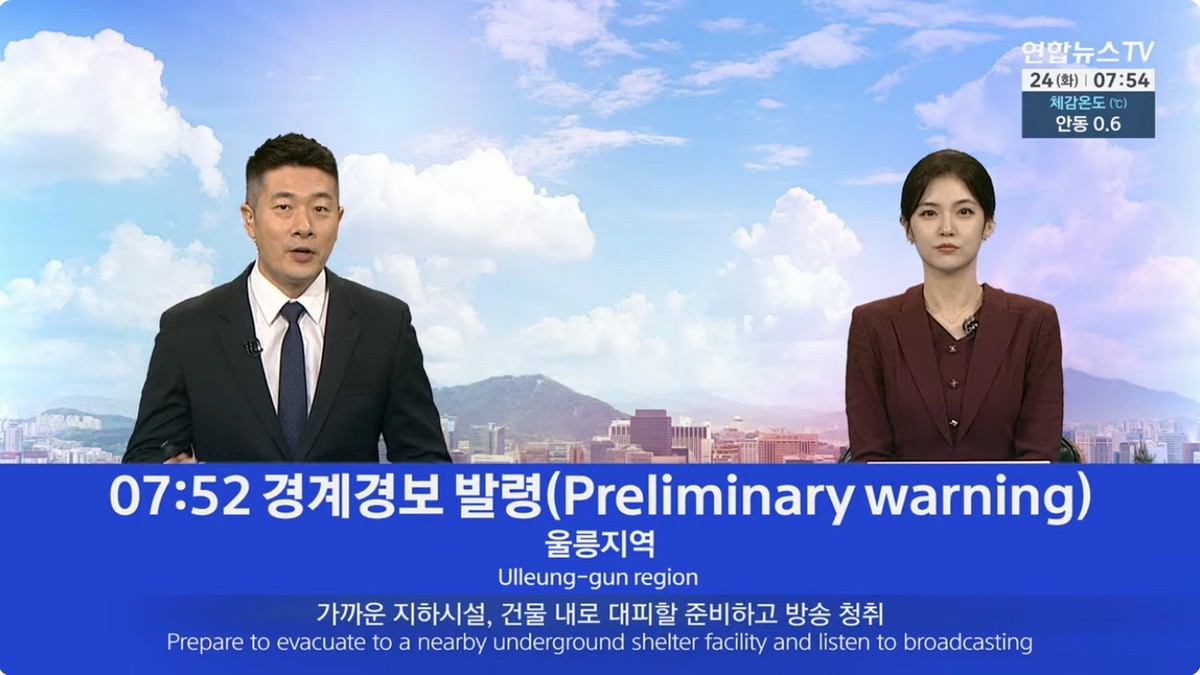
The Ministry of the Interior and Safety issued an alert for Ulleung County at 7:52 a.m. local time, Yonhap reported. The emergency text that followed read, in the Korea JoongAng Daily's English rendering: "Russian aircraft have violated Korean airspace. A warning has been issued for Ulleung County. Take shelter in an underground facility or inside a building."
At 7:55 the ministry sent a second message. "The Russian aircraft have left the danger zone. The warning for Ulleung County has been lifted as of 7:55 a.m. Please return to your normal activities."
Then the Joint Chiefs of Staff spoke, and contradicted the county's alert on its central claim. The aircraft had not violated South Korean airspace. That is not a wording slip. Whether a foreign warplane crossed the line is the one fact the military could not let stand uncorrected. The JoongAng Daily reported that "the alert was lifted after approximately five minutes." Its own timestamps put the span at three.
What the Joint Chiefs Actually Said
The JCS spokesperson, Jang Do-young, told a briefing, according to the Japan Times: "The Russian military aircraft had approached the Ulleung Island to the point where it was just short of entering our airspace. Given the high speed at which military aircraft travel, as you are all aware, we anticipated a potential airspace violation and issued the alert preemptively to protect our people and ensure their safety."
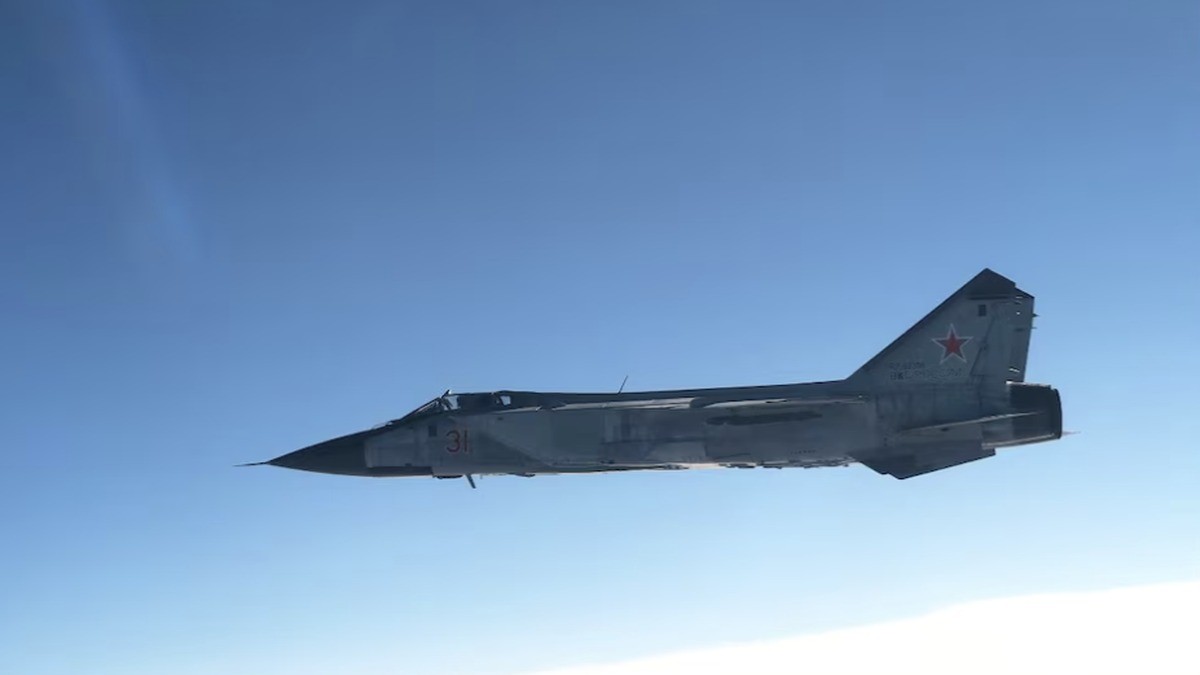
The JCS said: "We detected the movement before the Russian aircraft's entry into KADIZ and deployed fighter jets to conduct tactical maneuvers in case of contingencies." It said the Russian formation turned away toward the East Sea during that response.
SBS reported that fewer than five Russian aircraft were involved and that the interceptors included F-15Ks. The Associated Press noted that the military did not say how many aircraft it detected, or what type they were. Jang said Russian aircraft had breached the zone several times this year, and that a public warning from Seoul in response to such a flight is rare.
KADIZ Is Not Airspace, and That Is the Whole Dispute
An air defense identification zone is a buffer extending beyond a country's territorial airspace, giving a military more time to identify, track and turn back aircraft approaching its territory, the Associated Press explained. It is not sovereignty, and crossing one is not trespass.
International practice is for military aircraft entering another state's zone to submit a flight plan in advance and report their position on entry, Yonhap reported. Russia does not recognize the zone South Korea has drawn, arguing it has no basis in international law, and enters it without notice.
The scale of that traffic is documented. JCS data submitted to the National Assembly for the 2023 audit recorded about 65 unauthorized Russian entries between 2020 and June 2023. The Guardian, using a different window, put Russian entries without prior notification at about 60 in the five years to 2024, against about 430 by Chinese aircraft. The two figures measure overlapping periods differently and should not be combined.
The Island Heard the Sirens. Many Residents Say They Did Not.
Ulleung's deputy county governor, Lee Ui-jun, said the sirens sounded and village broadcasts went out in turn, Yonhap reported.
Residents described something faster and less legible. Jeong Hae-seung, 41, was working at a construction site when the text arrived. "I went outside wondering what on earth was happening, and the civil defense broadcast was playing," he told the Hankyoreh. "I couldn't make out the exact words."
The all-clear landed before he had worked out what was happening. "Even when I went back to work I felt uneasy," he said. "It said aircraft, not fighter jets, so I thought it couldn't be anything serious. But I grew up in Ulleung County and this was the first time in my life."
Others never heard the siren. A resident of the island's Buk-myeon township told Yonhap he did not hear it and that nobody around him evacuated. Another, in Dodong, said winter keeps doors shut, so the siren was lost but the village broadcast carried.
Two of Twenty-Three Devices Did Not Work
Ulleung County has 23 alert devices. Two did not operate, the Hankyoreh reported. A county official said staff were trying to trigger the failed units by hand when the alert was lifted, and that the cause was still being checked.
It was the county's first real emergency alert since North Korea's missile provocation in November 2022, about four years earlier. In that episode the North fired more than 20 missiles, one of them toward the island, setting off sirens and evacuations, the Associated Press reported.
This time the county used its Ulleung Alimi app to ask residents to keep to their normal routines. No damage and no casualties were reported, and the AP said there were no major disruptions on the island.
Why Pyongyang's Name Got Into a Russian Alert
At 7:58, North Gyeongsang Province, which has jurisdiction over the island, sent a message of its own: "The aircraft believed to be North Korean has left the danger zone. The actual warning for Ulleung County has been lifted. Please return to your normal activities."
The province said the wording came from a standard training template that refers to a presumed North Korean aircraft, and that only the time had been changed, the JoongAng Daily reported. An official told the Hankyoreh an employee had clicked through the drill language without amending it. "It was such an urgent situation that the staff member appears to have made a mistake."
The correction went out at 8:39 a.m.: "Correction: The airspace violation involved Russian aircraft. We confirm that the aircraft were Russian." That is 41 minutes after the 7:58 message; the Hankyoreh dates the erroneous message to 8:00 and the gap at 39 minutes.
The JCS said the military had not mentioned North Korea at any point in its coordination with civilian authorities.
A Week After the Last One, Five Days After the Summit
The flight was not a first. On November 17, seven days earlier, several Russian aircraft entered the same zone over the East Sea and South Korea scrambled fighters, SBS reported. On August 25, Russian aircraft entered the zone near Ulleungdo and Dokdo and drew the same response, according to the Korea Herald.
The Guardian counted Tuesday's as the fourth known Russian entry this year and the second inside a week.
It also came five days after the trilateral meeting in Shenzhen between Vladimir Putin, Donald Trump and Xi Jinping, held on the sidelines of the APEC summit. In the week before that meeting, South Korea, Japan and Taiwan all complained of Russian aircraft violating their airspace or identification zones, the Japan Times reported. Japan protested to Moscow on November 17 itself, after saying two suspected Russian aircraft had entered its airspace off its southwestern coast, the AP reported.
No source in the public record attributes a motive to Moscow for Tuesday's flight.
The Question the Briefing Room Did Not Answer
Asked whether a miscommunication with the safety ministry had caused the agency to announce an airspace violation, Jang gave no specific answer and said the military needed to look into the matter further, the Associated Press reported. He said the provincial government may have sent a training text by mistake.
The chain of authority behind the alert is narrow. The JCS said the judgment was made by the Air Force Ground Operations Command in light of the air situation and the island's proximity, and that the alert was then issued by the civil defense control center at the Interior Ministry, the Kyeonggi Ilbo reported.
An Interior Ministry official told Yonhap the ministry does not assess the threat itself. The official said: "Because the system is that we issue it when the military requests it, we do not judge on our own. We reflected the reason the military sent, as it was. We have no assets with which to judge." An incorrect claim therefore traveled through a relay that added no check of its own.
Korea Has Sent the Wrong Text Before
The pattern is national, not local. On April 23 this year the Geum River Flood Control Office sent a training flood alert to Nonsan, Buyeo and related agencies, Yonhap reported. Daegu's Dong-gu district sent an outlet-fire evacuation text during a drill on January 6 last year and corrected it eight minutes later. Cheongyang County sent a training landslide evacuation on July 4, 2024, and corrected it 20 minutes later. Seoul's Jongno-gu told residents an earthquake had occurred on April 28, 2024, when none had, and corrected it nine minutes later. The national disaster headquarters mislabeled a magnitude 3.5 earthquake in Jangsu, North Jeolla, as Jangsu, South Jeolla, on July 29, 2023.
An Ulleung resident told Yonhap the distinction carried real weight. Russian aircraft and North Korean aircraft are not comparable in how alarming they are, he said. He added: "I cannot understand how that kind of text was sent." He also said it defies common sense for the province, rather than the central government or the military, to announce the all-clear.
The Protest, the Politics, and What to Watch
Defense Ministry spokesperson Chung Binna said a Russian diplomat from the country's embassy in Seoul would be called in later on Tuesday to lodge a formal complaint, Yonhap reported. The Guardian and SBS both described the official being summoned as Russia's defense attaché.
The opposition moved quickly. Chung Hee-yong, secretary-general of the People Power Party, said on Facebook that the official account had shifted from a Russian violation to a suspected North Korean aircraft in a little over ten minutes. "In a grave situation where national security and public safety are at stake, is it normal crisis response to reverse the government's announcement without even properly identifying the intruder?" he asked, according to the Maeil Business Newspaper. He demanded that the government publish the full sequence, explain the reversal, lodge a protest with whichever state is found responsible, and take measures that prevent a repeat.
Three things are testable from here: whether Seoul explains the reversal, whether the two dead devices on Ulleungdo are repaired, and whether Moscow answers the protest.
By Jessica Ali, Staff Writer
This article was produced with AI-assisted research and editorial support. Sources: Yonhap News Agency, The Korea Herald, The Korea JoongAng Daily, The Hankyoreh, SBS News, Kyeonggi Ilbo, Maeil Business Newspaper, The Guardian, The Associated Press and The Japan Times. Quotations from Korean-language reporting are translated from the original. The cover photograph shows the northeast coast of Ulleung, seen from Jukdo, by Gupdaal (CC BY 4.0, via Wikimedia Commons). The inline photographs are a Yonhap News TV broadcast frame via The Korea Herald and a file photograph of a Russian MiG-31 by Reuters via Yonhap. The social card is a Global 1 News editorial image produced in house.
What's Your Reaction?
 Like
0
 Dislike
0
 Love
0
 Funny
0
 Wow
0
 Sad
0
 Angry
0

Editor-in-Chief at Global1.News. Atlanta-based journalist who cuts through the BS and tells it like it is. Lead anchor, host, and the voice you hear when the spin stops and the truth starts.












Comments (0)