
‘Music was our teacher’: the sound system pioneers reviving the scene in Manchester and beyond
Manchester’s sound system scene, once a clandestine lifeline for Black youth in the post‑war era, is experiencing a renaissance that is reshaping community identity across the city and beyond.
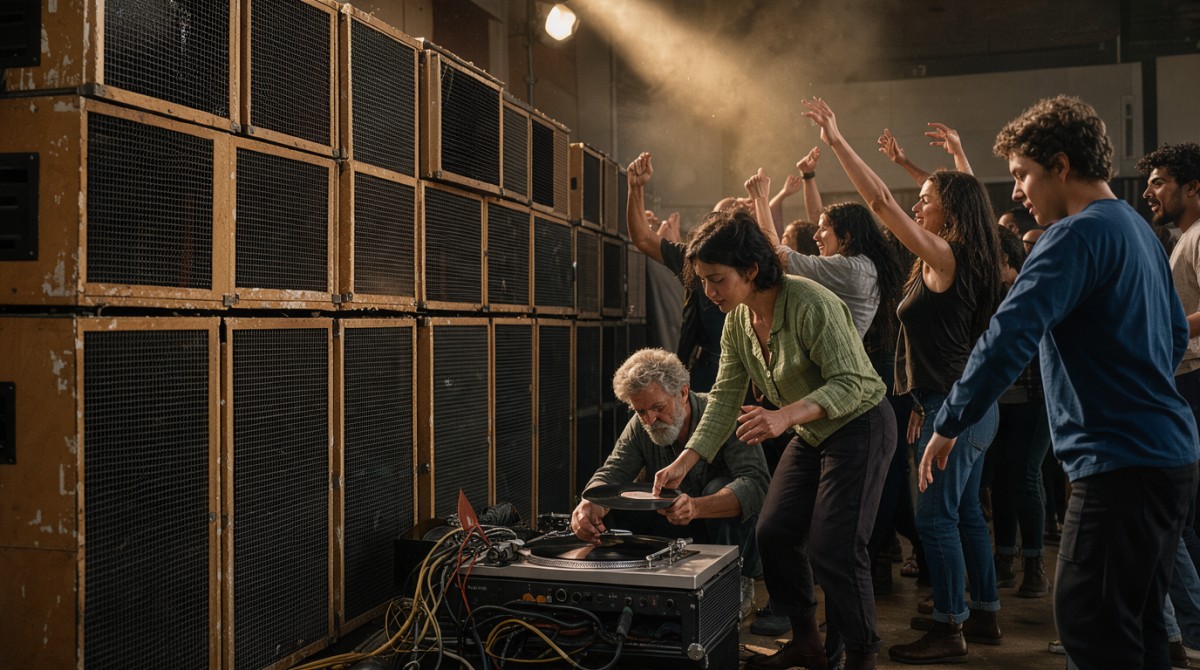
Manchester’s sound system scene, once a clandestine lifeline for Black youth in the post‑war era, is experiencing a renaissance that is reshaping community identity across the city and beyond. At its heart are two organisations – the Megatone Sound Foundation and the legendary Baron Turbo Charge – whose work is reviving the bass‑heavy culture that taught a generation about heritage, resistance and belonging.
The roots of a cultural classroom
For many young Black Mancunians, the lessons that mattered were never found in textbooks. Errol “Barzy” Beaumont, a founder of Baron Turbo Charge, recalls how the records that filled their flats – Burning Spears, Bob Marley, Culture – were the only conduit to a history omitted from school curricula. “We didn’t know where we fit in. We didn’t know our history,” he says, underscoring how the sound system functioned as a mobile classroom, delivering narratives of diaspora, struggle and pride through rhythm.
This educational role was echoed by Winston Jones, who now runs Trafford Bar Studios. He describes 1970s reggae as “a newspaper”, a medium that taught listeners about Marcus Garvey, Nelson Mandela and the idea that Africa was a spiritual home. The music’s capacity to convey political consciousness made the sound system a vital source of empowerment for a community navigating an unofficial colour bar and limited opportunities.
From house parties to museum halls
The early scene was anchored in the homes and community venues of Hulme, Moss Side and Old Trafford. Youth clubs such as Aquarius, Proctor’s, Birley and the Hideaway hosted nights where the sounds of Dillinger and Johnny Clarke reverberated alongside more mainstream tracks like Bob and Marcia’s “Young, Gifted and Black”. Even the more conservative families could tolerate the anthem, while the underground gatherings nurtured a distinct musical lexicon.
Decades later, artefacts from that era have entered the institutional record. A contract for David Rodigan’s appearance at the PSV club – a reggae venue founded by Black bus drivers – now resides in the V&A East’s exhibition “The Music is Black: A British Story”. Archivist Keithly Brandy has been instrumental in preserving such ephemera, working with museums and universities to ensure the narrative of Manchester’s sound system culture is not lost.
Building a legacy: the Megatone story
Marcus, a founder of the Megatone Sound Foundation, traces his journey to a nine‑year‑old’s curiosity in Old Trafford in 1976. Without his mother’s knowledge, he dismantled the family’s wooden stereogram, salvaging the turntable, speakers and valve amplifier to assemble a makeshift system he called “Conqueror”. “It was just like a house thing,” he recalls, highlighting the DIY ethos that underpinned the movement.
From that modest start, Megatone grew into a network that now supports sound systems across the Black diaspora, reaching as far as Kingston, the Gambia and Ethiopia. The foundation’s expansion illustrates how a local, self‑made practice can evolve into an international conduit for cultural exchange, reaffirming the original purpose of sound systems as vehicles of shared identity.
Baron Turbo Charge: perseverance on a tight budget
The origins of Baron Turbo Charge are equally grounded in resourcefulness. In the mid‑1970s, Errol Beaumont, Junior Wilson and the late Melvyn “Wizzydan” Joseph pooled £10 each to purchase a second‑hand valve guitar amplifier, adding it to a collection of records, speakers and an old turntable. With no cabinets for the speakers, they fashioned makeshift boxes from timber salvaged at a building site and lugged the assembly up the flats on Bonsall Street, near the now‑demolished Hulme Crescents.
Despite the improvisation, the system was operational for a party on the fourth floor, built on the first floor, and the sound carried through the stairwell. This anecdote captures the determination that characterised the early sound system crews, who often worked with limited resources yet managed to create powerful, bass‑driven experiences that drew crowds and forged community bonds.
Sound systems as a conduit for empowerment today
Today, the ethos of resilience and empowerment persists. At Trafford Bar Studios, Winston Jones offers free training in DJing, photography, videography and podcasting, funded by compensation he received from the Windrush scandal. The space mirrors the original sound system’s collective spirit, providing a safe haven where young people can acquire creative skills and confidence.
Jones emphasises the transformative impact: “A kid leaves school and believes he can’t do anything, but we give you hope when you come in here.” By removing financial barriers, the studio continues the tradition of using music and technology as tools for social mobility, echoing the original promise of the sound system as a platform for self‑expression and community cohesion.
The wider cultural ripple
The Manchester sound system’s influence extends beyond reggae. Its lineage can be traced to the birth of hip‑hop in the Bronx, where DJ Kool Herc adapted Jamaican sound system techniques. In the UK, the culture has seeded genres such as house, garage and jungle, and nurtured artists like Soul II Soul, Maxi Priest and Massive Attack. While reggae remains the core, the sound system’s adaptive nature has allowed it to absorb and inspire a spectrum of musical forms.
Keithly Brandy notes that early soundmen – Lord Cass, Bugga Levi, Count Leroy, Count Sam, Rocket and Angel Hi‑Fi – brought the Caribbean tradition to Manchester, performing at weddings, christenings and community events. Their presence not only entertained but also asserted a visible Black cultural identity within a city that was often hostile to such expressions.
Looking forward: a revival with purpose
The current revival is not merely nostalgic. Both Megatone and Baron Turbo Charge are actively shaping a future where sound systems serve as platforms for education, cultural exchange and community resilience. By establishing networks that span continents and offering free creative training, they are ensuring that the bass‑heavy beats continue to teach, unite and empower.
As the scene re‑emerges in the 2020s, the message remains clear: music is more than entertainment; it is a repository of history, a catalyst for empowerment and a conduit for belonging. In Manchester, the reverberating thump of the speakers is a reminder that the lessons once learned on makeshift wooden cabinets are still being taught, generation after generation, across the streets of Moss Side and beyond.
This article was produced with AI-assisted research and editorial support. Reporting is based on the source material cited below. Sources: The Guardian UK; theguardian.com; Global1.News (22 November 2026).
By Erica Thornton, Staff Writer
What's Your Reaction?
 Like
0
 Dislike
0
 Love
0
 Funny
0
 Wow
0
 Sad
0
 Angry
0

US Politics and Policy Correspondent at Global1.News. Based in Washington DC, covering American politics, policy, elections, and the courts. Knows how the system works and tells you what it actually means.











Comments (0)